
In the vast lexicon of technological terms and specifications, few numerical fractions carry as much weight and diverse application as “4/3.” Far from being a mere mathematical expression, 4/3 represents foundational concepts that have shaped the development and user experience across various tech domains. From the visual aesthetics of our screens to the intricate mechanics of our digital cameras, this ratio has played a pivotal role, dictating standards, influencing design choices, and defining user expectations. Understanding “what is 4/3” requires delving into its two most prominent manifestations: the ubiquitous 4:3 aspect ratio that once dominated display technology and the innovative Micro Four Thirds (M4/3) system that revolutionized the digital photography landscape. This exploration will unpack the historical significance, current relevance, and future implications of this seemingly simple ratio.
The Enduring Legacy of the 4:3 Aspect Ratio
Before the advent of widescreen dominance, the 4:3 aspect ratio was the visual cornerstone of how we consumed media, influencing everything from cinematic productions to home television sets and early computer monitors. Its prevalence wasn’t arbitrary; it was a carefully considered standard that offered a balanced and effective canvas for visual storytelling and information display.
A Historical Perspective: From Cinemas to CRTs
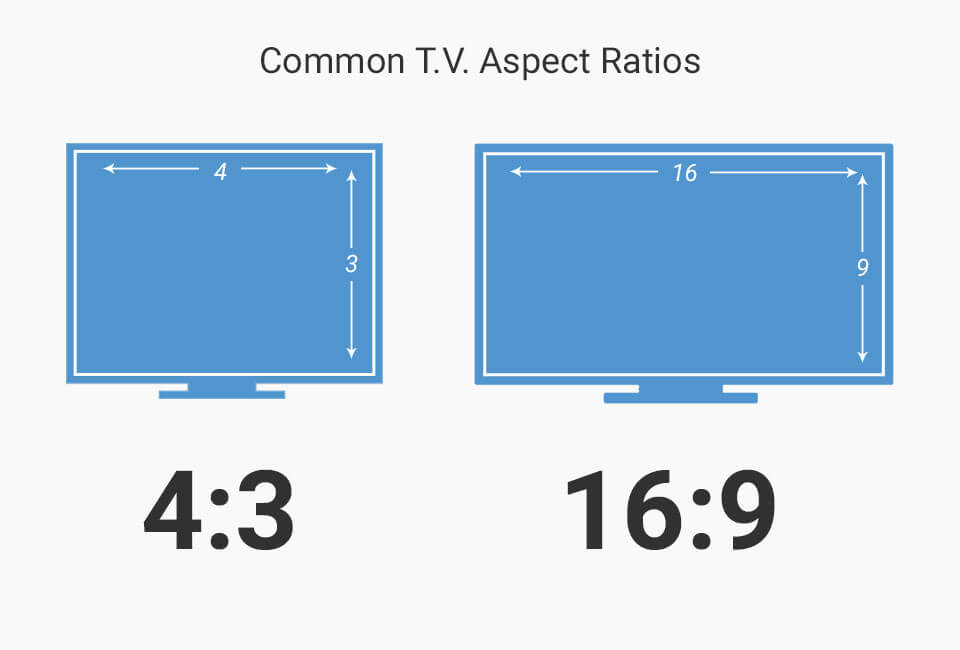
The 4:3 aspect ratio has roots deeply embedded in the history of motion pictures. Initially, it was proposed by the father of film, Thomas Edison, and standardized by the Academy of Motion Picture Arts and Sciences in 1932 as the “Academy Ratio.” This ratio, visually represented as a rectangle four units wide for every three units tall, provided a relatively square frame that was considered ideal for capturing human subjects and action without excessive cropping or wasted space.
When television emerged as a mass medium, it naturally adopted the established film standard. Early cathode-ray tube (CRT) televisions and computer monitors universally utilized the 4:3 aspect ratio, not just due to established convention but also because of the technical limitations and efficiencies of manufacturing these display tubes. The relatively squarish shape of the CRT was easier and more cost-effective to produce and offered a comfortable viewing experience for the content prevalent at the time, which was largely produced to fit this very frame. For decades, this ratio was synonymous with visual media, ingrained in our collective consciousness as the standard for screens.
The Rise of Widescreen and the Niche of 4:3
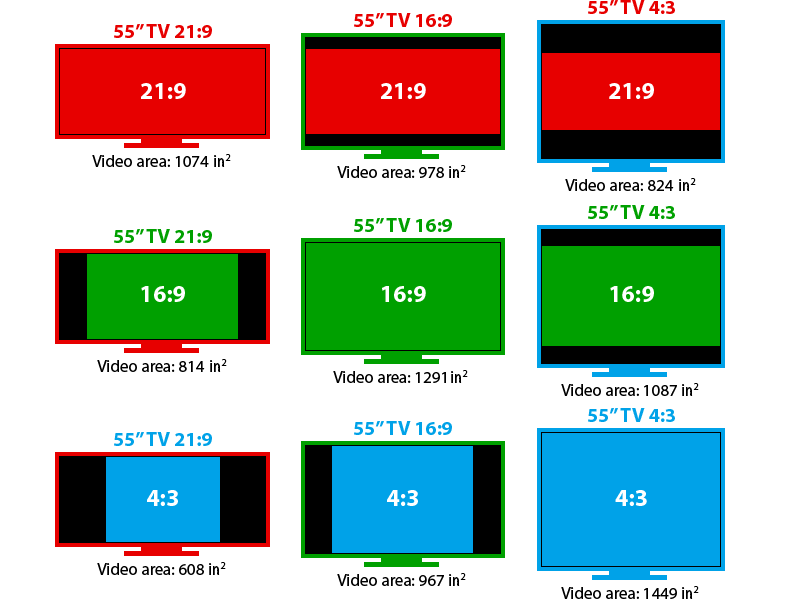
The turn of the millennium heralded a significant shift with the popularization of widescreen formats, most notably 16:9 (or 1.78:1) and the cinematic 21:9 (or 2.35:1/2.39:1). Driven by advancements in display technology, consumer demand for more immersive cinematic experiences at home, and the increasing availability of high-definition content, 16:9 rapidly became the new industry standard for televisions, computer monitors, and mobile devices. This wider format better accommodated peripheral vision and was perceived as more dynamic for action-oriented content and panoramic shots.
As widescreen took over, the 4:3 aspect ratio transitioned from a dominant standard to a niche player. Older content, originally filmed or broadcast in 4:3, often had to be “pillarboxed” (black bars on the sides) or stretched/cropped to fit new 16:9 displays. This transition, while commercially successful, underscored the importance of aspect ratios in preserving content integrity.
Despite its diminished ubiquity, 4:3 has not entirely disappeared. It maintains a dedicated following and specific applications. For instance, classic video game enthusiasts often prefer playing games on displays that natively support 4:3 to maintain the original artistic intent and avoid distortion. Some professional displays for niche applications, such as medical imaging or specialized control panels, still opt for 4:3 for its practical advantages in displaying specific types of data. Furthermore, some creative photographers and videographers intentionally shoot in 4:3 for artistic effect, leveraging its nostalgic appeal and distinct compositional qualities.
Modern Applications and Creative Choices
Today, the 4:3 aspect ratio serves several purposes that extend beyond mere legacy. In education and professional settings, projectors often still utilize 4:3, primarily because many older presentation materials and documents were created in this format. Similarly, document scanning and archival often benefit from 4:3, as many historical documents and photographs naturally conform to this shape, allowing for efficient digitization without wasted space.
In the realm of photography and videography, the choice of aspect ratio is a deliberate artistic decision. While most modern cameras offer 16:9, 3:2, and other widescreen options, 4:3 remains a strong choice for certain styles. It lends itself well to portraiture, macro photography, and compositions that emphasize vertical elements or a more confined, focused narrative. Filmmakers sometimes use 4:3 to evoke a specific era, create a sense of intimacy, or deliberately constrain the viewer’s perspective, as seen in critically acclaimed productions that choose to eschew modern widescreen formats. This conscious return highlights that 4:3 is not merely an antiquated standard but a viable creative tool with its own distinct visual language.
Micro Four Thirds: A Revolution in Mirrorless Camera Systems
Beyond display technology, “4/3” takes on a profoundly different yet equally significant meaning within the world of digital imaging, specifically referring to the Micro Four Thirds (M4/3) camera system. Launched in 2008 by Olympus and Panasonic, M4/3 spearheaded the mirrorless camera revolution, offering a compelling alternative to traditional DSLRs and compact point-and-shoots.
Genesis and Core Principles of M4/3
The Micro Four Thirds system is built around a specific sensor size and lens mount standard. The “Four Thirds” aspect of its name refers to the sensor’s diagonal measurement (approximately 21.6 mm) and, crucially, its 4:3 aspect ratio. This sensor is significantly smaller than “full-frame” (36x24mm) sensors but larger than those found in most compact cameras and smartphones. The “Micro” prefix signifies the elimination of the traditional DSLR mirror box and optical viewfinder, allowing for a much shorter flange focal distance (the distance between the lens mount and the sensor).
The core principle behind M4/3 was to create a camera system that offered DSLR-like image quality and interchangeable lenses in a much more compact and lightweight form factor. By removing the mirror and prism assembly, M4/3 cameras could be smaller, thinner, and lighter than their DSLR counterparts, making them more portable and less conspicuous. This design choice also opened doors for equally compact and high-performance lenses, creating a cohesive system where the body and optics were optimized for size and performance.
Advantages: Compactness, Lens Ecosystem, and Stabilization
The advantages of the Micro Four Thirds system are manifold and have resonated strongly with a diverse group of photographers and videographers:
- Compactness and Portability: This is arguably the most significant draw. M4/3 bodies and lenses are substantially smaller and lighter than equivalent DSLR or full-frame mirrorless gear, making them ideal for travel, street photography, and situations where discreetness and minimal bulk are paramount.
- Extensive Lens Ecosystem: Being an open standard, M4/3 boasts an incredibly rich and diverse lens lineup from multiple manufacturers, including Olympus (now OM Digital Solutions), Panasonic, Sigma, and others. This robust ecosystem offers a lens for virtually every photographic need, from ultra-wide angles and fast primes to super-telephoto zooms and specialized macro lenses, all designed to be compact.
- In-Body Image Stabilization (IBIS): Many M4/3 cameras feature highly advanced 5-axis in-body image stabilization. This technology allows users to shoot handheld at much slower shutter speeds without blur, providing sharper images and smoother video, especially beneficial in low-light conditions or with longer focal lengths. When combined with optically stabilized lenses, some M4/3 systems offer truly astounding stabilization capabilities.
- Excellent Video Capabilities: M4/3 cameras have often been at the forefront of video innovation, offering features like 4K recording, high frame rates, and advanced color profiles in compact bodies, making them popular choices for vloggers, documentary filmmakers, and independent creators.
- Crop Factor Benefits: The sensor’s 2x crop factor relative to full-frame means that a 300mm lens on an M4/3 camera provides the field of view equivalent to a 600mm lens on a full-frame camera. This is a significant advantage for wildlife and sports photographers who need long reach without the exorbitant size and cost of full-frame super-telephoto lenses.
Considerations and Performance in a Full-Frame World
While M4/3 offers numerous benefits, it’s also important to acknowledge its considerations, particularly in comparison to larger sensor formats like APS-C and full-frame. The smaller sensor size generally translates to:
- Lower Low-Light Performance: All else being equal, larger sensors inherently gather more light due to their larger individual photosites. This means M4/3 sensors typically exhibit more noise at very high ISO settings compared to full-frame or even some APS-C cameras. However, advancements in sensor technology and in-camera processing have significantly narrowed this gap over the years.
- Shallower Depth of Field Limitations: Achieving extremely shallow depth of field (the “bokeh” effect) is generally easier with larger sensors and wider apertures. While M4/3 can still produce beautiful background blur, matching the extreme separation possible with full-frame cameras often requires faster (larger aperture) M4/3 lenses, which can negate some of the size advantage.
- Dynamic Range: In some extreme lighting situations, larger sensors might offer a slight edge in dynamic range, capturing more detail in both highlights and shadows. Again, modern M4/3 sensors have made significant strides here.
Despite these theoretical limitations, the M4/3 system continues to thrive, proving that outright sensor size isn’t the sole determinant of image quality or photographic capability. For many users, the combination of portability, robust features, and excellent image quality makes M4/3 a highly practical and enjoyable system, particularly when the end product is destined for digital display or standard prints.
The Mathematical Essence: More Than Just a Number
Beyond its direct applications in displays and camera sensors, the ratio 4/3 embodies fundamental principles of proportionality and standardization that are critical in various technological contexts. Its mathematical simplicity belies its profound impact on how systems are designed and how users interact with them.
Ratios in Digital Media: Beyond Just Display
The concept of ratios extends far beyond just visual display. In digital media, ratios dictate file compression, data transmission rates, and even the efficiency of algorithms. While “4/3” isn’t a direct measure for all these, the underlying idea of defining relationships between quantities is constant. For instance, in audio engineering, compression ratios determine how dynamic range is managed. In network protocols, packet sizes and transmission windows are governed by ratios designed to optimize data flow. The simplicity of 4/3 as a fraction makes it an intuitive building block for scaling and proportioning within digital frameworks, influencing everything from graphic design grids to interface layouts.
The Impact of Standardized Ratios on Development
The establishment of standardized ratios like 4:3 has profound implications for technological development. It fosters interoperability, allows for economies of scale in manufacturing, and simplifies content creation. When content creators, hardware manufacturers, and software developers all adhere to a common standard, the entire ecosystem benefits from reduced complexity and increased compatibility. The transition from 4:3 to 16:9 for displays, while beneficial, illustrates the immense logistical challenge and cost involved in changing such a deeply entrenched standard. Conversely, the success of the Micro Four Thirds system demonstrates how a carefully defined ratio (both for sensor and mount) can create a thriving, innovative, and user-friendly platform within a competitive market. These standards, whether for display or sensor size, provide a common language that allows disparate parts of the tech world to communicate and integrate seamlessly.
Future Prospects: Where 4/3 Continues to Influence
Even as technology relentlessly marches forward, introducing new formats, higher resolutions, and more specialized devices, the fundamental principles represented by “4/3” persist. Its influence is not diminishing but rather evolving, finding new niches and reaffirming its utility in specific contexts.
Niche Markets and Specialized Equipment
In the future, 4:3 displays might not return to mainstream consumer electronics, but they will likely continue to serve specialized markets. For industrial monitors, certain types of kiosks, public information displays, and even e-ink readers, where content is primarily text-based or requires a specific vertical orientation, the 4:3 ratio offers practical advantages in terms of information density and ergonomic display. Its relatively square shape can be more efficient for certain data visualization and control panel interfaces, where space is at a premium and a traditional “cinematic” view is unnecessary or even detrimental. Similarly, vintage computing and gaming communities will continue to drive demand for 4:3 compatible displays to preserve the authentic experience of legacy hardware and software.
For the Micro Four Thirds system, its future appears robust within its established segments. As sensor technology improves, the perceived performance gap with larger sensors continues to shrink, especially for mainstream usage. The system’s strong emphasis on compact size, advanced in-body stabilization, and unparalleled lens selection will ensure its continued appeal for travel photographers, videographers, content creators, and enthusiasts who prioritize portability and a comprehensive, flexible system over absolute maximum low-light performance or ultra-shallow depth of field. M4/3 cameras are also increasingly finding homes in specialized applications such as drone photography, scientific imaging, and compact cinema setups, where their size-to-performance ratio is critical.

The Ongoing Debate: Form Factor vs. Sensor Size
The “what is 4/3” discussion ultimately touches upon a perennial debate in technology: the optimal balance between form factor and raw specification. For displays, it’s about how screen real estate is best utilized for diverse content. For cameras, it’s about the trade-offs between sensor size, lens size, camera body dimensions, and overall system weight. The M4/3 system, in particular, champions the philosophy that a smaller, well-engineered sensor within a compact, ergonomic system can often outperform larger, bulkier setups in real-world scenarios due to its usability and portability.
As artificial intelligence and computational photography advance, the inherent limitations of smaller sensors (like low-light noise) are increasingly mitigated through sophisticated software algorithms. This trend suggests that the physical dimensions of the sensor might become less critical than the computational power accompanying it. In such a future, the M4/3 system, with its mature ecosystem and compact form factor, stands to benefit greatly, offering high-quality results from incredibly portable packages. The elegance and efficiency inherent in the 4/3 ratio, whether applied to screen dimensions or sensor architectures, will continue to shape how we interact with and create technology for years to come.
aViewFromTheCave is a participant in the Amazon Services LLC Associates Program, an affiliate advertising program designed to provide a means for sites to earn advertising fees by advertising and linking to Amazon.com. Amazon, the Amazon logo, AmazonSupply, and the AmazonSupply logo are trademarks of Amazon.com, Inc. or its affiliates. As an Amazon Associate we earn affiliate commissions from qualifying purchases.