
Understanding your annual income is more than just knowing a number; it’s the bedrock of sound financial planning, smart budgeting, and achieving long-term financial goals. For many, the calculation seems straightforward: look at a paycheck, multiply by twelve. However, the reality is often far more nuanced, encompassing various income streams, deductions, and tax implications that can significantly alter your true earnings. Whether you’re a salaried employee, an hourly worker, a freelancer, or a small business owner, accurately figuring out how much you make each year is a critical skill for managing your money effectively.

This comprehensive guide will break down the process, offering insights into different income types, essential data gathering, step-by-step calculation methods, and the crucial reasons why this figure is so important for your financial well-being. By the end, you’ll have a clear framework to confidently determine your annual earnings and leverage this knowledge for a more secure financial future.
Understanding Your Income Sources and Types
Before you can calculate your annual income, it’s vital to identify and categorize all the money flowing into your accounts. Income isn’t a monolithic entity; it comes in various forms, each requiring a slightly different approach to tracking and calculation.
Differentiating Gross vs. Net Income
Perhaps the most fundamental distinction to grasp is the difference between gross and net income.
- Gross Income is the total amount of money you earn before any deductions are taken out. This includes your salary, hourly wages, freelance payments, bonuses, commissions, and any other earnings. It’s the “raw” income figure.
- Net Income (often referred to as take-home pay) is the amount of money you actually receive after all mandatory and voluntary deductions have been subtracted. These deductions typically include federal, state, and local taxes, Social Security, Medicare, health insurance premiums, retirement contributions (like 401(k)s), and other pre-tax or post-tax benefits. When people ask how much you “make,” they are often referring to gross income, but your financial reality is dictated by your net income.
Salaried vs. Hourly Wages: The Basics
The method for calculating income varies significantly depending on whether you are salaried or hourly.
- Salaried Employees typically receive a fixed amount of pay on a regular schedule (e.g., bi-weekly, semi-monthly, monthly), regardless of the exact number of hours worked, provided they meet their job responsibilities. Their annual gross income is usually straightforward: the agreed-upon annual salary.
- Hourly Workers are paid based on the number of hours they work. Their income can fluctuate significantly week-to-week or month-to-month, especially if their hours are not consistent or if they work overtime. Calculating their annual income requires diligent tracking of hours worked.
Irregular Income: Freelance, Gig Work, and Side Hustles
For those in the gig economy, self-employed individuals, or anyone with side hustles, income can be highly irregular. This category includes:
- Freelancers: Paid per project, per hour, or retainer, often invoicing clients directly.
- Gig Workers: Those earning through platforms like Uber, DoorDash, Etsy, or TaskRabbit.
- Side Hustles: Any supplementary work or business that brings in additional income beyond a primary job.
Accurately tracking these varied and often inconsistent payments is crucial. This income often comes without immediate tax deductions, meaning you are responsible for setting aside money for self-employment taxes.
Other Income Streams: Investments, Rental Properties, and Benefits
Don’t overlook other sources of income that contribute to your annual total. These can include:
- Investment Income: Dividends from stocks, interest from savings accounts or bonds, capital gains from selling assets.
- Rental Income: Money earned from renting out properties or rooms.
- Social Security or Disability Benefits: Government-provided income.
- Pension Payments: Regular payments received after retirement.
- Alimony or Child Support: Regular payments received as part of a legal agreement.
Each of these needs to be factored into your overall annual income calculation for a complete picture.
Gathering Your Financial Data
The accuracy of your annual income calculation hinges on the completeness and precision of the financial data you collect. This step requires a methodical approach to ensure no income stream or deduction is overlooked.
Essential Documents: Pay Stubs, Bank Statements, and Tax Forms
These documents are your primary sources of truth for income data.
- Pay Stubs (or Wage Statements): For employees, pay stubs provide detailed breakdowns of gross pay, hours worked (for hourly employees), pre-tax deductions (like 401(k) contributions, health insurance premiums), post-tax deductions, and net pay for each pay period. Keep all of them for the entire year.
- Bank Statements: Reviewing your bank statements helps identify direct deposits from employers, freelance clients, or other income sources that might not be captured elsewhere. They also show withdrawals for certain expenses which might be relevant for self-employed individuals.
- Tax Forms (W-2s, 1099s, K-1s): These are perhaps the most critical year-end summaries of your income.
- W-2 (Wage and Tax Statement): Issued by employers, it summarizes your annual wages, tips, and other compensation, as well as taxes withheld.
- 1099 Forms (e.g., 1099-NEC for Nonemployee Compensation, 1099-INT for Interest Income, 1099-DIV for Dividends, 1099-R for Retirement Distributions): Issued by various entities to report income paid to you when you are not an employee. Crucial for freelancers, contractors, and those with investment income.
- Schedule K-1 (Form 1065/1120S): For those with ownership in partnerships, S corporations, or trusts, this form reports your share of the entity’s income, losses, and deductions.
Digital Tools and Tracking Apps
In the digital age, numerous tools can simplify income tracking.
- Spreadsheets (Excel, Google Sheets): A highly customizable option to create your own income tracker. You can log each payment received, categorize it, and automatically sum it up.
- Budgeting Apps (Mint, YNAB, Personal Capital): Many popular budgeting apps link directly to your bank accounts and credit cards, automatically categorizing transactions and providing an overview of your income and expenses.
- Accounting Software (QuickBooks, FreshBooks, Xero): Essential for freelancers and small business owners, these tools manage invoicing, expense tracking, and can generate profit and loss statements, making annual income calculation much easier.
- Time Tracking Software: If you’re an hourly freelancer, tools like Toggl or Clockify can accurately log your billable hours, which is vital for income calculation.
Organizing Your Information Systematically
Collecting data is only half the battle; organizing it ensures accuracy and ease of access.
- Create a Dedicated Folder: Whether physical or digital, keep all income-related documents (pay stubs, invoices, 1099s) in one designated place.
- Regular Updates: For irregular income, update your spreadsheet or accounting software regularly, ideally weekly or monthly, rather than waiting until year-end. This prevents overwhelm and reduces the chance of missing data.
- Backup Your Data: If using digital files, ensure they are backed up to a cloud service or external drive.
Step-by-Step Calculation Methods
With all your data in hand, you’re ready to perform the calculations. The approach will vary based on your primary income type. Remember, the goal is to calculate your gross annual income first, then consider net income by factoring in deductions.
For Salaried Employees
This is generally the most straightforward calculation.
- Locate your annual salary: This is usually stated in your employment contract or the year-to-date (YTD) earnings section of your final pay stub for the year.
- Add any bonuses or commissions: If you received performance bonuses, sales commissions, or other one-time payments not part of your base salary, add these to your annual salary.
- Account for other benefits that count as taxable income: Some benefits, like certain fringe benefits or non-cash compensation, might be taxable and should be included. Your W-2 will typically reflect these.
- Formula: Annual Salary + Total Bonuses/Commissions + Other Taxable Benefits = Total Gross Annual Income.
- To find your net annual income, sum up the “Net Pay” or “Take-Home Pay” from all your pay stubs for the year. Alternatively, sum up all “federal taxable wages” from your W-2s, and subtract total federal, state, and local income taxes, plus other post-tax deductions.
For Hourly Workers

Hourly income requires careful tracking of hours worked.
- Track all hours worked: Keep a log of all regular and overtime hours for each pay period.
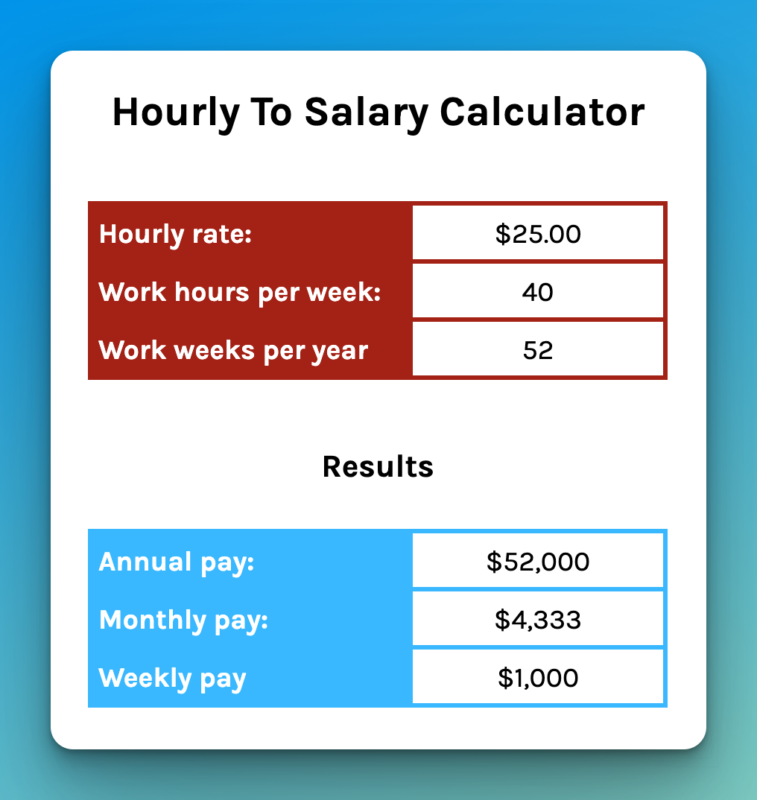
- Calculate weekly/bi-weekly/monthly gross pay: Multiply your regular hourly rate by regular hours, and your overtime rate (usually 1.5x regular rate) by overtime hours.
- Sum up all gross paychecks: Add the gross pay from every single pay stub received throughout the year.
- Add any bonuses or tips: If you received tips or bonuses, ensure they are included in your total.
- Formula: (Regular Hourly Rate x Total Regular Hours) + (Overtime Rate x Total Overtime Hours) + Total Bonuses/Tips = Total Gross Annual Income.
- Again, to determine net annual income, sum up the net pay from all your pay stubs.
For Freelancers and Small Business Owners
This is often the most complex, as income can be highly variable, and you’re responsible for both employer and employee portions of certain taxes.
- Track all invoices and payments: Use accounting software or a detailed spreadsheet to record every payment received from clients.
- Sum all gross revenue: Add up all payments received from all sources throughout the year. This is your business’s gross revenue.
- Subtract business expenses (for net income consideration): While your “gross annual income” from a personal finance perspective might be your total revenue, when talking about what you “make,” it’s crucial to consider your net business income, which is gross revenue minus allowable business expenses (e.g., software subscriptions, office supplies, travel, professional development). This figure is what you’ll typically report for self-employment taxes.
- Formula (Gross Business Revenue): Sum of all client payments/service fees = Total Gross Business Revenue.
- Formula (Net Business Income – pre-tax): Total Gross Business Revenue – Total Allowable Business Expenses = Net Business Income.
- This “Net Business Income” is your income before personal income taxes (federal, state) and self-employment taxes (Social Security and Medicare contributions).
Incorporating Investment and Passive Income
Don’t forget to add other income streams to your primary earnings.
- Gather Year-End Statements: Collect 1099-INT, 1099-DIV, 1099-B (for stock sales), Schedule K-1s, and statements from rental properties.
- Sum All Other Income: Add up all interest, dividends, capital gains (net of losses), rental income (gross, then net after expenses for a truer picture), and any other passive income reported on these forms.
- Formula: Total Primary Gross Income (from employment/business) + Total Investment Income + Total Rental Income + Total Other Passive Income = Comprehensive Gross Annual Income.
Accounting for Deductions and Pre-Tax Contributions
Once you have your comprehensive gross annual income, you can refine it to understand your taxable income and net income.
- Pre-Tax Deductions: These reduce your taxable income. Examples include 401(k) or 403(b) contributions, health savings account (HSA) contributions, and health insurance premiums paid pre-tax. These are usually visible on your pay stubs or W-2.
- Post-Tax Deductions: These are taken out after taxes are calculated, such as Roth 401(k) contributions or certain insurance premiums. They don’t reduce your taxable income but do reduce your take-home pay.
- Taxes Withheld: Federal, state, and local income taxes, as well as Social Security and Medicare (FICA). These are mandatory withholdings.
By systematically deducting these from your gross income, you arrive at a more accurate understanding of your financial inflows and what truly hits your bank account.
Beyond the Basics: Advanced Considerations and Tools
Calculating your annual income is a dynamic process that benefits from advanced understanding and the right resources.
The Impact of Taxes: Federal, State, and Local
Taxes are perhaps the most significant deduction from your gross income. Understanding their impact is crucial for a realistic view of your annual earnings.
- Progressive Tax System: In many countries, including the U.S., income tax is progressive, meaning higher earners pay a higher percentage in taxes. Your tax bracket determines the marginal rate applied to portions of your income.
- Tax Withholding: Employees have taxes withheld from each paycheck, while self-employed individuals are responsible for paying estimated quarterly taxes.
- Tax Deductions and Credits: These can reduce your taxable income or directly lower your tax liability. Common deductions include contributions to traditional IRAs, student loan interest, and certain itemized deductions. Tax credits (like the Child Tax Credit) directly reduce the amount of tax you owe, dollar-for-dollar.
A thorough understanding of your tax situation, potentially by reviewing previous year’s tax returns or consulting a tax professional, provides a clearer picture of your effective tax rate and how much of your gross income you actually retain.
Utilizing Financial Calculators and Software
Leveraging technology can streamline the income calculation process and provide deeper insights.
- Online Income Calculators: Numerous websites offer free tools to estimate your take-home pay based on your gross salary, location, and deductions. While helpful for a quick estimate, they may not capture all personal nuances.
- Budgeting Software (e.g., Mint, YNAB, Personal Capital): As mentioned earlier, these tools can automatically track income and expenses, providing real-time dashboards of your financial inflows.
- Tax Software (e.g., TurboTax, H&R Block): When you prepare your annual taxes, these programs consolidate all your W-2s, 1099s, and other income documents, ultimately calculating your total gross income, adjusted gross income (AGI), and taxable income for the year. This is arguably the most accurate annual summary of your financial earnings.
- Accounting Software for Businesses: For freelancers and small business owners, comprehensive accounting software is indispensable for tracking revenue, expenses, and calculating net income.
When to Seek Professional Advice
While self-calculation is often feasible, certain situations warrant professional guidance.
- Complex Income Structures: If you have multiple businesses, significant investment portfolios, international income, or intricate freelance arrangements, a financial advisor or an accountant can help accurately tally your earnings and optimize your tax situation.
- Major Life Changes: Events like marriage, divorce, starting a family, or changing career paths can significantly impact your income and tax liability. A professional can help you adjust your financial planning accordingly.
- Tax Optimization: An enrolled agent or CPA can offer strategies to minimize your tax burden legally, ensuring you’re taking advantage of all eligible deductions and credits.
- Financial Planning: Beyond just knowing your income, a financial planner can help you integrate this knowledge into a broader plan for retirement, savings, and wealth accumulation.
Why Knowing Your Annual Income Matters
Knowing how much you make annually isn’t just an academic exercise; it’s a fundamental piece of financial intelligence that empowers crucial decisions across various aspects of your life.
Budgeting and Financial Planning
Your annual income is the cornerstone of any effective budget. Without this figure, setting realistic spending limits, saving goals, and investment targets becomes guesswork. Knowing your precise income allows you to:
- Allocate Funds: Determine how much you can comfortably spend on housing, food, transportation, and discretionary items.
- Set Realistic Savings Goals: Accurately plan for emergencies, down payments, or retirement by knowing how much you can realistically set aside each month or year.
- Track Progress: Measure your financial health over time, identify areas for improvement, and ensure you’re living within your means or even increasing your savings rate.
Loan Applications and Creditworthiness
Lenders, whether for a mortgage, car loan, or personal loan, rely heavily on your reported annual income to assess your ability to repay debt.
- Debt-to-Income (DTI) Ratio: Lenders use your gross annual income to calculate your DTI ratio, which compares your monthly debt payments to your monthly gross income. A lower DTI ratio indicates a better ability to manage monthly payments and improves your chances of loan approval and favorable interest rates.
- Borrowing Power: A clear understanding of your income allows you to realistically assess how much you can afford to borrow without overextending yourself financially.
Setting Financial Goals and Benchmarks
Whether your goal is to save for a down payment, pay off debt, or build a significant investment portfolio, your annual income provides the baseline for setting achievable targets.
- Milestone Setting: You can benchmark your progress year over year, comparing your current income to previous years to track growth or identify stagnation.
- Retirement Planning: Accurate income figures are vital for calculating how much you need to save to maintain your desired lifestyle in retirement and for leveraging retirement calculators effectively.
Negotiating Salary and Career Advancement
Knowing your worth and your current annual income is a powerful tool in career negotiations.
- Salary Negotiations: When seeking a raise or a new job, knowing your current compensation allows you to negotiate from an informed position, aiming for a figure that reflects your experience, market value, and desired income growth.
- Career Planning: Understanding your income trajectory can inform decisions about further education, skill development, or career changes that could lead to higher earning potential.
Accurately figuring out how much you make a year is a foundational step toward financial empowerment. It moves you from guesswork to informed decision-making, enabling you to budget more effectively, plan for the future with confidence, and make strategic choices about your career and investments. By diligently tracking your income sources, utilizing the right tools, and understanding the nuances of gross versus net pay, you gain an invaluable perspective on your financial health, paving the way for greater financial stability and success. Take the time to master this crucial calculation; it’s an investment in your own financial future.
aViewFromTheCave is a participant in the Amazon Services LLC Associates Program, an affiliate advertising program designed to provide a means for sites to earn advertising fees by advertising and linking to Amazon.com. Amazon, the Amazon logo, AmazonSupply, and the AmazonSupply logo are trademarks of Amazon.com, Inc. or its affiliates. As an Amazon Associate we earn affiliate commissions from qualifying purchases.