
Understanding how your Social Security benefits are calculated is a critical component of effective retirement planning. For many Americans, Social Security represents a foundational pillar of their financial security in their later years, designed to replace a portion of pre-retirement income. However, the system can seem complex, shrouded in acronyms and rules that often deter individuals from delving deeper. Demystifying this process is not just an academic exercise; it’s a practical step towards making informed decisions about your financial future, influencing everything from your retirement age to your investment strategies.
This comprehensive guide aims to shed light on the mechanics behind your Social Security benefit calculation. We will break down the core concepts, walk through the step-by-step process, examine the various factors that influence your final benefit amount, and provide actionable insights into how you can access and maximize your entitlements. By the end, you should have a clearer picture of what to expect from Social Security and how to integrate it into your broader financial plan.

Understanding the Foundation: Eligibility and Key Concepts
Before we dive into the numbers, it’s essential to grasp the fundamental building blocks of Social Security eligibility and the key terms that drive the benefit calculation. These concepts are universal and apply to nearly all beneficiaries.
Earning Work Credits
To qualify for Social Security retirement benefits, you must accumulate “work credits” by working and paying Social Security taxes. The Social Security Administration (SSA) awards credits based on your annual earnings. In 2024, you earn one credit for every $1,730 in earnings, up to a maximum of four credits per year. Most people need 40 credits, accumulated over at least 10 years of work, to be eligible for retirement benefits. These credits never expire once earned.
Defining Your Full Retirement Age (FRA)
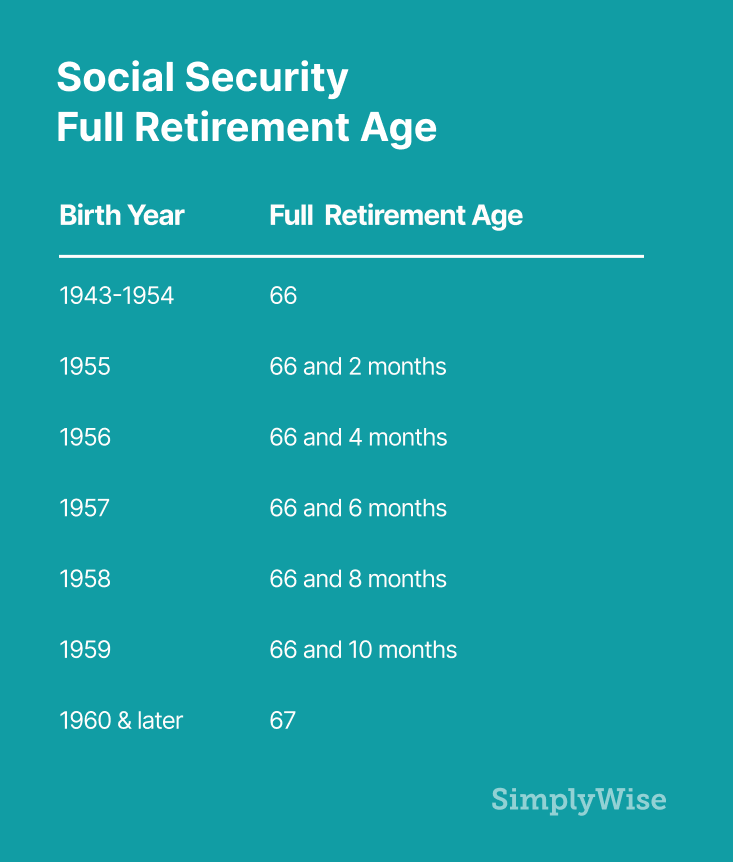
Your Full Retirement Age (FRA) is a crucial determinant of your benefit amount. This is the age at which you are entitled to receive 100% of your Primary Insurance Amount (PIA). FRA is not a single age for everyone; it depends on your birth year:
- Born 1943-1954: FRA is 66
- Born 1955: FRA is 66 and 2 months
- Born 1956: FRA is 66 and 4 months
- Born 1957: FRA is 66 and 6 months
- Born 1958: FRA is 66 and 8 months
- Born 1959: FRA is 66 and 10 months
- Born 1960 or later: FRA is 67
Claiming benefits before your FRA results in a permanent reduction, while delaying benefits past your FRA can permanently increase them.
Average Indexed Monthly Earnings (AIME)
AIME is arguably the most critical input into your Social Security benefit calculation. It represents your average monthly earnings over your career, adjusted for inflation. The SSA doesn’t just average your raw earnings; it “indexes” them to account for general wage increases over time. This indexing ensures that earlier years of earnings reflect their value relative to current wage levels, providing a more accurate measure of your lifetime earnings. The SSA considers your 35 highest-earning years, after indexing, to calculate your AIME. If you have fewer than 35 years of earnings, zero earnings will be factored in for the missing years, potentially reducing your AIME significantly.
Primary Insurance Amount (PIA)
Your Primary Insurance Amount (PIA) is the monthly benefit you would receive if you start collecting Social Security at your Full Retirement Age (FRA). It’s the baseline figure from which all other benefit adjustments are made. The PIA is calculated directly from your AIME using a progressive formula that provides higher replacement rates for lower earners. This formula involves “bend points,” which are specific dollar amounts that define segments of your AIME to which different percentages apply. The bend points change annually based on the national average wage index.
The Step-by-Step Calculation Process
Now, let’s break down how the SSA actually computes your benefits, moving from your earnings history to your final monthly check.
Calculating Your AIME
The first major step involves determining your Average Indexed Monthly Earnings (AIME).
- Gather Your Earnings Record: The SSA maintains a record of your earnings throughout your career. You can access this via your online “my Social Security” account.
- Index Your Earnings: For each year you worked, the SSA applies an indexing factor to your earnings. This factor brings past earnings up to a roughly comparable value to current wages. Earnings from the year you turn 60 and all subsequent years are not indexed, as they are considered closer to your retirement age.
- Identify Top 35 Years: From your indexed earnings history, the SSA selects the 35 years in which you had the highest indexed earnings.
- Sum and Divide: The total indexed earnings from these 35 years are summed up and then divided by 420 (which is 35 years x 12 months/year) to arrive at your Average Indexed Monthly Earnings (AIME).
Applying Bend Points to Determine PIA
Once your AIME is established, the SSA applies a progressive formula using “bend points” to calculate your Primary Insurance Amount (PIA). The idea behind bend points is to provide a higher percentage of replacement for lower incomes. For individuals who become eligible in 2024, the formula is:
- 90% of the first $1,174 of your AIME
- 32% of your AIME between $1,174 and $7,078
- 15% of your AIME over $7,078
You would sum these three components to get your PIA. For example, if your AIME is $5,000, your PIA would be:
(0.90 * $1,174) + (0.32 * ($5,000 – $1,174)) + (0.15 * $0) = $1,056.60 + (0.32 * $3,826) = $1,056.60 + $1,224.32 = $2,280.92.
This $2,280.92 would be your monthly benefit if you claim at your Full Retirement Age.
Adjusting for Claiming Age
Your PIA is the benefit at FRA. However, very few people claim precisely at their FRA. The age you choose to start receiving benefits significantly impacts your monthly payment, either increasing or decreasing it permanently.
- Claiming Early (Before FRA): You can start receiving benefits as early as age 62. However, for each month you claim before your FRA, your benefit is permanently reduced. The reduction is roughly 5/9 of 1% for each of the first 36 months early, and 5/12 of 1% for each additional month. For someone with an FRA of 67, claiming at 62 means a permanent 30% reduction in their PIA.
- Claiming at Full Retirement Age (FRA): As discussed, claiming at your FRA entitles you to 100% of your PIA.
- Claiming Late (After FRA): You can delay claiming benefits up to age 70. For each month you delay past your FRA, your benefit increases by a certain percentage, known as Delayed Retirement Credits (DRCs). These credits accumulate at a rate of 2/3 of 1% per month, or 8% per year, until age 70. For someone with an FRA of 67, delaying until age 70 would result in a permanent 24% increase (3 years * 8% per year) above their PIA.
Factors That Influence Your Benefit Amount
Beyond the core calculation, several other factors can significantly impact the actual amount of Social Security benefits you receive.
Your Earnings History
The most direct and substantial factor is your earnings history. The higher your indexed earnings over your 35 highest-earning years, the higher your AIME and, consequently, your PIA. Conversely, periods of unemployment, low earnings, or working fewer than 35 years can reduce your AIME and, therefore, your benefits. This underscores the importance of consistent employment and robust earnings throughout your career.
When You Choose to Claim
As detailed above, the decision of when to start receiving benefits is monumental. Claiming at 62 could mean a 30% reduction, while waiting until 70 could mean a 24-32% increase (depending on FRA) over your FRA benefit. This is a personal decision that balances immediate income needs against the desire for a larger monthly payment for the rest of your life.
Spousal and Survivor Benefits
Social Security is not just for individual workers; it provides benefits for families as well.
- Spousal Benefits: If you are married, your spouse may be eligible to receive benefits based on your earnings record, even if they never worked or had low earnings. A spouse can receive up to 50% of your PIA at their own FRA. If they claim early, their spousal benefit will also be reduced. You must have filed for your own benefits for your spouse to claim spousal benefits.
- Survivor Benefits: If you pass away, your surviving spouse, children, or even dependent parents may be eligible for survivor benefits based on your earnings record. A surviving spouse can receive 100% of your benefit amount (including any delayed retirement credits you earned) if they claim at their FRA, or a reduced amount if claimed earlier.
Taxation of Benefits
For some beneficiaries, a portion of their Social Security benefits may be subject to federal income tax. This depends on your “combined income,” which includes your adjusted gross income, non-taxable interest, and half of your Social Security benefits.
- If your combined income is between $25,000 and $34,000 (for single filers) or $32,000 and $44,000 (for married filing jointly), up to 50% of your benefits may be taxable.
- If your combined income exceeds $34,000 (single) or $44,000 (married filing jointly), up to 85% of your benefits may be taxable.
Some states also tax Social Security benefits, so it’s essential to understand your state’s rules.
The Windfall Elimination Provision (WEP) and Government Pension Offset (GPO)
These two provisions can significantly reduce Social Security benefits for individuals who also receive a pension from employment not covered by Social Security (e.g., some government jobs).
- WEP: Reduces the Social Security benefit for workers who also receive a “non-covered” pension and have fewer than 30 years of “substantial earnings” under Social Security. It modifies the PIA formula to use lower percentages on the first bend point.
- GPO: Reduces spousal or survivor benefits for individuals who also receive a “non-covered” government pension. It offsets the Social Security spousal/survivor benefit by two-thirds of the amount of the non-covered pension.
Accessing Your Personalized Benefit Information
The best way to understand your personal Social Security benefits is to go directly to the source. The SSA provides excellent tools and resources for this purpose.
The Social Security Administration’s Online Account
Creating a “my Social Security” online account at ssa.gov is perhaps the most important step you can take in your Social Security planning. This free, secure account allows you to:
- View your complete earnings record.
- Get personalized estimates of your future retirement benefits at different claiming ages (62, FRA, 70).
- Check the status of an application.
- Print a copy of your Social Security Statement.
- Manage your benefits if you are already receiving them.
Understanding Your Social Security Statement
The Social Security Statement, whether accessed online or received by mail, is a treasure trove of information. It summarizes your earnings history, provides estimates of your retirement, disability, and survivor benefits, and offers valuable information about Medicare. Regularly reviewing your statement helps you ensure your earnings record is accurate and allows you to track your projected benefits over time.
Strategies for Maximizing Your Social Security Benefits
While the calculation is largely formulaic, strategic decisions can significantly enhance your lifetime Social Security income.
Optimizing Your Earning Years
Since your AIME is based on your 35 highest-earning years, focusing on maximizing your income, particularly later in your career, can be highly beneficial. If you have years with low or no earnings, working a few extra years to replace those “zero” years with higher earnings can substantially boost your AIME. Conversely, retiring early and having fewer than 35 years of earnings will result in zero-income years being factored into your AIME, thereby lowering your benefit.
The Power of Delaying Claims
For many, delaying Social Security past their Full Retirement Age (FRA) is the most impactful strategy for maximizing benefits. With an 8% annual increase in benefits for each year you delay until age 70, this is a guaranteed, inflation-adjusted return that is hard to beat in other low-risk investments. This strategy is particularly appealing if you are in good health, have other retirement savings to draw from in the interim, or can continue working. The larger monthly payment you secure will continue for the rest of your life, providing enhanced financial security against longevity risk.
Coordinated Claiming Strategies for Couples
Married couples have more claiming options and opportunities to optimize their combined lifetime benefits. Sophisticated strategies often involve one spouse claiming early while the other delays, or a combination that maximizes survivor benefits. For instance, if one spouse is a much higher earner, they might delay claiming until age 70 to maximize their benefit, which will also become the higher survivor benefit for the remaining spouse. The lower-earning spouse might claim earlier to provide some income. Consulting with a financial advisor specializing in Social Security can help couples navigate these complex decisions to find the optimal strategy for their specific situation.

Conclusion
Calculating your Social Security benefits might seem daunting at first glance, but by understanding the key components – work credits, Full Retirement Age, Average Indexed Monthly Earnings, and Primary Insurance Amount – you can gain clarity and control over a vital part of your retirement income. The age you choose to claim, your lifetime earnings, and even your marital status all play significant roles in shaping your final benefit amount.
The Social Security Administration provides invaluable tools like the “my Social Security” online account to help you visualize your future benefits and track your earnings. However, merely understanding the calculation is not enough; proactive planning is essential. By strategically optimizing your earning years, carefully considering your claiming age, and exploring coordinated strategies for couples, you can significantly enhance your Social Security income and bolster your financial resilience in retirement. Social Security is a powerful safety net; understanding how it works empowers you to weave it into a robust and secure retirement plan.
aViewFromTheCave is a participant in the Amazon Services LLC Associates Program, an affiliate advertising program designed to provide a means for sites to earn advertising fees by advertising and linking to Amazon.com. Amazon, the Amazon logo, AmazonSupply, and the AmazonSupply logo are trademarks of Amazon.com, Inc. or its affiliates. As an Amazon Associate we earn affiliate commissions from qualifying purchases.