
For millions of Americans, Social Security represents a cornerstone of their retirement planning, a vital safety net designed to provide a steady income stream in their later years. Yet, despite its pervasive influence, many individuals find themselves grappling with a fundamental question: “How much money will I actually receive from Social Security?” The answer, far from being a simple figure, is a complex calculation influenced by a multitude of factors unique to each person’s work history, earnings, and claiming decisions.
Understanding your potential Social Security benefit is not merely an academic exercise; it’s a critical component of building a robust financial future. It allows you to realistically assess your income in retirement, identify potential gaps, and make informed decisions about supplementary savings, investments, and even when to stop working. This comprehensive guide will demystify the intricacies of Social Security, breaking down the key determinants of your benefit amount, how to accurately estimate it, and strategies to maximize what you receive. By the end, you’ll possess a clearer vision of your Social Security future and the tools to navigate its complexities with confidence.
Understanding the Fundamentals of Social Security Benefits
Before diving into the specifics of your potential benefit, it’s essential to grasp the foundational principles that govern the Social Security system. Far from a government handout, it’s an earned benefit, a collective insurance program funded primarily through payroll taxes.
A Brief History and Purpose
The Social Security Act was signed into law in 1935 as a response to the widespread poverty among seniors during the Great Depression. Its primary aim was to provide a basic level of economic security for retired workers, and later expanded to include benefits for survivors and individuals with disabilities. It operates on a pay-as-you-go system, meaning current workers’ contributions primarily fund the benefits of current retirees and other beneficiaries. While it’s designed to provide a foundation of income, it was never intended to be the sole source of retirement funds for most Americans. It acts as a crucial pillar in what financial planners often refer to as the “three-legged stool” of retirement income: Social Security, personal savings/investments, and employer-sponsored pensions/401(k)s.
The Earnings Record: Your Contribution History
The bedrock of your Social Security benefit is your earnings record. Every dollar you earn up to an annual limit (the Social Security taxable wage base) is subject to Social Security taxes (FICA taxes). These taxes, paid by both employees and employers, are credited to your personal earnings record. The Social Security Administration (SSA) then tracks these earnings over your entire working life. To qualify for retirement benefits, you generally need to accumulate 40 “credits” of work, which typically translates to 10 years of employment. In 2024, you earn one credit for every $1,730 in earnings, up to a maximum of four credits per year. While 40 credits are necessary to qualify, the amount you earn and the number of years you work significantly impact your ultimate benefit. The SSA specifically looks at your 35 highest-earning years, indexed for inflation, to calculate your average earnings. This means that years with low or zero earnings can significantly reduce your overall average, thereby lowering your benefit.
Key Factors Determining Your Benefit Amount
Calculating your Social Security benefit is a multi-step process that hinges on several critical variables. Understanding these factors is paramount to forecasting your future income.
Your Average Indexed Monthly Earnings (AIME)
The first crucial step in determining your Social Security benefit is calculating your Average Indexed Monthly Earnings (AIME). The SSA doesn’t just average your raw earnings; it “indexes” your past earnings to account for changes in the average wage level in the economy over time. This ensures that your past earnings are compared fairly with current wages. The SSA takes your highest 35 years of indexed earnings, sums them up, and then divides by 420 (the number of months in 35 years) to arrive at your AIME. If you have fewer than 35 years of earnings, the missing years are counted as zeroes, which can substantially lower your AIME and, consequently, your benefit. This highlights the importance of working consistently for at least 35 years, or even longer if your earlier years had lower earnings, to replace those “zero” or low-earning years with higher ones.
Primary Insurance Amount (PIA)
Once your AIME is calculated, the SSA applies a formula to determine your Primary Insurance Amount (PIA). Your PIA is the monthly benefit you are entitled to receive if you begin collecting benefits at your Full Retirement Age (FRA). The PIA formula is “progressive,” meaning it replaces a higher percentage of earnings for lower-income workers than for higher-income workers. This is achieved through “bend points” – specific dollar amounts in the AIME formula where the percentage of earnings replaced changes. For example, a high percentage (e.g., 90%) of your AIME up to the first bend point is included, a lower percentage (e.g., 32%) for the amount between the first and second bend points, and an even lower percentage (e.g., 15%) for the amount above the second bend point. The PIA is the foundation; all other benefit amounts (early, delayed, spousal, survivor) are derived from it.
Your Full Retirement Age (FRA)
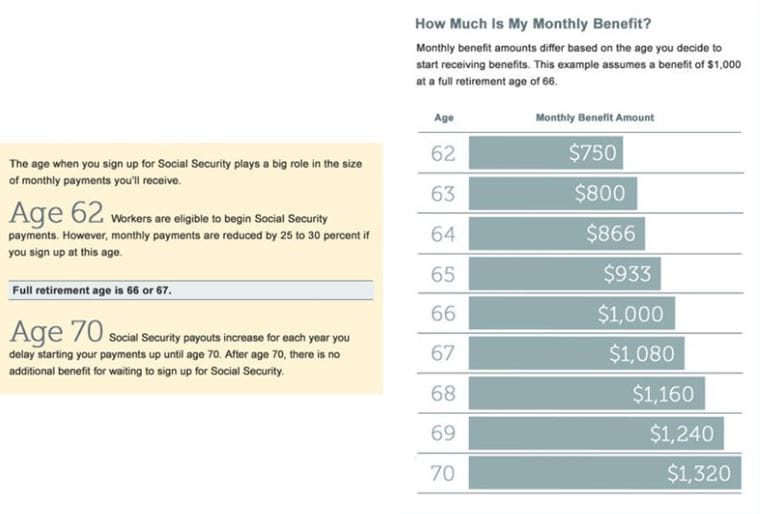
Your Full Retirement Age (FRA) is perhaps the most significant single factor influencing the amount of your monthly Social Security check. Your FRA is determined by your birth year and is the age at which you are eligible to receive 100% of your PIA. For those born in 1943-1954, FRA is 66. It gradually increases for those born between 1955 and 1959, until it reaches 67 for everyone born in 1960 or later. Claiming benefits before your FRA results in a permanent reduction, while delaying benefits past your FRA can significantly increase your monthly payment.
The Impact of Claiming Age: Early vs. Delayed Benefits
The age at which you choose to start receiving benefits has a profound and permanent impact on your monthly payment.
- Claiming Early (as early as age 62): You can begin collecting Social Security benefits as early as age 62, but doing so will result in a permanent reduction in your monthly payment. This reduction can be up to 30% if your FRA is 67. The SSA applies an actuarial reduction because you will be receiving benefits for a longer period.
- Claiming at Full Retirement Age (FRA): If you wait until your FRA, you will receive 100% of your calculated PIA. This is the baseline amount from which early or delayed benefits are adjusted.
- Delaying Benefits (up to age 70): For each month you delay claiming benefits past your FRA, up until age 70, you earn “Delayed Retirement Credits.” These credits permanently increase your monthly benefit by approximately 8% per year (or 2/3 of 1% per month) for those born in 1943 or later. Delaying until age 70 could result in a monthly benefit that is 24% to 32% higher than your FRA benefit, making it a powerful strategy for maximizing income, especially for those with long life expectancies. The decision of when to claim is a deeply personal one, weighing factors like current financial needs, health status, and life expectancy.
Estimating and Accessing Your Social Security Information
While understanding the calculations is crucial, the most practical way to find out your specific estimated benefits is directly through the Social Security Administration.
Using Your Online Social Security Account
The single most valuable tool for estimating your Social Security benefit is your personal “my Social Security” account at SSA.gov. Creating an account is free, secure, and highly recommended. Once logged in, you can:
- View your complete earnings record: This allows you to check for accuracy and ensure all your contributions have been properly recorded.
- Get personalized benefit estimates: The account provides estimates of your retirement benefits at various claiming ages (62, FRA, and 70), as well as estimates for disability and survivor benefits.
- Access your Social Security Statement: An electronic version of the statement that was formerly mailed to most workers.
- Manage your benefits: If you are already receiving benefits, you can manage your direct deposit, address, and other information.
Regularly checking your earnings record is vital, as errors can impact your future benefits. If you find any discrepancies, you should contact the SSA to correct them.

Interpreting Your Social Security Statement
Whether accessed online or received by mail, your Social Security Statement is a goldmine of information. It typically includes:
- Estimated retirement benefits: The most prominent figures are your estimated monthly benefits if you claim at age 62, your Full Retirement Age (FRA), and age 70. These estimates are based on your earnings history and projections of your future earnings.
- Estimated disability benefits: Information on what you or your family might receive if you become severely disabled.
- Estimated survivor benefits: Details on the benefits your family members (spouse, children) might receive upon your death.
- Your earnings record: A detailed breakdown of your taxed earnings for each year you’ve worked.
It’s crucial to review these figures carefully. The estimates are based on assumptions about your future earnings, so if your career path changes significantly, your actual benefits may differ. The statement is also a prime opportunity to verify the accuracy of your earnings history; any missing or incorrect earnings could reduce your future benefits.
Beyond Your Own Record: Spousal and Survivor Benefits
Social Security isn’t just for individual retirees; it also provides crucial benefits for families.
- Spousal Benefits: If you are married, divorced (under certain conditions), or widowed, you may be eligible to receive benefits based on your spouse’s (or ex-spouse’s) earnings record, even if you never worked or had low earnings. A spouse can receive up to 50% of their partner’s PIA if they claim at their own FRA.
- Survivor Benefits: In the event of a worker’s death, eligible family members, including a surviving spouse, children, or dependent parents, may be entitled to survivor benefits. The amount of survivor benefits depends on the deceased worker’s PIA and the relationship of the survivor. A surviving spouse can receive 100% of the deceased worker’s benefit if they claim at their own FRA, or a reduced amount if claimed earlier. Divorced spouses may also be eligible for survivor benefits if they meet specific criteria. Understanding these often-overlooked benefits is crucial for comprehensive family financial planning.
Strategies to Maximize Your Social Security Benefits
While your past earnings heavily influence your benefits, there are proactive steps you can take to potentially increase your monthly Social Security payment.
Working Longer and Earning More
The Social Security benefit calculation is based on your highest 35 years of indexed earnings. If you have fewer than 35 years of earnings, or if some of your earlier working years had very low income, continuing to work can significantly boost your AIME. By working additional years, you can replace a “zero” earning year or a low-earning year with a higher-earning one, thereby increasing your average. Even if you’ve worked for 35 years, if your current earnings are higher than some of your earlier indexed earnings, continuing to work can still improve your overall average. This strategy is particularly powerful for individuals who took time out of the workforce for caregiving or other reasons.
Strategic Claiming Age Decisions
As discussed, your claiming age is arguably the most impactful decision you’ll make regarding Social Security.
- Evaluating the Breakeven Point: A common approach is to calculate the “breakeven point”—the age at which the total amount of money you would have received by claiming early equals the total amount received by claiming later. However, this is a statistical exercise and doesn’t account for individual longevity.
- Considering Life Expectancy: If you anticipate a long life, delaying benefits until age 70 often yields the most overall income due to the substantial Delayed Retirement Credits. Conversely, if you have health issues or a family history of shorter lifespans, claiming earlier might be more prudent to maximize total lifetime benefits.
- Immediate Financial Needs: If you are in immediate need of income and have no other savings, claiming early might be your only option, despite the permanent reduction. The decision should be integrated into your holistic financial plan, considering all income sources and expenses in retirement.
Coordinating with a Spouse
For married couples, the claiming decision becomes more complex but also offers opportunities for optimization. Strategic coordination can lead to higher combined lifetime benefits.
- The “Higher Earner Delays” Strategy: Often, the spouse with the higher earnings record is advised to delay claiming benefits as long as possible, ideally until age 70, to maximize their individual benefit. This not only provides a larger individual payment but also ensures a higher survivor benefit for the remaining spouse.
- The “Lower Earner Claims Early” Strategy: The spouse with the lower earnings record might consider claiming benefits earlier, potentially at age 62 or their FRA, to provide some income while the higher earner’s benefit continues to grow. This “bridge” income can be crucial during the years leading up to the higher earner’s delayed claim.
- File and Suspend (No Longer an Option): It’s important to note that the “file and suspend” strategy, which allowed one spouse to file for benefits to trigger spousal benefits for their partner while suspending their own to earn delayed credits, was largely eliminated for those born after January 1, 1954. Couples should consult with a financial advisor specializing in Social Security to navigate current rules.
Understanding Cost-of-Living Adjustments (COLAs) and Taxation
Your Social Security benefit isn’t static once you start receiving it.
- Cost-of-Living Adjustments (COLAs): Each year, the Social Security Administration reviews the Consumer Price Index (CPI-W) to determine if a Cost-of-Living Adjustment (COLA) is warranted. If inflation has occurred, benefits are increased to help maintain their purchasing power. These annual adjustments are applied to your benefit, regardless of your claiming age.
- Taxation of Benefits: It’s important to be aware that your Social Security benefits may be subject to federal income tax. If your “provisional income” (which includes your adjusted gross income, tax-exempt interest, and 50% of your Social Security benefits) exceeds certain thresholds, a portion of your benefits (up to 85%) may be taxable. These thresholds are $25,000 for single filers and $32,000 for married couples filing jointly. Some states also tax Social Security benefits, though most do not. Planning for potential taxation is an integral part of retirement income management.
Social Security’s Role in Your Broader Retirement Plan
While critical, Social Security is rarely enough to fund a comfortable retirement on its own. It’s a foundational component within a much larger financial strategy.
A Foundation, Not a Full Solution
Financial experts generally agree that Social Security was designed to replace only about 40% of an average worker’s pre-retirement income. For higher earners, that percentage can be even lower. This underscores the critical need for personal savings and investments. Relying solely on Social Security for retirement is a risky proposition, as it will likely not cover all your expenses, especially if you plan for an active and fulfilling retirement. It’s essential to diligently save in employer-sponsored plans (like 401(k)s or 403(b)s), Individual Retirement Accounts (IRAs), and other investment vehicles. These personal savings, combined with Social Security, form the robust framework needed for true financial security in retirement.
Future Outlook and Financial Health of the System
Concerns about the long-term solvency of the Social Security system periodically arise, driven by demographic shifts such as increased life expectancy and lower birth rates. While these are valid considerations, it’s important to approach them with a balanced perspective. Projections from the Social Security Administration’s Trustees’ Report indicate that the program can pay 100% of promised benefits for several decades, but without legislative changes, it may only be able to pay a reduced percentage in the long term. Various proposals for strengthening the system are regularly debated in Congress. However, it is highly unlikely that Social Security will disappear entirely. It remains a deeply entrenched and indispensable program for millions of Americans, and legislative adjustments are far more probable than a complete dismantling. Nevertheless, this outlook reinforces the importance of not relying solely on Social Security and maintaining diversified retirement savings.

Conclusion
Determining “how much money will I get from Social Security” is a dynamic process influenced by your personal work history, earning patterns, and critical claiming decisions. Far from being a mystery, your potential benefits can be accurately estimated and strategically influenced. By understanding the core calculations—your Average Indexed Monthly Earnings (AIME) and Primary Insurance Amount (PIA)—and, most importantly, the profound impact of your claiming age, you gain significant control over this vital income stream.
The first and most crucial step is to create and regularly monitor your “my Social Security” account at SSA.gov. This online portal provides personalized estimates, allows you to review your earnings history, and is an invaluable resource for planning. Beyond individual claims, remember to explore spousal and survivor benefits, which can provide critical financial support for your loved ones.
While Social Security is a powerful and indispensable component of your retirement plan, it should be viewed as a foundational element, not the entirety of your financial security. Supplementing these benefits with personal savings and investments remains paramount for achieving a comfortable and worry-free retirement. Arm yourself with knowledge, utilize the resources available, and consider consulting a financial advisor to tailor a Social Security claiming strategy that aligns perfectly with your unique financial goals and life circumstances. A proactive approach today will pave the way for a more secure and predictable financial future.
aViewFromTheCave is a participant in the Amazon Services LLC Associates Program, an affiliate advertising program designed to provide a means for sites to earn advertising fees by advertising and linking to Amazon.com. Amazon, the Amazon logo, AmazonSupply, and the AmazonSupply logo are trademarks of Amazon.com, Inc. or its affiliates. As an Amazon Associate we earn affiliate commissions from qualifying purchases.