
Navigating the complexities of divorce often involves confronting challenging financial questions, none more central for many couples than spousal support. Known colloquially as alimony, spousal support in California is a legal obligation for one spouse to provide financial assistance to the other following a divorce or legal separation. Unlike child support, which often follows a more rigid formula, spousal support determinations in California are notably nuanced, balancing statutory guidelines with significant judicial discretion, particularly for long-term marriages. Understanding how this crucial financial component is calculated is essential for anyone facing a marital dissolution in the Golden State, offering a clearer path through an emotionally charged process. This article delves into the intricacies of spousal support calculation in California, exploring the legal frameworks, key factors, and the distinct approaches taken for temporary versus permanent orders.
Understanding the Fundamentals of Spousal Support in California
Before diving into the “how,” it’s vital to grasp the foundational concepts of spousal support within California’s legal landscape. This financial tool is designed to prevent a spouse from experiencing undue hardship and to help them maintain a lifestyle reasonably comparable to what they enjoyed during the marriage, especially when there’s a significant disparity in income or earning capacity.
Defining Spousal Support (Alimony)
Spousal support is a court-ordered payment from one ex-spouse to another, intended to provide financial assistance after a marriage ends. Its primary purpose is rehabilitative, aiming to help the recipient spouse become self-supporting within a reasonable period, especially in shorter marriages. In longer marriages, it can also serve to equalize the financial disparities that often emerge when one spouse has sacrificed career opportunities to support the other’s career, raise children, or manage the household. It’s not a punitive measure but rather a mechanism for financial adjustment during a major life transition.
Types of Spousal Support: Temporary vs. Permanent
California law distinguishes between two primary types of spousal support, each calculated and approached differently by the courts:
- Temporary Spousal Support (Pendente Lite Support): This support is ordered during the pendency of the divorce proceedings—from the time of separation until a final judgment is entered. Its primary purpose is to maintain the financial status quo and ensure both parties can meet their living expenses during the often lengthy divorce process. Courts typically use a “guideline” formula for temporary support.
- Permanent Spousal Support (Post-Judgment Support): This support is ordered as part of the final divorce judgment and can continue for a defined period or indefinitely. Despite the term “permanent,” it rarely means for life. Instead, it refers to the support established in the final order, which is subject to modification or termination based on various factors and changed circumstances. The calculation for permanent support involves a much broader array of factors than temporary support.
The Legal Framework: California Family Code
The legal authority for spousal support in California is primarily found within the California Family Code, particularly sections 4320 through 4360. These statutes outline the criteria courts must consider when making spousal support orders, providing the framework within which judges exercise their discretion. The code emphasizes a fair and equitable approach, recognizing the unique circumstances of each marriage and divorce.
Calculating Temporary Spousal Support: The Guideline Formula
For temporary spousal support, California courts often rely on a standardized, algebraic formula, similar in concept to how child support is calculated. This approach aims for efficiency and predictability during the interim period of a divorce.
Purpose of Temporary Support
The immediate goal of temporary support is to maintain the existing financial situation of both spouses as much as possible while the divorce case is ongoing. It ensures that neither party faces a sudden and drastic decline in their standard of living, which could impede their ability to participate effectively in the legal process or care for themselves and any children. It’s a stop-gap measure to provide stability until a more permanent arrangement can be negotiated or ordered.
Key Factors in the Guideline Formula
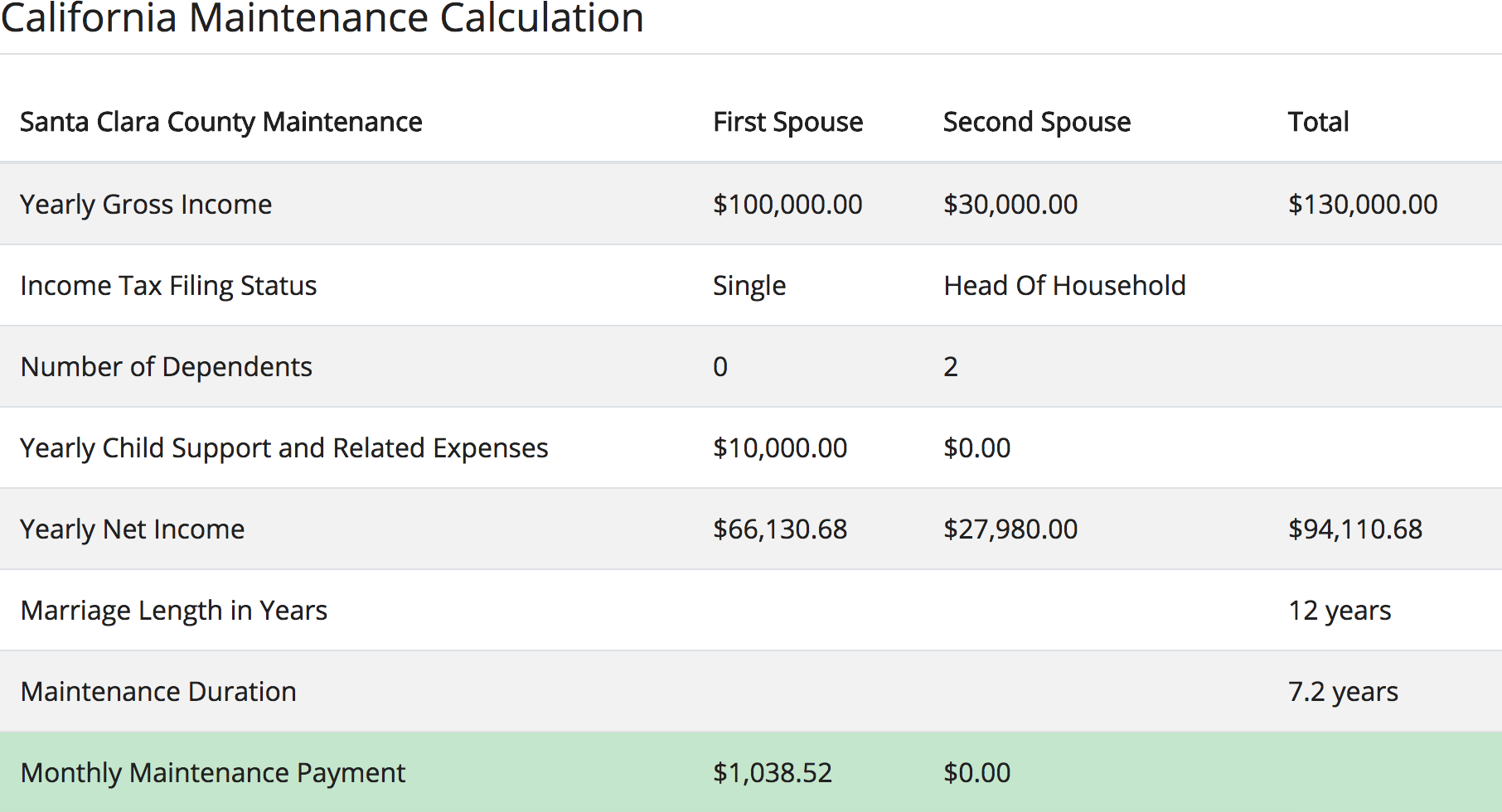
While there isn’t one single, statewide statutory formula for temporary spousal support, most California courts and attorneys use computer programs like “Dissomaster” or “Xspouse.” These programs incorporate a complex calculation that generally aims to determine the amount one spouse needs to pay to help the other meet their reasonable needs, taking into account their respective incomes and expenses. The core components typically include:
- Net Disposable Income of Both Parties: This is the most critical factor. It’s calculated by taking gross income and subtracting mandatory deductions such as federal and state income taxes, Social Security, Medicare, mandatory union dues, and health insurance premiums. Child support payments are also deducted from the paying spouse’s income before calculating spousal support.
- Child Support Orders: If there are children, child support is calculated first. The rationale is that child support is a primary obligation, and the amount paid or received for child support directly impacts the disposable income available for spousal support.
- Percentage Split: The formulas typically take a percentage of the difference in the parties’ net disposable incomes after child support is calculated. A common guideline in many counties is to take 40% of the high earner’s net monthly income, subtract 50% of the low earner’s net monthly income, and pay the result to the low earner. However, specific percentages can vary by county.
The Role of Discretion
Even with a guideline formula, judges retain some discretion. They can deviate from the guideline if its application would lead to an unjust or inequitable result. This might occur in situations involving extraordinary expenses, significant health issues, or non-income-generating assets. However, deviations are less common for temporary support than for permanent support, as the focus is on maintaining the status quo rather than a deep dive into all the nuances of the marital history.
Determining Permanent Spousal Support: The Family Code § 4320 Factors
The calculation of permanent spousal support is markedly different from temporary support. Here, the court moves away from a strict formula and instead considers a comprehensive list of factors outlined in California Family Code § 4320. This allows for a more individualized and equitable determination based on the specific circumstances of the marriage.
Moving Beyond the Formula: Judicial Discretion
For permanent spousal support, there is no fixed formula. Instead, judges are required to consider all the circumstances enumerated in Family Code § 4320. This grants significant discretion to the courts, making outcomes less predictable and highlighting the importance of thorough legal representation. The court’s goal is to make a “just and reasonable” order.
The “Marital Standard of Living”
One of the most heavily weighted factors is the marital standard of living. The court aims to ensure the supported spouse can maintain a lifestyle reasonably comparable to what they enjoyed during the marriage, to the extent possible, given the financial realities post-divorce. This involves reviewing past budgets, spending habits, and the overall economic picture of the marital household.
Earning Capacity and Marketable Skills
The court assesses the earning capacity of each spouse, considering their education, skills, job history, and the current job market. If one spouse has marketable skills that they are not utilizing, the court may impute income to them, meaning it will treat them as if they are earning what they could earn, even if they aren’t presently. The court also considers the time and expense required for the supported spouse to acquire education, training, or experience to find employment.
Contributions to Education, Training, or Career

A spouse who contributed to the other spouse’s education, training, career, or professional license during the marriage may receive consideration. For example, if one spouse worked to put the other through medical school, that contribution can influence the support order.
Debts and Assets of Each Party
The respective assets and debts of each spouse, including separate property and the marital property division, are considered. A spouse with substantial assets or income-generating investments might need less support, or vice versa.
Duration of the Marriage
The length of the marriage is a critical factor. For marriages of “long duration” (generally ten years or more), the court typically does not set an end date for spousal support and often retains jurisdiction to modify it indefinitely. For shorter marriages, the general guideline is that support should last for half the length of the marriage, though this is not a strict rule.
Age and Health of the Parties
The age and physical and emotional health of both spouses are relevant. An older spouse with health issues and limited earning potential may need support for a longer period than a younger, healthier spouse.
Domestic Violence Considerations
The court must consider any documented history of domestic violence by either party against the other. This can significantly impact the support order, potentially leading to increased support for the victim or limitations on the abuser’s ability to receive support.
Tax Consequences and Hardship
The immediate and long-term tax consequences of the spousal support order for each party are taken into account. Additionally, the court considers the balance of the hardships to each party.
The Role of Professional Guidance and Settlement
Given the extensive judicial discretion and the multitude of factors involved in permanent spousal support, seeking professional legal and financial guidance is paramount.
Why Legal Counsel Is Essential
An experienced family law attorney can help you:
- Understand Your Rights and Obligations: Interpret the nuances of California Family Code and apply them to your specific situation.
- Gather Necessary Documentation: Compile financial records, income statements, tax returns, and expense reports crucial for accurate assessment.
- Negotiate Effectively: Advocate on your behalf during settlement discussions, ensuring your interests are protected.
- Represent You in Court: Present your case compellingly to a judge if a settlement cannot be reached.
- Navigate Complex Issues: Address unique circumstances such as self-employment, fluctuating income, or international assets.
Mediation and Collaborative Divorce
Many couples choose alternative dispute resolution methods like mediation or collaborative divorce to determine spousal support. These processes allow parties to work together, often with the assistance of financial professionals, to reach a mutually agreeable spousal support arrangement outside of court. This can lead to more customized and sustainable outcomes, reduce animosity, and lower legal costs.
Spousal Support Agreements and Orders
Whether reached through negotiation, mediation, or court order, the final spousal support terms are incorporated into a formal legal document. This “Stipulated Judgment” or “Court Order” specifies the amount, duration, payment schedule, and any conditions for modification or termination. It is legally binding and enforceable.
Modifying or Terminating Spousal Support
Spousal support orders are not always set in stone. Circumstances can change significantly after a divorce is finalized, warranting a review of the existing order.
Grounds for Modification
A court will generally only modify a spousal support order if there has been a “material change in circumstances” since the last order was made. Examples of such changes include:
- Significant Change in Income: A substantial increase or decrease in either spouse’s income.
- New Employment or Job Loss: One spouse securing a well-paying job or becoming unemployed.
- Retirement: A legitimate, good-faith retirement of the paying spouse.
- Disability: A permanent disability affecting either party’s ability to work.
- Change in Health: A significant health issue impacting earning capacity or living expenses.
- Recipient Becomes Self-Supporting: The supported spouse achieves financial independence.
It’s important to note that a modification is not automatic; one party must file a motion with the court demonstrating the material change in circumstances.

Automatic Termination Events
In California, spousal support automatically terminates upon certain events, unless the parties have a written agreement to the contrary. These typically include:
- Death of Either Spouse: Support obligations cease upon the death of either the paying or receiving spouse.
- Remarriage of the Supported Spouse: If the spouse receiving support remarries, the support obligation generally terminates automatically. Cohabitation, while not automatic termination, can be grounds for modification, as the court may presume a decreased need for support.
Understanding the mechanisms for modification and termination is as crucial as understanding the initial calculation, as it empowers parties to adapt to life’s inevitable changes.
Calculating spousal support in California is a multi-faceted process that demands a thorough understanding of legal principles, financial realities, and individual circumstances. From the guideline-based approach for temporary support to the comprehensive consideration of the Family Code § 4320 factors for permanent orders, the system strives for equity and fairness. While the journey through divorce and spousal support can be daunting, armed with knowledge and the right professional guidance, individuals can navigate this financial aspect with greater clarity and confidence, ultimately working towards a stable financial future.
aViewFromTheCave is a participant in the Amazon Services LLC Associates Program, an affiliate advertising program designed to provide a means for sites to earn advertising fees by advertising and linking to Amazon.com. Amazon, the Amazon logo, AmazonSupply, and the AmazonSupply logo are trademarks of Amazon.com, Inc. or its affiliates. As an Amazon Associate we earn affiliate commissions from qualifying purchases.