
The quest for energy independence and sustainable living has propelled solar power into the mainstream. For many homeowners and businesses, the allure of harnessing the sun’s energy is compelling. Yet, the initial question that often arises, and perhaps the most critical for a successful implementation, is: “How big of a solar system do I need?” This isn’t a one-size-fits-all answer. Determining the optimal size of a solar photovoltaic (PV) system involves a meticulous analysis of your energy consumption, the available resources, and your specific objectives. It’s a technical deep dive into kilowatt-hours, panel efficiencies, battery capacities, and system architectures designed to precisely match your needs.
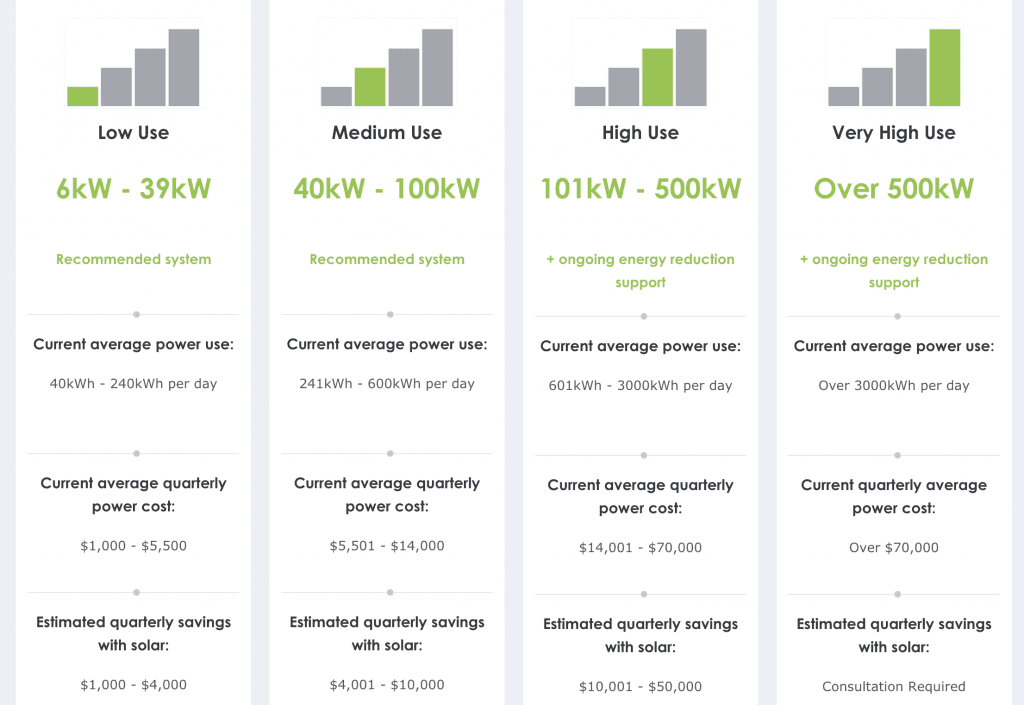
Understanding Your Energy Footprint: The Foundation of Sizing
Before any solar panels are considered or batteries are calculated, the fundamental step is to comprehensively understand your current and projected energy demands. This baseline data is the bedrock upon which your entire solar system will be built. Without an accurate assessment, you risk either oversizing (leading to unnecessary expense) or undersizing (resulting in insufficient power or reliance on grid power).
Analyzing Historical Energy Consumption
Your electricity bills are a goldmine of information. They typically detail your monthly or daily kilowatt-hour (kWh) usage over the past year. Observing this data will reveal patterns:
- Average Daily Usage: Calculate your average daily kWh consumption across different seasons. This is the primary metric for system sizing.
- Peak Usage Periods: Identify times when your energy demand is highest. This might be during specific seasons (e.g., air conditioning in summer, heating in winter if electric) or certain hours of the day.
- Seasonal Variations: Energy use often fluctuates significantly with the seasons. A solar system must be capable of meeting your highest demands, or at least a substantial portion of them, throughout the year.
Conducting a Comprehensive Appliance Audit
Beyond historical bills, a detailed inventory of every electrical appliance and device in your home or business provides a granular view of energy consumption. For each item, you’ll want to determine:
- Wattage (W): The power rating of the appliance. This is usually found on a label or in the product manual.
- Hours of Daily Use: An estimate of how many hours per day (or week/month) each appliance is active.
- Calculating Individual Appliance kWh: Multiply wattage by hours of use and divide by 1000 (W * h / 1000 = kWh). Summing these up gives you a very precise daily energy demand. Don’t forget phantom loads – devices that consume power even when turned off.
Accounting for Future Energy Needs and Lifestyle Changes
A solar system is a long-term investment. Consider any anticipated changes that might impact your future energy consumption:
- New Appliances: Planning to buy an electric vehicle (EV), install a hot tub, or upgrade to a larger refrigerator? Factor in the potential increase in demand.
- Home Additions/Renovations: Expanding your living space will likely increase lighting, heating/cooling, and appliance needs.
- Lifestyle Changes: Growing family, working from home more, or increased reliance on electric heating/cooling could all shift your energy profile.
Components of a Solar System: Matching Technology to Needs
Once your energy demands are meticulously quantified, the next step involves understanding the core technological components that will convert sunlight into usable electricity and store it if necessary. Each component plays a vital role in the system’s overall efficiency, reliability, and cost-effectiveness.
Solar Panels (PV Modules): The Energy Harvesters
Panels are the most visible part of a solar system, directly converting photons into electrons. Their specifications are crucial for sizing:
- Wattage Rating: Individual panels range from 300W to over 500W. The total wattage of your system is the sum of all panel wattages.
- Efficiency: How effectively a panel converts sunlight into electricity. Higher efficiency means more power from a smaller footprint. Common types include monocrystalline (highest efficiency, sleek look), polycrystalline (good efficiency, more affordable), and thin-film (flexible, lower efficiency, niche applications).
- Temperature Coefficient: Panels lose some efficiency as temperatures rise. Understanding this helps predict real-world performance.
- Degradation Rate: Panels gradually lose efficiency over their lifespan. Manufacturers typically guarantee a certain percentage of original power output after 25 years.
Inverters: The Power Translators
Solar panels produce direct current (DC) electricity, but most homes and businesses use alternating current (AC). Inverters are essential for this conversion:
- String Inverters: Traditional, cost-effective for simple systems. Multiple panels are wired in “strings” to one central inverter. If one panel underperforms, it can affect the entire string.
- Micro-inverters: Installed at each individual panel. They optimize output for each panel independently, mitigating shading issues and simplifying expansion. They also provide panel-level monitoring.
- Hybrid Inverters: Combine the functions of a solar inverter and a battery inverter, allowing direct charging of batteries from solar panels and seamlessly switching between grid and battery power. These are ideal for systems with energy storage.
Batteries (Energy Storage): The Resilience Factor
For off-grid systems or grid-tied systems seeking backup power or peak shaving, batteries are indispensable. They store excess solar energy for use when the sun isn’t shining.
- Capacity (kWh): The amount of energy a battery can store. This needs to be calculated based on your daily energy needs and desired “days of autonomy” (how long the system can run without solar input or grid power).
- Depth of Discharge (DoD): The percentage of a battery’s capacity that can be safely used without damaging it. Lithium-ion batteries often allow a higher DoD (e.g., 80-100%) than lead-acid batteries (e.g., 50%).
- Cycle Life: The number of charge/discharge cycles a battery can endure before its capacity significantly degrades.
- Types: Lithium-ion (higher energy density, longer life, higher cost) and lead-acid (proven technology, lower cost, shorter life, requires more maintenance).
Charge Controllers: Battery Guardians (for DC-coupled systems with batteries)
These devices regulate the voltage and current coming from the solar panels to prevent overcharging or deep discharging of batteries, thereby extending their lifespan.
- PWM (Pulse Width Modulation): Simpler, less efficient, suitable for smaller systems.
- MPPT (Maximum Power Point Tracking): More advanced, significantly more efficient, especially in varying weather conditions, and crucial for larger, more complex battery-based systems.
Sizing Your System: Step-by-Step Technical Calculation
With your energy needs quantified and component understanding in place, you can now proceed to the technical calculations for sizing your solar system. This process is iterative and often refined with professional input.
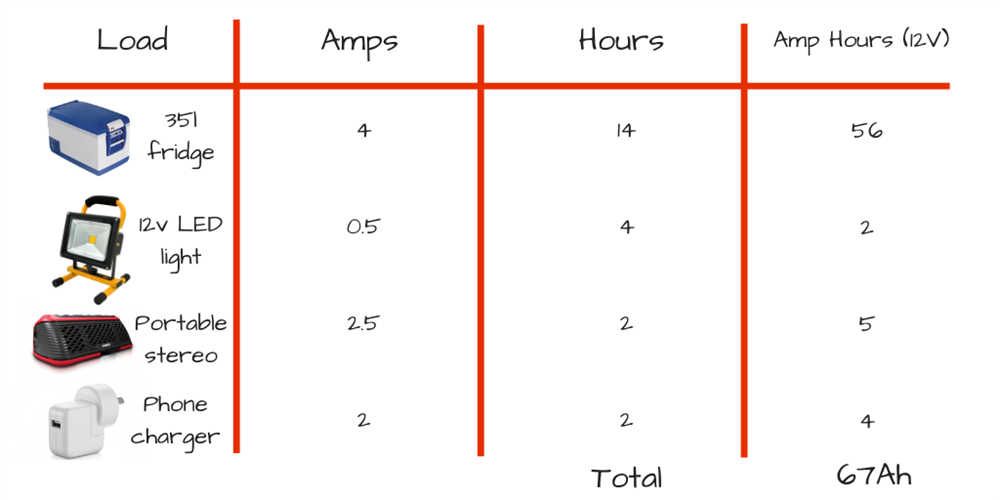
Step 1: Determine Your Daily Energy Requirement
This is the kWh/day figure derived from your energy audit, including a buffer for efficiency losses and future growth (e.g., 10-20% extra). Let’s assume you’ve determined a daily need of 20 kWh/day.
Step 2: Calculate Required Solar Panel Output
Not all sunlight reaching your panels is converted into usable electricity. Factors like weather, shading, panel orientation, and system inefficiencies reduce actual output.
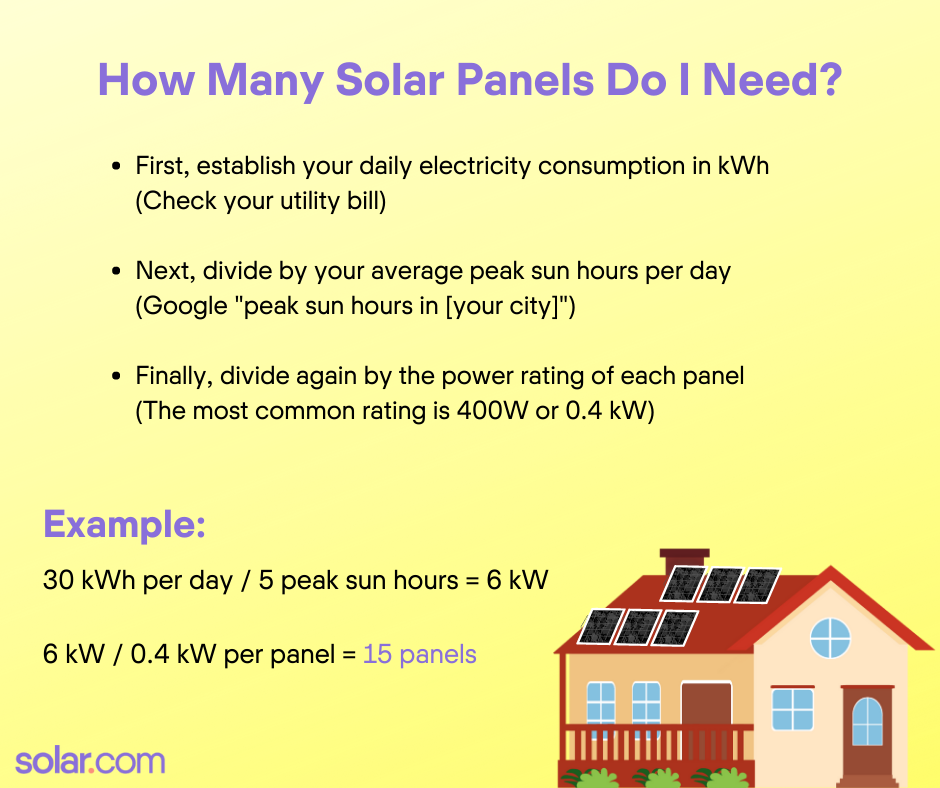
- Peak Sun Hours (PSH): This is a critical factor, representing the equivalent number of hours per day when solar irradiance averages 1000 watts per square meter (W/m²). This varies significantly by geographic location and time of year. For example, a location might average 5 PSH.
- System Loss Factor: Account for losses from wiring, temperature, inverter efficiency, and dust (typically 15-25%). Let’s use 20% (or a multiplier of 0.8).
Formula for Required Panel Output:
Total Daily kWh Required / (Peak Sun Hours * System Loss Factor) = Required DC Panel Output in Watts- Using our example:
20,000 Wh / (5 PSH * 0.8) = 20,000 Wh / 4 = 5,000 W - So, you’d need approximately 5 kW (5000 Watts) of DC panel capacity.
Step 3: Determine the Number of Solar Panels
Divide the total required DC panel output by the wattage of your chosen individual panels.
- If using 400W panels:
5000 W / 400 W/panel = 12.5 panels - You would round up to 13 panels to meet or exceed the requirement.
Step 4: Sizing the Inverter
The inverter’s job is to convert the DC power from the panels into AC power. Its size depends on the total DC wattage of your panels and your peak AC load.
- For Grid-Tied Systems: Inverter size is often matched closely to the DC panel capacity (e.g., a 5 kW panel array might use a 4.5 kW to 5 kW inverter). It can sometimes be slightly smaller than the DC array (DC-to-AC ratio less than 1) to optimize performance, as panels rarely operate at 100% capacity.
- For Off-Grid/Hybrid Systems: The inverter must also be capable of handling your peak AC load (the maximum instantaneous power you might draw from your appliances at once). If you simultaneously run a well pump (2000W), a refrigerator (500W), and a microwave (1200W), your inverter needs to handle at least 3700W (3.7 kW). It’s generally recommended to oversize the inverter slightly beyond your peak load.
Step 5: Sizing the Battery Bank (for Off-Grid or Backup Systems)
Battery sizing is crucial for systems needing energy storage. It’s based on your daily energy requirement and desired days of autonomy.
- Calculate Total Watt-hours (Wh) Needed:
Daily kWh * 1000 = Daily Wh(e.g., 20,000 Wh). - Account for Battery Inefficiency & DoD: Batteries aren’t 100% efficient, and you shouldn’t discharge them fully. Assume a battery efficiency of 85% and a maximum DoD (e.g., 80% for lithium-ion, 50% for lead-acid).
- Formula:
(Total Daily Wh / (Battery Efficiency * Max DoD)) * Days of Autonomy = Required Battery Capacity in Wh - Example (Lithium-ion, 80% DoD, 1 day autonomy):
(20,000 Wh / (0.85 * 0.80)) * 1 = (20,000 Wh / 0.68) * 1 = 29,412 Whor approximately 29.4 kWh. - This would then be translated into specific battery modules (e.g., if one module is 10 kWh, you’d need 3 modules).
System Architectures: Grid-Tied vs. Off-Grid vs. Hybrid
The desired functionality of your solar system heavily influences its design and the types of components needed.
Grid-Tied Systems: Simplicity and Synergy
These are the most common residential solar installations. They are connected to the utility grid and do not typically include batteries.
- Operation: When your panels produce more electricity than you consume, the excess is fed back into the grid, often earning you credits through net metering. When production is low (night, cloudy days), you draw power from the grid.
- Advantages: Lower initial cost (no batteries), minimal maintenance, reliable power supply (as long as the grid is up).
- Disadvantage: No power during grid outages (for safety, grid-tied inverters automatically shut down).
Off-Grid Systems: Ultimate Independence
Designed for complete self-sufficiency, these systems are not connected to the utility grid. Batteries are a non-negotiable component.
- Operation: All electricity comes from solar panels (and often a backup generator). Excess power charges the batteries for nighttime or cloudy periods.
- Advantages: Total energy independence, ideal for remote locations without grid access.
- Disadvantages: Higher initial cost (due to batteries and often a generator), more complex design and maintenance, requires careful sizing to prevent power shortages.
Hybrid Systems: The Best of Both Worlds
These systems combine the advantages of grid-tied and off-grid setups, offering grid connectivity with battery backup.
- Operation: Primarily grid-tied, but with batteries that store excess solar energy. In a grid outage, the system automatically switches to battery power.
- Advantages: Energy independence during outages, potential for peak shaving (using stored energy during expensive grid electricity times), increased self-consumption of solar power.
- Disadvantages: Higher cost than pure grid-tied systems (due to batteries and more sophisticated inverters), more complex installation.
Looking Ahead: Installation, Maintenance, and Technological Evolution
While the calculations provide the technical blueprint, the actual implementation and long-term performance depend on several practical considerations.
Professional Installation and Monitoring
Given the complexity and safety aspects of electrical systems, professional installation by certified technicians is highly recommended. They ensure proper wiring, adherence to codes, and optimal panel placement. Post-installation, monitoring systems (often app-based) allow you to track real-time production, consumption, and battery status, helping you identify and troubleshoot any issues promptly.
Ongoing Maintenance
Solar systems are generally low-maintenance, but periodic checks are beneficial. This includes cleaning panels (especially in dusty areas) to prevent efficiency loss, inspecting wiring for wear, and for battery-based systems, checking battery health.
The Future of Solar Technology
The solar industry is rapidly innovating. Panel efficiencies are constantly improving, battery technologies are becoming more affordable and powerful (e.g., solid-state batteries on the horizon), and smart energy management systems are integrating solar into broader home automation. Keeping an eye on these advancements can inform future upgrades or system expansions.
In conclusion, determining “how big of a solar system do I need” is a journey through your energy profile, a technical exploration of specialized components, and a meticulous calculation based on hard data. It’s an investment in a cleaner, more resilient energy future. By understanding your specific needs and the technologies available, you can design a solar system that is not just a collection of panels and wires, but a precisely engineered solution tailored to power your life efficiently and sustainably. Always consult with qualified solar professionals who can translate these technical principles into a robust, real-world system designed for your unique circumstances.
aViewFromTheCave is a participant in the Amazon Services LLC Associates Program, an affiliate advertising program designed to provide a means for sites to earn advertising fees by advertising and linking to Amazon.com. Amazon, the Amazon logo, AmazonSupply, and the AmazonSupply logo are trademarks of Amazon.com, Inc. or its affiliates. As an Amazon Associate we earn affiliate commissions from qualifying purchases.