
In the intricate world of finance, where numbers dictate value, growth, and loss, few concepts are as ubiquitous and fundamental as the percentage. Whether you’re a seasoned investor dissecting market returns, a small business owner calculating profit margins, or simply a consumer trying to understand a sale discount, grasping “what is a percentage of an amount” is not merely a mathematical exercise; it’s a critical skill for informed financial decision-making. This seemingly simple calculation unlocks a deeper understanding of monetary relationships, allowing individuals and businesses alike to quantify changes, compare values, and project future outcomes with greater clarity. Without this foundational knowledge, navigating personal budgets, investment opportunities, or even a grocery store flyer can become a bewildering challenge. This article will demystify percentages, exploring their definition, practical application in various financial contexts, and the profound impact they have on our everyday economic lives.
Understanding the Fundamentals of Percentages
Before delving into complex financial models, it’s essential to build a solid understanding of what a percentage truly represents. Far from being an abstract mathematical symbol, the percentage is a powerful tool for standardizing comparison and expressing proportions in a universally understood format.
Defining a Percentage: The “Per Cent” Concept
The word “percentage” originates from the Latin “per centum,” meaning “by the hundred” or “out of every hundred.” At its core, a percentage is simply a way of expressing a number as a fraction of 100. It’s a dimensionless number, used to denote a proportion or a share relative to a whole. The symbol “%” is universally used to indicate a percentage. For instance, 25% means 25 out of every 100. This standardization to a base of 100 makes comparing different quantities or changes incredibly intuitive, regardless of the absolute size of the original amounts. Whether we’re discussing the percentage of defective products in a batch of thousands or the percentage of income saved from a monthly salary, expressing these as a fraction of 100 provides an immediate, comparable metric.
Why Percentages Matter in Finance
In the financial realm, percentages are the lingua franca for expressing everything from growth rates to risk levels. They provide a standardized metric that allows for apples-to-apples comparisons across vastly different scales. For example, knowing that a stock increased by $5 isn’t as informative as knowing it increased by 10%. The percentage tells you the proportional change, which is crucial for assessing performance relative to the initial investment. Similarly, understanding interest rates on loans or savings accounts, calculating tax burdens, or analyzing profit margins all hinge on the ability to interpret and calculate percentages accurately. They allow financial professionals and laypersons alike to contextualize numerical information, making complex data digestible and actionable for strategic planning and everyday financial management.
Basic Components: Whole, Part, and Rate
To calculate or understand a percentage, it’s crucial to identify its three core components:
- The Whole (Base): This is the total amount, the original value, or the entire quantity from which a part is taken. For example, if you’re calculating a discount, the original price of the item is the whole. If you’re assessing an investment’s return, your initial investment amount is the whole.
- The Part: This is the portion, amount, or value that is being compared to the whole. It’s the specific quantity we are interested in expressing as a percentage. In a discount scenario, the amount of money saved is the part. In an investment return, the profit gained is the part.
- The Rate (Percentage): This is the fraction of the whole, expressed as “per hundred.” It’s the result of dividing the part by the whole and multiplying by 100. This rate tells us what proportion the part represents of the whole. Understanding these three components is the first step in mastering percentage calculations and their application in financial contexts.
The Practical Calculation: How to Find a Percentage of an Amount
Once the fundamental concepts are clear, the practical application of calculating percentages becomes straightforward. This section will walk through the core formula and illustrate its use with relevant financial examples.
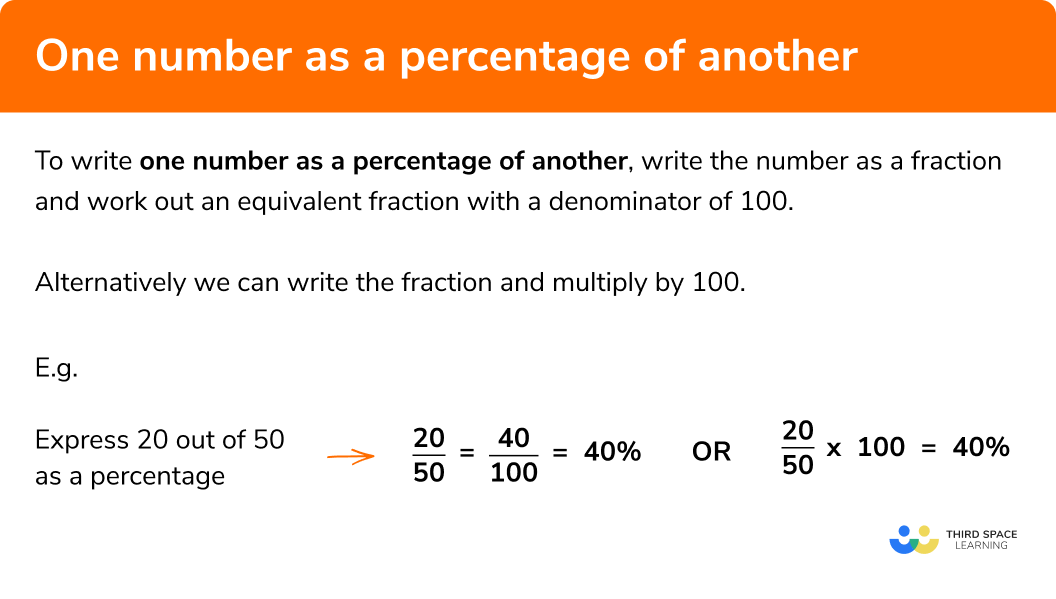
The Core Formula: Percentage = (Part/Whole) * 100
The most fundamental formula for calculating a percentage is elegantly simple:
Percentage (%) = (Part ÷ Whole) × 100
Let’s break this down:
- First, you divide the ‘Part’ by the ‘Whole’. This gives you a decimal representing the proportion of the part to the whole.
- Second, you multiply that decimal by 100. This converts the decimal proportion into a percentage, expressing it “per hundred.”
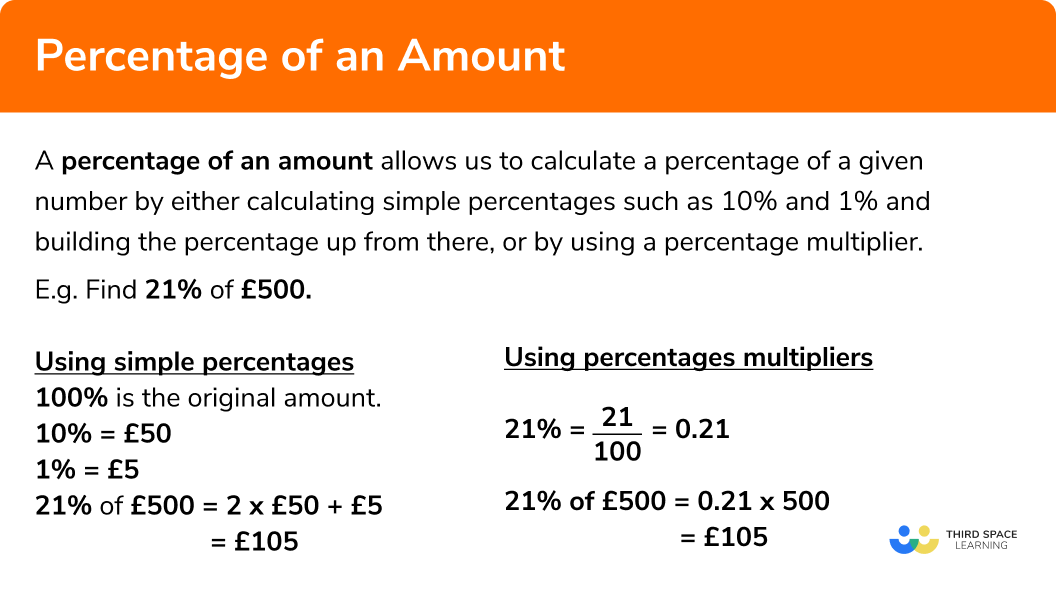
Conversely, if you know the percentage and the whole amount, and you want to find the part, you can rearrange the formula:
Part = (Percentage ÷ 100) × Whole
This inverse calculation is equally vital for scenarios like determining the discount amount given a percentage discount, or calculating the interest earned on an investment.
Step-by-Step Calculation Examples
Let’s apply these formulas to common financial situations:
-
Example 1: Calculating a Discount
- You see a shirt priced at $80, and it’s on sale for 25% off. What is the discount amount, and what is the final price?
- Here, the Whole = $80, and the Percentage = 25%. We want to find the Part (discount amount).
- Part = (25 ÷ 100) × $80 = 0.25 × $80 = $20.
- The discount amount is $20. The final price is $80 – $20 = $60.
-
Example 2: Calculating Sales Tax
- You buy an item for $150, and the sales tax rate is 7%. How much is the sales tax, and what is the total cost?
- Here, the Whole = $150, and the Percentage = 7%. We want to find the Part (tax amount).
- Part = (7 ÷ 100) × $150 = 0.07 × $150 = $10.50.
- The sales tax is $10.50. The total cost is $150 + $10.50 = $160.50.
-
Example 3: Determining an Investment Return
- You invested $5,000, and it grew to $5,350. What is your percentage return on investment?
- Here, the Whole = $5,000. The Part (gain) = $5,350 – $5,000 = $350. We want to find the Percentage.
- Percentage = ($350 ÷ $5,000) × 100 = 0.07 × 100 = 7%.
- Your investment return is 7%.
Using Decimals and Fractions for Easier Calculations
While the percentage symbol is common, converting percentages to decimals or fractions often simplifies calculations, especially when dealing with financial software or calculators.
- Converting Percentage to Decimal: Divide the percentage by 100.
- Example: 25% = 25 ÷ 100 = 0.25
- Example: 7% = 7 ÷ 100 = 0.07
Working with decimals (e.g., multiplying by 0.25 instead of 25%) is often more intuitive for calculating the ‘part’ of an ‘amount’.
- Converting Percentage to Fraction: Place the percentage over 100 and simplify.
- Example: 25% = 25/100 = 1/4
- Example: 50% = 50/100 = 1/2
Fractions can be useful for quick mental estimations or when dealing with common percentages. Understanding these conversions allows for flexibility and efficiency in various financial computations.
Common Financial Applications of Percentages
Percentages are not just theoretical constructs; they are the bedrock of everyday financial literacy and complex economic analysis. Their applications permeate every facet of the money world.
Discounts, Sales Tax, and Tips: Everyday Transactions
Perhaps the most common encounters with percentages occur in consumer transactions.
- Discounts: Sales are often advertised as a percentage off the original price (e.g., “20% off all items”). This directly impacts how much you save and ultimately pay. Understanding how to calculate these discounts quickly helps you evaluate deals and manage your spending.
- Sales Tax: Most purchases are subject to sales tax, expressed as a percentage of the item’s price. Accurately calculating this tax allows you to budget for the final cost and avoid surprises at the checkout.
- Tips: In many service industries, tipping is customary, typically calculated as a percentage (e.g., 15-20%) of the total bill. This requires a quick percentage calculation to ensure fair compensation for service providers.
Interest Rates: Loans, Savings, and Investments
Interest rates are arguably one of the most significant financial applications of percentages, influencing everything from personal debt to national economies.
- Loans (Mortgages, Car Loans, Credit Cards): The interest rate is the percentage of the principal loan amount that lenders charge for borrowing money. A higher interest rate means a higher cost of borrowing over time. Understanding how these percentages translate into actual dollar amounts is crucial for managing debt and evaluating loan offers.
- Savings Accounts and Bonds: Conversely, interest rates on savings accounts or bonds represent the percentage return you earn on your deposited or invested money. A higher interest rate means faster growth for your savings.
- Investments: Returns on investments (stocks, mutual funds, real estate) are frequently expressed as percentage gains or losses, allowing investors to compare the performance of different assets over various periods.
Financial Ratios and Performance Metrics
In business and corporate finance, percentages are indispensable for analyzing performance, assessing health, and making strategic decisions.
- Profit Margins: Companies use percentages to express various profit margins (gross profit margin, operating profit margin, net profit margin) as a percentage of revenue. These percentages indicate how efficiently a company converts sales into profit.
- Growth Rates: Whether it’s revenue growth, earnings growth, or customer acquisition rates, businesses track these metrics as percentages to understand their expansion and trajectory over time.
- Return on Investment (ROI): A critical metric, ROI is typically expressed as a percentage, indicating the profitability of an investment relative to its cost.
- Debt-to-Equity Ratio: This ratio, often expressed as a percentage, helps assess a company’s financial leverage and risk.
Understanding Inflation and Deflation
Macroeconomic concepts like inflation and deflation are also quantified using percentages.
- Inflation: The rate at which the general level of prices for goods and services is rising, and subsequently, purchasing power is falling. It’s expressed as a percentage change over a period (e.g., 3% annual inflation). Understanding inflation helps individuals and businesses make decisions about savings, investments, and pricing strategies to protect their wealth.
- Deflation: The opposite of inflation, where prices are falling. While seemingly good, persistent deflation can signal economic contraction and is also expressed as a percentage. These percentages directly impact the real value of money over time.
Beyond Basic Calculation: Advanced Insights and Common Pitfalls
While the basic calculation of a percentage of an amount is straightforward, the nuances and common misinterpretations in financial contexts can be complex. Understanding these helps in making more informed decisions.
Percentage Change vs. Percentage of an Amount
It’s crucial to distinguish between calculating a “percentage of an amount” and a “percentage change.”
- Percentage of an Amount: This is what we’ve primarily discussed – finding a part of a whole based on a given percentage (e.g., 20% of $100 is $20).
- Percentage Change: This measures the relative change between two values over time. The formula is:
((New Value - Old Value) / Old Value) * 100. For example, if a stock went from $100 to $120, the percentage change is(($120 - $100) / $100) * 100 = 20%. If it dropped from $100 to $80, it’s(($80 - $100) / $100) * 100 = -20%. This distinction is vital in finance, especially when analyzing investment performance or economic indicators.
Compounding Percentages: The Power of Growth
In finance, percentages rarely act in isolation over time. The concept of compounding is where percentages truly reveal their power.
- Compound Interest: This is interest earned not only on the initial principal but also on the accumulated interest from previous periods. If you earn 5% interest annually on $1,000, in year one you get $50. In year two, you earn 5% on $1,050, not just the original $1,000. This exponential growth (or decay in the case of compound debt) is a cornerstone of long-term investing and debt management. Understanding the power of compounding percentages is key to building wealth and avoiding financial traps.
Avoiding Misinterpretations: Context is Key
Percentages can be easily manipulated or misunderstood without proper context.
- Base Value Matters: A “20% increase” sounds impressive, but if the base amount was very small, the absolute increase might be insignificant. Conversely, a small percentage change on a very large base can represent a massive absolute change. Always question what the percentage is of.
- Successive Percentage Changes: A common trap is assuming that a 10% increase followed by a 10% decrease results in the original amount. It does not. If an item costs $100, a 10% increase makes it $110. A 10% decrease from $110 is $11, bringing the price down to $99. This demonstrates why careful calculation and contextual understanding are vital.
- Relative vs. Absolute Risk: A small percentage chance of a catastrophic event might still be an unacceptable risk. Similarly, a high percentage return on a very small investment may not be enough to achieve financial goals. Always consider both the percentage and the absolute numbers it represents.
Leveraging Financial Tools for Percentage Calculations
While understanding the manual calculation of percentages is essential, modern financial life is greatly aided by tools that automate and simplify these computations, enhancing accuracy and efficiency.
Spreadsheets and Online Calculators
For most individuals and small businesses, spreadsheet software like Microsoft Excel or Google Sheets are invaluable. They offer:
- Built-in Functions: Spreadsheets have functions specifically designed for percentage calculations. For example, to find 25% of a number in cell A1, you’d simply type
=0.25*A1or=(25/100)*A1. - Automation: They allow you to create templates for budgeting, expense tracking, or investment analysis, where percentage calculations update automatically as you enter new data. This is particularly useful for complex scenarios involving multiple percentage operations, such as calculating total interest paid over a loan’s lifetime or projecting compounded investment growth.
- Online Calculators: Numerous free online percentage calculators are available for quick, specific tasks like calculating tips, discounts, sales tax, or simple interest. These are ideal for on-the-go calculations without needing to set up a spreadsheet.
Financial Software and Apps
Beyond basic spreadsheets, dedicated financial software and mobile applications provide sophisticated percentage-based analytics:
- Budgeting Apps: Many personal finance apps automatically categorize spending and display it as percentages of your total income or budget categories, giving you immediate visual feedback on where your money goes.
- Investment Platforms: Brokerage accounts and investment tracking apps show portfolio performance, individual stock gains/losses, and asset allocation all expressed in percentages, facilitating performance comparison and rebalancing decisions.
- Business Accounting Software: Tools like QuickBooks or Xero generate financial statements that include percentage-based metrics (e.g., gross profit margin, operating expenses as a percentage of revenue), essential for business performance analysis and strategic planning. These applications often provide dashboards that present key financial health indicators in easily digestible percentage formats, allowing quick insights into a business’s operational efficiency and profitability trends.

The Importance of Mental Math and Estimation
Despite the prevalence of digital tools, developing a knack for mental math and estimation with percentages remains a valuable skill.
- Quick Approximations: Being able to quickly estimate 10%, 20%, or even 50% of an amount can help you make snap decisions, like checking if a discount is truly significant or if a tip is reasonable, without pulling out a calculator.
- Spotting Errors: If you calculate a 30% discount on a $50 item and the calculator shows a $35 discount, your mental estimate (30% of $50 is $15) immediately tells you something is wrong.
- Enhanced Financial Literacy: The ability to mentally process percentages strengthens overall financial literacy, making you more confident and capable in understanding financial news, evaluating offers, and managing your money effectively. It provides an intuitive feel for numbers that tools alone cannot replicate, fostering a deeper engagement with your financial landscape.
In conclusion, understanding “what is a percentage of an amount” is far more than an academic exercise. It is a vital tool that underpins virtually every financial transaction and decision. From calculating everyday discounts and taxes to comprehending complex interest rates, investment returns, and economic indicators like inflation, percentages provide the standardized language needed to navigate the monetary world. By mastering their calculation, recognizing their diverse applications, and leveraging available financial tools, individuals and businesses can gain greater control, make more informed choices, and ultimately achieve their financial goals with clarity and confidence.
aViewFromTheCave is a participant in the Amazon Services LLC Associates Program, an affiliate advertising program designed to provide a means for sites to earn advertising fees by advertising and linking to Amazon.com. Amazon, the Amazon logo, AmazonSupply, and the AmazonSupply logo are trademarks of Amazon.com, Inc. or its affiliates. As an Amazon Associate we earn affiliate commissions from qualifying purchases.