
In the dynamic world of finance, understanding growth and change is paramount. Whether you’re tracking the performance of your investments, analyzing business profits, or monitoring changes in your personal income, the ability to accurately calculate a percentage increase is an indispensable skill. It provides a clear, relative measure of growth, offering far more insight than a simple numerical difference alone. A mere $100 increase might seem negligible on a $10,000 portfolio but significant on a $500 side hustle. Percentage increase contextualizes this growth, transforming raw data into actionable financial intelligence.
This guide will demystify the process of calculating percentage increase, demonstrating its fundamental formula and illustrating its diverse applications across personal and business finance. By mastering this simple yet powerful calculation, you will gain a deeper understanding of financial trends, enabling more informed decision-making and a clearer path towards your monetary goals.
The Foundational Concept: Understanding Financial Growth
At its core, percentage increase quantifies how much a value has grown in relation to its original state. It provides a standardized metric that allows for comparison across different scales, making it an essential tool for financial analysis where context is everything. Without this relative measure, comparing the growth of disparate financial entities – a small personal savings account versus a large corporate fund – would be inherently misleading.
Defining Percentage Increase in Financial Terms
In finance, a percentage increase represents the proportional rise in a financial metric over a specified period or between two distinct points. It’s not just about the absolute dollar amount gained; it’s about the magnitude of that gain relative to the starting point. For instance, a stock increasing from $10 to $15 has grown by 50%, while a stock increasing from $100 to $105 has only grown by 5%. Both had a $5 absolute increase, but their percentage increases tell very different stories about their respective performances. This relative understanding is crucial for assessing risk, return, and overall financial health.
Why Simple Subtraction Isn’t Enough for Financial Analysis
While simple subtraction tells you the absolute difference between two numbers, it fails to provide the critical context needed for financial evaluation. Knowing that your investment portfolio increased by $5,000 is useful, but without knowing the initial investment amount, you cannot truly gauge its success. Was it $5,000 on a $10,000 initial investment (a 50% increase) or $5,000 on a $1,000,000 investment (a 0.5% increase)? The percentage increase reveals the efficiency and scale of the growth, which is vital for making sound financial decisions, comparing investment vehicles, or evaluating business strategies.
The Fundamental Formula: (New Value – Old Value) / Old Value × 100%
The calculation for percentage increase is straightforward and universally applied in financial contexts:
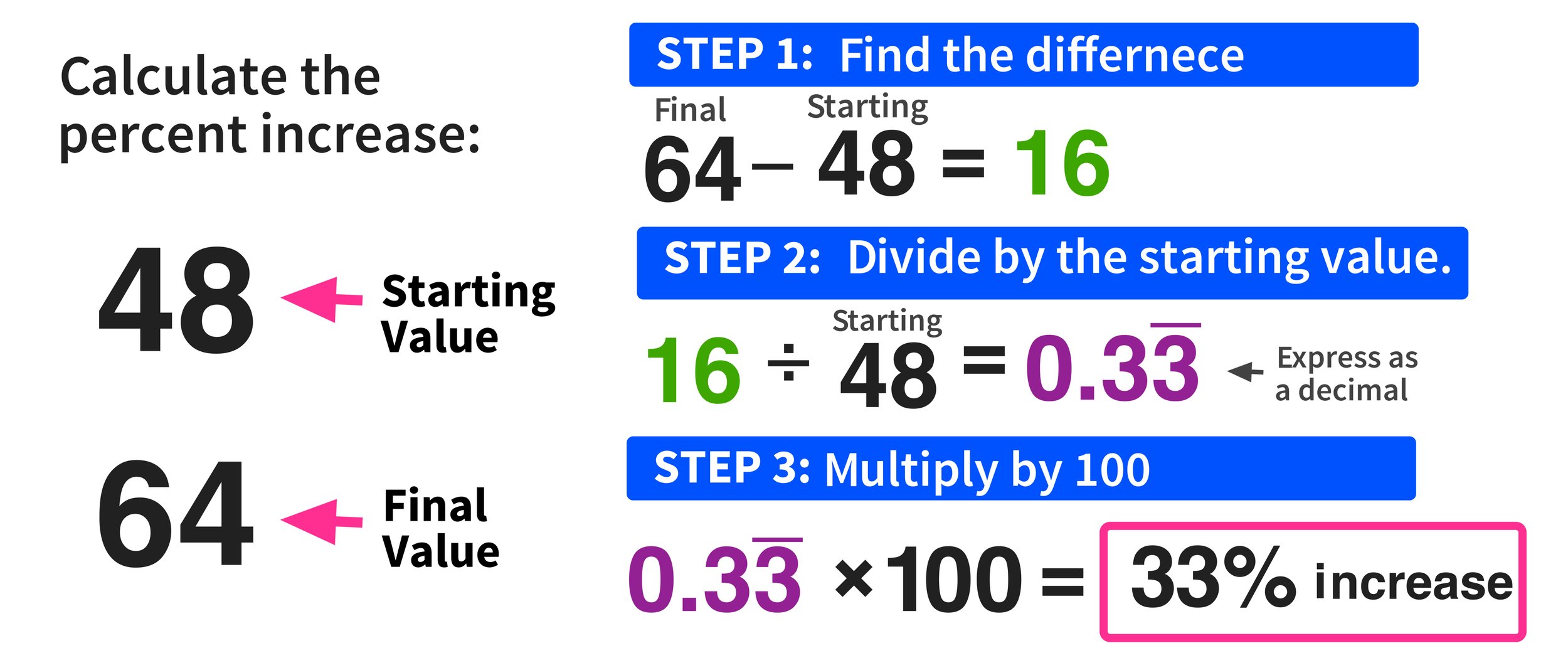
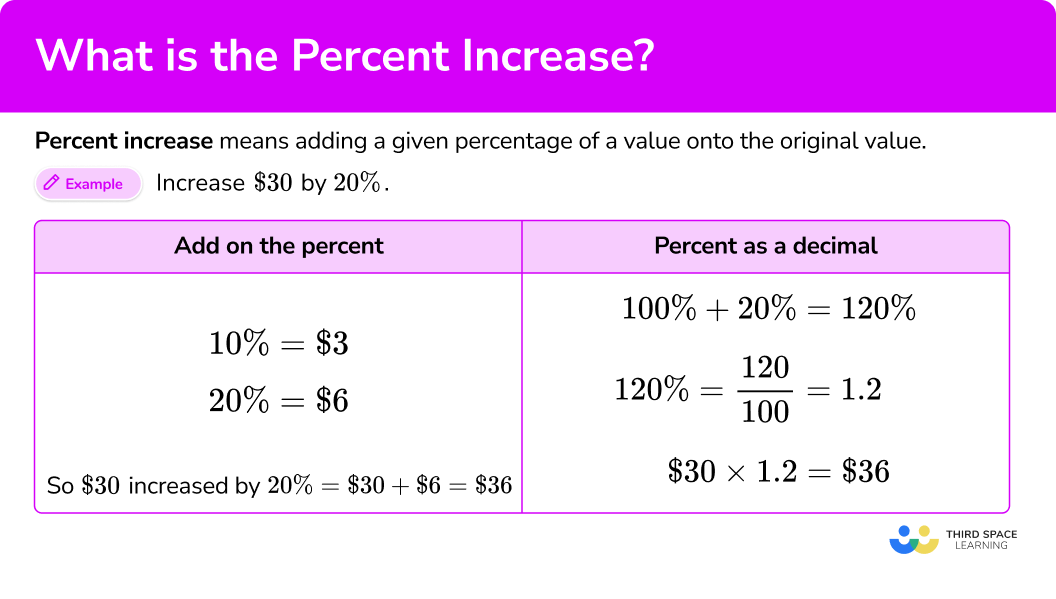
Percentage Increase = ((New Value – Old Value) / Old Value) × 100%
Let’s break down the components:
- New Value: The most recent or final financial figure.
- Old Value: The initial or starting financial figure.
- Difference (New Value – Old Value): This is the absolute amount of increase.
- Divide by Old Value: This step normalizes the increase by expressing it as a fraction of the original amount.
- Multiply by 100%: This converts the fractional result into a percentage, making it easily interpretable.
For example, if your business revenue grew from $50,000 (Old Value) to $65,000 (New Value):
Percentage Increase = (($65,000 – $50,000) / $50,000) × 100%
Percentage Increase = ($15,000 / $50,000) × 100%
Percentage Increase = 0.3 × 100% = 30%
This formula is the bedrock for countless financial analyses, from personal budgeting to corporate financial reporting.
Practical Applications in Personal Finance
For individuals, understanding percentage increase is a cornerstone of effective personal finance management. It empowers you to track progress, evaluate opportunities, and make astute decisions about your money. From savings goals to retirement planning, this calculation provides a clear lens through which to view your financial journey.
Tracking Investment Growth and Portfolio Performance
One of the most common and crucial applications of percentage increase in personal finance is assessing investment performance. Whether you’re invested in stocks, mutual funds, real estate, or cryptocurrencies, knowing the percentage growth of your assets is essential. It allows you to compare the returns of different investments over similar periods, helping you determine which strategies are most effective. For instance, if one stock grew by 15% and another by 8% over the same year, the 15% growth is clearly superior, regardless of the initial investment amounts. This comparison is vital for optimizing your portfolio and rebalancing your assets to achieve your financial objectives.
Analyzing Salary and Income Increases
Negotiating a pay raise or evaluating a job offer often hinges on understanding percentage increases. If your current salary is $60,000 and you’re offered a new position at $66,000, that’s a 10% increase. Conversely, if you receive a $3,000 raise, calculating it as a percentage of your current $50,000 salary (6%) provides a clearer perspective than just the raw dollar amount. This insight helps you assess your earning potential, benchmark your compensation against industry standards, and plan for future financial goals, such as buying a home or saving for retirement.
Monitoring Expense Changes and Budgeting Effectively
Percentage increase isn’t just for gains; it’s also vital for understanding increases in your expenditures. Tracking how much your housing costs, groceries, or transportation expenses have increased as a percentage helps you identify areas where your budget might be strained. For example, if your monthly grocery bill went from $400 to $480, that’s a 20% increase – a significant jump that warrants investigation and potential adjustments to your spending habits. By monitoring these percentage changes, you can adapt your budget proactively, ensuring you stay on track with your financial plan and avoid unexpected shortfalls.
Understanding Inflation’s Impact on Purchasing Power
Inflation is the rate at which the general level of prices for goods and services is rising, and subsequently, the purchasing power of currency is falling. Understanding inflation is fundamentally about percentage increase. When you hear that inflation is at 3%, it means that, on average, the cost of goods and services has increased by 3% over a year. This directly impacts the real value of your savings and income. Calculating the percentage increase in your living costs versus your income rise allows you to determine if your purchasing power is growing, stagnating, or declining, which is critical for long-term financial planning and maintaining your standard of living.
Business Finance and Strategic Decision-Making
For businesses, percentage increase is an indispensable metric for evaluating performance, setting strategic goals, and communicating financial health to stakeholders. It provides a standardized language for growth and efficiency, enabling comparisons across different periods, departments, and even competitors.
Evaluating Revenue and Profit Growth

In business, tracking the percentage increase in revenue and profit is paramount. A 15% increase in quarterly revenue indicates strong sales performance, while a 5% increase in net profit margin suggests improved operational efficiency. These percentage figures allow business leaders to assess the effectiveness of their strategies, identify trends, and make informed decisions about resource allocation, marketing campaigns, and product development. A company might see an absolute increase in profit, but if its percentage growth lags behind its competitors or market average, it could signal underlying issues that need addressing.
Assessing Market Share Expansion
Companies constantly strive to grow their market share. Calculating the percentage increase in market share from one period to the next provides a clear indicator of competitive success. For example, if a company’s market share grew from 10% to 12%, that represents a 20% increase in its share of the market ( (12-10)/10 * 100% ). This metric is crucial for understanding a company’s position within its industry, evaluating the impact of strategic initiatives, and forecasting future competitive landscapes. It helps businesses understand if their growth is outpacing, matching, or falling behind the overall market expansion.
Measuring Operational Efficiency Improvements
Beyond top-line revenue and bottom-line profit, percentage increase can be used to gauge improvements in operational efficiency. For instance, a reduction in manufacturing waste by 10% or an increase in production output per employee by 8% are critical indicators of operational excellence. These percentage improvements can lead to significant cost savings and enhanced productivity, directly impacting a company’s profitability. Managers use these figures to justify investments in new technology, process improvements, or employee training programs, demonstrating the tangible benefits of these initiatives.
Projecting Future Growth and Financial Forecasting
Financial forecasting heavily relies on understanding historical percentage increases. By analyzing past growth rates in sales, expenses, or market trends, businesses can project future performance with greater accuracy. If a company has consistently achieved an average annual revenue growth of 7% over the past five years, this percentage becomes a key input for future revenue projections. This helps in budgeting, strategic planning, and setting realistic growth targets. While historical performance is not a guarantee of future results, percentage increases provide a robust foundation for building reliable financial models and guiding long-term business strategy.
Common Pitfalls and Nuances in Financial Calculations
While the percentage increase formula is straightforward, its application in finance comes with nuances that, if overlooked, can lead to misinterpretations or flawed conclusions. Being aware of these common pitfalls ensures more accurate and insightful financial analysis.
The Base Value Matters: Avoiding Misinterpretations
The “Old Value” or base figure is critical in percentage increase calculations. A small absolute increase on a very small base value will result in a dramatically high percentage increase, which can be misleading if not put into context. Conversely, a large absolute increase on a massive base value might yield a modest percentage. For example, a $100 profit increase from $10 to $110 is a 1000% increase, while a $100 profit increase from $1,000,000 to $1,000,100 is a mere 0.01% increase. Always consider the absolute numbers alongside the percentage to get a complete picture, especially when comparing vastly different scales.
Dealing with Negative Numbers and Decreases
The standard percentage increase formula is designed for positive growth. When dealing with decreases, a slightly modified approach or interpreting the result as a “percentage decrease” is more appropriate. If a value drops from $100 to $80, the percentage decrease is (($100 – $80) / $100) × 100% = 20%. Attempting to calculate a “percentage increase” when the New Value is less than the Old Value will result in a negative percentage, which correctly indicates a decrease but can be confusing if the terminology isn’t consistent. Understanding how to handle both scenarios ensures clarity in financial reporting.
Annualized vs. Absolute Increases
It’s important to distinguish between an absolute percentage increase over a specific, potentially short, period and an annualized percentage increase. A stock that gains 2% in one month might seem small, but if that trend were to continue consistently, its annualized return would be significantly higher (e.g., compounding for 12 months). Conversely, a stock that jumps 20% in one day due to a specific event might not maintain that rate over a year. Annualizing returns provides a standardized way to compare investment performance over different timeframes, offering a more realistic picture of long-term growth potential.
The Impact of Compounding on Growth
In finance, especially with investments, compounding significantly influences the true growth over time. Percentage increase often refers to simple, period-over-period growth. However, when returns are reinvested, the base value for subsequent periods grows, leading to exponential growth. While the basic percentage increase formula calculates the change for one period, understanding its role within a compounding framework (where “New Value” becomes the “Old Value” for the next calculation) is crucial for appreciating the power of long-term investment strategies. This is how small, consistent percentage increases can lead to substantial wealth accumulation.
Leveraging Financial Tools for Efficient Calculation
While the formula for percentage increase is simple enough for manual calculation, modern financial analysis benefits immensely from leveraging digital tools. These tools not only speed up the process but also reduce the risk of errors and facilitate more complex analyses, especially when dealing with large datasets or recurring calculations.
Spreadsheet Software (Excel, Google Sheets) for Automation
Spreadsheet software like Microsoft Excel or Google Sheets are indispensable for financial professionals and individuals alike. They allow you to input your Old Value and New Value into cells and then use a simple formula to automatically calculate the percentage increase. For example, if your Old Value is in cell A1 and your New Value is in B1, the formula =((B1-A1)/A1)*100 will instantly give you the percentage increase. This capability is particularly powerful when tracking multiple items over time, as you can drag the formula down a column to apply it to hundreds of data points, creating dynamic financial reports and dashboards with ease.
Online Calculators and Financial Apps
For quick, one-off calculations or for those less familiar with spreadsheets, numerous online calculators and financial apps offer a user-friendly way to find the percentage increase. Websites dedicated to personal finance, investment platforms, and even basic search engine functions often include these tools. You simply input the two numbers, and the calculator provides the result. Many financial apps designed for budgeting, investing, or business management also integrate percentage change calculations directly into their reporting features, making it effortless to see growth rates on your income, expenses, or portfolio performance without manual input.
Programming for Complex Financial Modeling
For advanced financial analysts, quantitative traders, or business intelligence professionals, programming languages like Python with libraries such as Pandas and NumPy offer the ultimate flexibility and power for calculating percentage increases within complex models. Programmatic approaches allow for automated data ingestion from various sources, batch processing of thousands of calculations, and integration into sophisticated forecasting and simulation models. This level of automation is crucial for large-scale financial operations, algorithmic trading, and in-depth economic analysis where efficiency and precision are paramount. While beyond basic needs, it highlights the scalability of the percentage increase concept.
Conclusion
The ability to accurately calculate the percentage increase between two numbers is far more than a simple mathematical exercise; it is a fundamental skill that underpins sound financial literacy and effective decision-making across personal and business domains. From evaluating the growth of your investments and the rise in your income to scrutinizing business performance and understanding economic inflation, this formula transforms raw data into meaningful insights.
By grasping the core concept, understanding its diverse applications, and recognizing the nuances involved, you empower yourself to navigate the complexities of the financial world with greater confidence. Whether you rely on simple manual calculations, efficient spreadsheet formulas, or advanced programming techniques, mastering the percentage increase is an invaluable asset. It allows you to track progress, identify trends, and make strategic choices that contribute to your financial well-being and success. Embrace this powerful tool, and unlock a clearer, more informed perspective on your financial journey.
aViewFromTheCave is a participant in the Amazon Services LLC Associates Program, an affiliate advertising program designed to provide a means for sites to earn advertising fees by advertising and linking to Amazon.com. Amazon, the Amazon logo, AmazonSupply, and the AmazonSupply logo are trademarks of Amazon.com, Inc. or its affiliates. As an Amazon Associate we earn affiliate commissions from qualifying purchases.