
In an increasingly data-driven world, the ability to understand and calculate percentages is not merely a mathematical exercise; it is a cornerstone of financial literacy. From navigating personal budgets and investment portfolios to analyzing business performance and economic trends, percentages provide a universal language for comparison, growth, and decline. For anyone striving for financial mastery – whether managing household expenses, launching an online venture, or making strategic investment decisions – accurately finding a percentage of an amount is an indispensable skill. It empowers you to make informed decisions, identify opportunities, and mitigate risks in a way that raw numbers alone cannot. This guide will demystify the process, grounding each step in practical financial applications, so you can leverage this powerful tool across all facets of your financial life.
The Fundamental Math: Unlocking Financial Insights
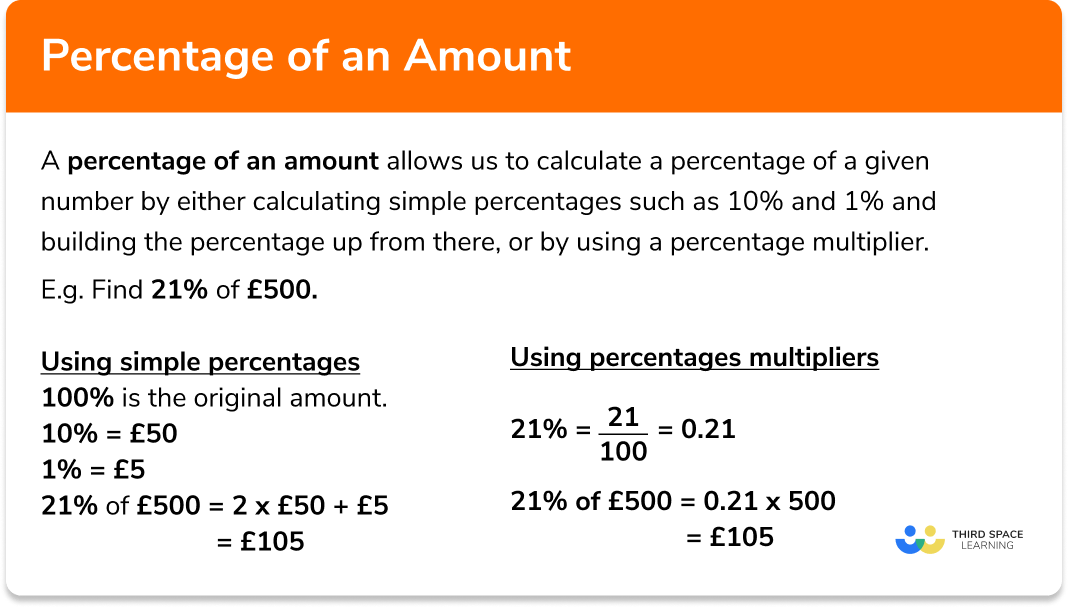
At its core, a percentage represents a part of a whole, expressed as a fraction of 100. The term “percent” literally means “per hundred.” This simple concept is profoundly powerful in finance because it allows for easy comparison between different amounts, scales, and timeframes, making complex financial data digestible and actionable. Understanding the basic formula is the first step towards transforming raw financial figures into meaningful insights.
Deciphering the Percentage Formula
The most common scenario involves finding a specific percentage of a given amount. For example, if you want to know what 15% of $200 is, you’re looking for a part of that $200. The formula is straightforward:
Percentage of Amount = (Percentage / 100) × Whole Amount
Let’s break it down:
- Percentage: The rate you’re interested in (e.g., 15, 20, 5).
- Whole Amount: The total value from which you’re calculating the percentage (e.g., $200, 500 units, 1,000 employees).
Example in Personal Finance: Imagine you’re buying a new gadget, and it’s advertised at $800 with a 20% discount. To find the discount amount:
Discount Amount = (20 / 100) × $800
Discount Amount = 0.20 × $800
Discount Amount = $160
So, the discount is $160, and the final price would be $800 – $160 = $640. This quick calculation helps you verify the final price and ensures you’re getting the advertised deal.
The Power of Proportions in Finance
Beyond finding a percentage of an amount, you’ll often need to determine what percentage one amount is of another. This is crucial for calculating profit margins, return on investment (ROI), expense ratios, and countless other financial metrics. Here, the formula is slightly different:
Percentage = (Part / Whole) × 100
Example in Business Finance: Suppose your small online business generated $15,000 in revenue last month, and your total operating expenses were $4,500. To find out what percentage your expenses are of your revenue:
Expense Percentage = ($4,500 / $15,000) × 100
Expense Percentage = 0.30 × 100
Expense Percentage = 30%
This tells you that 30% of your revenue is consumed by expenses. This proportion is a vital indicator of your business’s efficiency and helps identify areas for cost reduction. Similarly, if your profit was $10,500, your profit margin would be ($10,500 / $15,000) × 100 = 70%. Understanding these proportions is key to gauging financial health and setting strategic goals.
Everyday Applications: Personal Finance Made Easy
The practical utility of percentage calculations in daily financial management cannot be overstated. From smart shopping to managing debt and saving for the future, percentages empower individuals to take control of their money.
Navigating Sales and Discounts Smartly
One of the most immediate applications of percentages is in consumer spending. Sales, discounts, and rebates are ubiquitous, and being able to quickly calculate the true price or savings is a critical skill for a savvy shopper.
Example: You see an item marked down by 35% from its original price of $120.
Discount amount = (35 / 100) × $120 = 0.35 × $120 = $42.
Final price = $120 – $42 = $78.
However, sometimes a store might offer “an additional 10% off the sale price.” This requires calculating percentages sequentially. If the $120 item is first discounted by 35% to $78, and then an additional 10% is applied:
Second discount amount = (10 / 100) × $78 = 0.10 × $78 = $7.80.
Final price = $78 – $7.80 = $70.20.
Understanding how to calculate these multi-layered discounts ensures you’re making the most informed purchasing decisions and truly grasping the value proposition.
Budgeting for Success: Tracking Spending Percentages
Effective personal budgeting relies heavily on percentages. By allocating percentages of your income to different categories (housing, food, savings, entertainment), you gain a clearer picture of your spending habits and can adjust them to align with your financial goals. Popular budgeting rules, like the 50/30/20 rule (50% for needs, 30% for wants, 20% for savings and debt repayment), are built entirely on this principle.
Example: If your net monthly income is $4,000, and you follow the 50/30/20 rule:
- Needs (50%): 0.50 × $4,000 = $2,000
- Wants (30%): 0.30 × $4,000 = $1,200
- Savings/Debt (20%): 0.20 × $4,000 = $800
Regularly calculating what percentage of your income goes to each category helps you identify areas of overspending or under-saving. If your housing costs are 40% of your income, you might realize you’re exceeding your desired allocation and need to adjust.
Understanding Interest Rates on Loans and Savings
Interest rates, whether on loans, credit cards, or savings accounts, are fundamentally expressed as percentages. Knowing how to apply these percentages is crucial for understanding the true cost of borrowing or the potential growth of your savings.
Example: Loan Interest: You take out a $10,000 personal loan with a 7% annual interest rate. To find the interest accrued in the first year:
Annual Interest = (7 / 100) × $10,000 = 0.07 × $10,000 = $700.
Example: Savings Growth: You have $5,000 in a savings account earning 2.5% annual interest.
Interest earned in one year = (2.5 / 100) × $5,000 = 0.025 × $5,000 = $125.
Your new balance would be $5,000 + $125 = $5,125.
These calculations, especially when compounded over time, reveal the significant impact of interest rates on your financial future, emphasizing the importance of securing low rates for debt and high rates for savings.
Strategic Finance: Business, Investing, and Growth
Beyond personal finance, percentages are the backbone of strategic financial analysis for businesses, investors, and entrepreneurs. They allow for the assessment of profitability, efficiency, and market share, guiding critical decisions.

Calculating Profit Margins and Business Health
For any business, understanding profit margins is paramount. Gross profit margin, operating profit margin, and net profit margin are all expressed as percentages and provide different views of a company’s financial health.
Gross Profit Margin: Measures the percentage of revenue left after deducting the cost of goods sold (COGS).
Formula: (Gross Profit / Revenue) × 100
Example: A company has $500,000 in revenue and $200,000 in COGS.
Gross Profit = $500,000 – $200,000 = $300,000.
Gross Profit Margin = ($300,000 / $500,000) × 100 = 60%.
This indicates how efficiently a business produces its goods or services. A declining gross margin could signal rising production costs or pricing issues.
Evaluating Investment Returns (ROI)
Investors use percentages extensively to measure the performance of their investments. Return on Investment (ROI) is a fundamental metric that quantifies the gain or loss generated on an investment relative to its initial cost.
Formula: ((Current Value of Investment – Original Cost of Investment) / Original Cost of Investment) × 100
Example: You invest $1,000 in a stock, and it grows to $1,250.
ROI = (($1,250 – $1,000) / $1,000) × 100
ROI = ($250 / $1,000) × 100
ROI = 0.25 × 100 = 25%.
Conversely, if the investment value dropped to $800, the ROI would be (($800 – $1,000) / $1,000) × 100 = -20%. ROI provides a clear, comparable metric to assess the success of different investment opportunities, helping you allocate capital more effectively.
Analyzing Financial Growth and Decline
Businesses and economies are constantly in flux, and percentages are the ideal tool for quantifying growth or decline over time. Whether it’s sales growth, market share changes, or GDP fluctuations, percentages offer a standardized way to measure change.
Percentage Change = ((New Value – Old Value) / Old Value) × 100
Example: Sales Growth: Your online store’s sales grew from $10,000 in Q1 to $13,000 in Q2.
Percentage Growth = (($13,000 – $10,000) / $10,000) × 100
Percentage Growth = ($3,000 / $10,000) × 100
Percentage Growth = 0.30 × 100 = 30%.
This tells you your sales increased by 30%. If sales dropped from $13,000 to $10,000, it would be a 23.08% decline (calculation: (($10,000 – $13,000) / $13,000) * 100 = -23.08%). Regularly tracking these percentages helps identify trends, evaluate the effectiveness of strategies, and forecast future performance.
Leveraging Tools: Efficiency in Financial Calculations
While manual calculations are fundamental for understanding, leveraging technology can significantly enhance accuracy and efficiency, especially when dealing with complex datasets or repetitive tasks in finance.
Mastering Spreadsheets for Financial Analysis
Spreadsheet software like Microsoft Excel or Google Sheets are indispensable tools for financial professionals and individuals alike. They automate percentage calculations, allowing you to build dynamic financial models, budgets, and investment trackers.
Basic Percentage Calculation in Excel:
- To find 20% of $500: In a cell, type
=0.20*500or=20/100*500. - To find what percentage $150 is of $600: In a cell, type
=150/600and then format the cell as a percentage. Excel will display25%. - To calculate percentage change: If Q1 sales are in cell A1 and Q2 sales in A2, the formula for growth is
=(A2-A1)/A1. Format as percentage.
The power of spreadsheets lies in their ability to handle large datasets, perform calculations instantly across multiple cells, and update results automatically when input values change. This is invaluable for scenario planning, complex budgeting, and managing extensive investment portfolios.
Quick Calculations with Online Financial Tools
For on-the-go calculations or specific financial scenarios, a plethora of online calculators and mobile apps are available. These tools are designed to quickly compute everything from mortgage payments with interest, compound interest on savings, loan amortization schedules, to detailed investment returns.
- Mortgage Calculators: Input loan amount, interest rate, and term to see monthly payments and total interest paid.
- Compound Interest Calculators: Project the growth of your investments over time, factoring in regular contributions and interest rates.
- Discount Calculators: Quickly find the final price of an item after a discount.
While these tools are convenient, it’s crucial to understand the underlying percentage principles they employ. This foundational knowledge ensures you can verify the results, understand the assumptions being made, and apply the logic to situations where a specific tool might not be available.
Avoiding Pitfalls: Precision in Your Financial Figures
Even with a solid understanding of the formulas and access to tools, common mistakes can lead to inaccurate financial figures and potentially poor decisions. Being mindful of these pitfalls ensures the integrity of your percentage calculations.
The Peril of Rounding Errors
Rounding too early or too aggressively can significantly skew financial results, especially in long-term calculations like compound interest or when dealing with large sums.
Example: If an annual interest rate is 2.753%, rounding it to 2.8% for a loan of $100,000 over 30 years might seem minor, but it can alter the total interest paid by hundreds or even thousands of dollars. Always carry calculations to sufficient decimal places and only round the final result, or let your spreadsheet software handle the precision.
Ensuring Your Base Amount is Correct
The “whole amount” or “original cost” used in percentage calculations is called the base. A common error is using the wrong base, leading to wildly inaccurate percentages.
Example: When calculating profit margin, ensure you’re dividing by total revenue, not just the profit itself. When calculating percentage change, always divide by the original (old) value, not the new value. Misidentifying the base can invert the meaning of your results or make them incomparable to industry standards. For instance, a 10% increase from $100 to $110 is correct; if you incorrectly divide by $110, you’d get a different, wrong percentage.

The Importance of Context in Percentage Interpretation
Percentages are powerful, but they must always be interpreted within their proper context. A large percentage increase might seem impressive, but it means little if the base amount was tiny.
Example: An online store reports a “100% sales increase” for a new product. While this sounds phenomenal, if sales only went from $5 to $10, the absolute impact on overall revenue is negligible. Conversely, a 5% increase on a multi-million dollar portfolio is a substantial gain. Always consider the absolute numbers alongside the percentages to gain a complete and accurate financial picture. Similarly, remember that percentages don’t always add up directly. An item discounted by 20% and then an additional 10% is not a total 30% discount; it’s 28%, as shown in a previous example.
By mastering the fundamentals, applying them diligently to real-world financial scenarios, and leveraging available tools while remaining vigilant about common errors, you can transform your understanding of percentages from a mere mathematical concept into a vital instrument for achieving financial success and making astute decisions in an increasingly complex economic landscape.
aViewFromTheCave is a participant in the Amazon Services LLC Associates Program, an affiliate advertising program designed to provide a means for sites to earn advertising fees by advertising and linking to Amazon.com. Amazon, the Amazon logo, AmazonSupply, and the AmazonSupply logo are trademarks of Amazon.com, Inc. or its affiliates. As an Amazon Associate we earn affiliate commissions from qualifying purchases.