
In the intricate world of personal finance, business operations, and investment strategies, understanding how to quantify change is paramount. One of the most common and crucial calculations is determining a reduction in percentage. From spotting the best deals during a sale to analyzing a dip in investment value or managing budget cuts, this skill provides clarity and empowers informed decisions. Far more than just a mathematical exercise, mastering percentage reduction is a fundamental pillar of financial literacy, enabling individuals and businesses alike to interpret data, evaluate opportunities, and navigate economic shifts with greater precision.
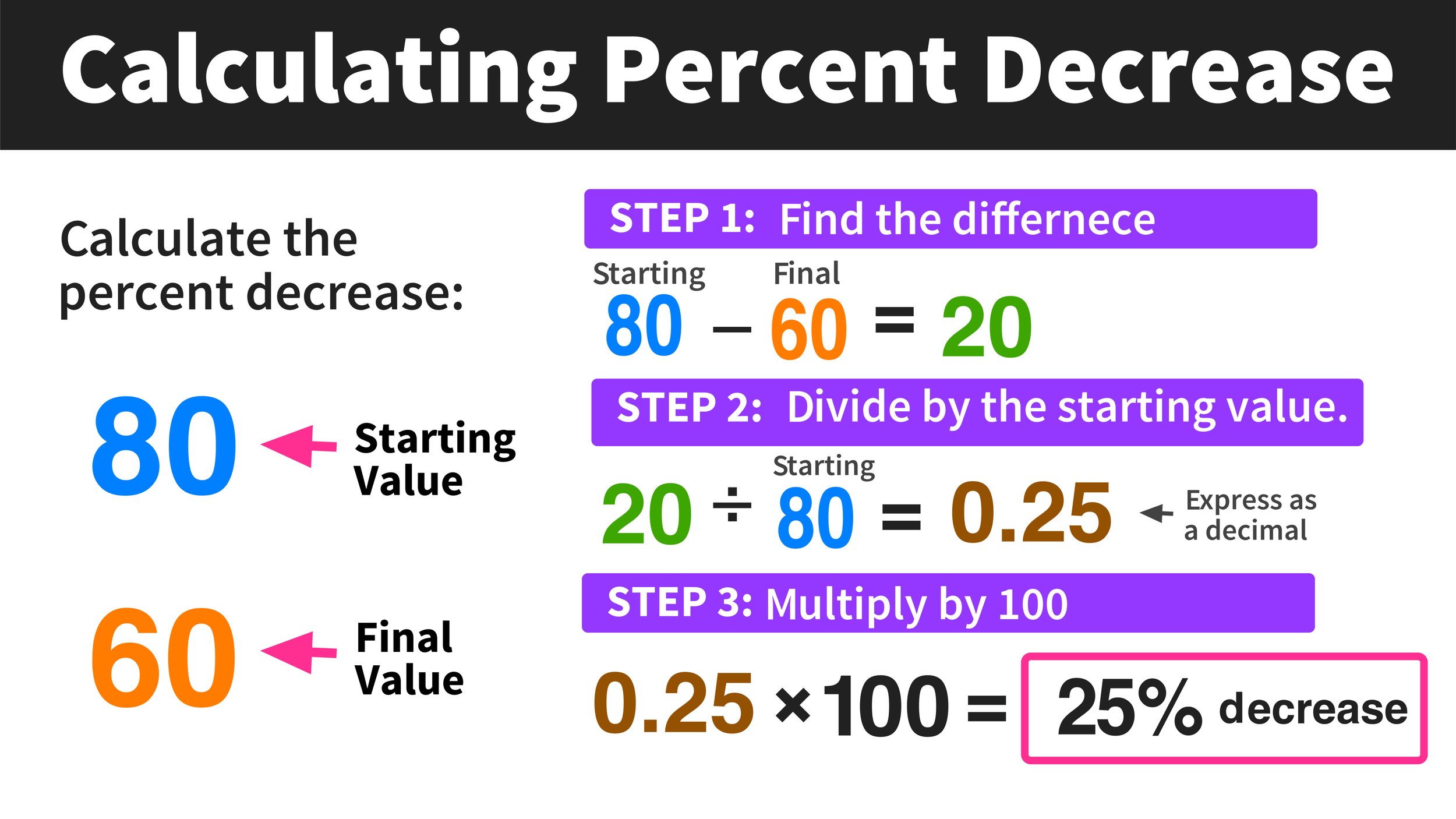
This article will demystify the process of calculating a percentage reduction, offering a clear, step-by-step guide applicable to a myriad of financial scenarios. We will delve into the core formula, illustrate its use with practical examples from the financial domain, and highlight common applications in both personal and business finance, ensuring you can confidently apply this essential skill in your monetary endeavors.
The Fundamentals of Percentage Reduction in Finance
Before diving into the mechanics, it’s essential to grasp what a percentage reduction represents and why it holds such significance in financial contexts. This foundational understanding underpins its application in everything from everyday shopping to sophisticated financial analysis.
What is a Percentage Reduction?
At its core, a percentage reduction quantifies the relative decrease between two values. It expresses the absolute drop in a value as a proportion of the original amount, then converts that proportion into a percentage. For instance, if a product’s price drops from $100 to $80, the absolute reduction is $20. The percentage reduction tells us that this $20 drop represents 20% of the original $100 price.
Why is this critical in finance?
- Contextual Understanding: Knowing a price dropped by $50 is one thing, but knowing it dropped by 50% from an original $100 gives you a much clearer picture of the scale of the reduction.
- Comparative Analysis: It allows for easy comparison of reductions across different scales. A $100 reduction on a $1,000 item (10%) is different from a $100 reduction on a $10,000 item (1%).
- Decision Making: Whether evaluating discounts, assessing investment losses, or streamlining budgets, the percentage reduction provides the standardized metric needed to make astute financial choices.
The Core Formula Unpacked
The formula for calculating a percentage reduction is straightforward yet incredibly powerful:
$$text{Percentage Reduction} = frac{text{(Original Value – New Value)}}{text{Original Value}} times 100$$
Let’s break down each component:
- Original Value: This is the starting point, the initial amount before any reduction occurred. It serves as the crucial baseline against which the change is measured. In finance, this could be the initial price of an item, the starting value of an investment portfolio, or the initial allocation of a budget.
- New Value: This is the amount after the reduction has taken place. It’s the current price, the current investment value, or the revised budget allocation.
- ** (Original Value – New Value):** This part of the formula calculates the absolute reduction or the raw difference between the starting and ending values. This tells you “how much” the value decreased in absolute terms.
- ** / Original Value:** Dividing the absolute reduction by the original value converts that absolute change into a decimal fraction or a proportion. This is where the reduction is contextualized relative to its starting point.
- ** × 100:** Multiplying the result by 100 transforms the decimal fraction into a percentage, making it easily understandable and comparable.
Understanding this formula is the first step to confidently navigating countless financial scenarios where reductions occur.
Step-by-Step Calculation: Mastering the Math
Calculating a percentage reduction is a methodical process. By following these steps, you can accurately determine the proportional decrease in any financial scenario.
Identifying Original and New Values
The most crucial first step is to correctly identify the original (starting) value and the new (ending) value. Misidentifying these will lead to an incorrect calculation.
- Example 1 (Shopping): A smartphone was originally priced at $800 (Original Value) but is now on sale for $640 (New Value).
- Example 2 (Investing): Your stock portfolio began the month at $50,000 (Original Value) and ended at $48,000 (New Value).
- Example 3 (Budgeting): A department’s allocated budget was $150,000 (Original Value), but due to cost-cutting measures, it has been reduced to $135,000 (New Value).
Always ensure the original value is the larger number when calculating a reduction, as a reduction implies a decrease.
Calculating the Absolute Reduction
Once you have identified your values, the next step is to find the absolute difference between them. This tells you the raw monetary (or unit) amount of the reduction.
$$text{Absolute Reduction} = text{Original Value} – text{New Value}$$
Let’s apply this to our examples:
- Example 1 (Smartphone): $800 – $640 = $160 (Absolute Reduction)
- Example 2 (Investment): $50,000 – $48,000 = $2,000 (Absolute Reduction)
- Example 3 (Budget): $150,000 – $135,000 = $15,000 (Absolute Reduction)
This step provides the raw magnitude of the change.
Dividing by the Original Value
Now, we take the absolute reduction and divide it by the original value. This converts the absolute reduction into a decimal fraction, showing its proportion relative to the starting point.
$$text{Proportion} = frac{text{Absolute Reduction}}{text{Original Value}}$$
Continuing with our examples:
- Example 1 (Smartphone): $160 / $800 = 0.20
- Example 2 (Investment): $2,000 / $50,000 = 0.04
- Example 3 (Budget): $15,000 / $150,000 = 0.10
It’s crucial to always divide by the original value. Dividing by the new value would yield an incorrect and misleading result.
Converting to a Percentage
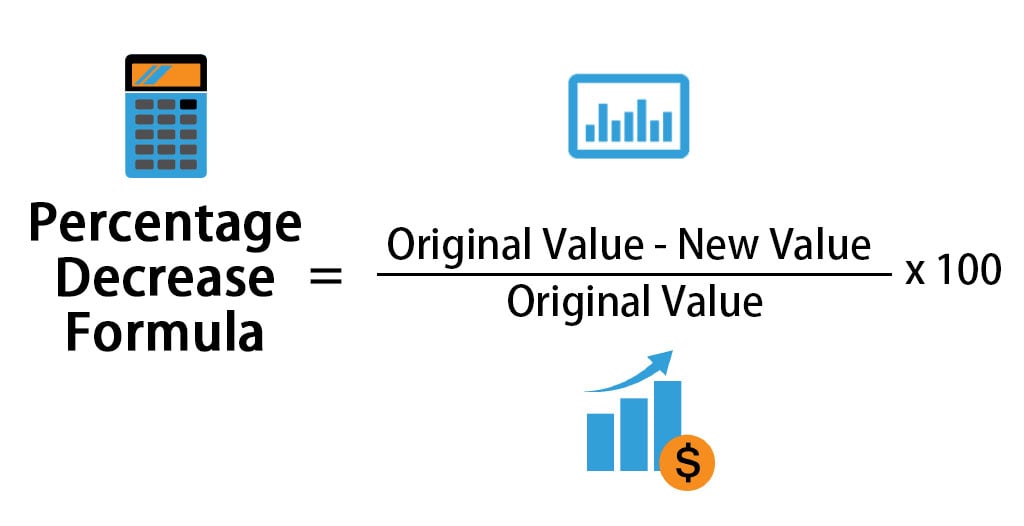
The final step is to convert the decimal proportion into a percentage by multiplying by 100. This makes the figure easily digestible and comparable.
$$text{Percentage Reduction} = text{Proportion} times 100$$
Wrapping up our examples:
- Example 1 (Smartphone): 0.20 × 100 = 20% reduction (The smartphone is discounted by 20%).
- Example 2 (Investment): 0.04 × 100 = 4% reduction (Your portfolio value decreased by 4%).
- Example 3 (Budget): 0.10 × 100 = 10% reduction (The department’s budget was cut by 10%).
By consistently following these four steps, you can accurately calculate percentage reductions for any financial data you encounter.
Real-World Applications in Personal and Business Finance
The ability to calculate percentage reductions isn’t just an academic skill; it’s a vital tool with countless practical applications across all facets of financial management.
Savvy Shopping and Discount Analysis
For personal finance, perhaps the most immediate application is in understanding sales and discounts. When a store advertises a “30% off” sale, you immediately know the percentage reduction. But what if an item is simply listed with an original price and a new, lower price?
- Comparing Deals: If one store offers a laptop for $800, down from $1,000, and another offers a similar laptop for $900, down from $1,200, which is the better percentage discount?
- Store 1: (($1,000 – $800) / $1,000) * 100 = 20% reduction.
- Store 2: (($1,200 – $900) / $1,200) * 100 = 25% reduction.
- Store 2 offers a better percentage discount, even if the absolute reduction is higher in Store 1. This helps consumers make smarter purchasing decisions.
- Understanding Effective Savings: Knowing the percentage reduction allows you to quickly assess the true value of a promotion or clearance sale, ensuring you don’t just focus on the absolute dollar amount.
Understanding Investment Losses and Performance
In the world of investing, percentage reductions are fundamental for analyzing portfolio performance, individual asset depreciation, and market corrections.
- Portfolio Drawdowns: If an investment portfolio drops from $100,000 to $92,000 in a month, that’s an 8% reduction (($100,000 – $92,000) / $100,000) * 100). This figure is far more impactful than just seeing a $8,000 loss, as it contextualizes the loss relative to the total value.
- Stock Price Declines: When a stock you own drops from $150 per share to $120, calculating the 20% reduction (($150 – $120) / $150) * 100) helps you understand the impact on your holdings and inform potential buy, sell, or hold decisions.
- Risk Assessment: Financial professionals often look at historical percentage drawdowns to assess the risk profile of an investment.
Budgeting and Cost-Cutting Strategies
Both individuals and businesses frequently use percentage reductions to manage budgets and implement cost-cutting measures effectively.
- Personal Budgeting: If your monthly discretionary spending needs to be reduced from $1,000 to $750, you’ve implemented a 25% reduction (($1,000 – $750) / $1,000) * 100). This clear percentage goal can guide your adjustments.
- Business Expenses: A company might aim to reduce its marketing budget from $50,000 to $40,000, representing a 20% cut. This informs departmental heads of the target and helps them reallocate resources efficiently.
- Negotiating Bills: When calling a service provider to lower your bill, understanding potential percentage reductions (e.g., if they offer to reduce your $80/month internet bill to $60, that’s a 25% saving) empowers you to negotiate better deals.
Analyzing Financial Reports and Economic Data
For business finance and macroeconomics, percentage reductions are indispensable for interpreting financial statements, economic indicators, and market trends.
- Revenue Declines: If a company’s quarterly revenue drops from $10 million to $8.5 million, reporting a 15% reduction (($10M – $8.5M) / $10M) * 100) provides a concise and comparable measure of performance decline to investors and stakeholders.
- Profit Margin Squeeze: A reduction in profit margin from 20% to 15% (which is itself a percentage reduction on the margin, not the absolute profit) indicates a significant squeeze on profitability.
- Economic Contraction: Governments and economists regularly cite percentage reductions in GDP (Gross Domestic Product) to signal economic recession or contraction, such as a 2% GDP reduction quarter-over-quarter.
These examples highlight how essential this calculation is for anyone dealing with money, from individual consumers to corporate financial analysts.
Common Pitfalls and Best Practices
While calculating a percentage reduction is relatively simple, there are common mistakes that can lead to erroneous results. Being aware of these and adopting best practices will ensure accuracy and enhance your financial acumen.
Avoiding the “New Value” Trap
The most frequent error in calculating a percentage reduction is incorrectly using the new value as the denominator instead of the original value. This can significantly skew your results.
- The Error: If an item drops from $100 to $50, the correct reduction is 50% (($100-$50)/$100)100. If you mistakenly divide by the new value ($50), you would get (($100-$50)/$50)100 = 100%, which is incorrect.
- Best Practice: Always, always use the original (starting) value as the denominator (the number you divide by). This provides the true reduction relative to the initial state.
The Importance of Context
A percentage reduction, while a powerful metric, must always be interpreted within its specific context.
- Magnitude Matters: A 10% reduction on a $1,000 item ($100 saving) is less impactful than a 10% reduction on a $1,000,000 investment ($100,000 loss). While the percentage is the same, the absolute monetary impact is vastly different.
- Timeframes: A 5% reduction over a day is far more volatile than a 5% reduction over a year. The rate of change adds another layer of context.
- Comparison Basis: Ensure you’re comparing apples to apples. A price reduction on one product shouldn’t be blindly compared to a salary reduction if the underlying drivers and implications are entirely different.
Using Financial Tools and Calculators
While mental math or a basic calculator suffices for simple reductions, financial tools offer efficiency and reduce the risk of manual error, especially with more complex or numerous calculations.
- Spreadsheets (Excel, Google Sheets): These are invaluable. You can set up formulas that automatically calculate percentage reductions for entire columns of data. This is particularly useful for tracking investment performance, sales data, or budget variances over time.
- Example Formula: If original value is in A2 and new value is in B2, the formula
=((A2-B2)/A2)*100will give you the percentage reduction.
- Example Formula: If original value is in A2 and new value is in B2, the formula
- Online Percentage Calculators: Numerous free online tools are available for quick, one-off calculations.
- Financial Software: Many personal finance apps and business accounting software packages include built-in features to display percentage changes for various financial metrics.
Leveraging these tools allows you to focus more on interpreting the financial implications of the reductions rather than getting bogged down in the arithmetic.
Conclusion
Calculating a reduction in percentage is an indispensable skill in the financial world. Whether you’re a consumer seeking the best value, an investor monitoring your portfolio, or a business professional managing budgets and analyzing market trends, understanding this fundamental mathematical concept empowers you to make smarter, more informed decisions. By correctly identifying original and new values, applying the simple yet powerful formula, and interpreting the results within their proper context, you gain a crucial advantage in navigating the complexities of personal and business finance. Embrace this skill, and unlock a clearer, more analytical perspective on the ebb and flow of money.
aViewFromTheCave is a participant in the Amazon Services LLC Associates Program, an affiliate advertising program designed to provide a means for sites to earn advertising fees by advertising and linking to Amazon.com. Amazon, the Amazon logo, AmazonSupply, and the AmazonSupply logo are trademarks of Amazon.com, Inc. or its affiliates. As an Amazon Associate we earn affiliate commissions from qualifying purchases.