
The question “how much is 10 percent?” seems deceptively simple. On the surface, it’s a straightforward mathematical calculation. Yet, beneath this seemingly basic query lies a powerful concept that, when fully understood and applied, can profoundly transform your financial well-being. From managing your personal budget and growing your investments to evaluating business opportunities and understanding various financial obligations, the ability to quickly and accurately grasp what 10 percent represents is an indispensable skill in the world of money.
In a financial landscape often complicated by jargon and intricate formulas, the consistent application of a simple percentage like 10% can serve as a guiding star. It can help you set realistic savings goals, estimate potential investment returns, gauge the impact of debt, or even understand the true cost of a discount. This article will delve into the multifaceted importance of 10 percent, moving beyond mere arithmetic to explore its strategic role across personal finance, investing, and business, providing actionable insights that can empower you to make smarter financial decisions.

The Foundational Math: Mastering the Basics of 10 Percent
Before we explore its profound financial applications, it’s crucial to solidify our understanding of what 10 percent actually means and how to calculate it effortlessly. At its core, “10 percent” literally means “10 out of every 100” or “10 per hundred.” It can be expressed as a fraction (10/100 or 1/10) or a decimal (0.10). This fundamental understanding is the cornerstone of all its practical uses.
Simple Calculations: The Rule of Ten
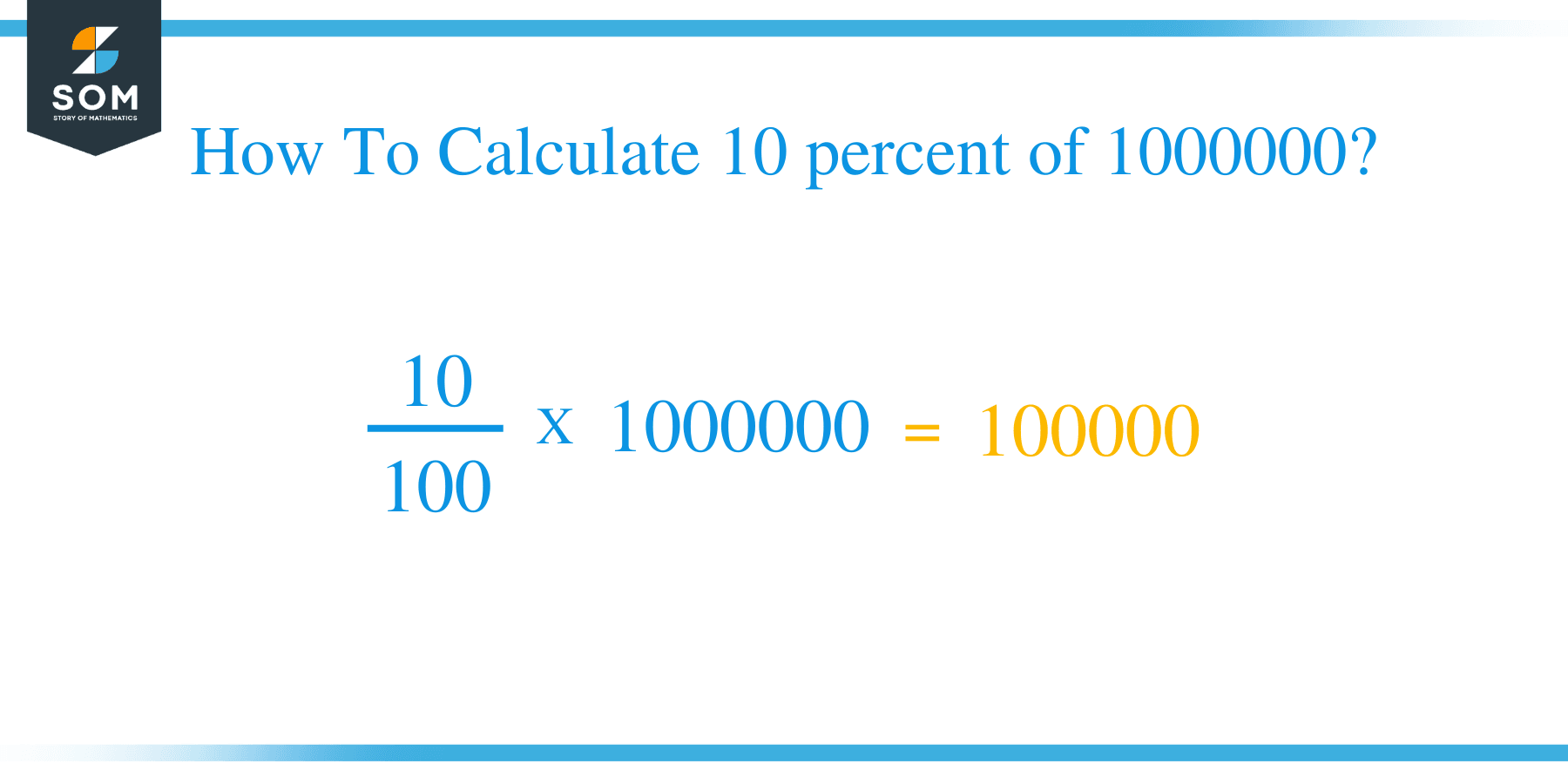
The easiest way to calculate 10 percent of any number is to simply divide that number by 10. Mathematically, this is the same as multiplying the number by 0.10.
- Example 1: 10% of 100.
- $100 / 10 = 10$
- Or, $100 * 0.10 = 10$
- Example 2: 10% of 50.
- $50 / 10 = 5$
- Or, $50 * 0.10 = 5$
An even quicker mental shortcut, particularly useful for whole numbers, is to move the decimal point one place to the left.
- Example 3: 10% of 250.
- Imagine the decimal point after the 0: $250.0$
- Move it one place left: $25.0$
- So, 10% of 250 is 25.
- Example 4: 10% of $1,500.
- $1,500.0$ becomes $150.0$
- So, 10% of $1,500 is $150.
When 10 Percent Isn’t Obvious: Tackling Complex Numbers
The rule of ten and the decimal shift also apply perfectly to numbers with decimals or those that don’t end in zero.
- Example 5: 10% of $79.50.
- Move the decimal one place left: $7.950$
- So, 10% of $79.50 is $7.95.
- Example 6: 10% of $3,286.75.
- Move the decimal one place left: $328.675$
- Rounding to the nearest cent, 10% is $328.68.
Mastering these quick calculations frees up mental energy, allowing you to focus on the strategic implications of 10 percent in your financial decisions rather than getting bogged down by the arithmetic itself.
10 Percent in Personal Finance: Building a Strong Financial Foundation
In the realm of personal finance, the concept of 10 percent is a versatile tool for budgeting, saving, and debt management. It offers simple, actionable rules that can significantly impact your financial health.
Saving Strategies: The 10% Rule for Financial Freedom
One of the most widely advocated principles in personal finance is the “pay yourself first” mantra, often accompanied by a specific percentage. The 10% savings rule suggests that you should automatically save at least 10 percent of every paycheck before you pay any other bills or expenses.
- Impact: Even if your income is modest, consistently saving 10% can accumulate substantial wealth over time, thanks to the power of compounding. For instance, if you earn $3,000 a month, saving 10% means setting aside $300. Over a year, that’s $3,600, not including any investment gains.
- Actionable Steps: Automate transfers from your checking account to a savings or investment account on payday. Treat this 10% as a fixed expense, non-negotiable.
Debt Management: Understanding Interest and Payments
When dealing with debt, understanding percentages is crucial. While not always exactly 10%, many common financial products feature interest rates that are in the ballpark or require payments that are a percentage of the outstanding balance. Grasping how 10% relates helps you quickly estimate costs.
- Estimating Interest: If you have a credit card balance of $1,000 with a 19.9% APR, knowing how to calculate 10% helps you quickly understand the magnitude of the interest being charged. For example, 10% of $1,000 is $100. So, 19.9% will be roughly double that, around $200 per year in interest if the balance remains constant.
- Down Payments: Many significant purchases, like homes, require a down payment, often expressed as a percentage of the total price. Understanding 10% helps you quickly determine what that means in dollar figures (e.g., 10% down on a $300,000 home is $30,000).
Budgeting and Expense Control: Identifying Key Outflows
The 10 percent rule isn’t just for savings; it’s also a powerful lens for scrutinizing your spending. By identifying categories where you spend 10% or more of your income, you can pinpoint areas for potential optimization.
- The 50/30/20 Rule: A popular budgeting framework suggests dedicating 50% of your income to needs, 30% to wants, and 20% to savings and debt repayment. While the 10% rule specifically targets savings, it integrates well into this broader framework, emphasizing the importance of a dedicated savings allocation.
- Spotting Overspending: If your “dining out” category consistently consumes more than 10% of your take-home pay, it might be an area to cut back if you’re struggling to meet other financial goals. Regularly reviewing your expenses in terms of percentages helps to put spending into perspective relative to your overall income.
Investing and Wealth Growth: Harnessing the Power of 10 Percent Returns
In the world of investing, percentages are the language of growth, risk, and fees. Understanding what 10 percent means in this context is vital for setting expectations and evaluating opportunities.
Target Returns and Growth Expectations
While past performance is not indicative of future results, a 10% annual return has historically been a significant benchmark for long-term equity market performance. Investors often aim for returns in this range when building diversified portfolios.
- Realistic Goal Setting: Setting a goal of 10% annual growth provides a tangible target for your investment strategy. Knowing that 10% of $10,000 is $1,000 helps you visualize your money’s potential growth more concretely.
- Compounding Growth: A consistent 10% return, especially with reinvested dividends, can lead to substantial wealth accumulation over decades.
The Impact of Compounding at 10 Percent
Compounding is often called the “eighth wonder of the world,” and understanding its effect with a 10% annual return highlights its immense power.
- Doubling Time (Rule of 72): The Rule of 72 is a quick way to estimate how long it will take for an investment to double at a given annual rate of return. Simply divide 72 by the annual interest rate.
- At a 10% annual return, your money would roughly double every $72 / 10 = 7.2$ years. This is a powerful concept for long-term financial planning.
- Long-Term Scenarios: Imagine investing $10,000 at a consistent 10% annual return.
- After 7.2 years: $20,000
- After 14.4 years: $40,000
- After 21.6 years: $80,000
This demonstrates how a steady 10% can be a game-changer for wealth accumulation over decades.
Fees and Their Erosion: The Hidden Cost of Percentages
While focusing on returns, it’s equally important to understand how percentages apply to fees, which can subtly erode your investment gains over time. Even a small percentage fee can have a significant cumulative impact.
- Mutual Fund Expense Ratios: An expense ratio of 1% might seem negligible, but if your fund generates a 10% return, that 1% fee effectively shaves off 10% of your gain. Over decades, this difference can amount to thousands, if not tens of thousands, of dollars.
- Advisory Fees: Financial advisors might charge a percentage of assets under management (AUM), typically ranging from 0.5% to 1.5%. Understanding what this translates to in dollar terms (e.g., 1% of a $500,000 portfolio is $5,000 annually) helps you evaluate the value you’re receiving.
Business and Income Generation: 10 Percent as a Key Metric
For entrepreneurs, side hustlers, and anyone focused on generating income, 10 percent serves as a critical metric for evaluating profitability, setting prices, and understanding various forms of compensation.
Profit Margins and Discounts
Businesses thrive on profit, and percentages are the language of margins. Understanding 10 percent helps in quick assessments.
- Gross Profit Margin: If an item costs $90 to produce and sells for $100, the gross profit is $10. This represents a 10% gross profit margin ($10/$100 * 100%). Businesses constantly evaluate if their margins are healthy enough to cover operating expenses and still yield a net profit.
- Discounts and Sales: Offering a 10% discount on a product or service is a common marketing strategy. Knowing exactly what this means in terms of revenue reduction (e.g., a 10% discount on a $200 item is $20 off) helps businesses decide if such promotions are sustainable.
Commissions and Royalties
Many income streams, especially in sales, creative fields, or affiliate marketing, are structured around percentages.
- Sales Commissions: If you earn a 10% commission on sales, and you sell $5,000 worth of products, you immediately know you’ve earned $500 ($5,000 * 0.10). This clear calculation motivates performance and helps in income forecasting.
- Royalties: Authors, musicians, and inventors often receive royalties, which are a percentage of sales. If you earn a 10% royalty on a book that sells $10,000 worth of copies, you know you’re due $1,000.
Setting Financial Goals for Your Hustle
Whether it’s a small side hustle or a growing business, using percentages to set income goals provides clear targets.
- Income Growth: Aiming to grow your side hustle income by 10% month-over-month or year-over-year provides a measurable objective. If you made $500 last month, a 10% growth target means aiming for $550 this month.
- Expense Control: Similar to personal finance, keeping business expenses under a certain percentage (e.g., ensuring marketing costs don’t exceed 10% of gross revenue) is crucial for maintaining profitability.
Beyond the Numbers: The Behavioral Aspect of 10 Percent
The practical application of “10 percent” extends beyond mere calculations; it significantly influences financial behavior and decision-making. Its simplicity makes it an effective psychological tool for building sustainable financial habits.
The Psychology of Savings and Giving
The 10% rule for savings is powerful not just for its mathematical outcome but for its psychological impact. It feels achievable for many, creating a positive feedback loop.
- Feasibility: Unlike a daunting 50% savings goal, 10% often feels less restrictive and more attainable, encouraging individuals to start and stick with the habit. Small, consistent wins build momentum.
- Tithing and Giving: Historically, the concept of tithing (giving 10% of one’s income) has deep roots in various cultures and religions. This practice demonstrates the power of designating a specific percentage for charitable or spiritual purposes, fostering a sense of contribution and financial discipline.
Building Consistent Financial Habits
The consistent application of the 10% principle across various financial domains helps engrain good habits.
- Automaticity: By making saving 10% automatic, you remove the decision-making burden, transforming it into a passive habit. This consistency is far more effective than sporadic, larger savings efforts.
- Mindset Shift: Regularly thinking in terms of percentages encourages a more analytical and disciplined approach to money. It fosters a mindset where you evaluate financial decisions not just on their absolute dollar amount but on their proportional impact relative to your total income or assets.
Conclusion
The question “how much is 10 percent?” might open with a simple arithmetic answer, but its implications for your financial life are anything but trivial. From diligently saving a portion of your income and making informed investment decisions to running a profitable business and understanding the true cost of debt, the power of 10 percent permeates every aspect of financial literacy.
By mastering the basic calculations and consciously applying this simple yet potent percentage across your personal finance, investments, and entrepreneurial pursuits, you unlock a clearer lens through which to view your money. It empowers you to set realistic goals, evaluate opportunities, mitigate risks, and, ultimately, build a more secure and prosperous financial future. Embrace the power of 10 percent – it’s a small number with an outsized impact on your journey to financial freedom.
aViewFromTheCave is a participant in the Amazon Services LLC Associates Program, an affiliate advertising program designed to provide a means for sites to earn advertising fees by advertising and linking to Amazon.com. Amazon, the Amazon logo, AmazonSupply, and the AmazonSupply logo are trademarks of Amazon.com, Inc. or its affiliates. As an Amazon Associate we earn affiliate commissions from qualifying purchases.