
Understanding how much interest you can earn is a fundamental pillar of sound personal finance. It’s not just a mathematical exercise; it’s a window into the potential growth of your savings and investments, dictating how quickly your money can work for you. Whether you’re saving for a down payment, retirement, or simply building an emergency fund, the interest rate and the way it’s calculated can significantly impact your financial future. In a world of fluctuating economic conditions and diverse financial products, knowing the mechanics behind interest generation empowers you to make smarter choices, optimize your returns, and achieve your financial goals with greater efficiency. This comprehensive guide will demystify the process, exploring the factors that influence your interest earnings, the various avenues available, and strategic approaches to maximize your financial growth.

The Foundations of Interest: Decoding How Your Money Grows
To truly grasp “how much interest will I make,” one must first understand the core concepts that govern its calculation. Interest isn’t just a bonus; it’s the cost of borrowing money or the reward for lending it, and its power lies in its ability to compound over time.
Simple vs. Compound Interest: The Game Changer
At its most basic level, interest is the amount charged by a lender to a borrower for the use of assets, or paid by a financial institution to an individual for depositing funds. However, not all interest is created equal.
- Simple Interest is calculated only on the principal amount, or the initial amount of money deposited or invested. It’s a straightforward calculation: Principal x Interest Rate x Time. For instance, if you deposit $1,000 at a 5% simple annual interest rate for two years, you’d earn $50 each year, totaling $100. Simple interest is less common in savings products but can be found in some short-term loans or bonds.
- Compound Interest is the true marvel of financial growth. It’s calculated on the initial principal and also on all the accumulated interest from previous periods. This means your interest earns interest, leading to exponential growth over time. Using the same example, if your $1,000 earns 5% compound annual interest, in the first year you’d earn $50, making your balance $1,050. In the second year, the 5% would be calculated on $1,050, earning you $52.50, bringing your total to $1,102.50. The difference might seem small initially, but over decades, the compounding effect can transform modest savings into substantial wealth. This concept led Albert Einstein to famously call compound interest the “eighth wonder of the world.”
Key Factors Determining Your Interest Earnings
Several critical variables interact to determine the precise amount of interest you will make:
- Principal Amount: This is the initial capital you deposit or invest. Simply put, the more money you start with, the more interest you can potentially earn, assuming all other factors remain constant. A larger principal provides a bigger base for interest to be calculated upon.
- Interest Rate (Annual Percentage Yield – APY): This is the percentage charged by the lender or paid by the financial institution for the use of the money. In savings and investment contexts, you’ll often see APY (Annual Percentage Yield) which accounts for the effect of compounding, giving you a more accurate representation of your effective annual return than a simple APR (Annual Percentage Rate). A higher interest rate directly translates to greater earnings.
- Time (Investment Horizon): The duration for which your money remains invested or deposited is incredibly influential, particularly with compound interest. The longer your money has to grow, the more periods it has to compound, leading to significantly higher returns. This highlights the importance of starting early.
- Compounding Frequency: This refers to how often the interest is calculated and added back to your principal. Interest can compound annually, semi-annually, quarterly, monthly, daily, or even continuously. The more frequently interest is compounded, the faster your money grows. For example, monthly compounding on a 5% annual rate will yield slightly more than annual compounding on the same rate because interest is added to the principal more often, allowing subsequent interest calculations to be based on a larger sum.
Understanding these intertwined factors provides a robust framework for evaluating any interest-bearing financial product and forecasting your potential returns.
Navigating the Landscape of Interest-Bearing Accounts and Investments
Earning interest isn’t limited to a single type of account. The financial market offers a spectrum of options, each with its unique characteristics, risk profiles, and potential for interest generation. Identifying the right vehicle depends on your financial goals, liquidity needs, and risk tolerance.
Traditional Savings Vehicles
These are the most common and accessible ways to earn interest, typically offering safety and liquidity.
- High-Yield Savings Accounts (HYSAs): These online-only or digital bank accounts generally offer significantly higher interest rates than traditional brick-and-mortar bank savings accounts. They provide excellent liquidity, allowing you to access your funds easily, making them ideal for emergency funds or short-term savings goals. While rates can fluctuate with the market, HYSAs are a popular choice for maximizing interest on accessible cash.
- Certificates of Deposit (CDs): CDs offer a fixed interest rate for a predetermined period (term), ranging from a few months to several years. In exchange for locking up your money for the term, CDs typically offer higher interest rates than standard savings accounts. There’s a penalty for early withdrawal, so they’re best suited for money you won’t need immediate access to.
- Money Market Accounts (MMAs): These accounts combine features of both savings and checking accounts. They often offer higher interest rates than traditional savings accounts and may come with limited check-writing privileges or debit card access. However, they usually require a higher minimum balance than savings accounts and may have transaction limits.
Fixed-Income Investments Beyond Basic Savings
For those willing to explore slightly broader options, fixed-income investments can also be a source of interest income.
- Bonds: When you buy a bond, you are essentially lending money to a government, municipality, or corporation. In return, the issuer promises to pay you regular interest payments (called coupon payments) over a specified period, and then return your principal at maturity. Bond interest rates (yields) vary based on the issuer’s creditworthiness, the bond’s term, and prevailing market rates.
- Annuities: While complex, certain types of annuities, particularly fixed annuities, offer a guaranteed interest rate for a period, providing a steady stream of income later in life. These are often used for retirement planning.
- Peer-to-Peer (P2P) Lending: This newer avenue involves individuals lending money directly to other individuals or small businesses through online platforms. Lenders can earn interest on the loans they fund, though it comes with higher risk than traditional bank deposits, as there’s no FDIC insurance.
Each of these avenues presents a different balance of risk, liquidity, and potential return. A well-rounded financial strategy often involves utilizing a combination of these vehicles to match various financial goals and time horizons.
Calculating Your Potential Interest Earnings: Tools and Formulas
Understanding how to calculate your potential interest earnings is crucial for effective financial planning. While many online calculators can do the heavy lifting, knowing the underlying formulas provides valuable insight and allows you to estimate returns independently.
Simple Interest Calculation Revisited
As mentioned, simple interest is straightforward:
Simple Interest = Principal (P) x Interest Rate (R) x Time (T)
- P: The initial amount of money.
- R: The annual interest rate (expressed as a decimal, e.g., 5% becomes 0.05).
- T: The time period in years.
Example: If you invest $5,000 (P) at a simple annual interest rate of 4% (R = 0.04) for 3 years (T), your simple interest would be:
Interest = $5,000 x 0.04 x 3 = $600.
Your total balance after 3 years would be $5,600.
The Power of Compound Interest Formulas
Compound interest calculations are more intricate due to the interest-on-interest effect. The most common formula for future value with compound interest is:
A = P (1 + r/n)^(nt)
- A: The future value of the investment/loan, including interest.
- P: The principal investment amount (the initial deposit or loan amount).
- r: The annual interest rate (as a decimal).
- n: The number of times that interest is compounded per year.
- t: The number of years the money is invested or borrowed for.
Example: If you invest $5,000 (P) at an annual interest rate of 4% (r = 0.04), compounded monthly (n = 12) for 3 years (t):
A = $5,000 (1 + 0.04/12)^(12*3)
A = $5,000 (1 + 0.0033333)^(36)
A = $5,000 (1.0033333)^36
A = $5,000 * 1.127327
A = $5,636.64
In this scenario, your total interest earned would be $636.64, which is notably higher than the $600 from simple interest over the same period, illustrating the power of compounding.
Utilizing Online Interest Calculators
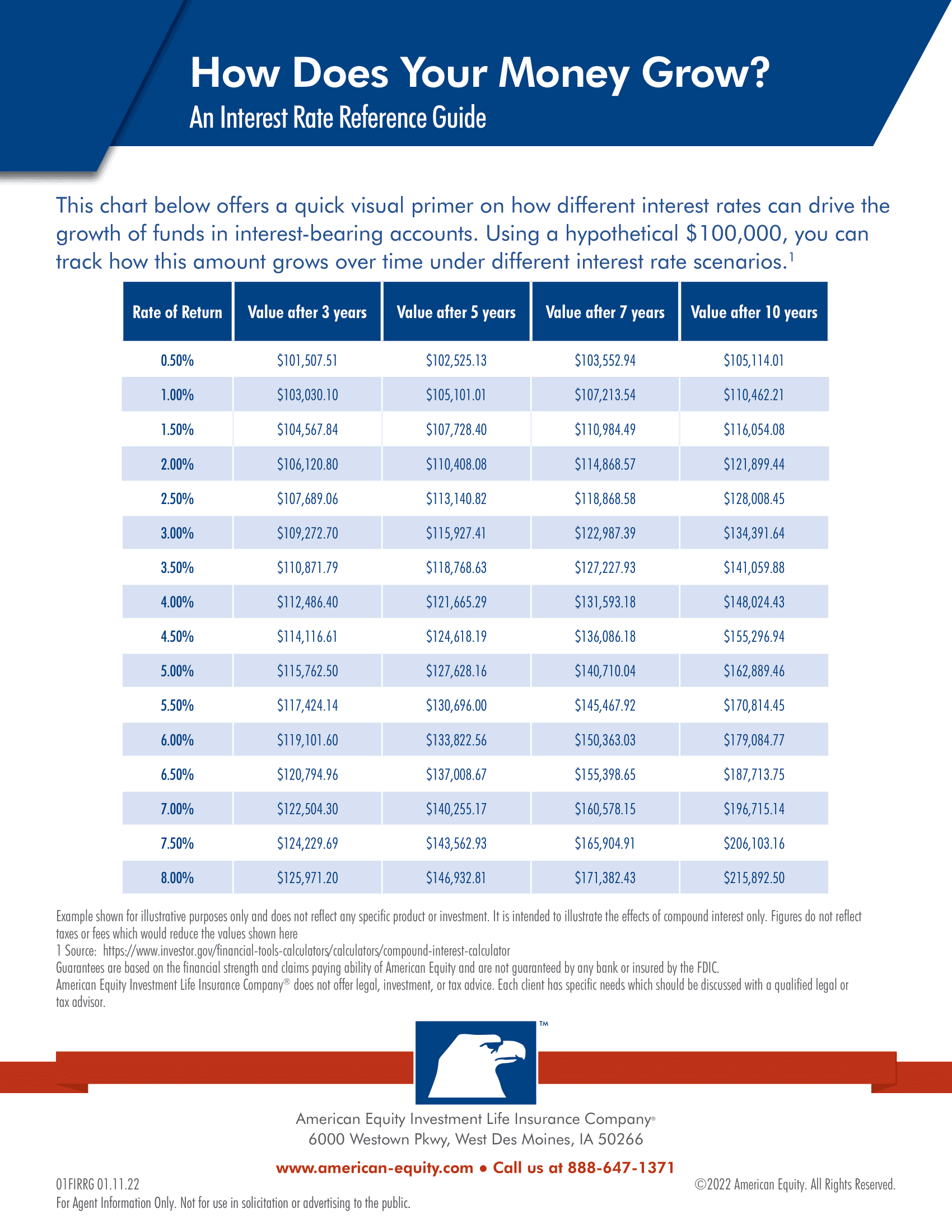
While understanding the formulas is beneficial, for practical purposes, online interest calculators are invaluable. Most financial institutions and personal finance websites offer free tools where you can input your principal, interest rate, compounding frequency, and time horizon to instantly see your projected earnings. Some advanced calculators can even factor in regular contributions, allowing you to project the growth of your savings over time more accurately. These tools remove the manual calculation burden and are excellent for modeling different scenarios.
Strategies to Maximize Your Interest Income and Accelerate Growth
Simply placing your money in an interest-bearing account isn’t enough; strategic planning can significantly boost how much interest you will make. By adopting proactive approaches, you can harness the full potential of your savings and investments.
Prioritize High-Yield Accounts and Seek Competitive Rates
This is arguably the most straightforward strategy. Don’t settle for the meager interest rates offered by traditional savings accounts at large banks. Actively seek out:
- High-Yield Savings Accounts (HYSAs): As discussed, online banks typically offer superior rates.
- Certificates of Deposit (CDs): Lock in higher rates for funds you don’t need immediately. Consider a “CD ladder” where you stagger CDs with different maturity dates to maintain some liquidity while still earning better rates.
- Money Market Accounts: Compare these with HYSAs for the best balance of rate and flexibility.
Always compare the Annual Percentage Yield (APY), not just the stated interest rate, as APY accounts for compounding and gives you the truest picture of your annual return.
Increase Your Principal Contributions Consistently
The more money you contribute regularly, the larger your principal becomes, and consequently, the more interest you will earn. This is especially impactful with compounding.
- Automate Savings: Set up automatic transfers from your checking account to your savings or investment accounts on payday. Even small, consistent contributions add up over time.
- “Pay Yourself First”: Treat savings as a non-negotiable expense in your budget, ensuring money is allocated before other discretionary spending.
- Windfalls and Bonuses: Direct unexpected income, tax refunds, or bonuses directly into interest-bearing accounts to give your principal a significant boost.
Leverage Compounding for Long-Term Growth: The Power of Time
Time is your greatest ally when it comes to compound interest. The longer your money has to grow, the more pronounced the compounding effect becomes.
- Start Early: The earlier you begin saving and investing, the more time your money has to compound, leading to exponentially larger returns. Even small amounts saved in your 20s can outperform much larger amounts saved later in life.
- Resist Early Withdrawals: Try to keep your money invested for as long as possible to allow the compounding magic to fully unfold. Each withdrawal diminishes your principal and reduces future interest earnings.
Diversify Your Interest-Bearing Portfolio
While safety is paramount for cash savings, diversifying across different types of interest-bearing assets can enhance overall returns and manage risk.
- Mix of Liquidity and Yield: Balance highly liquid HYSAs for emergency funds with less liquid but higher-yielding CDs for specific future goals.
- Explore Beyond Banks: For suitable portions of your portfolio, consider bonds for additional interest income, understanding the associated risks.
- Monitor Market Conditions: Interest rates are influenced by central bank policies and economic indicators. Be prepared to adjust your strategy (e.g., move funds to a higher-yielding account) when rates change.
Understand the Impact of Inflation and Taxes
While technically not a strategy to make more interest, understanding these factors helps preserve the real value of your interest earnings.
- Inflation: If the interest rate you earn is lower than the rate of inflation, your purchasing power is eroding. Aim for rates that at least keep pace with or exceed inflation.
- Taxes: Interest income is generally taxable at your ordinary income tax rate, unless it’s in a tax-advantaged account (like a Roth IRA, though interest isn’t the primary focus here) or from tax-exempt bonds (like municipal bonds). Factor in taxes when calculating your net interest earnings.
By combining these strategies, you move beyond merely saving money to actively growing your wealth, ensuring that the question “how much interest will I make?” is met with an increasingly satisfying answer.
Beyond the Numbers: Broader Considerations for Your Interest Earnings
While calculating and maximizing interest is crucial, a holistic view of your financial health requires considering additional factors that can influence the real value and security of your interest income.
The Ever-Present Shadow of Inflation
One of the most significant external factors impacting the real amount of interest you make is inflation. Inflation is the rate at which the general level of prices for goods and services is rising, and subsequently, the purchasing power of currency is falling.
- Erosion of Purchasing Power: If you earn 5% interest on your savings, but inflation is running at 3%, your real return is only 2%. If inflation exceeds your interest rate, you are effectively losing money in terms of purchasing power, even though your nominal balance is growing.
- Impact on Long-Term Goals: For long-term goals like retirement, where money needs to maintain its value for decades, understanding and mitigating the effects of inflation is paramount. It often drives the decision to seek investments that offer higher potential returns than basic savings accounts, even if they carry more risk.
- Inflation-Protected Securities: For those extremely concerned about inflation, specialized instruments like Treasury Inflation-Protected Securities (TIPS) offer a principal that adjusts with inflation, providing a real rate of return.
Taxation on Interest Income
Unfortunately, most interest income is not entirely yours to keep. The government generally views interest earned as taxable income.
- Ordinary Income Tax: Interest from savings accounts, CDs, and corporate bonds is typically taxed as ordinary income at your marginal tax rate. This means a portion of your interest earnings will go to federal and potentially state income taxes.
- Tax-Advantaged Accounts: Interest earned within tax-advantaged retirement accounts (like 401(k)s, IRAs) grows tax-deferred or, in the case of Roth accounts, tax-free upon withdrawal in retirement. While these accounts are primarily for investments, any interest generated within them benefits from this tax treatment.
- Tax-Exempt Interest: Interest from municipal bonds (munis) issued by state and local governments is often exempt from federal income tax and sometimes from state and local taxes, especially if you reside in the issuing state. This makes them attractive to high-income earners.
- Planning for Taxes: When projecting your interest earnings, it’s wise to consider the after-tax return to get a true picture of how much interest will genuinely benefit your financial position.
Risk vs. Reward in Interest-Bearing Investments
While savings accounts and CDs are generally considered very low-risk, as they are often FDIC-insured up to $250,000 per depositor per institution, other interest-bearing options carry varying degrees of risk.
- Credit Risk: With bonds, there’s a risk that the issuer might default on interest payments or principal repayment. Government bonds typically have lower credit risk than corporate bonds.
- Interest Rate Risk: The value of existing bonds can fall if market interest rates rise, as newly issued bonds will offer more attractive yields. This is less of a concern if you hold bonds to maturity.
- Liquidity Risk: Some interest-bearing investments (like CDs with early withdrawal penalties or less marketable bonds) might not be easily convertible to cash without a penalty or loss in value.
- Prioritizing Safety: For funds designated for immediate needs (e.g., emergency fund), prioritizing safety and liquidity through FDIC-insured accounts like HYSAs is paramount, even if it means a slightly lower interest rate. For long-term goals, a calculated amount of risk for potentially higher returns might be appropriate.
By understanding these broader considerations, you can move beyond simple interest calculations to construct a more robust, tax-efficient, and risk-appropriate strategy for maximizing and preserving the true value of the interest you make over your financial lifetime. It transforms the question from a mere calculation into a dynamic component of your overarching financial planning.

Conclusion: Empowering Your Financial Growth Through Interest
The question “how much interest will I make?” is more than a casual inquiry; it’s a gateway to understanding and optimizing your personal financial growth. We’ve explored the fundamental mechanics of simple versus compound interest, the critical factors influencing your earnings—principal, rate, time, and compounding frequency—and the diverse landscape of interest-bearing accounts and investments available, from high-yield savings to bonds. We’ve also delved into the practical calculations and offered strategic approaches to maximize your interest income, such as prioritizing high-yield options, making consistent contributions, and harnessing the unparalleled power of time and compounding.
Ultimately, truly understanding how much interest your money can make empowers you to be an active participant in your financial journey, rather than a passive observer. It encourages proactive decision-making, from choosing the right savings vehicle to adjusting your strategy in response to economic shifts. By consistently seeking competitive rates, prioritizing regular contributions, and giving your money the time it needs to grow, you’re not just earning interest; you’re building a foundation for financial independence and securing a more prosperous future. Let the pursuit of compound growth be a guiding principle in your ongoing financial planning.
aViewFromTheCave is a participant in the Amazon Services LLC Associates Program, an affiliate advertising program designed to provide a means for sites to earn advertising fees by advertising and linking to Amazon.com. Amazon, the Amazon logo, AmazonSupply, and the AmazonSupply logo are trademarks of Amazon.com, Inc. or its affiliates. As an Amazon Associate we earn affiliate commissions from qualifying purchases.