
Compound interest, often hailed as the “eighth wonder of the world” by Albert Einstein, is a fundamental concept in personal finance and investing that can profoundly impact your wealth accumulation. Unlike simple interest, which is calculated only on the principal amount, compound interest is calculated on the initial principal and on the accumulated interest from previous periods. This creates a powerful “snowball effect” where your money earns returns, and then those returns themselves start earning returns, leading to exponential growth over time. Understanding how to harness this force is not just beneficial; it’s essential for anyone looking to build significant wealth and achieve long-term financial security.
I. Understanding the Magic of Compound Interest
At its core, compound interest is about earning “interest on interest.” It’s the process of reinvesting your earnings to generate further earnings. This seemingly simple mechanism is what separates stagnant savings from thriving investment portfolios.
What is Compound Interest? A Foundational Definition
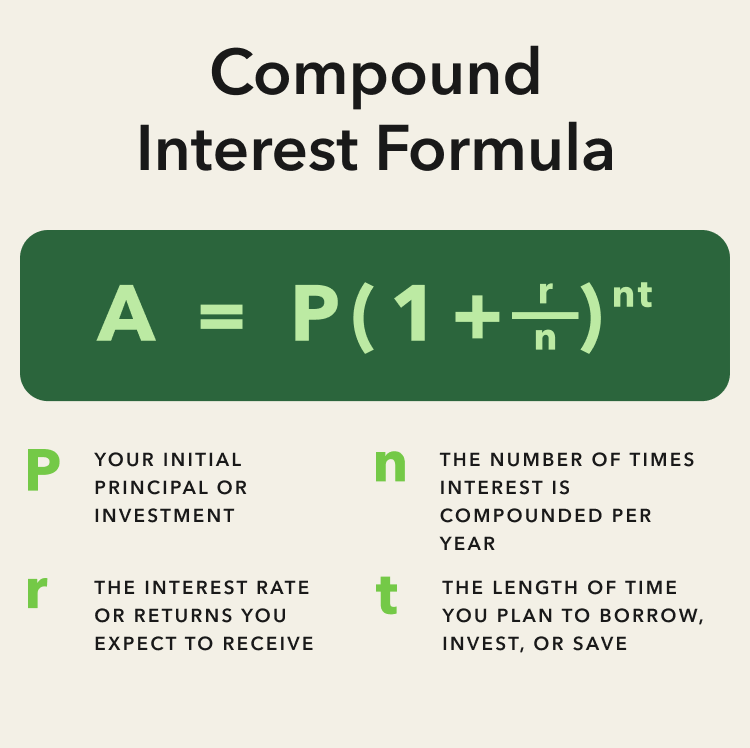
Imagine you invest $1,000 at an annual interest rate of 5%. With simple interest, after one year, you’d earn $50, and you’d continue to earn $50 each year regardless of how much money is in your account. With compound interest, however, after the first year, your $50 in interest is added to your principal, making your new principal $1,050. In the second year, your 5% interest is calculated on $1,050, yielding $52.50. This additional $2.50 might seem small initially, but over decades, and with larger sums and higher interest rates, these small increments compound into substantial sums. The formula for compound interest is $A = P(1 + r/n)^{nt}$, where:
- $A$ = the future value of the investment/loan, including interest
- $P$ = the principal investment amount (the initial deposit or loan amount)
- $r$ = the annual interest rate (as a decimal)
- $n$ = the number of times that interest is compounded per year
- $t$ = the number of years the money is invested or borrowed for
This formula illustrates how every component — principal, rate, frequency, and time — plays a crucial role in accelerating your wealth.
The “Snowball Effect”: Why It Matters for Your Wealth
The real power of compound interest lies in its exponential nature, often referred to as the “snowball effect.” Think of a small snowball rolling down a hill; it starts small, but as it rolls, it picks up more snow, growing larger and gathering momentum. Similarly, your initial investment is the small snowball. As it earns interest, that interest is added to the principal, making the “snowball” larger. This larger snowball then earns even more interest, accelerating its growth. Over longer periods, this growth becomes incredibly dramatic, turning modest initial contributions into significant nest eggs. This effect is particularly potent for long-term goals like retirement planning, where decades of compounding can transform regular savings into millions.
II. The Essential Ingredients for Compounding Success
To effectively harness compound interest, you need to understand and strategically manage its key drivers. These elements work in concert to determine the ultimate impact of compounding on your financial assets.
Time: Your Greatest Ally in Wealth Accumulation
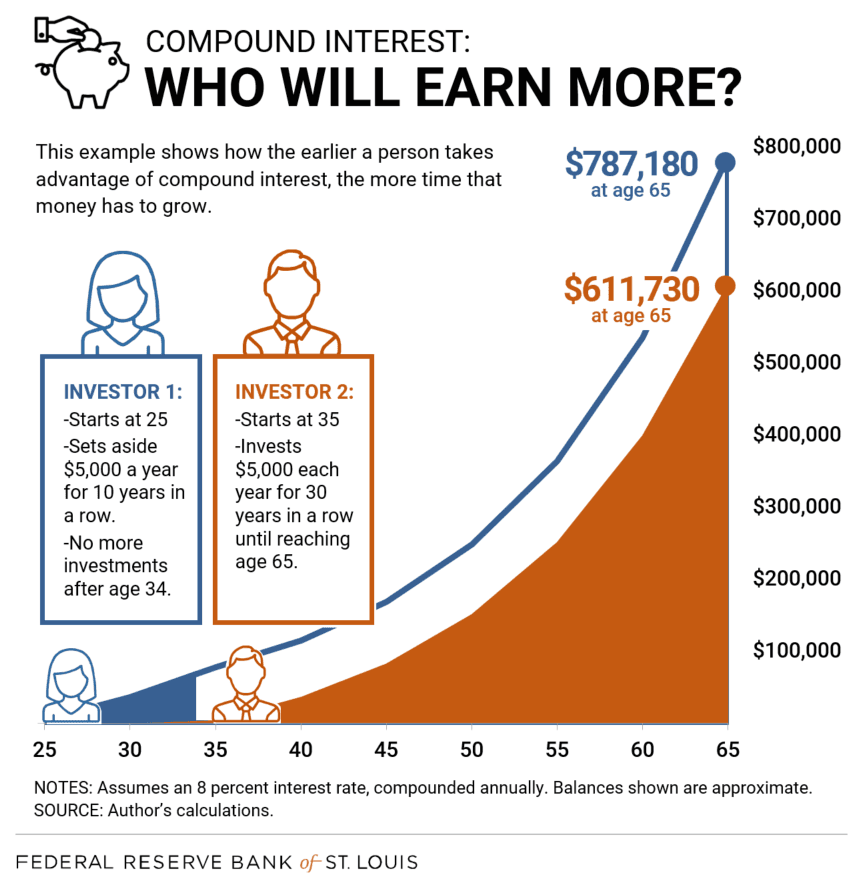
Without a doubt, time is the most critical factor in compounding. The longer your money has to grow, the more periods it has to compound, and the more significant the “interest on interest” effect becomes. Someone who starts investing $200 a month at age 25 will likely accumulate far more wealth by age 65 than someone who starts investing $400 a month at age 35, even though the latter contributes more overall. The early investor benefits from an additional 10 years of compounding. This emphasizes the invaluable advantage of starting early, even with modest amounts.
Principal: The Seed Money That Starts the Growth
The principal is your initial investment or the sum of money on which interest is calculated. A larger principal provides a bigger base for compounding to work its magic. While starting with a substantial lump sum is advantageous, consistent contributions to your principal over time can achieve a similar effect. Each new contribution essentially adds to your principal, giving the compounding process more fuel.
Interest Rate: The Accelerator of Your Returns
The interest rate directly impacts how quickly your money grows. A higher interest rate means your money compounds faster, generating more significant returns in the same amount of time. For example, $1,000 invested at 10% will grow much faster than $1,000 invested at 2%. However, higher interest rates often come with higher risk. It’s crucial to find a balance between seeking attractive returns and managing risk appropriately, aligning with your financial goals and risk tolerance.
Contribution Frequency: Fueling the Fire Consistently
While not explicitly in the compound interest formula, the frequency of your contributions is a vital practical component. Regular, consistent contributions (e.g., monthly investments) continuously add to your principal, giving more money more time to compound. This strategy not only leverages dollar-cost averaging (reducing risk from market volatility) but also provides a steady stream of capital for the compounding engine. The more frequently you add funds, the more opportunities your money has to earn interest and compound.
III. Practical Avenues for Earning Compound Interest
Compound interest isn’t an abstract concept; it’s actively at work in various financial products and investment vehicles. Knowing where to find it and how to utilize these avenues is key to benefiting from it.
High-Yield Savings Accounts and Certificates of Deposit (CDs)
These are among the simplest ways to earn compound interest with minimal risk. High-yield savings accounts typically offer better interest rates than traditional savings accounts, with interest often compounded monthly or daily. CDs offer a fixed interest rate for a specified term, and the interest earned is usually compounded over that term. While the returns might not be as high as stock market investments, they offer safety and predictable growth for your emergency fund or short-to-medium-term savings goals.
Investment Accounts: Stocks, Bonds, and Mutual Funds
The stock market is a powerful arena for compound interest, albeit with higher risk. When you invest in stocks, you can earn returns through capital appreciation (the stock’s value increasing) and dividends (a portion of company profits paid to shareholders). Reinvesting these dividends is a classic way to harness compounding, as you’re using your earnings to buy more shares, which then earn more dividends and potential appreciation. Bonds also pay interest, which can be reinvested. Mutual funds and Exchange Traded Funds (ETFs) offer diversified portfolios of stocks and bonds, allowing your overall investment to grow and compound over time through reinvested gains and dividends.
Retirement Plans: 401(k)s and IRAs
These tax-advantaged accounts are specifically designed to maximize compound interest for retirement savings.
- 401(k)s (and 403(b)s): Employer-sponsored plans allow pre-tax contributions to grow tax-deferred. Any investment gains (from stocks, bonds, mutual funds within the plan) compound without being taxed until withdrawal in retirement. Many employers also offer matching contributions, which are essentially free money that also compounds.
- IRAs (Individual Retirement Accounts): These accounts (Traditional or Roth) allow individuals to save for retirement with tax advantages. Traditional IRA contributions might be tax-deductible, and growth is tax-deferred. Roth IRA contributions are made with after-tax money, but qualified withdrawals in retirement are entirely tax-free – a tremendous advantage for compounding.
The combination of tax benefits and long investment horizons makes retirement accounts ideal vehicles for supercharging the effects of compound interest.
Debt Reduction: The Reverse Power of Compounding
While we typically focus on earning compound interest, it’s equally crucial to understand its destructive power when you’re on the paying end. High-interest debts like credit card balances or personal loans compound against you, making it incredibly difficult to pay them off. Every month, interest is added to your outstanding balance, and then the next month’s interest is calculated on that new, larger balance. By aggressively paying down high-interest debt, you are effectively stopping the “reverse compounding” from eroding your wealth, freeing up funds that can then be invested to earn compound interest for you.
IV. Strategies to Maximize Your Compounding Potential
Understanding compound interest is one thing; actively implementing strategies to maximize its benefits is another. Here are practical steps to make compound interest work hardest for you.
Start Early, Stay Consistent
This cannot be stressed enough. The earlier you begin investing, the more time your money has to compound, leading to substantially larger sums over the long run. Even small, consistent contributions made early can outperform larger, later contributions due to the magic of time and compounding. Make investing a habit, like paying a bill, and automate your contributions.
Prioritize Higher Returns (Wisely)
While higher interest rates accelerate growth, they often come with increased risk. It’s important to differentiate between genuinely strong investment opportunities and speculative gambles. For long-term goals like retirement, a diversified portfolio of growth-oriented investments (like stock market index funds) generally offers better long-term compounding potential than low-interest savings accounts. However, always ensure your investment choices align with your risk tolerance and financial goals, avoiding undue risk.
Reinvest Your Earnings
To fully leverage compound interest, always opt to reinvest any dividends, interest payments, or capital gains back into your investments. If you receive cash payouts, you’re essentially removing funds from the compounding process. By reinvesting, you increase your principal, allowing more shares or a larger balance to grow and earn further returns. Most brokerage accounts offer automatic dividend reinvestment (DRIPs), making this strategy effortless.
Automate Your Investments and Contributions
Set up automatic transfers from your checking account to your investment or savings accounts on a regular basis (e.g., bi-weekly or monthly). Automation removes the psychological barrier of having to actively decide to invest, ensures consistency, and helps you stick to your financial plan. This “set it and forget it” approach ensures that your money is continually being put to work, benefiting from compounding without constant manual intervention.
Avoid the Drag of High-Interest Debt
As discussed, high-interest debt works against you through reverse compounding. Before aggressively investing, prioritize paying off credit card debt, personal loans, or any other high-interest obligations. The guaranteed “return” of avoiding 18-24% interest on debt often outweighs the potential returns from investing, making debt repayment a highly effective compounding strategy in reverse. Once debt-free, you can redirect those payments towards your investments.
V. Overcoming Obstacles and Maintaining Momentum
While the principles of compound interest are straightforward, the path to maximizing it isn’t always smooth. Understanding potential obstacles and how to navigate them is crucial for maintaining momentum.
The Impact of Inflation
Inflation, the gradual rise in prices over time, erodes the purchasing power of money. While your money might be compounding numerically, its real value (what it can buy) might be decreasing if your investment returns don’t outpace inflation. This is why investing in assets that historically beat inflation, like stocks, is often preferred over solely relying on low-yield savings accounts for long-term goals.
Navigating Market Volatility
Investment markets are inherently volatile, experiencing ups and downs. Seeing your portfolio value drop during a downturn can be unnerving and tempt you to sell, stopping the compounding process. However, for long-term investors, market corrections are often opportunities to buy more assets at lower prices, which then compound more effectively when the market recovers. Patience and a long-term perspective are vital to ride out these periods and allow compounding to work its magic.
The Importance of Financial Discipline and Patience
Building substantial wealth through compound interest is a marathon, not a sprint. It requires consistent effort, prudent financial decisions, and above all, patience. There will be times when progress feels slow, or when external factors test your resolve. Maintaining financial discipline – sticking to your budget, avoiding unnecessary debt, and consistently investing – is the bedrock upon which the power of compounding is truly realized. Trust the process, remain patient, and let time and consistent contributions turn your financial efforts into significant wealth.
In conclusion, understanding how to get compound interest is about more than just a mathematical formula; it’s about adopting a strategic mindset towards your money. By starting early, investing consistently, wisely choosing your investment vehicles, and allowing time to be your ally, you can unlock the transformative power of compound interest and build a robust financial future.
aViewFromTheCave is a participant in the Amazon Services LLC Associates Program, an affiliate advertising program designed to provide a means for sites to earn advertising fees by advertising and linking to Amazon.com. Amazon, the Amazon logo, AmazonSupply, and the AmazonSupply logo are trademarks of Amazon.com, Inc. or its affiliates. As an Amazon Associate we earn affiliate commissions from qualifying purchases.