
In the intricate world of personal finance, investing, and business operations, few mathematical concepts hold as much sway and utility as the humble percentage. Far from being an abstract academic exercise, understanding “how do you find out a percentage” is a fundamental skill that underpins sound financial decision-making, from evaluating discounts and calculating interest to assessing investment returns and deciphering market trends. This article delves into the core mechanics of percentage calculation, exclusively through the lens of money and finance, equipping you with the insights needed to navigate your financial landscape with confidence and precision.
The Foundational Role of Percentages in Financial Understanding
Percentages are ubiquitous in finance, serving as a standardized way to express proportions, changes, and comparisons. Without a firm grasp of how to calculate and interpret them, one is essentially navigating a financial maze blindfolded, unable to fully comprehend the implications of a loan’s interest rate, the growth of an investment, or the true cost of a budget overrun.
Defining the Core Concept
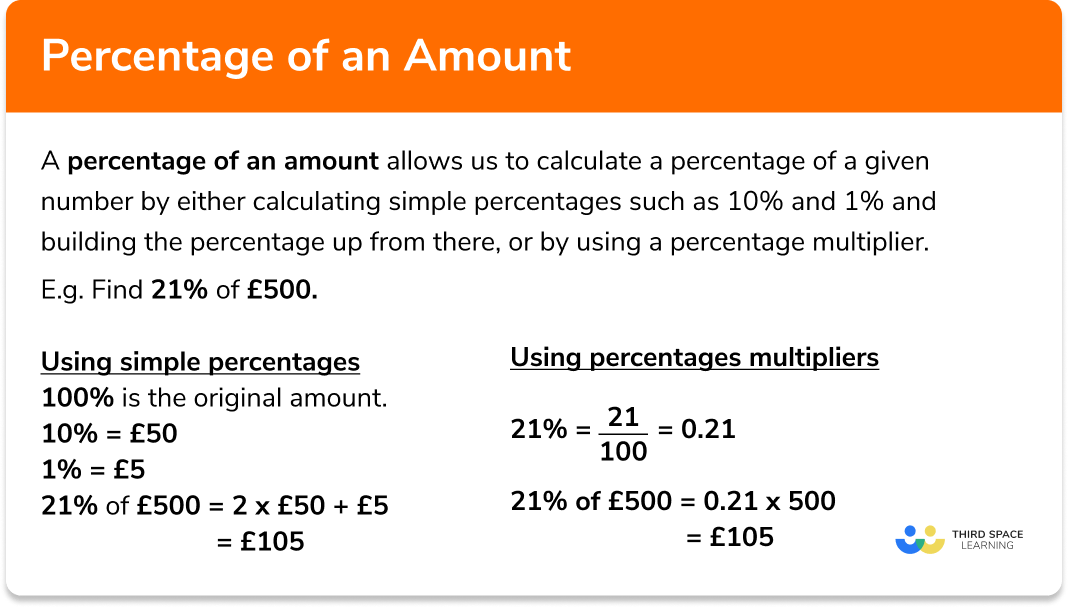
At its heart, a percentage represents a fraction of a whole, specifically one part in a hundred. The term “percent” derives from the Latin “per centum,” meaning “by the hundred.” When you see 20%, it literally means 20 out of 100, or 20/100, which simplifies to 0.20 in decimal form. This conversion to a decimal is often the crucial first step in any percentage calculation, enabling easier manipulation in formulas and financial models. Understanding this fundamental equivalence—that a percentage is just a specialized fraction or decimal—demystifies many seemingly complex financial calculations. It provides a common language for comparing disparate financial figures, whether it’s the yield on different savings accounts or the performance of various investment portfolios.
Why Percentage Literacy is Non-Negotiable for Financial Success
For individuals, percentage literacy empowers informed decisions on everything from credit card interest to mortgage rates, retirement savings goals, and budgeting for discretionary spending. In the realm of investing, percentages are the yardstick for measuring returns, risk, and portfolio allocation, dictating strategy and expected outcomes. For businesses, percentages illuminate profitability (profit margins), growth trajectories, market share, and operational efficiency, guiding strategic planning and resource deployment. A miscalculation or misunderstanding of a percentage can lead to significant financial missteps, lost opportunities, or even catastrophic losses. Therefore, mastering percentage calculations isn’t just about math; it’s about financial empowerment and safeguarding your economic future.
Mastering Basic Percentage Calculations for Everyday Finance
The ability to perform three core types of percentage calculations forms the bedrock of financial numeracy. These basic operations are versatile tools applicable across a vast spectrum of financial scenarios.
Calculating a Percentage of a Whole: Discounts, Taxes, and Commissions
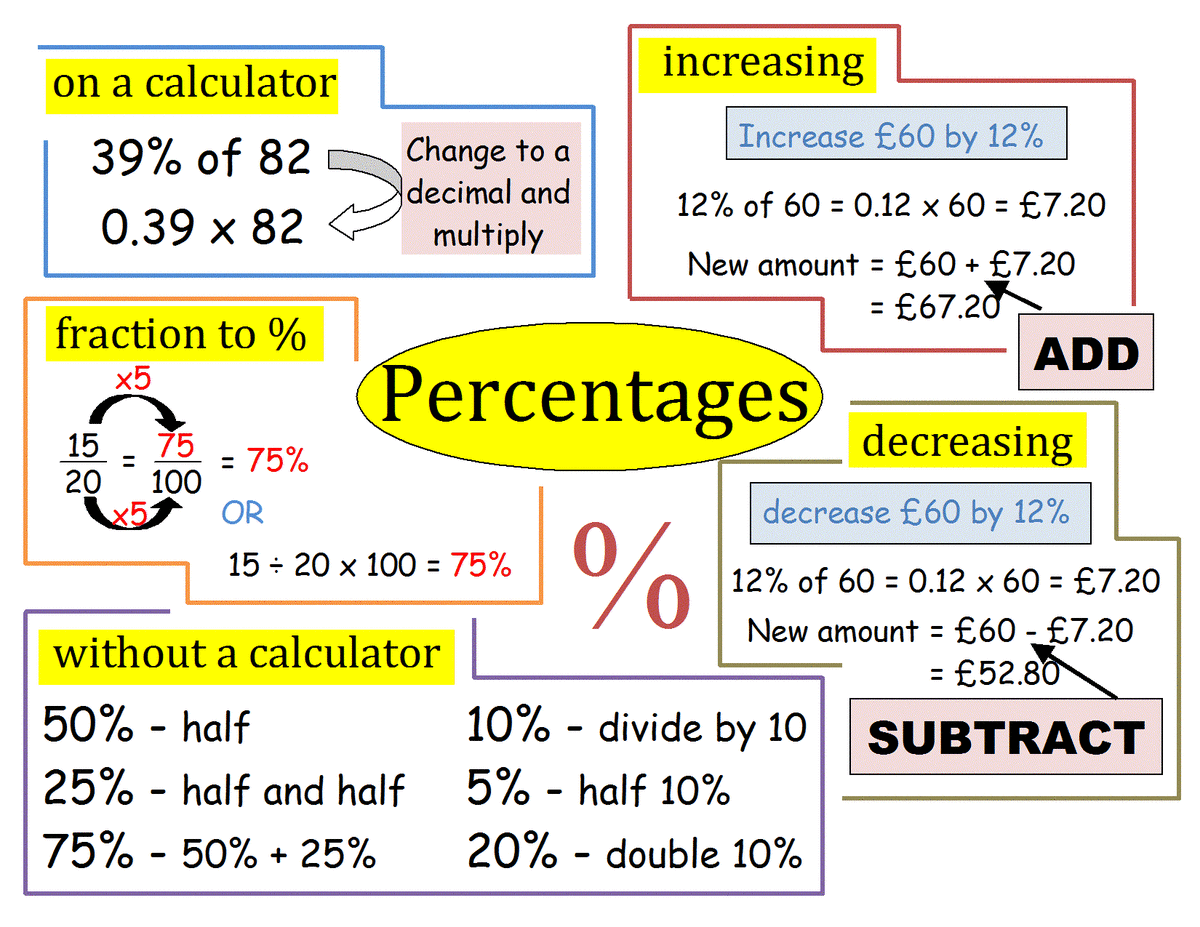
This is perhaps the most common application: finding out what a certain percentage of a given number is. The formula is straightforward: (Percentage / 100) * Whole Amount.
Example 1: Calculating a Discount
Imagine a jacket is priced at $150, and there’s a 25% discount.
- Convert 25% to a decimal: 25 / 100 = 0.25
- Multiply by the whole amount: 0.25 * $150 = $37.50
- The discount amount is $37.50. The new price is $150 – $37.50 = $112.50.
Example 2: Calculating Sales Tax
If you buy an item for $80 and the sales tax is 7.5%.
- Convert 7.5% to a decimal: 7.5 / 100 = 0.075
- Multiply by the item price: 0.075 * $80 = $6.00
- The sales tax is $6.00. The total cost is $80 + $6.00 = $86.00.
Example 3: Understanding Commissions
A salesperson earns a 10% commission on sales. If they sell $5,000 worth of products.
- Convert 10% to a decimal: 10 / 100 = 0.10
- Multiply by total sales: 0.10 * $5,000 = $500
- The commission earned is $500.
Determining Percentage Change: Growth, Loss, and Performance Metrics
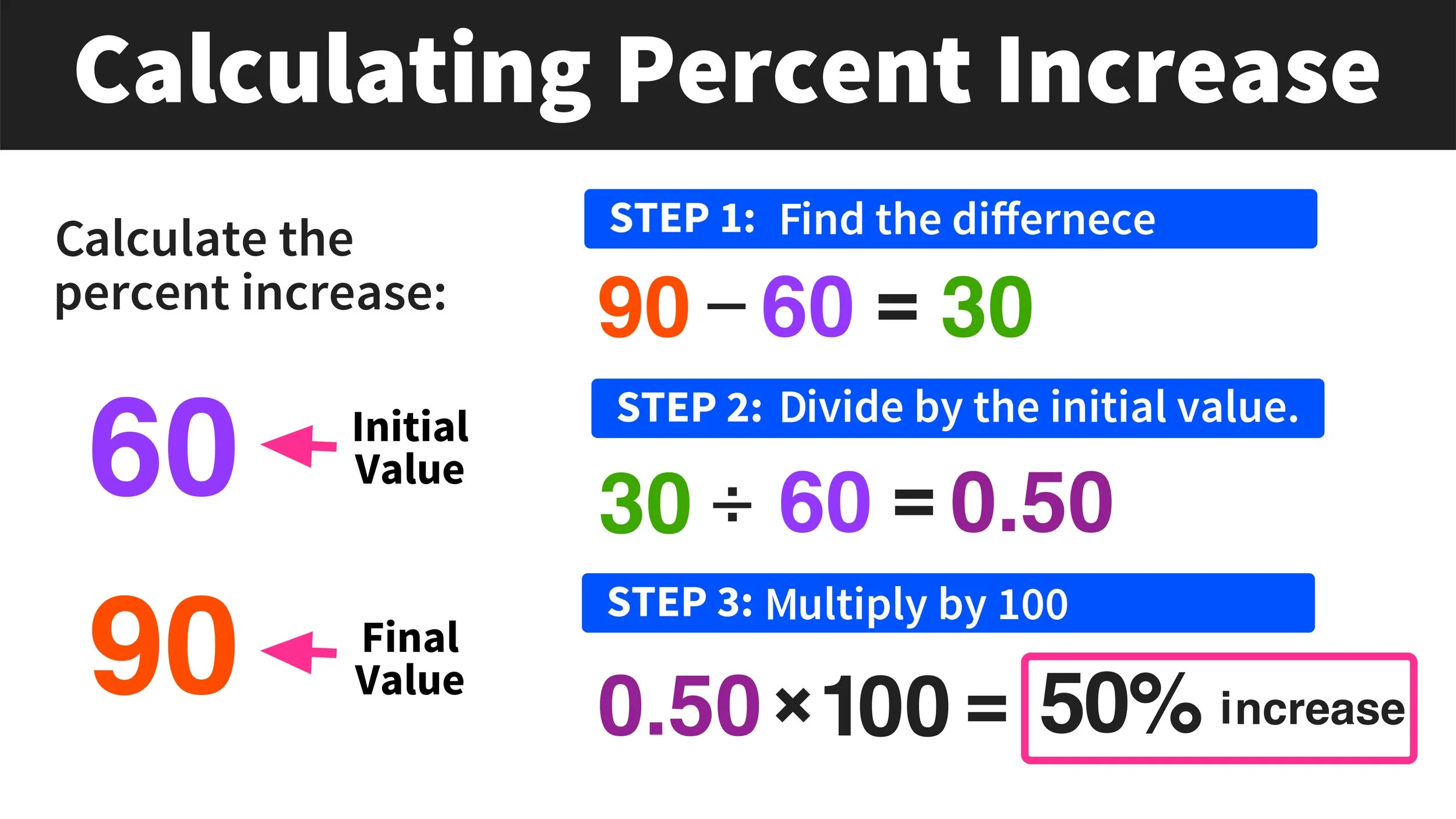
Percentage change measures the relative difference between an old value and a new value. This is critical for assessing growth, decline, and performance over time. The formula is: ((New Value – Old Value) / Old Value) * 100.
Example 1: Investment Growth
Your investment portfolio grew from $10,000 to $12,500 over a year.
- New Value = $12,500, Old Value = $10,000
- Change = $12,500 – $10,000 = $2,500
- Percentage Change = ($2,500 / $10,000) * 100 = 0.25 * 100 = 25% growth.
Example 2: Budget Overrun/Under-run
Your monthly budget for groceries was $400, but you spent $450.
- New Value = $450, Old Value = $400
- Change = $450 – $400 = $50
- Percentage Change = ($50 / $400) * 100 = 0.125 * 100 = 12.5% over budget.
Example 3: Price Decrease
The price of a stock dropped from $50 to $45.
- New Value = $45, Old Value = $50
- Change = $45 – $50 = -$5
- Percentage Change = (-$5 / $50) * 100 = -0.10 * 100 = -10% decrease.
Finding One Number as a Percentage of Another: Budgeting and Allocation
This calculation determines what proportion one number represents relative to a total, expressed as a percentage. The formula is: (Part / Whole) * 100.
Example 1: Budget Allocation
Your monthly income is $4,000, and you spend $1,200 on rent.
- Part = $1,200, Whole = $4,000
- Percentage = ($1,200 / $4,000) * 100 = 0.30 * 100 = 30% of your income goes to rent.
Example 2: Portfolio Diversification
You have $50,000 invested, with $15,000 in technology stocks.
- Part = $15,000, Whole = $50,000
- Percentage = ($15,000 / $50,000) * 100 = 0.30 * 100 = 30% of your portfolio is in tech stocks.
Advanced Financial Applications: Beyond the Basics
While the fundamental calculations remain the same, their application in more complex financial scenarios demands a deeper understanding of context and implications.
Personal Finance: Interest Rates, Loan Payments, and Savings Growth
Percentages are the bedrock of personal finance instruments. Interest rates on savings accounts (Annual Percentage Yield – APY), loans (Annual Percentage Rate – APR), and credit cards dictate how quickly your money grows or how much you pay for borrowing. Understanding how these percentages are applied—whether compounded daily, monthly, or annually—is crucial for financial planning. For instance, calculating the future value of savings or the total cost of a loan involves repetitive percentage applications over time, often facilitated by financial calculators or formulas like the compound interest formula.
Investing: Understanding Returns, Risk, and Portfolio Diversification
In investing, percentages quantify almost every aspect. Return on Investment (ROI) is a direct percentage calculation. Risk is often expressed as a percentage (e.g., probability of loss). Portfolio diversification strategies recommend allocating certain percentages of assets to different classes (e.g., 60% stocks, 30% bonds, 10% cash). Understanding how these percentages interact and change over time is essential for managing risk and optimizing returns. For example, comparing the percentage returns of different funds or calculating the percentage contribution of a single stock to overall portfolio volatility requires sophisticated use of these basic concepts.
Business Finance: Profit Margins, Revenue Growth, and Market Share
Businesses live and die by percentages. Gross profit margin (Gross Profit / Revenue * 100) and net profit margin (Net Income / Revenue * 100) are vital indicators of operational efficiency and profitability. Revenue growth (Percentage Change in Revenue) signals market acceptance and expansion. Market share (Company Sales / Total Market Sales * 100) positions a business within its industry. These metrics guide strategic decisions, attract investors, and inform competitive positioning. A seemingly small percentage change in a key metric can have massive implications for a company’s bottom line and future viability.
Leveraging Tools for Accurate Percentage Analysis
While mental math can handle simple calculations, accuracy and efficiency demand the use of appropriate tools, especially for more complex financial scenarios.
Everyday Calculators and Mental Math
For quick checks on discounts, tips, or simple interest, a basic calculator (even on your phone) or strong mental math skills are invaluable. Knowing that 10% is simply moving the decimal one place to the left, and 5% is half of that, can speed up many everyday financial decisions without needing a dedicated tool.
The Power of Spreadsheets for Complex Scenarios
When dealing with budgets, investment portfolios, loan amortization schedules, or business financial statements, spreadsheets like Microsoft Excel or Google Sheets become indispensable. They allow for complex formulas to be built once and then applied across numerous data points, automatically updating calculations as inputs change. Functions like PERCENTAGE, RATE, PV, and FV make intricate financial percentage calculations accessible and manageable, enabling scenario analysis and comprehensive financial modeling.
Specialized Financial Software and Online Tools
For highly specialized tasks, dedicated financial software (e.g., accounting software, investment analysis platforms) and online calculators (e.g., mortgage calculators, retirement planners) provide tailored solutions. These tools often abstract away the complex underlying percentage calculations, presenting users with clear results and projections. However, a foundational understanding of how these percentages are derived ensures that the outputs are interpreted correctly and that the limitations of the tools are understood.
Common Misinterpretations and Strategic Implications
Even with a grasp of the calculations, certain nuances in how percentages are presented or applied can lead to significant misunderstandings, particularly in finance.
Differentiating Percentage Points from Percentage Change
A common pitfall is confusing “percentage points” with “percentage change.” If an interest rate increases from 5% to 6%, it has increased by 1 percentage point. However, the percentage change is ((6-5)/5) * 100 = 20%. This distinction is critical in understanding the magnitude of change, especially when discussing policy rates, investment returns, or financial regulations. Misinterpreting this can lead to overestimating or underestimating the impact of financial shifts.
The Impact of Compounding: A Percentage Phenomenon
Compounding interest, often lauded as the “eighth wonder of the world,” is a powerful concept entirely driven by percentages. It means earning interest on your initial investment plus the accumulated interest. A seemingly small annual percentage rate, when compounded over many years, can lead to exponential growth in savings or, conversely, a massive accumulation of debt if applied to loans. Understanding the compounding effect of various financial products is vital for long-term wealth creation and debt management.
Using Percentages for Strategic Financial Decision-Making
Beyond mere calculation, percentages serve as powerful analytical tools for strategic financial decision-making. Comparing your personal savings rate to national averages, benchmarking your business’s profit margin against industry competitors, or evaluating the risk-adjusted returns of different investment options all rely on percentage-based analysis. By understanding how to find, interpret, and apply percentages strategically, individuals and businesses can make more informed choices that align with their financial goals and risk tolerance.
In conclusion, “how do you find out a percentage” is a gateway to profound financial literacy. From the simplest discount to the most complex investment analysis, percentages provide the universal language of money. By mastering their calculation and understanding their nuances within financial contexts, you gain an invaluable tool for managing your personal wealth, steering business operations, and making astute financial decisions that pave the way for prosperity.
aViewFromTheCave is a participant in the Amazon Services LLC Associates Program, an affiliate advertising program designed to provide a means for sites to earn advertising fees by advertising and linking to Amazon.com. Amazon, the Amazon logo, AmazonSupply, and the AmazonSupply logo are trademarks of Amazon.com, Inc. or its affiliates. As an Amazon Associate we earn affiliate commissions from qualifying purchases.