
Percentages are more than just numbers; they are a fundamental language of money, deeply embedded in nearly every aspect of personal finance, investing, and business operations. From understanding discounts and taxes to evaluating investment returns and managing debt, a solid grasp of percentage calculations is indispensable for informed financial decision-making. This guide will demystify percentages, providing you with the knowledge and tools to confidently navigate your financial world.
The Foundation: Understanding What a Percentage Truly Means
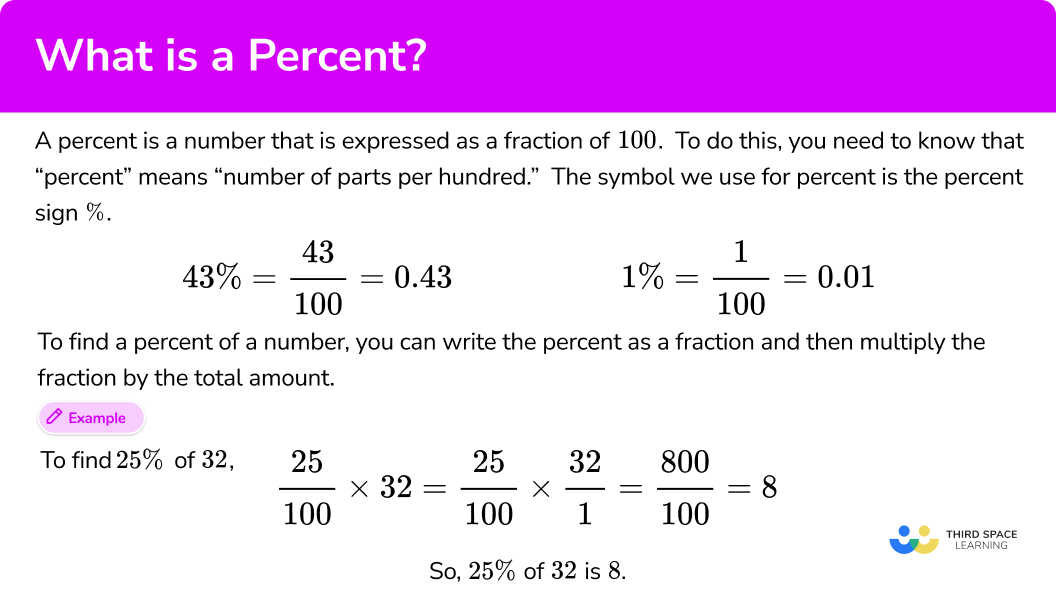
At its core, a percentage represents a fraction of a whole, expressed as a number out of 100. The term “percent” literally means “per hundred.” When you see 15%, it means 15 out of 100, or 15/100. This universal representation allows for easy comparison of proportions across different contexts.

The most basic formula for calculating a percentage is:
Percentage = (Part / Whole) * 100
For instance, if you earn $4,000 a month (the whole) and spend $1,200 on rent (the part), the percentage of your income going to rent is:
($1,200 / $4,000) * 100 = 0.30 * 100 = 30%
Understanding this fundamental relationship is the first step toward financial fluency, enabling you to break down complex financial figures into easily digestible proportions.
Mastering Core Percentage Calculations for Financial Insight
Once you grasp the basics, applying percentages to various financial scenarios becomes intuitive. Several common calculations form the bedrock of financial analysis.
Calculating Discounts and Sales Savings
One of the most common encounters with percentages is in retail, where discounts are offered as a percentage off the original price. To calculate the savings and the final price, you first determine the discount amount.
If an item costs $250 and is offered at a 20% discount:
- Calculate the discount amount:
20% of $250 = (20 / 100) * $250 = 0.20 * $250 = $50 - Calculate the final price:
$250 - $50 = $200
Alternatively, you can directly calculate the final price by realizing you’re paying 80% of the original price (100% – 20% discount): 0.80 * $250 = $200. This method is often quicker for mental calculations.
Understanding Taxes and Tips
Sales tax and tips are additions to an original amount, also calculated as a percentage. This involves adding the percentage amount rather than subtracting it.
Consider a restaurant bill of $60 with an 8% sales tax and a desire to leave a 15% tip on the original food cost:
- Calculate sales tax:
8% of $60 = (8 / 100) * $60 = 0.08 * $60 = $4.80 - Calculate tip:
15% of $60 = (15 / 100) * $60 = 0.15 * $60 = $9.00 - Total bill (with tax and tip):
$60 + $4.80 + $9.00 = $73.80
When dealing with a percentage increase, such as adding tax, you can also multiply the original amount by (1 + percentage/100). For the bill with tax: $60 * (1 + 0.08) = $60 * 1.08 = $64.80.
Determining Percentage Increase or Decrease
This calculation is vital for tracking financial growth or decline, whether it’s the value of an investment, the rise in expenses, or changes in income.
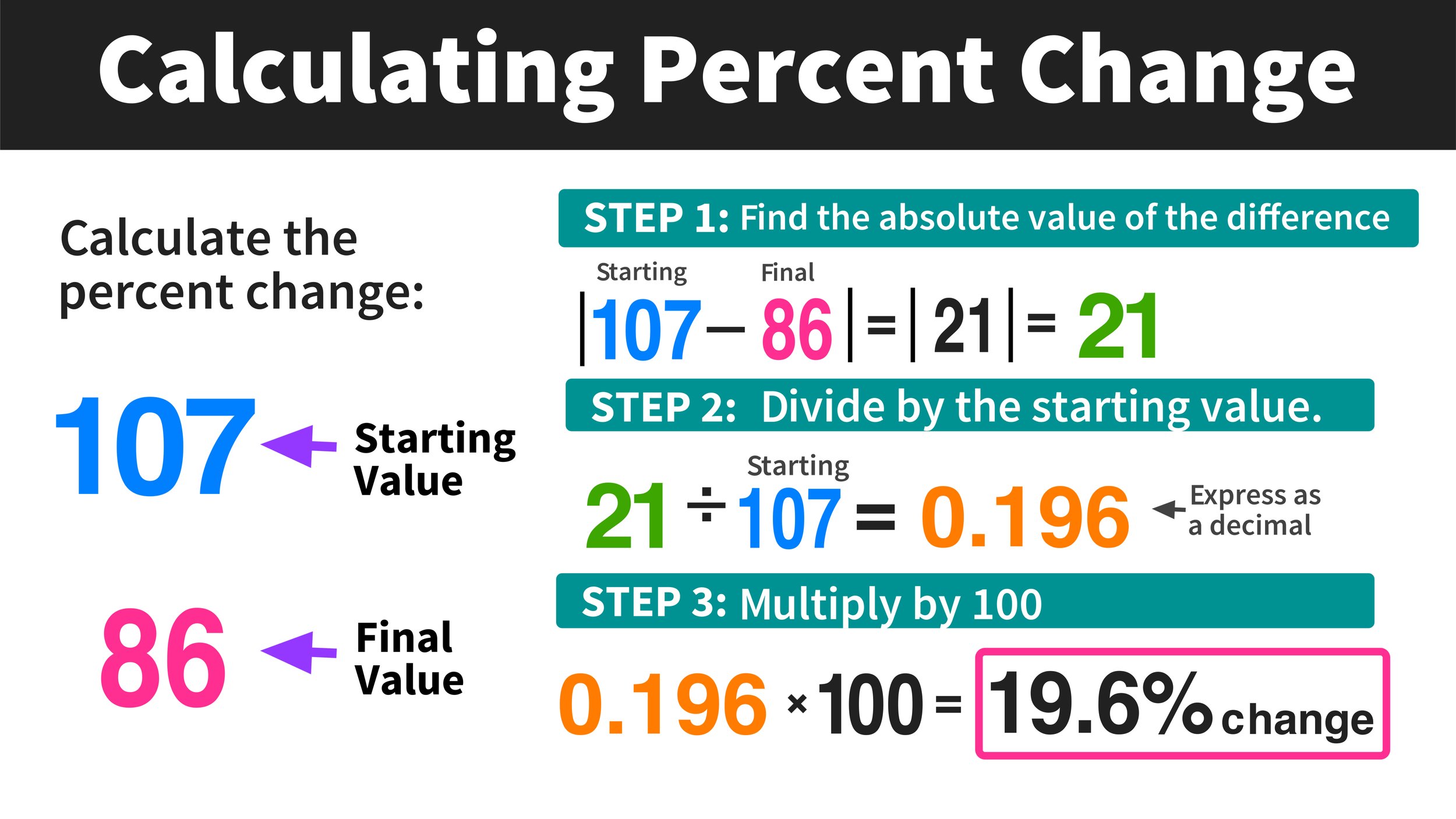
The formula for percentage change is:
Percentage Change = ((New Value - Old Value) / Old Value) * 100
- If your portfolio grew from $10,000 to $12,000:
(($12,000 - $10,000) / $10,000) * 100 = ($2,000 / $10,000) * 100 = 0.20 * 100 = 20% increase. - If an expense decreased from $500 to $450:
(($450 - $500) / $500) * 100 = (-$50 / $500) * 100 = -0.10 * 100 = -10% decrease.
Positive results indicate an increase, while negative results signify a decrease.
Percentages in Personal Finance: Everyday Applications
Percentages aren’t just for quick calculations; they are the backbone of sound personal financial management, influencing everything from debt to long-term wealth accumulation.
Unpacking Interest Rates: Loans, Savings, and Credit Cards
Interest rates, expressed as percentages, dictate the cost of borrowing money and the earnings on savings. Understanding them is crucial for managing debt and maximizing returns.
- Loans (Mortgages, Auto Loans, Personal Loans): The Annual Percentage Rate (APR) determines how much interest you pay annually on the principal loan amount. A higher APR means higher monthly payments and a greater total cost over the loan’s lifetime.
- Savings Accounts and CDs: Banks pay you interest, typically a low percentage, on your deposited money. The Annual Percentage Yield (APY) reflects the true annual rate of return, taking into account compounding interest.
- Credit Cards: Credit card interest rates are notoriously high, often in the double digits. Carrying a balance means paying a significant percentage of that balance in interest each month, quickly accumulating debt.
Budgeting with Percentages: Allocating Your Income Wisely
Budgeting often involves allocating specific percentages of your income to different categories. A popular method is the 50/30/20 rule:
- 50% for Needs: Housing, utilities, groceries, transportation, insurance.
- 30% for Wants: Dining out, entertainment, hobbies, travel, shopping.
- 20% for Savings and Debt Repayment: Emergency fund, retirement contributions, paying down high-interest debt.
This percentage-based approach provides a clear framework for managing cash flow, ensuring you meet essential obligations while making progress toward financial goals and enjoying discretionary spending. Tracking your actual spending as a percentage of your income helps identify areas for adjustment.
Measuring Investment Performance and Growth
In the investment world, percentages are indispensable for evaluating performance, managing risk, and diversifying portfolios.
- Return on Investment (ROI): This measures the profitability of an investment relative to its cost.
ROI = ((Current Value - Initial Investment) / Initial Investment) * 100. A positive ROI indicates a gain, while a negative one signifies a loss. - Portfolio Allocation: Investors often diversify their holdings by allocating specific percentages of their portfolio to different asset classes (e.g., 60% stocks, 30% bonds, 10% cash) to manage risk and align with their financial objectives.
- Annualized Returns: This standardizes investment performance over different timeframes, allowing for consistent comparison of various investments on an annual basis.
Beyond the Basics: Advanced Financial Concepts and Percentage Pitfalls
While basic percentage calculations are straightforward, their application in more complex financial scenarios can introduce nuances that require careful attention.
The Impact of Inflation on Your Purchasing Power
Inflation, measured as a percentage, represents the rate at which the general level of prices for goods and services is rising, and consequently, the purchasing power of currency is falling. If your savings account offers a 2% interest rate, but inflation is 3%, your real return (the actual increase in purchasing power) is negative 1% (2% – 3%). Understanding inflation is critical for preserving and growing wealth over the long term.
Compound Interest: The Power of Percentages Over Time
Often called the “eighth wonder of the world,” compound interest refers to earning interest not only on your initial principal but also on the accumulated interest from previous periods. This exponential growth makes percentages incredibly powerful for long-term investing and detrimental for unchecked debt. For example, if you invest $1,000 at a 7% annual interest rate, after one year, you’ll have $1,070. In the second year, you’ll earn 7% on $1,070, not just the original $1,000, illustrating how percentages build on themselves.
Avoiding Common Percentage Miscalculations
Even seasoned financial professionals can fall prey to subtle percentage traps.
- Confusing Base Values: A common mistake is misinterpreting the “whole.” If an item’s price increases by 10% and then decreases by 10%, it does not return to its original price.
($100 * 1.10 = $110)then($110 * 0.90 = $99). The base for the second calculation changed. - Percentage Points vs. Percentage Change: An interest rate increase from 5% to 6% is a 1 percentage point increase, but a 20% percentage change (
((6-5)/5)*100). These terms are not interchangeable and have significant implications. - Annual vs. Monthly Rates: Always be mindful of the time frame. A 1% monthly interest rate on a loan is not 12% annually if compounding is involved; it’s significantly higher due to compounding.
Leveraging Tools for Accurate Financial Percentage Calculations
In today’s digital age, you don’t need to perform every percentage calculation manually. Various tools can simplify the process and minimize errors, especially for complex financial planning.
- Basic Calculators: For simple additions, subtractions, and percentages, a standard calculator on your phone or computer is sufficient.
- Spreadsheet Software: Programs like Microsoft Excel or Google Sheets are invaluable for budgeting, tracking investments, and performing sophisticated financial analysis. You can set up formulas that automatically calculate percentages for expenses, income allocation, investment returns, and loan amortization schedules, allowing for dynamic adjustments and “what-if” scenarios.
- Online Financial Calculators: Websites offer specialized calculators for mortgages, retirement planning, loan repayments, and savings growth. These tools often incorporate complex percentage formulas, such as those for compound interest and amortization, to provide detailed insights into your financial future.
Mastering percentages is not just about crunching numbers; it’s about gaining clarity and control over your financial life. By understanding how percentages work and applying them consistently, you empower yourself to make smarter decisions, grow your wealth, and achieve your financial aspirations.
aViewFromTheCave is a participant in the Amazon Services LLC Associates Program, an affiliate advertising program designed to provide a means for sites to earn advertising fees by advertising and linking to Amazon.com. Amazon, the Amazon logo, AmazonSupply, and the AmazonSupply logo are trademarks of Amazon.com, Inc. or its affiliates. As an Amazon Associate we earn affiliate commissions from qualifying purchases.