
Understanding how to calculate the percentage of a number is a fundamental skill that permeates nearly every aspect of personal and business finance. From evaluating investment returns and dissecting budget allocations to understanding loan interest and navigating sales discounts, percentages provide a universal language for comparison and analysis. Mastering this core mathematical concept is not just about arithmetic; it’s about gaining clarity and control over your financial decisions.
The Fundamental Role of Percentages in Finance
At its core, a percentage represents a portion of a whole, expressed as a fraction of 100. The term “percent” literally means “per one hundred.” This standardized way of expressing ratios makes it incredibly useful for comparing different quantities or measuring changes over time, regardless of the original total amounts. In the world of money, where numbers can vary wildly from a few dollars to millions, percentages offer a consistent framework for interpretation.
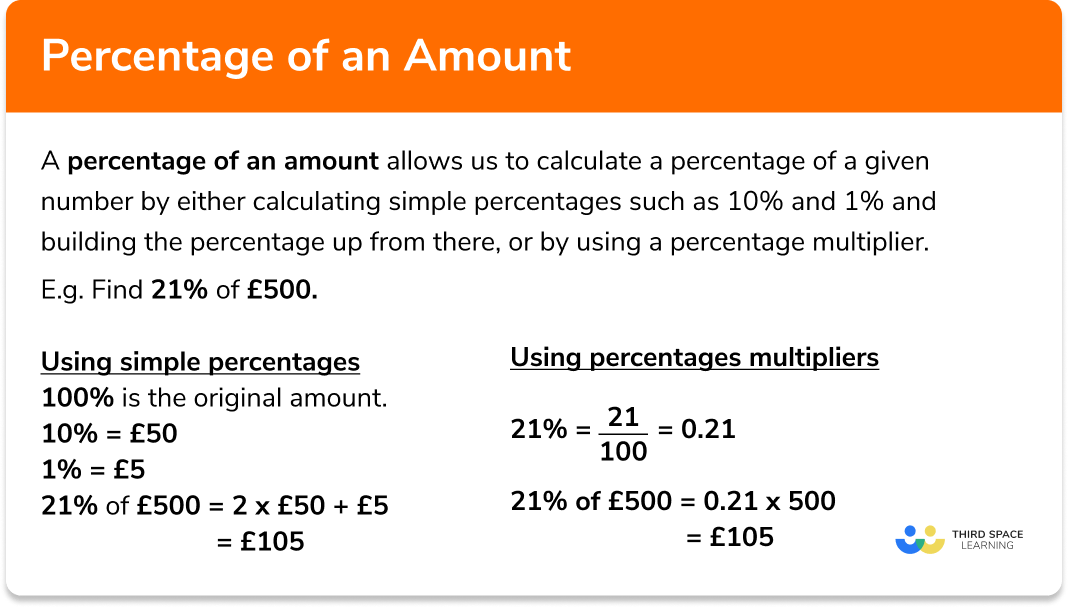
Understanding the Core Calculation
Calculating a percentage involves a simple formula, but its application can yield profound financial insights. There are generally two main types of percentage calculations you’ll encounter:
-
Finding a percentage of a number: This answers questions like “What is 15% of $200?”
- Formula:
Percentage (as a decimal) × Whole Number = Part - To convert a percentage to a decimal, divide it by 100. So, 15% becomes 0.15.
- Example: To find 15% of $200:
0.15 × $200 = $30. - Financial Application: Calculating a sales tax amount, a discount, or a commission payout.
- Formula:
-
Finding what percentage one number is of another: This answers questions like “$30 is what percentage of $200?”
- Formula:
(Part / Whole) × 100 = Percentage - Example: To find what percentage $30 is of $200:
($30 / $200) × 100 = 0.15 × 100 = 15%. - Financial Application: Determining your profit margin, your investment return rate, or the proportion of your budget spent on a specific category.
- Formula:
These two foundational calculations form the bedrock for almost all financial percentage analysis.
Why Percentages Matter for Your Money
Percentages offer unparalleled advantages in financial management:
- Comparability: They allow you to compare vastly different figures on a level playing field. For instance, comparing a 5% interest rate on a $1,000 loan to a 5% interest rate on a $100,000 mortgage immediately shows the proportional cost, even though the absolute dollar amounts are different.
- Proportionality: Percentages clearly illustrate the size of a component relative to the total. This is crucial for understanding budget allocation or portfolio diversification.
- Tracking Change: Measuring percentage increase or decrease helps gauge growth, decline, or performance over time (e.g., a 10% increase in income, a 2% drop in investment value).
- Decision Making: Informed financial decisions, whether buying a home, investing in stocks, or managing debt, often hinge on interpreting percentage-based metrics.
Applying Percentages in Personal Finance
Personal finance is replete with scenarios where a firm grasp of percentage calculations can save you money, help you grow wealth, and provide peace of mind.
Budgeting and Expense Tracking
A fundamental use of percentages in personal finance is budgeting. By categorizing your expenses and expressing them as a percentage of your total income, you gain a clear picture of where your money goes.
- Example: If your monthly take-home income is $4,000, and you spend $1,200 on rent, $600 on groceries, and $400 on transportation:
- Rent:
($1,200 / $4,000) × 100 = 30% - Groceries:
($600 / $4,000) × 100 = 15% - Transportation:
($400 / $4,000) × 100 = 10%
- Rent:
- This allows you to adhere to common budgeting rules (like the 50/30/20 rule for needs/wants/savings) and identify areas where you might need to cut back. If your “wants” category is consuming 45% of your income, you know you’re exceeding the recommended 30%.
Savings Goals and Progress
Setting savings goals and tracking your progress is more effective with percentages.
- Example: You aim to save 10% of your $4,000 monthly income.
- Monthly savings goal:
0.10 × $4,000 = $400.
- Monthly savings goal:
- If you’ve saved $10,000 towards a $50,000 down payment on a house:
- Progress:
($10,000 / $50,000) × 100 = 20%. This tells you you’re one-fifth of the way there.
- Progress:
Debt Management and Interest
Understanding interest rates, which are always expressed as percentages, is critical for managing debt. Whether it’s a credit card, personal loan, or mortgage, the interest rate dictates the cost of borrowing.
- Example: A credit card with a 20% Annual Percentage Rate (APR). If you carry a balance of $1,000 for a month, the approximate monthly interest charge would be
(20% / 12 months) × $1,000 = 0.01667 × $1,000 ≈ $16.67. While this is a simplified calculation, it illustrates how even small percentages can accrue significant costs over time. - Similarly, understanding the principal portion versus the interest portion of your loan payments often involves percentage breakdowns.
Discounts, Sales, and Taxes
Everyday transactions frequently involve percentages. From a 25% off sale at your favorite store to a 7% sales tax on a purchase, these calculations directly impact your spending.
- Example 1 (Discount): An item costs $80, with a 25% discount.
- Discount amount:
0.25 × $80 = $20. - New price:
$80 - $20 = $60.
- Discount amount:
- Example 2 (Sales Tax): You buy an item for $60 in an area with 7% sales tax.
- Tax amount:
0.07 × $60 = $4.20. - Total cost:
$60 + $4.20 = $64.20.
Being able to quickly perform these calculations in your head or with a calculator can empower you to make smarter purchasing decisions.
- Tax amount:
Percentages in Investing and Wealth Building
For investors, percentages are the primary language for evaluating performance, managing risk, and planning for the future.

Calculating Investment Returns (ROI)
Return on Investment (ROI) is a key metric, almost always expressed as a percentage, to measure the profitability of an investment relative to its cost.
- Formula:
((Current Value - Original Cost) / Original Cost) × 100 = ROI % - Example: You invested $5,000 in a stock, and it’s now worth $6,500.
- ROI:
(($6,500 - $5,000) / $5,000) × 100 = ($1,500 / $5,000) × 100 = 0.30 × 100 = 30%.
This 30% tells you how effective your investment was, allowing you to compare it against other investment opportunities or market benchmarks.
- ROI:
Portfolio Allocation and Diversification
Smart investors diversify their portfolios across different asset classes (stocks, bonds, real estate) to mitigate risk. This allocation is typically expressed in percentages.
- Example: A common aggressive allocation might be 80% stocks and 20% bonds. If your total portfolio is $100,000:
- Stock portion:
0.80 × $100,000 = $80,000. - Bond portion:
0.20 × $100,000 = $20,000.
Regularly checking your portfolio’s actual percentages against your target allocation helps you rebalance and stay aligned with your risk tolerance and financial goals.
- Stock portion:
Understanding Fees and Commissions
Investment fees, whether for mutual funds, financial advisors, or trading platforms, are often expressed as percentages. Even a seemingly small percentage can have a significant impact on your long-term returns due to compounding.
- Example: An investment fund has an annual expense ratio of 1.5%. If you have $100,000 invested, the annual fee is
0.015 × $100,000 = $1,500. Over decades, these fees can erode a substantial portion of your potential gains. Being aware of these percentage-based costs is crucial for maximizing your wealth.
Leveraging Percentages for Business and Side Hustles
For entrepreneurs, small business owners, and those with side hustles, percentage calculations are indispensable for pricing, profitability analysis, and strategic growth.
Profit Margins and Markups
Understanding gross and net profit margins, expressed as percentages, is vital for assessing the health and sustainability of a business.
- Gross Profit Margin Formula:
((Revenue - Cost of Goods Sold) / Revenue) × 100 - Example: A product sells for $100, and its cost to produce is $60.
- Gross Profit:
$100 - $60 = $40. - Gross Profit Margin:
($40 / $100) × 100 = 40%. This indicates that 40 cents of every dollar of revenue is gross profit.
- Gross Profit:
- Markup Percentage: This determines how much to price an item above its cost.
- Formula:
((Selling Price - Cost) / Cost) × 100 - If you buy an item for $60 and sell it for $100:
(($100 - $60) / $60) × 100 = ($40 / $60) × 100 ≈ 66.67% markup.
- Formula:
Sales Growth and Market Share
Businesses track growth and market penetration using percentages.
- Year-over-Year Growth: If sales were $50,000 last year and $60,000 this year:
(($60,000 - $50,000) / $50,000) × 100 = ($10,000 / $50,000) × 100 = 20% growth.
- Market Share: If total market sales are $1 million and your business generated $150,000 in sales:
- Market Share:
($150,000 / $1,000,000) × 100 = 15%.
These percentages offer critical insights into business performance and competitive standing.
- Market Share:
Commission Structures and Payouts
Many sales roles and affiliate marketing models are based on commission percentages.
- Example: A salesperson earns a 5% commission on all sales. If they make $10,000 in sales:
- Commission earned:
0.05 × $10,000 = $500.
- Commission earned:
- Understanding these structures is vital for forecasting income and motivating sales teams.
Tools and Tips for Accurate Percentage Calculations
While the underlying math is straightforward, accuracy is paramount when dealing with financial figures.
Financial Calculators and Spreadsheets
For complex calculations or to prevent manual errors, leveraging financial tools is highly recommended.
- Basic Calculators: Most standard calculators have a ‘%’ button, which can simplify some percentage operations (e.g., to find 15% of 200, type
200 x 15 % =). However, understanding the manual formula ensures you can always perform the calculation correctly. - Spreadsheets (Excel, Google Sheets): These are invaluable for managing larger datasets and automating percentage calculations. You can set up formulas that automatically update as your numbers change. For instance, in Excel,
=A1*0.15would calculate 15% of the value in cell A1.= (A2/A3)*100would show A2 as a percentage of A3. - Online Converters and Financial Apps: Many websites and mobile apps offer specialized percentage calculators for loans, tips, discounts, and investment returns, streamlining the process.

Avoiding Common Mistakes
- Decimal Conversion: The most frequent error is forgetting to convert the percentage to a decimal (by dividing by 100) before multiplying, or conversely, forgetting to multiply by 100 when expressing a fraction as a percentage.
- Understanding the “Whole”: Be clear about what constitutes the “whole” or the base number when calculating a percentage. Is it the original price, the current income, or the total portfolio value? Misidentifying the base will lead to incorrect results.
- Percentage Point vs. Percentage Change: A critical distinction in finance. If an interest rate goes from 5% to 6%, it’s a 1 percentage point increase. However, it’s a
((6-5)/5) * 100 = 20%percentage change. Always be precise in your language and calculations.
By consistently applying these principles and utilizing available tools, anyone can confidently calculate percentages and harness their power to make sound financial decisions, optimize investments, and manage money more effectively.
aViewFromTheCave is a participant in the Amazon Services LLC Associates Program, an affiliate advertising program designed to provide a means for sites to earn advertising fees by advertising and linking to Amazon.com. Amazon, the Amazon logo, AmazonSupply, and the AmazonSupply logo are trademarks of Amazon.com, Inc. or its affiliates. As an Amazon Associate we earn affiliate commissions from qualifying purchases.