
In the intricate world of personal finance, investing, and business, percentages are more than just mathematical constructs; they are the bedrock of informed decision-making. From calculating the interest on a loan to understanding your investment returns, deciphering discounts, or analyzing profit margins, the ability to “find percents” is not merely a numerical skill but a critical component of financial literacy. This guide demystifies percentages, providing a clear roadmap to understanding, calculating, and applying them effectively to achieve greater financial control and success.
Understanding the Core: What Exactly is a Percent?
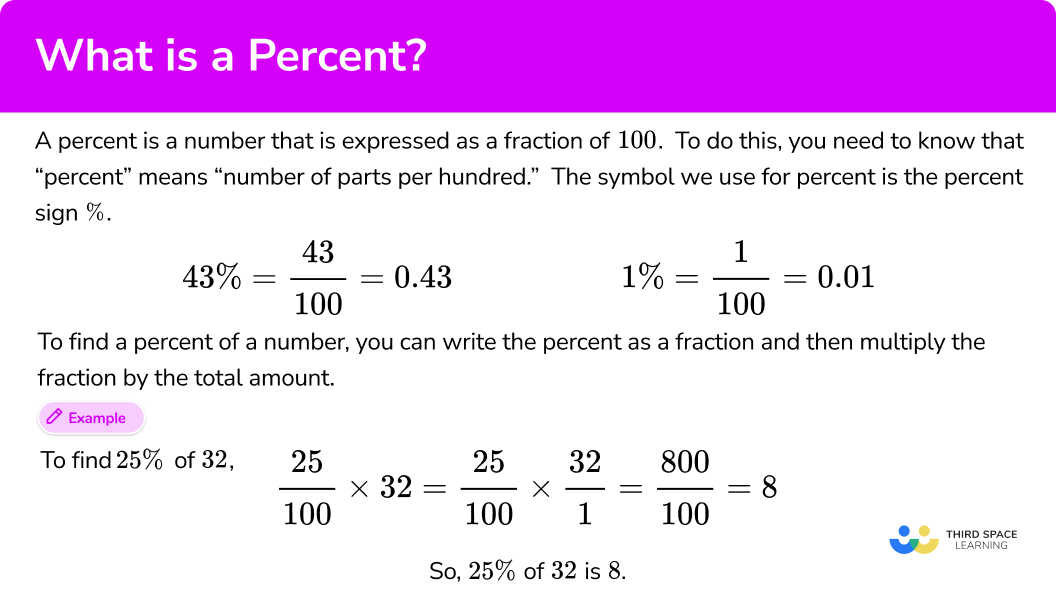
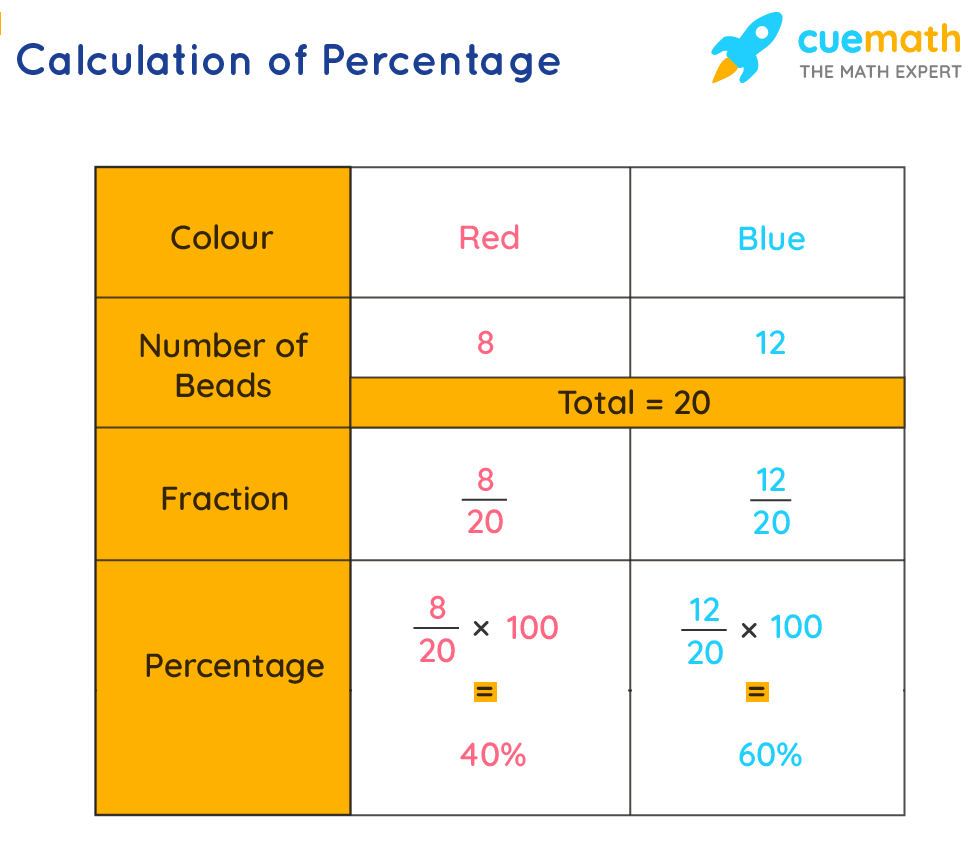
Before diving into calculations, it’s crucial to grasp the fundamental concept of a percent. The word “percent” originates from the Latin “per centum,” meaning “by the hundred.” Essentially, a percentage represents a fraction of a whole, specifically one hundredth of it. So, 25% means 25 out of 100, or 25/100. This simple idea has profound implications across all financial domains.
Percent as a Fraction and Decimal
Understanding the interchangeability of percents, fractions, and decimals is foundational.
- Percent to Fraction: To convert a percent to a fraction, simply place the percentage value over 100 and simplify if possible. For example, 75% = 75/100 = 3/4.
- Percent to Decimal: To convert a percent to a decimal, divide the percentage value by 100 (or equivalently, move the decimal point two places to the left). For instance, 45% = 45 / 100 = 0.45.
- Decimal to Percent: To convert a decimal to a percent, multiply the decimal by 100 (or move the decimal point two places to the right) and add the percent symbol. For example, 0.8 = 0.80 * 100 = 80%.
This conversion ability is essential because many financial calculations, especially in spreadsheets or financial software, require decimals rather than percentages. Knowing how to fluently move between these forms ensures accuracy in your financial modeling and analysis.
Why Percentages Matter in Finance
Percentages provide a standardized way to compare quantities and express relationships, regardless of the absolute numbers involved. A 5% interest rate on a $1,000 loan is directly comparable to a 5% interest rate on a $100,000 loan, even though the dollar amounts differ wildly. This standardization allows for:
- Clearer Comparisons: Easily compare investment returns, discount rates, or salary increases.
- Contextual Understanding: Put raw numbers into perspective (e.g., a $50 price drop means more on a $100 item than on a $10,000 item, and percentages quantify this).
- Informed Decisions: Evaluate financial products, budget allocations, and investment opportunities with greater clarity.
Core Formulas for Percentage Calculation
Mastering a few fundamental formulas is all it takes to confidently calculate percentages in most financial scenarios. These formulas form the backbone of financial analysis.
Calculating a Percentage of a Number
This is perhaps the most common percentage calculation you’ll encounter. You want to find out what a certain percentage of a total value is.
Formula: Part = Percent (as a decimal) × Whole
Example (Personal Finance – Discounts): You want to buy a jacket that costs $120, and it’s on sale for 25% off.
- Convert 25% to a decimal: 0.25
- Discount amount = 0.25 × $120 = $30
- Sale price = $120 – $30 = $90
Finding the Whole When Given a Part and Percent
Sometimes you know a part of a number and what percentage it represents, and you need to find the total (the whole).
Formula: Whole = Part / Percent (as a decimal)
Example (Business Finance – Commission): You earned a $500 commission this month, which represents 10% of your total sales. What were your total sales?
- Convert 10% to a decimal: 0.10
- Total Sales = $500 / 0.10 = $5,000
Determining Percentage Change
This formula is crucial for tracking growth, decline, and performance over time. It tells you the proportional increase or decrease between two values.
Formula: Percentage Change = ((New Value - Old Value) / Old Value) × 100%
Example (Investing – Stock Performance): You bought a stock for $50 per share, and it’s now trading at $65 per share. What is the percentage increase?
- Percentage Change = (($65 – $50) / $50) × 100%
- Percentage Change = ($15 / $50) × 100%
- Percentage Change = 0.30 × 100% = 30% increase
Calculating Percentage Increase/Decrease
This is a specific application of percentage change, useful for understanding how much a value has grown or shrunk relative to its original size.
For Increase: Percentage Increase = ((Amount of Increase) / Original Amount) × 100%
For Decrease: Percentage Decrease = ((Amount of Decrease) / Original Amount) × 100%
Example (Personal Finance – Expense Tracking): Your monthly grocery bill increased from $400 last month to $450 this month. What is the percentage increase?
- Amount of Increase = $450 – $400 = $50
- Percentage Increase = ($50 / $400) × 100% = 0.125 × 100% = 12.5%
Practical Applications in Personal Finance
The ability to calculate percents is not just an academic exercise; it’s a vital life skill, particularly in managing your personal finances effectively.
Decoding Discounts and Sales
Every savvy shopper understands the power of a percentage discount. Whether it’s “20% off,” “buy one, get one 50% off,” or “save an additional 15% at checkout,” knowing how to calculate the actual savings is key to smart spending.
- Multi-tiered Discounts: Be aware of how successive discounts are applied. A “20% off” item with an “additional 10% off” coupon usually means the 10% is taken off the reduced price, not the original price, resulting in less total savings than if both percentages were applied to the original price simultaneously. For example, $100 item: 20% off = $80. Additional 10% off $80 = $8. Total discount $28, not $30.
Navigating Interest Rates (Loans, Savings, Credit Cards)
Interest rates are almost universally expressed as percentages and are central to borrowing and saving.
- Loan Interest: Whether it’s a mortgage, car loan, or personal loan, understanding the Annual Percentage Rate (APR) allows you to calculate your interest payments and the total cost of borrowing. A higher APR means more interest paid over the life of the loan.
- Savings and Investments: Conversely, a higher Annual Percentage Yield (APY) on a savings account or certificate of deposit means your money grows faster. Knowing how to calculate compound interest (where interest earns interest) involves applying percentages repeatedly over time.
- Credit Card Interest: High credit card APRs can quickly balloon debt if balances are carried over. Calculating the daily interest on an outstanding balance is crucial for managing this debt effectively.
Budgeting and Expense Allocation
Percentages are invaluable for creating and sticking to a budget. Many popular budgeting rules, like the “50/30/20 rule” (50% needs, 30% wants, 20% savings/debt repayment), are percentage-based.
- Allocating Income: You can allocate a specific percentage of your take-home pay to different categories like housing, food, transportation, entertainment, and savings. This provides a flexible framework that adjusts automatically if your income changes.
- Tracking Spending: Monitor how much of your budget you’re actually spending in each category. If you spent $500 on dining out this month and your total budget is $3,000, that’s 16.7% of your budget, helping you identify areas for potential cuts or adjustments.
Calculating Tips and Service Charges
In many service industries, tipping is customary, and tips are almost always expressed as percentages. Quickly calculating 15%, 18%, or 20% of a bill allows for courteous and accurate tipping. Similarly, some services or establishments might add a percentage-based service charge, which you should be able to verify.
Percentages in Investing and Business
Moving beyond personal daily finances, percentages become even more sophisticated and critical in the realms of investing and business.
Return on Investment (ROI)
ROI is a fundamental metric used to evaluate the efficiency or profitability of an investment. It’s almost always expressed as a percentage.
Formula: ROI = ((Net Profit from Investment - Cost of Investment) / Cost of Investment) × 100%
Example: You invest $1,000 in a small business, and it returns $1,200 (your original $1,000 plus a $200 profit).
- ROI = (($200) / $1,000) × 100% = 0.20 × 100% = 20%
A higher ROI indicates a more efficient and profitable investment, enabling comparison between different investment opportunities.
Profit Margins and Markups
For businesses, understanding profit margins is non-negotiable for pricing, managing costs, and assessing financial health.
- Gross Profit Margin:
((Revenue - Cost of Goods Sold) / Revenue) × 100%– Indicates the percentage of revenue left after accounting for the direct costs of producing goods or services. - Net Profit Margin:
((Net Profit) / Revenue) × 100%– Shows the percentage of revenue left after all expenses (including taxes and interest) have been deducted. - Markup:
((Selling Price - Cost) / Cost) × 100%– This is the percentage by which a product’s cost is increased to arrive at its selling price.
These percentage metrics allow businesses to benchmark their performance against competitors and industry standards, identify inefficiencies, and make strategic pricing decisions.
Market Share Analysis
In business strategy, market share is the percentage of total sales in an industry generated by a particular company.
Formula: Market Share = (Company's Sales / Total Market Sales) × 100%
Understanding market share trends is vital for assessing a company’s competitive position, identifying growth opportunities, and formulating marketing strategies.
Portfolio Allocation
Investors use percentages to allocate their capital across different asset classes (stocks, bonds, real estate, cash) to achieve diversification and manage risk. For example, a common allocation might be “60% stocks, 30% bonds, 10% cash.” As asset values fluctuate, investors periodically rebalance their portfolios to maintain their desired percentage allocations.
Tools and Tips for Effortless Percent Calculations
While understanding the underlying math is crucial, modern financial life also offers tools to streamline percentage calculations.
Leveraging Calculators (Physical and Digital)
Basic calculators, whether physical or built into your smartphone or computer, are indispensable for quick and accurate percentage calculations. Most scientific and even basic calculators have a “%” button, which can simplify some operations, though understanding how it works is key to avoiding errors.
Spreadsheets (Excel, Google Sheets)
For more complex financial modeling, budgeting, and analysis, spreadsheets like Microsoft Excel or Google Sheets are incredibly powerful. They allow you to set up formulas once and apply them to vast datasets, automating percentage calculations. For example, you can easily calculate percentage change across years of financial data, determine what percentage of your income each expense category consumes, or model different investment scenarios.
Financial Apps and Online Tools
Many personal finance apps (e.g., Mint, YNAB), investment platforms (e.g., Robinhood, Fidelity), and banking apps automatically display percentages for your budget, investment returns, or account growth. Online calculators are also readily available for specific tasks like mortgage interest, compound interest, or tip calculations. While these tools provide convenience, the ability to mentally estimate or double-check their outputs using your foundational percentage knowledge is a valuable safeguard.
Mental Math Strategies for Quick Estimates
For everyday situations like discounts, tips, or quick budget checks, developing mental math shortcuts can save time and foster confidence.
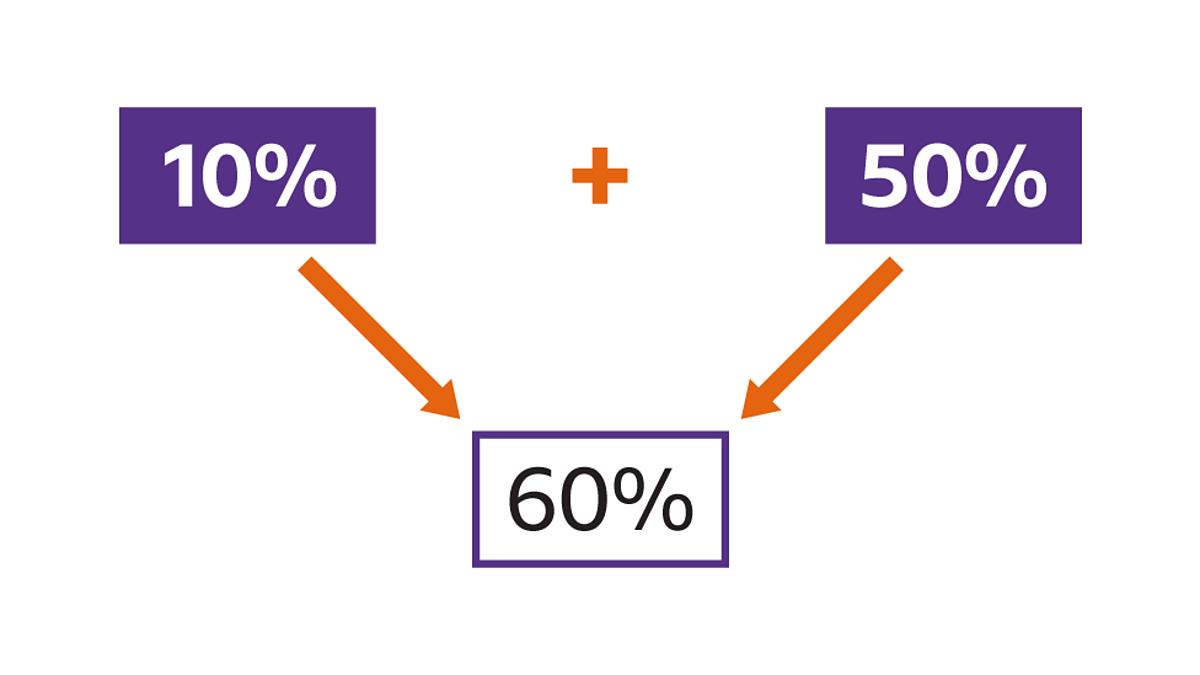
- Find 10% First: To find 10% of a number, just move the decimal one place to the left (e.g., 10% of $75 is $7.50).
- Build from 10%:
- To find 20%, double 10%.
- To find 5%, halve 10%.
- To find 1%, move the decimal two places left (1% of $75 is $0.75).
- Use Benchmarks: For 25%, think “divide by 4.” For 50%, think “halve it.”
Conclusion
The ability to “find percents” is far more than a simple arithmetic skill; it is a cornerstone of financial intelligence. From navigating personal budgets and shopping sales to making informed investment decisions and understanding business performance, percentages are the universal language of finance. By mastering the core concepts, practical applications, and available tools, you empower yourself to make smarter financial choices, achieve greater control over your money, and confidently pursue your financial goals. Embrace percentages as your ally on the path to financial mastery.
aViewFromTheCave is a participant in the Amazon Services LLC Associates Program, an affiliate advertising program designed to provide a means for sites to earn advertising fees by advertising and linking to Amazon.com. Amazon, the Amazon logo, AmazonSupply, and the AmazonSupply logo are trademarks of Amazon.com, Inc. or its affiliates. As an Amazon Associate we earn affiliate commissions from qualifying purchases.