
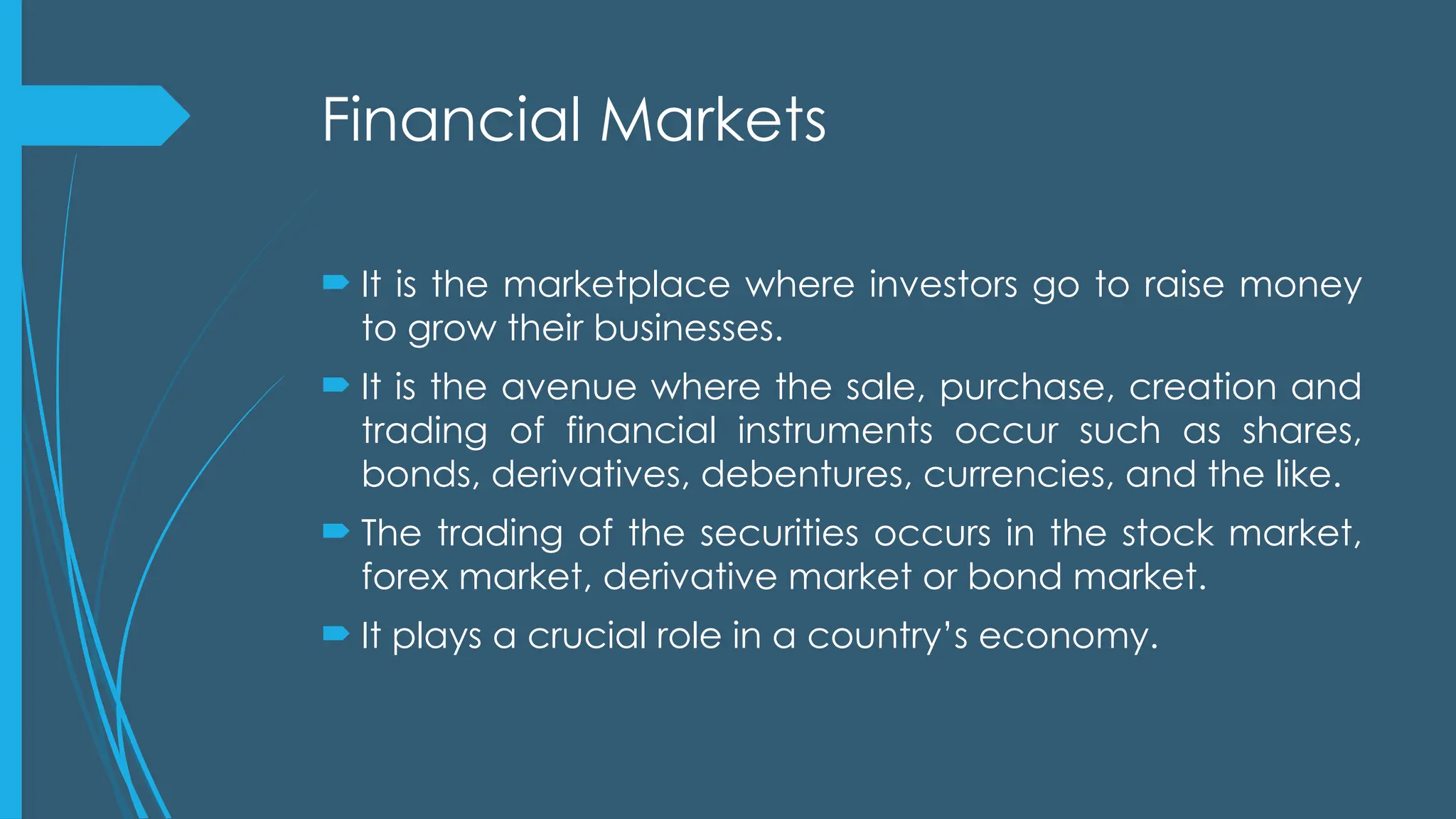
Financial markets, at their core, are the intricate arteries through which capital flows, connecting those with surplus funds to those in need of them. They are far more than just trading floors or digital screens flashing numbers; they are dynamic, complex ecosystems that reflect human ambition, economic realities, and technological advancement. To truly understand what generally occurs within these vital arenas is to grasp the pulsating heart of the global economy. They are simultaneously arenas of immense opportunity and significant risk, driven by a myriad of forces ranging from rational economic calculus to often irrational human psychology.
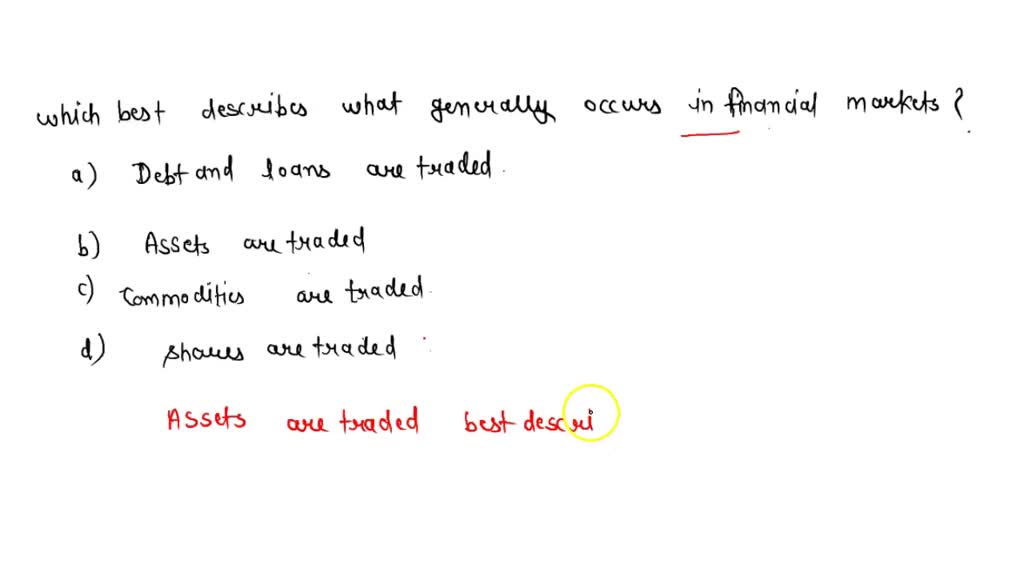
While a single word can hardly encapsulate their multifaceted nature, financial markets are best described as a continuous, adaptive process of price discovery and capital allocation, underpinned by the constant interplay of risk, return, and uncertainty. This ongoing process is influenced by a diverse array of participants, macroeconomic forces, technological innovation, and regulatory frameworks, all converging to shape the economic landscape.
The Dual Engines of Price Discovery and Capital Allocation
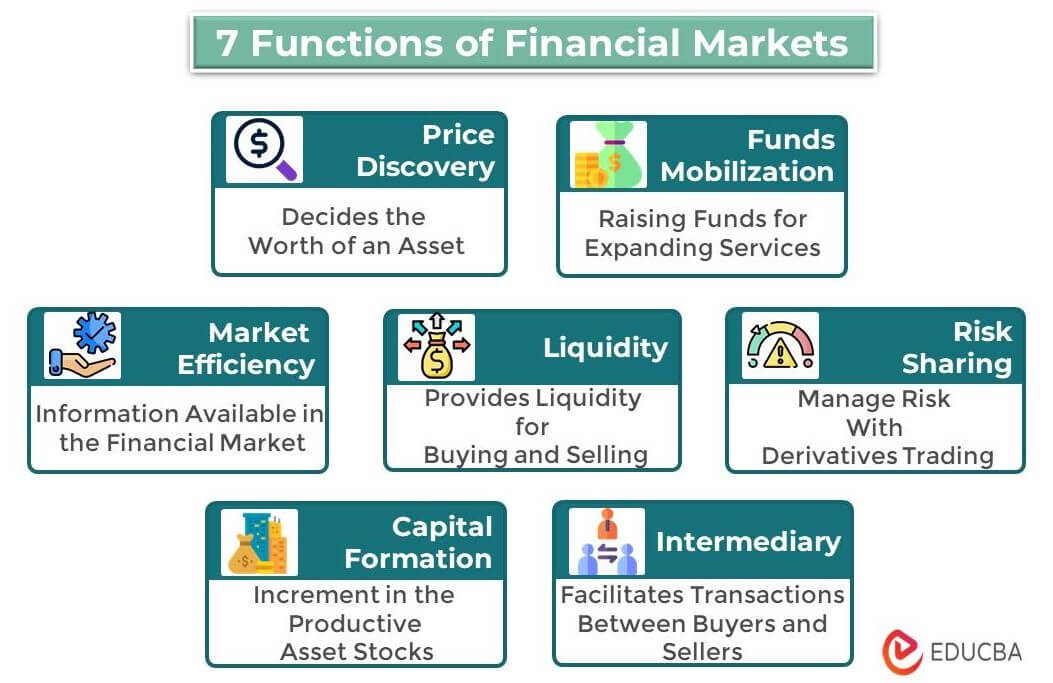
At the heart of any financial market lies its fundamental purpose: to efficiently allocate capital and discover the fair value of assets. This dual function is not merely an academic concept but a continuous, real-world mechanism that underpins economic growth and societal progress.
Facilitating Economic Growth
Financial markets act as critical conduits, channeling savings from individuals, institutions, and governments towards productive investments. This capital fuels businesses, enables infrastructure projects, and finances innovation, ultimately driving economic expansion and job creation. Without well-functioning markets, the efficient mobilization of capital would be severely hampered, leading to stagnation. Corporations issue stocks and bonds to raise funds for expansion, governments borrow to finance public services, and startups secure venture capital to bring revolutionary ideas to fruition. This seamless transfer of funds from those who have it to those who need it is the lifeblood of a thriving economy.
The Mechanism of Price Discovery
Every stock, bond, commodity, or currency traded in a financial market has a price, and this price is constantly being determined through the interaction of buyers and sellers. Price discovery is the process by which all available information, expectations, and market sentiment are aggregated into a single, observable price. When new information emerges – be it a company’s earnings report, an interest rate decision by a central bank, or a geopolitical event – market participants react, adjusting their bids and offers. This continuous negotiation, driven by supply and demand, ensures that asset prices generally reflect their perceived value, at least at a given moment in time. It’s a never-ending auction where information, belief, and capital converge.
Efficiency vs. Friction
The ideal scenario is that markets are “efficient,” meaning that asset prices fully reflect all available information, making it impossible to consistently “beat” the market. In reality, markets often exhibit varying degrees of efficiency. Information asymmetry, behavioral biases, transaction costs, and regulatory hurdles create friction, preventing perfect efficiency. This friction is precisely what creates opportunities for skilled analysts and investors, while also contributing to periods of mispricing and market anomalies. The debate between efficient market theorists and those who emphasize market imperfections continues to shape our understanding of financial dynamics.
Navigating the Inherent Dynamics of Risk, Return, and Volatility
Financial markets are synonymous with risk and return. Every investment decision is a calculation, conscious or unconscious, of these two fundamental forces. Understanding their relationship and the omnipresence of volatility is key to comprehending market behavior.
The Fundamental Risk-Return Trade-off
One of the most enduring principles in finance is the risk-return trade-off: higher potential returns typically come with higher levels of risk, and conversely, lower-risk investments tend to offer lower potential returns. Investors choose their positions along this spectrum based on their financial goals, time horizon, and risk tolerance. A startup equity might offer exponential growth potential but also carries a high probability of failure, while government bonds offer relative safety but yield modest returns. This trade-off is not merely theoretical; it dictates portfolio construction and investment strategies across all market segments. It forces participants to constantly evaluate their appetite for potential loss against the lure of potential gain.
Volatility as a Constant Companion
Market volatility – the degree of variation of a trading price series over time – is a natural and inevitable feature of financial markets. It’s the measure of how much asset prices fluctuate. Volatility can be driven by a multitude of factors: unexpected economic data, corporate news, geopolitical tensions, shifts in investor sentiment, or even technological glitches. While periods of high volatility can be unsettling, they also create opportunities for astute investors and traders. It’s crucial to distinguish between normal market fluctuations, which are part of the daily rhythm, and extreme events, which can signal broader systemic issues. Investors who understand volatility as a characteristic, rather than an anomaly, are better positioned to navigate market cycles.
The Role of Information and Uncertainty
Information is the lifeblood of financial markets, and uncertainty is its shadow. Every piece of new information, whether it’s an inflation report, a company’s product launch, or a political election outcome, is digested and rapidly priced into assets. However, perfect information is rarely available, and the future is always uncertain. This inherent uncertainty leads to diverse interpretations of information, differing expectations, and consequently, price movements. Participants are constantly trying to predict future outcomes, leading to a complex web of speculation, hedging, and arbitrage activities that generate market activity.
A Symphony of Participants and Influences
Financial markets are not monolithic entities; they are vast arenas where countless entities interact, each with their own objectives, resources, and influence. This complex interplay creates a dynamic environment susceptible to a wide range of external forces.
Diverse Market Players
The participants in financial markets are incredibly diverse. They range from individual retail investors looking to save for retirement or a down payment, to massive institutional investors like pension funds, mutual funds, and hedge funds managing trillions in assets. Corporations participate by issuing securities or managing their treasury operations, while governments issue debt to fund public spending. Central banks play a crucial role in setting monetary policy, which profoundly impacts interest rates and the money supply. Intermediaries such as brokers, market makers, and investment banks facilitate transactions, provide liquidity, and offer advisory services, making the wheels of the market turn. Each player contributes to the market’s overall liquidity, efficiency, and character.
Macroeconomic and Geopolitical Undercurrents
Beyond individual players, broader forces exert immense influence. Macroeconomic indicators such as GDP growth rates, inflation figures, employment statistics, and interest rate changes can send ripples through entire markets. A sudden spike in inflation, for instance, might lead investors to sell bonds and buy inflation-hedging assets. Similarly, geopolitical events – wars, trade agreements, political instability, or international sanctions – can trigger significant market reactions by altering perceptions of risk, supply chains, and future economic prospects. These large-scale forces often act as the primary drivers of long-term trends and major market shifts, transcending the day-to-day noise.
Behavioral Economics and Market Sentiment
While economic models often assume rational actors, behavioral economics highlights the significant impact of human psychology on financial markets. Emotions like fear, greed, overconfidence, and herd mentality can lead to irrational decision-making, contributing to market bubbles and crashes. “Market sentiment” – the overall psychological mood of investors regarding a particular market or asset – can powerfully drive prices, sometimes detaching them from fundamental value. Understanding these psychological biases is crucial for a complete picture of what generally occurs, explaining why markets can sometimes defy logical explanations and move in unpredictable ways.
Evolution, Innovation, and Regulatory Scrutiny
Financial markets are not static; they are constantly evolving, driven by technological advancements, the development of new financial products, and an ever-present need for regulatory oversight to maintain stability and fairness.
Technological Advancements Reshaping Markets
Technology has revolutionized financial markets, transforming them from physical trading pits to global electronic networks. High-frequency trading, algorithmic strategies, and the proliferation of real-time data analytics have dramatically increased market speed and efficiency. The advent of blockchain technology is now exploring new frontiers in settlement, transparency, and the creation of decentralized financial instruments. These technological shifts have democratized access to markets for retail investors while also introducing new complexities and challenges, such as cyber security risks and the need for robust IT infrastructure.
Financial Product Innovation
The financial world is also a hotbed of innovation in terms of products and services. From simple stocks and bonds, markets have expanded to include complex derivatives (futures, options, swaps), exchange-traded funds (ETFs), structured products, and various alternative investments. These innovations allow investors to manage risk more effectively, access new asset classes, and pursue specialized investment strategies. However, the complexity of some of these instruments can also introduce new risks and necessitate greater scrutiny from both participants and regulators.
The Watchful Eye of Regulation
Given the critical role of financial markets in the economy and the potential for abuse or systemic failure, robust regulatory frameworks are indispensable. Regulatory bodies such as the Securities and Exchange Commission (SEC) in the U.S. or the Financial Conduct Authority (FCA) in the UK work to ensure market fairness, transparency, and stability. They aim to protect investors, prevent fraud, mitigate systemic risks, and enforce compliance with financial laws. This constant regulatory oversight attempts to balance fostering innovation with maintaining investor confidence and preventing a repeat of past financial crises.
Beyond Efficiency: The Reality of Market Cycles and Bubbles
While the underlying mechanisms of financial markets strive for efficiency and rational allocation, the reality is often characterized by pronounced cycles and occasional speculative excesses.
The Cyclical Nature of Markets
Financial markets do not move in a straight line; they exhibit cyclical patterns of expansion and contraction, often referred to as bull and bear markets. Bull markets are periods of sustained growth and optimism, driven by positive economic conditions and rising corporate profits. Bear markets, conversely, are characterized by declining prices, pessimism, and economic downturns. These cycles are a natural part of economic activity, influenced by business cycles, monetary policy, and investor sentiment. Understanding these cyclical tendencies helps participants temper expectations during booms and identify potential opportunities during downturns.
Speculative Bubbles and Crashes
Despite attempts at rational pricing, financial markets are also prone to speculative bubbles, where asset prices become significantly overvalued relative to their fundamental worth. These bubbles are often fueled by irrational exuberance, herd mentality, easy credit, and the belief that “this time it’s different.” The dot-com bubble of the late 1990s and the housing bubble leading up to the 2008 financial crisis are prominent examples. When these bubbles inevitably burst, they lead to market crashes, resulting in significant wealth destruction and often broader economic repercussions. These events underscore the powerful, sometimes destructive, influence of human psychology and collective behavior in financial markets.
Adaptability as a Key to Success
For any participant in financial markets, from the casual investor to the seasoned institutional trader, adaptability is a crucial trait. The markets are constantly changing, influenced by new technologies, evolving geopolitical landscapes, shifts in economic paradigms, and the unpredictable nature of human behavior. Those who can learn, adjust strategies, and remain resilient through various market conditions are better positioned to navigate the complexities and capitalize on the opportunities that inevitably arise.
In conclusion, “what generally occurs in financial markets” is a dynamic and ceaseless process of price discovery and capital allocation. It is a world shaped by the fundamental trade-off between risk and return, characterized by constant volatility, and populated by a vast array of participants whose actions are influenced by macroeconomic forces, technological shifts, and profound psychological biases. They are complex adaptive systems, often unpredictable but ultimately essential for channeling resources, fostering innovation, and driving the global economy forward. To describe them accurately is to acknowledge their intricate dance between logic and emotion, stability and chaos, opportunity and peril, all within a continually evolving framework.
aViewFromTheCave is a participant in the Amazon Services LLC Associates Program, an affiliate advertising program designed to provide a means for sites to earn advertising fees by advertising and linking to Amazon.com. Amazon, the Amazon logo, AmazonSupply, and the AmazonSupply logo are trademarks of Amazon.com, Inc. or its affiliates. As an Amazon Associate we earn affiliate commissions from qualifying purchases.