
The rhythm of financial markets dictates much of the global economy, and at the heart of this rhythm are the opening and closing bells of stock exchanges worldwide. For investors, traders, and anyone keen on understanding market dynamics, knowing “when does the stock exchange open” is more than a trivial piece of information; it’s fundamental to strategy, risk management, and opportunity identification. This article delves into the precise mechanics of market hours, exploring not just the standard trading times but also the nuances of pre-market, after-hours sessions, and the rationale behind these structured environments. Understanding these timings is crucial for navigating the complexities of modern investing and making informed decisions in an increasingly interconnected global financial landscape.
The Rationale Behind Fixed Trading Hours
While the idea of a 24/7 financial market might seem appealing in our always-on world, traditional stock exchanges operate within well-defined timeframes. This structure is not arbitrary; it’s a deliberate design choice with deep roots in market efficiency, fairness, and operational practicalities.
Maintaining Order and Price Discovery
Fixed trading hours concentrate buying and selling activity into specific windows, which is vital for efficient price discovery. When a large volume of orders converges simultaneously, it creates deeper liquidity, meaning there are more buyers and sellers available for any given security. This high concentration of activity ensures that prices reflect the most current and comprehensive information available, making them more accurate and less susceptible to manipulation. If trading were spread thinly across all hours, prices might become more volatile, less representative, and easier to influence by a few large trades, undermining market integrity. The opening and closing auctions, in particular, are designed to aggregate orders and establish robust opening and closing prices that reflect the market’s collective sentiment.
Facilitating Operational Efficiency
Beyond market dynamics, fixed hours simplify the operational complexities of running an exchange and the supporting financial ecosystem. Clearing and settlement processes, which ensure that trades are accurately recorded and funds/securities are transferred between parties, typically occur outside of standard trading hours. This “downtime” allows for essential administrative tasks, system maintenance, and data reconciliation without interrupting active trading. Furthermore, it provides brokers, institutional traders, and market makers with dedicated time to analyze market movements, prepare for the next trading session, and manage their positions, contributing to more thoughtful and less impulsive trading decisions. This structured environment helps prevent system overloads and ensures the stability and reliability of the trading infrastructure.
Navigating Standard Trading Hours Across Key Global Exchanges
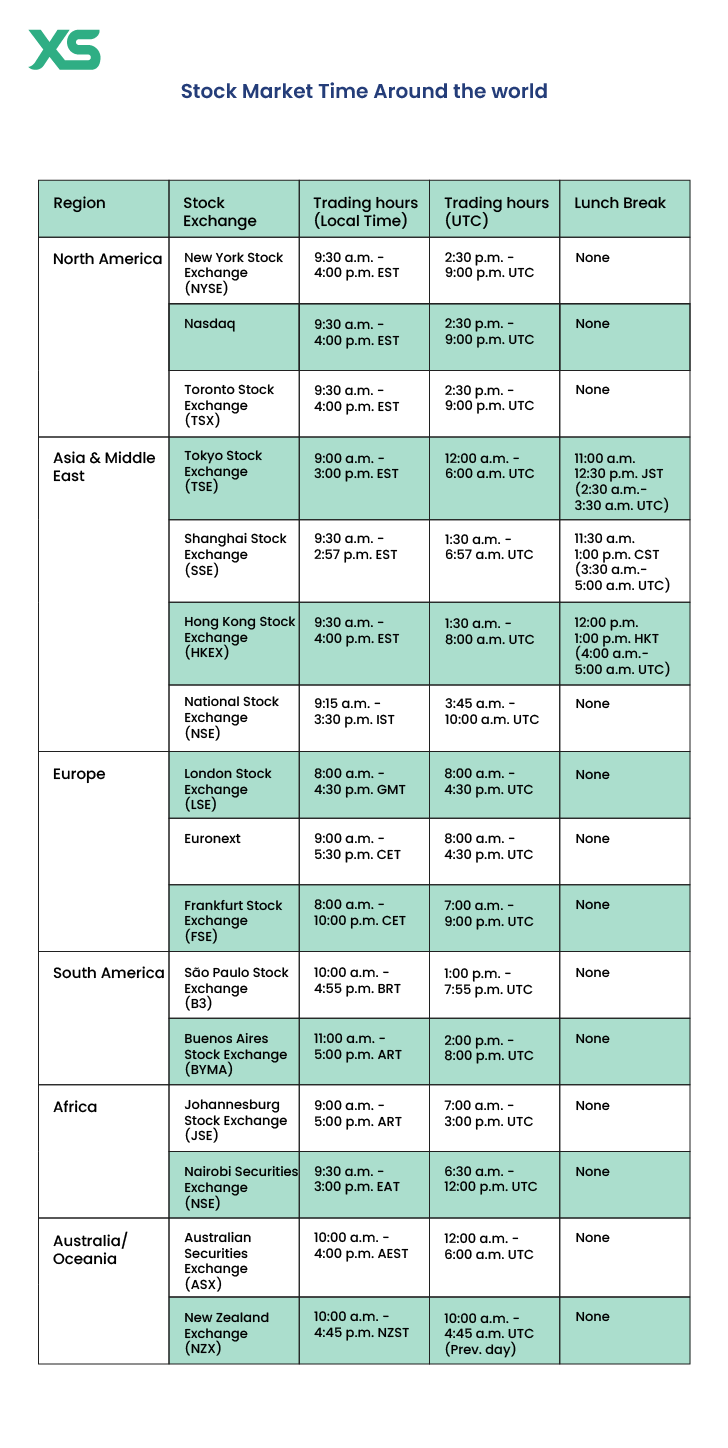
The opening and closing times of stock exchanges vary significantly across different regions, primarily due to local business customs, time zones, and public holidays. Understanding these differences is crucial for investors with global portfolios or those interested in specific international markets. All times mentioned are local to the respective exchange.
North American Markets (NYSE, NASDAQ)
The two largest stock exchanges in the United States, the New York Stock Exchange (NYSE) and the Nasdaq Stock Market, operate on a consistent schedule.
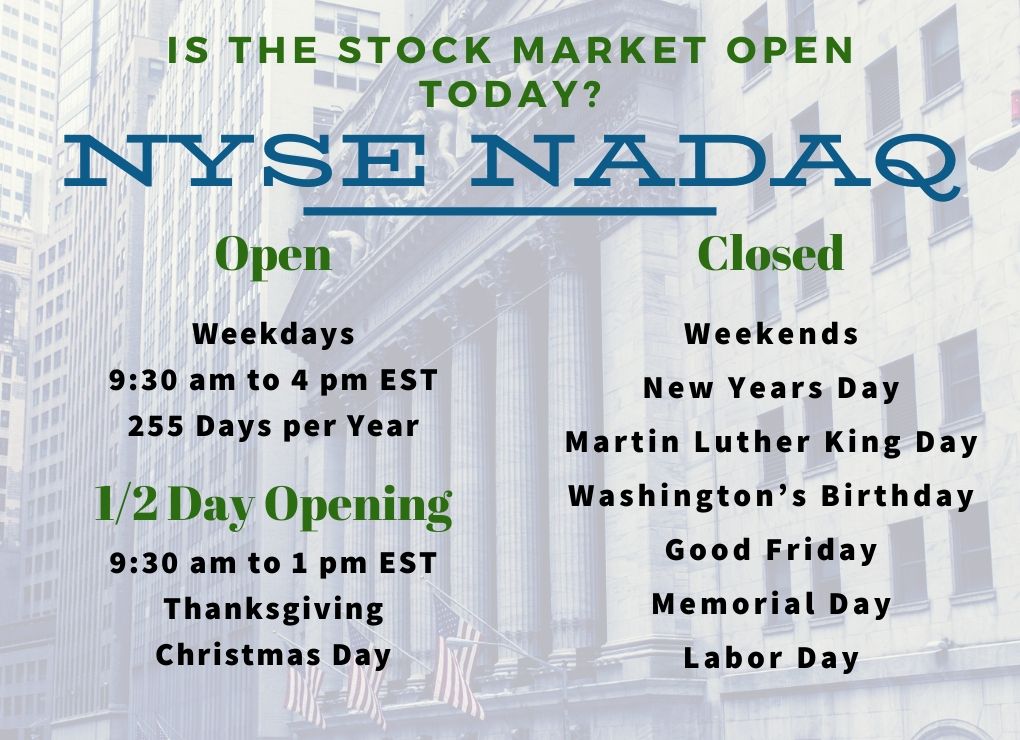
- Opening Time: 9:30 AM Eastern Time (ET)
- Closing Time: 4:00 PM Eastern Time (ET)
This standard 6.5-hour trading day is the benchmark for most North American equity trading. Canadian exchanges, such as the Toronto Stock Exchange (TSX), typically follow a very similar schedule, often opening and closing in sync with their U.S. counterparts or with slight variations adjusted for their local time zones.
European Financial Hubs (LSE, Euronext)
Europe boasts several influential stock exchanges, each with its own schedule, though many tend to have longer trading days than U.S. exchanges.
- London Stock Exchange (LSE): One of the world’s oldest and most international exchanges.
- Opening Time: 8:00 AM Greenwich Mean Time (GMT) / British Summer Time (BST)
- Closing Time: 4:30 PM GMT / BST
- Euronext (Paris, Amsterdam, Brussels, Lisbon, Dublin, Oslo): This pan-European exchange group operates across multiple cities.
- Opening Time: 9:00 AM Central European Time (CET) / Central European Summer Time (CEST)
- Closing Time: 5:30 PM CET / CEST
These longer trading windows cater to a diverse base of institutional and retail investors across different European time zones.
Asian Powerhouses (TSE, SSE)
Asia’s financial markets are among the most dynamic, often beginning their trading day while Western markets are still asleep.
- Tokyo Stock Exchange (TSE): The largest exchange in Japan.
- Morning Session: 9:00 AM JST (Japan Standard Time) to 11:30 AM JST
- Afternoon Session: 12:30 PM JST to 3:00 PM JST
The TSE has a one-hour lunch break, a common feature in many Asian markets designed to allow market participants time for a meal and to prepare for the afternoon session.
- Shanghai Stock Exchange (SSE) & Shenzhen Stock Exchange (SZSE): The major exchanges in mainland China.
- Morning Session: 9:30 AM CST (China Standard Time) to 11:30 AM CST
- Afternoon Session: 1:00 PM CST to 3:00 PM CST
Similar to Tokyo, Chinese exchanges also observe a lunch break, typically lasting 90 minutes. Other significant Asian markets, like the Hong Kong Stock Exchange (HKEX) and the Singapore Exchange (SGX), also follow schedules with similar morning and afternoon sessions, often including a lunch break.
Beyond Standard Hours: Pre-Market and After-Hours Trading
While the official trading sessions define the core market day, activity doesn’t always cease with the closing bell or begin precisely at the open. Extended trading sessions—pre-market and after-hours—offer opportunities for investors to react to news and execute trades outside the standard 9:30 AM to 4:00 PM ET window in the U.S., and similar periods in other regions.
Understanding Extended Trading Sessions
- Pre-market trading refers to the period before the official market open. In the U.S., this typically runs from 4:00 AM ET to 9:30 AM ET.
- After-hours trading takes place after the market’s official close, generally from 4:00 PM ET to 8:00 PM ET in the U.S.
These sessions are facilitated by Electronic Communication Networks (ECNs) rather than the traditional exchange floor or direct order matching systems used during standard hours. ECNs automatically match buy and sell orders electronically, allowing for continuous trading even when the primary exchange is closed. Access to these sessions is typically provided by brokerage firms that connect to these ECNs.
Advantages and Disadvantages for Investors
Extended trading offers both distinct advantages and disadvantages that investors must weigh carefully.
Advantages:
- Immediate Reaction to News: Investors can react swiftly to corporate earnings reports, economic data releases, or geopolitical events that often occur outside standard market hours, potentially getting ahead of the general market.
- Flexibility: It provides greater flexibility for investors who cannot monitor markets during regular business hours due to work or other commitments.
- Opportunity for Arbitrage: Sophisticated traders might find opportunities to capitalize on price discrepancies that emerge in less liquid markets.
Disadvantages: - Lower Liquidity: Fewer participants mean wider bid-ask spreads and potentially larger price swings, making it harder to execute trades at desired prices.
- Higher Volatility: The thinner liquidity can lead to increased price volatility, where small trades can have a disproportionately large impact on a stock’s price.
- Limited Order Types: Not all order types (e.g., stop orders) may be available or function optimally during extended hours, increasing execution risk.
- Professional Dominance: These sessions are often dominated by institutional investors and professional traders, who have access to more sophisticated tools and information, potentially disadvantaging retail investors.
Liquidity and Volatility Considerations
The most significant factors distinguishing extended hours from standard trading are liquidity and volatility. During pre-market and after-hours, the trading volume for most stocks is substantially lower. This reduced liquidity means that fewer shares are being bought and sold, leading to several implications:
- Wider Spreads: The difference between the highest price a buyer is willing to pay (bid) and the lowest price a seller is willing to accept (ask) can be significantly wider than during regular hours. This means investors might pay more when buying and receive less when selling.
- Price Gaps: News released outside regular hours can cause stocks to “gap up” or “gap down” significantly at the open, as the pent-up demand or supply is released. Trading in extended hours can help mitigate some of this gap, but it also exposes traders to the risk of being on the wrong side of a major price movement.
- Difficulty Executing Large Orders: For investors looking to buy or sell a large block of shares, executing such a trade without significantly impacting the stock price can be challenging in a low-liquidity environment.
Investors participating in extended trading sessions must be acutely aware of these conditions and consider using limit orders to control their execution price, rather than market orders which could fill at unexpectedly unfavorable prices.
Weekends, Holidays, and Exceptional Closures
While standard trading hours define the daily schedule, there are numerous days throughout the year when stock exchanges remain closed, and rare occasions when they close unexpectedly. These breaks are crucial for understanding the complete picture of market availability.
Regular Market Breaks and Public Holidays
Stock exchanges around the world observe local public holidays, similar to banks and other financial institutions. These holidays vary by country but generally include major national celebrations, religious festivals, and bank holidays.
- United States: U.S. markets (NYSE, NASDAQ) typically close for federal holidays such as New Year’s Day, Martin Luther King, Jr. Day, Presidents’ Day, Good Friday, Memorial Day, Juneteenth National Independence Day, Independence Day, Labor Day, Thanksgiving Day, and Christmas Day. They may also close early on certain days, like the day before Independence Day or Christmas Eve.
- United Kingdom: The LSE closes for UK bank holidays, including New Year’s Day, Good Friday, Easter Monday, Early May Bank Holiday, Spring Bank Holiday, Summer Bank Holiday, Christmas Day, and Boxing Day.
- Japan: The TSE observes numerous Japanese national holidays, including New Year’s Day, Coming of Age Day, National Foundation Day, Emperor’s Birthday, Vernal Equinox Day, Showa Day, Constitution Memorial Day, Greenery Day, Children’s Day, Marine Day, Mountain Day, Respect for the Aged Day, Autumnal Equinox Day, Sports Day, Culture Day, and Labor Thanksgiving Day.
It’s vital for global investors to consult the specific holiday calendar for each exchange they trade on, as trading platforms may not always automatically block orders for closed markets.
Unforeseen Suspensions and Circuit Breakers
In addition to scheduled closures, stock exchanges can experience unexpected trading halts or suspensions under extraordinary circumstances.
- Trading Halts: Individual stocks may be halted by the exchange for various reasons, such as pending news announcements (e.g., earnings, mergers, drug trial results), regulatory concerns, or excessive volatility. These halts are temporary and are typically lifted once the reason for the halt is resolved or sufficient information is disseminated.
- Circuit Breakers: These are pre-defined mechanisms designed to temporarily halt trading across the entire market (or a major index) during periods of extreme price declines. They are triggered when a market index falls by a certain percentage within a specific timeframe, aimed at preventing panic selling and allowing investors to process information.
- In the U.S., circuit breakers for the S&P 500 index trigger at 7%, 13%, and 20% declines, with varying halt durations. For instance, a 7% decline before 3:25 PM ET results in a 15-minute halt.
These measures are critical for maintaining market stability and investor confidence during times of crisis.
- In the U.S., circuit breakers for the S&P 500 index trigger at 7%, 13%, and 20% declines, with varying halt durations. For instance, a 7% decline before 3:25 PM ET results in a 15-minute halt.
Strategic Implications for Investors and Traders
Understanding when the stock exchange opens and closes, along with all the nuances of market hours, is not merely a matter of scheduling; it’s a fundamental aspect of developing effective investment and trading strategies. The timing of market activity profoundly influences liquidity, volatility, and information flow, all of which are critical for maximizing returns and managing risk.
Optimizing Trading Strategies Around Market Hours
Different parts of the trading day present unique characteristics that can be leveraged or must be managed.
- Market Open: The first 30-60 minutes after the opening bell are often characterized by high volatility and heavy trading volume. This period is driven by reactions to overnight news, economic data, and pre-market trading activity. Experienced day traders may seek to capitalize on these initial explosive moves, but it also carries significant risk due to unpredictable price swings and wider spreads. Less experienced investors might do well to avoid making critical decisions immediately after the open.
- Mid-Day Lull: As the initial frenzy subsides, trading volume often tapers off in the middle of the day. This can be a period of lower volatility, making it suitable for long-term investors or those executing larger orders with less price impact. However, it can also lead to thinner markets where prices can be less stable.
- Market Close: The last hour of trading, often called the “power hour,” sees another surge in volume and volatility as institutional investors and funds make adjustments to their positions, portfolio managers “window dress” their holdings, and day traders close out positions. This period can present opportunities for quick gains but also carries elevated risk.
- Overnight Holds: For long-term investors, the decision to hold positions overnight or over a weekend means accepting exposure to potential news events or global market movements that occur while the primary exchange is closed. This risk is inherent in long-term investing but must be factored into risk tolerance.
Managing Risk and Information Flow
Market hours are directly tied to the flow of information.
- News Releases: Companies often release earnings reports or significant corporate news either before the market opens or after it closes. This timing is deliberate, designed to allow all market participants to absorb and analyze the information before trading resumes, theoretically promoting a fairer market. Investors must be prepared to react to such news, potentially using extended-hours trading or adjusting their strategies for the next trading day.
- Economic Data: Key economic indicators (e.g., inflation reports, employment figures) are typically released at specific times during the trading day, often early in the morning, which can cause immediate and significant market reactions. Being aware of the economic calendar is crucial for understanding potential catalysts for market movement.
- Liquidity Management: Recognizing when liquidity is high (e.g., during standard hours, especially at open and close) and when it’s low (e.g., extended hours, mid-day lull) is vital for executing trades efficiently. Trading in illiquid markets can lead to unfavorable execution prices and higher transaction costs.
The Impact of Global Time Zones
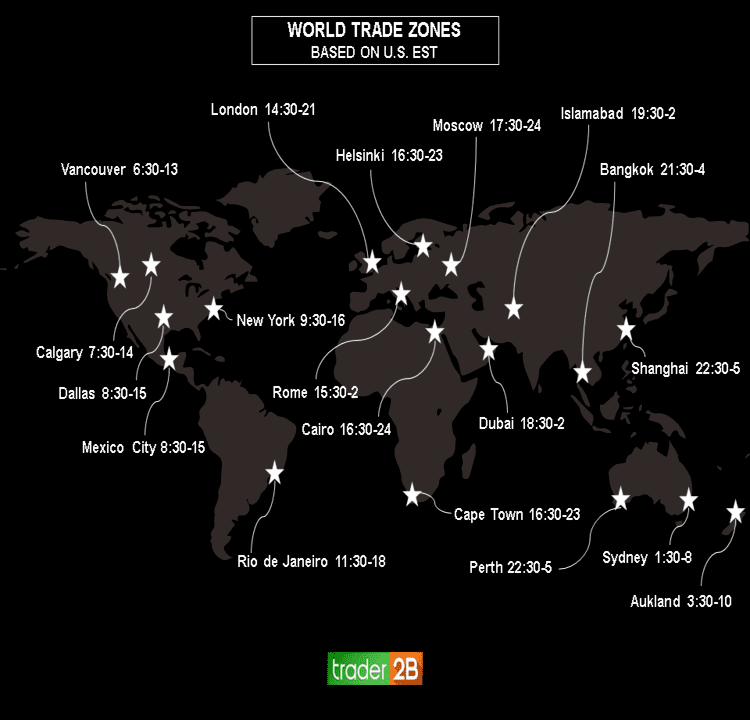
For international investors or those trading global instruments, understanding the staggered opening and closing times of exchanges across different time zones is paramount. The continuous cycle of global markets means that while one major market closes, another is opening or already in full swing.
- 24/5 Trading: Although no single stock exchange trades 24/7, the combined operation of major exchanges across Asia, Europe, and North America creates an almost continuous 24-hour trading environment for many globally traded assets, particularly currencies and certain commodities.
- “Following the Sun”: Major news or economic events in one region can have a ripple effect across subsequent markets as they open. For example, a significant economic announcement in Japan can influence the sentiment in European markets upon their open, and then subsequently impact North American markets.
- Hedging and Diversification: Global trading hours allow investors to diversify their portfolios across different regions, potentially reducing overall risk by not having all assets concentrated in a single time zone’s market activity. It also enables active traders to hedge positions or capitalize on arbitrage opportunities that arise from these time zone differences.
Ultimately, mastering the intricacies of “when the stock exchange opens” is an ongoing learning process for any serious investor or trader. It’s about more than just checking a clock; it’s about understanding market structure, information dissemination, and the strategic opportunities and risks inherent in each segment of the trading day. By aligning investment decisions with market hours, participants can enhance their decision-making, optimize trade execution, and navigate the financial markets with greater confidence and insight.
aViewFromTheCave is a participant in the Amazon Services LLC Associates Program, an affiliate advertising program designed to provide a means for sites to earn advertising fees by advertising and linking to Amazon.com. Amazon, the Amazon logo, AmazonSupply, and the AmazonSupply logo are trademarks of Amazon.com, Inc. or its affiliates. As an Amazon Associate we earn affiliate commissions from qualifying purchases.