
The world of stock markets operates on a meticulously structured timetable, a rhythm dictated by geographic location, national holidays, and the specific rules of individual exchanges. For anyone looking to participate in the financial markets, from the novice investor placing their first trade to the seasoned professional managing vast portfolios, understanding “when does stock open” is not merely a matter of curiosity; it is a fundamental prerequisite for effective strategy, risk management, and successful execution. This article delves into the intricacies of stock market hours, exploring the standard schedules, the nuances of extended trading, and the critical implications for investors worldwide.
Understanding Standard Market Operating Hours
The concept of market operating hours is foundational to equity trading. These defined periods facilitate price discovery, ensure liquidity, and provide a standardized environment for transactions. While the core idea remains consistent, the specifics vary significantly across different markets.
Major U.S. Stock Exchanges: NYSE and NASDAQ
In the United States, the New York Stock Exchange (NYSE) and the NASDAQ Stock Market are the two primary exchanges, dictating much of the global equity market’s rhythm. Their standard trading hours are well-established:
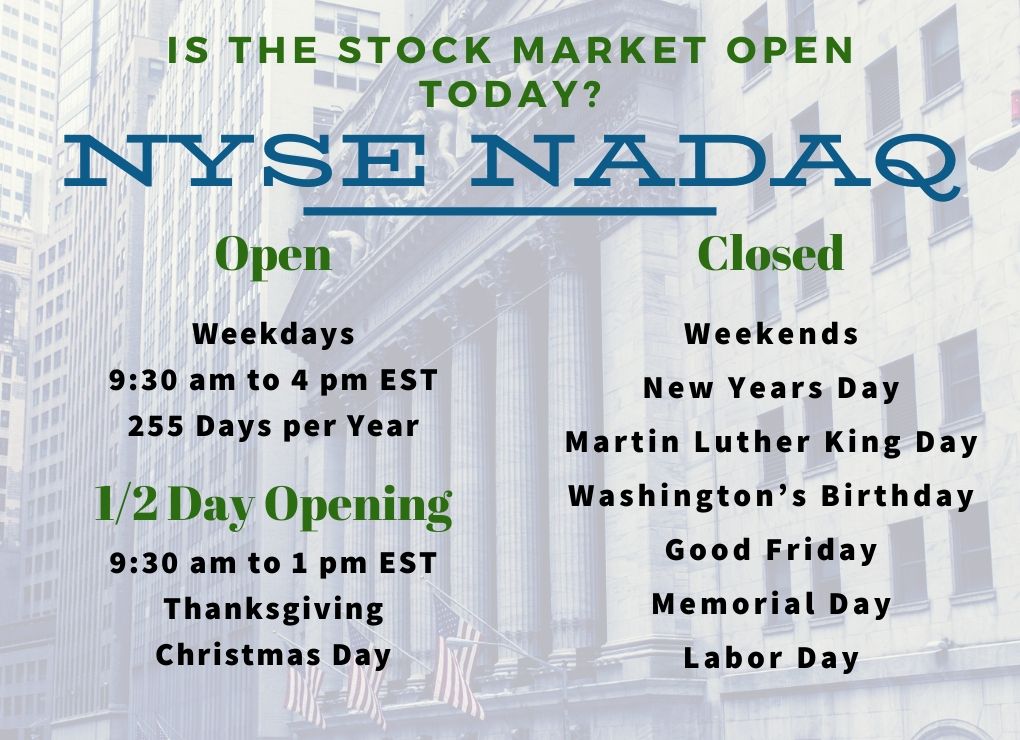
- Opening Bell: 9:30 AM Eastern Time (ET)
- Closing Bell: 4:00 PM Eastern Time (ET)
This 6.5-hour window, Monday through Friday, forms the backbone of the U.S. trading day. During these hours, the vast majority of trading volume occurs, characterized by high liquidity and relatively tighter bid-ask spreads. These hours are designed to align with typical business operations, allowing for news releases, corporate announcements, and economic data to be digested and reacted to by a broad spectrum of market participants. The synchronized opening and closing times help to create concentrated periods of activity, contributing to efficient price formation.
Global Market Hours: A Quick Overview
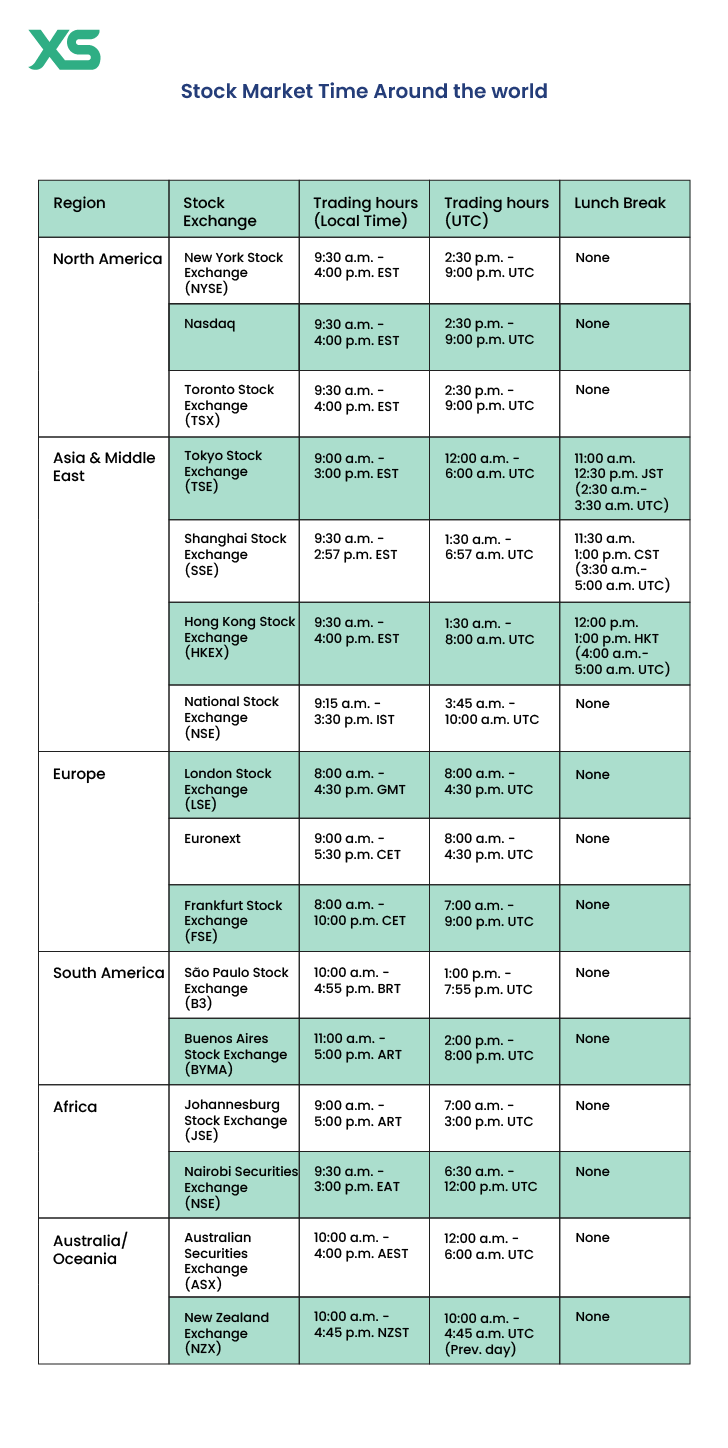
Beyond the U.S., stock markets around the world operate on their own local schedules, creating a near 24-hour cycle of trading opportunities across different time zones. Understanding these shifts is vital for investors with international portfolios or those trading global instruments.
- Asia-Pacific: Markets like the Tokyo Stock Exchange (TSE), Shanghai Stock Exchange (SSE), and Australian Securities Exchange (ASX) generally open first, often starting in the late evening or early morning hours relative to U.S. ET. For example, the TSE typically operates from 9:00 AM to 3:00 PM JST (Japan Standard Time), with a lunch break.
- Europe: European exchanges, including the London Stock Exchange (LSE), Euronext (covering Paris, Amsterdam, Brussels, Lisbon), and Deutsche Börse (Frankfurt), follow, bridging the gap between Asian and North American sessions. The LSE, for instance, trades from 8:00 AM to 4:30 PM GMT/BST.
- North America: After the U.S., Canada’s Toronto Stock Exchange (TSX) generally aligns with U.S. hours, operating from 9:30 AM to 4:00 PM ET.
This staggered opening and closing creates distinct trading sessions, each with its own characteristics driven by regional news, economic data releases, and investor sentiment. The overlap between these sessions can often be periods of heightened volatility and liquidity.
The Rationale Behind Fixed Trading Hours
The existence of fixed trading hours is not arbitrary. It serves several crucial purposes:
- Centralization of Liquidity: By concentrating trading activity into specific windows, exchanges ensure a higher volume of buyers and sellers are present simultaneously. This leads to greater liquidity, meaning assets can be bought and sold more easily without significantly impacting their price.
- Orderly Price Discovery: Fixed hours allow for a more structured process of price discovery. Information released during off-hours can be fully digested by the market before the open, leading to a more orderly reaction at the bell.
- Operational Efficiency: Exchanges and brokerage firms have specific operational needs, including reconciliation, risk management, and system maintenance, which are facilitated by defined closure periods.
- Investor Protection: By limiting trading to specific hours, regulators can better monitor market activity, prevent manipulation, and ensure fair and transparent trading practices.
Navigating Extended Trading Sessions
While standard market hours define the core trading day, the advent of electronic trading platforms has significantly expanded the period during which investors can buy and sell stocks. These “extended hours” trading sessions offer both opportunities and unique challenges.
Pre-Market Trading: Seizing Early Opportunities
Pre-market trading refers to the period before the official market open. For U.S. exchanges, this typically begins as early as 4:00 AM ET and runs until 9:30 AM ET. This session is primarily driven by:
- Overnight News: Companies often release earnings reports, significant corporate announcements, or news that might impact their stock price either before the market opens or after the previous day’s close. Pre-market trading allows investors to react to this information instantly.
- Economic Data: Key economic indicators released before the market open can trigger immediate reactions in pre-market futures and subsequently, individual stocks.
For active traders, pre-market can be an opportunity to enter or exit positions based on fresh information before the broader market reacts. However, it requires vigilance and a keen understanding of the market’s dynamics.
After-Hours Trading: Reacting to Late-Breaking News
After-hours trading occurs after the official market close, typically from 4:00 PM ET to 8:00 PM ET (though some platforms extend this further). Similar to pre-market, this session is often characterized by reactions to:
- Late Earnings Reports: Many companies choose to release their quarterly earnings results after the market closes, giving analysts and investors time to process the information.
- Regulatory Filings: Important disclosures made to regulatory bodies can also trigger after-hours activity.
- Global Market Influences: Significant developments in Asian or European markets that occur during the U.S. evening hours can spill over into after-hours trading.
Both pre-market and after-hours trading extend the window for investors to respond to events, offering flexibility but also demanding a higher level of caution.
The Risks and Rewards of Extended Hours
Extended hours trading presents a unique risk-reward profile:
Rewards:
- Immediate Reaction: Investors can react swiftly to breaking news, potentially capitalizing on early price movements or mitigating losses.
- Convenience: For those whose schedules don’t align with standard market hours, extended sessions offer flexibility.
- Arbitrage Opportunities: Discrepancies between market prices and news can create short-term arbitrage possibilities.
Risks:
- Lower Liquidity: Fewer participants typically mean lower trading volumes. This can lead to wider bid-ask spreads, making it more expensive to enter or exit positions, and potentially causing significant price swings with relatively small orders.
- Higher Volatility: The thinner liquidity can amplify the impact of individual trades or news items, leading to exaggerated price movements.
- Price Discrepancies: Prices established during extended hours may not accurately reflect the stock’s value once standard hours resume, potentially leading to “gap” openings.
- Limited Order Types: Some brokers may restrict the types of orders available during extended hours, often only allowing limit orders to protect against extreme price fluctuations.
Therefore, while extended hours offer agility, they are generally recommended for experienced traders who understand and can manage the heightened risks.
Weekends, Holidays, and Market Closures
The stock market is not a perpetual motion machine; it observes regular breaks and special closures that are critical for investors to understand.
Observing National and Exchange-Specific Holidays
Stock exchanges typically close for major national holidays, ensuring that financial professionals can observe these days and that trading activity is not disproportionately affected by reduced participation. In the U.S., examples include:
- New Year’s Day
- Martin Luther King, Jr. Day
- Washington’s Birthday (Presidents’ Day)
- Good Friday
- Memorial Day
- Juneteenth National Independence Day
- Independence Day
- Labor Day
- Thanksgiving Day
- Christmas Day
Additionally, exchanges may have early closures on the days before or after certain holidays (e.g., the day after Thanksgiving or Christmas Eve). Other countries have their own sets of national holidays that result in market closures, meaning investors dealing with international stocks must be aware of multiple holiday calendars. These closures effectively halt trading, preventing any price movements until the next open, regardless of intervening news.
The Impact of Early Closures and Circuit Breakers
Beyond scheduled holidays, markets can also experience unscheduled or early closures under specific circumstances:
- Unforeseen Events: Extremely rare events like natural disasters or significant national emergencies can lead to temporary market shutdowns (e.g., the NYSE closure after 9/11).
- Circuit Breakers: These are automated trading halts designed to curb excessive volatility. If the market (often measured by a broad index like the S&P 500) experiences a steep percentage decline within a short period, trading can be paused for a specific duration (e.g., 15 minutes) to allow investors to absorb information and prevent panic selling. There are different thresholds for these halts, progressively increasing in severity.
Such closures, whether planned or unplanned, underscore the fact that market access is not continuous and can be interrupted, requiring investors to have contingency plans for managing open positions.
Strategic Implications for Long-Term Investors
While active traders are most impacted by daily market hours, even long-term investors benefit from understanding closures:
- Dividend Dates: Knowing market holidays can be crucial for investors tracking ex-dividend dates or record dates for dividend payments.
- Rebalancing Schedules: Portfolio rebalancing often involves buying and selling, which requires open market access. Holiday calendars inform optimal rebalancing timing.
- News Digestions: Long-term investors can use market closure periods to thoroughly research news that occurred during off-hours without the pressure of immediate trading decisions. They can formulate a strategy for the next open.
- Setting Expectations: Understanding that markets close on weekends and holidays prevents unnecessary worry about portfolio fluctuations during these periods.
The Influence of Time Zones and Market Specifics
The global nature of finance means that market hours are intrinsically linked to time zones and the specific characteristics of different asset classes.
Synchronizing Trading Across Different Regions
The staggered opening and closing of global markets create a continuous flow of trading activity around the clock. An event in Asia can influence European markets, which in turn influences North American markets. This interconnectedness means that while a specific stock might only trade during its local market hours, its potential price direction is constantly being influenced by global events. Investors with diverse portfolios must remain cognizant of these overlaps and the differing time zones to avoid missed opportunities or unexpected price movements. Many professional traders use “follow the sun” strategies, passing positions from one regional trading desk to another as markets open and close.
Differentiating Equity Markets from Other Asset Classes
It’s important to remember that “stock open” specifically refers to equity markets. Other financial markets have different operating hours:
- Forex (FX) Market: The foreign exchange market trades 24 hours a day, five days a week, due to its decentralized, over-the-counter nature and the constant need for currency exchange globally.
- Futures Market: Futures contracts (on commodities, indices, currencies, etc.) often have extended trading hours, sometimes nearly 24/5, on electronic platforms, though with specific daily settlements.
- Bond Market: The bond market typically has different, often shorter, trading hours than equity markets, with less emphasis on pre- and after-hours trading for retail investors.
Each asset class has its own rhythm, and understanding these differences is vital for a holistic financial strategy.
Technological Factors and Market Access
Modern technology has fundamentally changed how investors access markets and track hours. Online brokerage platforms provide real-time market data, pre-market/after-hours trading capabilities, and notifications for market closures. Financial news outlets and data providers offer comprehensive calendars of global market hours and holidays. This technological infrastructure empowers individual investors with tools previously only available to institutions, making it easier to navigate the complex world of market timing. However, it also means that information flows faster, demanding quicker decision-making and a constant awareness of trading windows.
Why Knowing Market Hours is Crucial for Investors
Beyond the mechanics, understanding when stock opens and closes is a critical component of successful investing and trading, impacting strategy, risk management, and overall psychological preparedness.
Optimizing Trade Execution and Strategy
- Liquidity Management: The highest liquidity typically occurs during standard market hours, especially near the open and close. Trading during these periods generally results in tighter spreads and better execution prices. Conversely, trading during low-liquidity extended hours can lead to slippage and unfavorable prices.
- Strategy Alignment: Day traders rely entirely on intra-day market hours. Swing traders might place orders at the open or close. Long-term investors might set limit orders to execute when their target price is met during peak liquidity. Knowledge of hours allows for strategic order placement.
- News-Based Trading: Many strategies revolve around reacting to news. Knowing when news is typically released (e.g., before market open or after close) and when the market will react is paramount.
Managing Volatility and Liquidity
- Volatility Zones: The opening and closing hours of major markets are often the most volatile, as accumulated news and orders are processed. Savvy investors might avoid these periods if they are risk-averse, or actively seek them out if they thrive on volatility.
- Risk Control: Understanding periods of low liquidity helps in setting appropriate stop-loss orders or avoiding market orders that could be executed at undesirable prices during thin trading.
- Opportunity Identification: High liquidity periods offer opportunities for large-block trades without significant price impact, while lower liquidity periods can sometimes present opportunities for well-placed limit orders to be filled when larger players are absent.
The Psychological Edge of Informed Trading
- Reduced Stress: Knowing the market’s schedule removes uncertainty. Investors aren’t left guessing if they can trade or if a holiday will affect their plans. This clarity helps in maintaining a calm and rational approach.
- Discipline and Patience: Understanding that there are defined periods for trading encourages discipline. It prevents impulsive decisions during off-hours when emotions might run high in reaction to news without the market’s counterbalancing forces.
- Preparation: Armed with knowledge of market hours, investors can prepare their research, analyze potential trades, and set up alerts during off-hours, ensuring they are ready to act decisively when the market is open. This structured approach fosters a more professional and less reactive investing style.
In conclusion, “when does stock open” is far more than a simple query about a clock time. It is a gateway to understanding the intricate mechanisms of global financial markets. From the standard trading windows of major exchanges to the extended hours of electronic platforms, and the necessary pauses for holidays and circuit breakers, every aspect of market timing holds significant implications for investor strategy, risk management, and ultimately, success. By mastering this fundamental aspect, investors can navigate the markets with greater confidence, precision, and insight.
aViewFromTheCave is a participant in the Amazon Services LLC Associates Program, an affiliate advertising program designed to provide a means for sites to earn advertising fees by advertising and linking to Amazon.com. Amazon, the Amazon logo, AmazonSupply, and the AmazonSupply logo are trademarks of Amazon.com, Inc. or its affiliates. As an Amazon Associate we earn affiliate commissions from qualifying purchases.