
The Dow Jones Industrial Average (DJIA), often simply called “the Dow,” stands as one of the most recognized and venerable stock market indices globally. For over a century, it has served as a critical barometer of American industrial health and, by extension, the broader U.S. economy. Investors, analysts, and the general public frequently track its movements, particularly when it approaches or breaches new all-time highs. The question of “what’s the highest the Dow Jones has ever been” isn’t merely a matter of trivia; it’s a reflection of economic cycles, corporate triumphs, and the enduring power of the market to generate wealth over time.
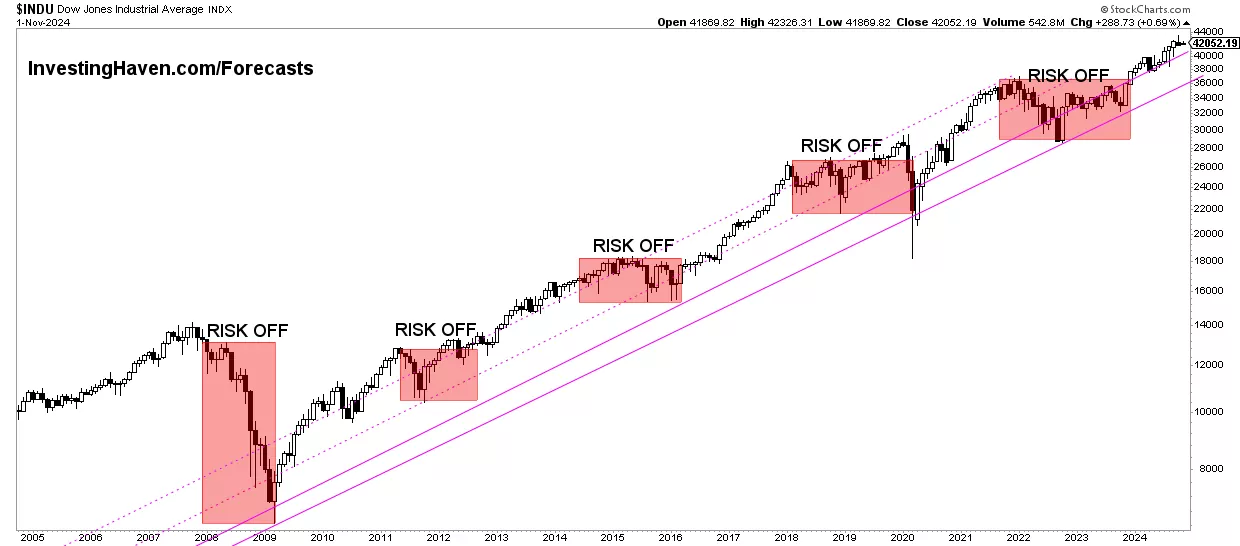
As of early 2024, the Dow Jones Industrial Average has achieved remarkable milestones, surpassing the 40,000-point mark for the first time in its history. This landmark achievement represents not just a numerical peak but a testament to sustained economic growth, corporate innovation, and resilient market sentiment that has navigated various challenges, from global pandemics to inflationary pressures. This article delves into the journey of the Dow, exploring its historical peaks, the forces that drive its ascent, and what its record-breaking performance signifies for investors and the economy.
The Dow Jones Industrial Average: An Enduring Barometer
To appreciate the significance of the Dow’s record highs, it’s essential to understand its origins, composition, and its unique role in the financial landscape.
What is the Dow Jones?
Founded by Charles Dow and Edward Jones in 1896, the Dow Jones Industrial Average was initially comprised of 12 prominent American industrial companies. Its purpose was to provide a clear, concise measure of the health of the U.S. industrial sector. Over time, its composition has evolved significantly, expanding to 30 companies that represent various sectors of the economy, including technology, finance, healthcare, and consumer goods, reflecting a more diversified view of American corporate strength.
Unlike market-capitalization-weighted indices like the S&P 500, the Dow is a price-weighted index. This means that stocks with higher share prices have a greater impact on the index’s value, regardless of their total market capitalization. While this methodology has drawn criticism for not fully representing the market’s true scale, the Dow’s historical lineage and widespread recognition ensure its continued relevance. Its constituents are blue-chip companies, large, well-established, and financially sound corporations whose performance is generally seen as indicative of the broader economic trend. Examples of current or past constituents include Apple, Microsoft, Goldman Sachs, Boeing, and Procter & Gamble. The selection of these companies is not based on rigid quantitative rules but rather on the committee’s judgment of their reputation, sustained growth, and investor interest, making it a qualitative selection process that seeks to represent the “face” of American industry.
Why Does the Dow Matter?
The Dow’s prominence extends beyond its historical roots. It serves as a psychological benchmark for investors and a quick reference point for the health of the stock market. A rising Dow often signals investor confidence, robust corporate earnings, and a generally optimistic economic outlook. Conversely, a sharp decline can trigger concerns about impending recessions or market instability.
For many individual investors, the Dow is the first number they check to gauge their investment portfolio’s performance. Its daily movements are extensively covered by financial news outlets, influencing sentiment and investment decisions. While more comprehensive indices exist, the Dow’s storied history and the caliber of its constituent companies give it a unique gravitas. It provides an accessible narrative of market performance, often simplifying complex economic trends into easily digestible points. Furthermore, it’s seen as a bellwether for the overall economy. When the 30 largest and most influential companies in America are performing well, it suggests a healthy environment for business and consumer spending, which are crucial components of economic growth.
Charting the Peaks: A Historical Journey of Dow Records
The path to 40,000 points has been anything but linear. The Dow’s history is punctuated by remarkable highs and devastating lows, each reflecting the economic and geopolitical context of its time.
Early Milestones and the Roaring Twenties
After its inception, the Dow’s initial growth was modest. It first broke 100 points in 1906. The “Roaring Twenties” saw the index surge dramatically, driven by post-World War I industrial expansion, technological innovation like widespread automobile adoption, and a buoyant consumer culture. It peaked at 381.17 points in September 1929, an unprecedented level for its time. This era was characterized by widespread speculation and enthusiasm, only to be famously followed by the devastating stock market crash of 1929, which ushered in the Great Depression and demonstrated the market’s inherent volatility. The Dow wouldn’t reclaim its 1929 high for another 25 years, a stark reminder of the long-term impact of severe economic downturns.
Post-War Prosperity and the Tech Boom
The latter half of the 20th century brought renewed periods of sustained growth. The post-World War II economic boom, fueled by industrial production and suburbanization, slowly propelled the Dow higher. It finally surpassed its 1929 peak in 1954 and continued its upward trajectory, albeit with significant corrections along the way. The 1980s and 1990s marked an era of remarkable expansion, driven by globalization, deregulation, and the burgeoning technology sector. The Dow crossed 1,000 points in 1972, but its rapid acceleration truly began in the mid-80s. It reached 10,000 points for the first time in 1999, a symbolic milestone that captivated the world. This period, often called the “dot-com boom,” was characterized by explosive growth in internet-related companies, pushing market valuations to unprecedented levels. While many tech stocks ultimately crashed, the Dow’s broader base of established companies helped it weather the storm and set the stage for future growth.
The 21st Century Surge: Navigating Crises to New Heights
The 21st century has been a period of extreme market dynamics. Following the dot-com bust, the Dow recovered, reaching new highs before facing the severe challenge of the 2008 financial crisis, which saw the index plummet. However, the market’s resilience, aided by unprecedented monetary policy interventions and a slow but steady economic recovery, led to one of the longest bull markets in history.
The Dow meticulously climbed past its pre-crisis highs, breaching 20,000 points in January 2017 and 30,000 points in November 2020, an impressive feat amidst the global economic uncertainty of the COVID-19 pandemic. The rapid recovery from the pandemic-induced sell-off demonstrated the market’s capacity to rebound, fueled by massive government stimulus, low interest rates, and accelerated digital transformation. This period also highlighted the adaptability of large corporations and their ability to innovate under duress. The latest and most significant peak came in early 2024, when the Dow Jones Industrial Average surpassed 40,000 points, marking the highest point it has ever reached. This achievement reflects robust corporate earnings, a surprisingly resilient U.S. economy, and sustained investor confidence despite ongoing inflationary pressures and geopolitical tensions.

Understanding the Drivers Behind Dow’s Ascent
The Dow’s journey to its highest points is not accidental; it is a complex interplay of fundamental economic factors, corporate performance, monetary policy, and investor psychology.
Corporate Earnings and Economic Growth
At its core, the stock market reflects the health and profitability of corporations. Strong corporate earnings, driven by increased sales, efficient operations, and innovation, directly contribute to higher stock prices for the Dow’s constituent companies. When the economy is growing, consumers spend more, businesses invest more, and profits tend to rise, creating a virtuous cycle that lifts the broader market. Economic indicators such as GDP growth, employment rates, and consumer confidence surveys often correlate with the Dow’s performance. Companies like those in the Dow are typically multinational, benefiting not just from domestic growth but also from international market expansion, further bolstering their earnings potential.
Monetary Policy and Interest Rates
The policies set by central banks, particularly the U.S. Federal Reserve, exert a significant influence on stock market valuations. Low interest rates make borrowing cheaper for companies, encouraging investment and expansion, and make stocks more attractive compared to lower-yielding bonds. Quantitative easing, another tool used by central banks, injects liquidity into the financial system, often finding its way into asset markets. Conversely, rising interest rates, implemented to combat inflation, can make borrowing more expensive, dampen economic activity, and make fixed-income investments more appealing, potentially causing market corrections. The period of ultra-low interest rates post-2008 and post-COVID-19 played a crucial role in the Dow’s sustained bull run towards its record highs.
Technological Advancements and Innovation
Throughout history, technological revolutions have been powerful catalysts for market growth. From the industrial revolution’s impact on early Dow companies to the advent of electricity, the automobile, and more recently, the internet and artificial intelligence, innovation drives productivity, creates new industries, and transforms existing ones. Companies that successfully adapt and lead in these transformative periods often become the giants of their era, eventually earning a place in the Dow and propelling its value higher. The current wave of AI advancements and digitalization continues to fuel optimism about future corporate profitability and market potential. This continuous cycle of disruption and innovation ensures that the Dow, through its evolving constituent list, remains relevant to the leading edge of economic development.
Investor Sentiment and Market Psychology
Beyond the fundamentals, investor sentiment plays a critical role in short-to-medium term market movements. Periods of optimism, often fueled by positive news or perceived economic strength, can lead to increased buying activity, pushing prices higher. This “animal spirits” phenomenon, described by economists, can create momentum that propels markets to new highs. Conversely, fear, uncertainty, and doubt can trigger sell-offs. The collective psychology of millions of investors, driven by a mix of rational analysis and emotional responses, can amplify trends and contribute to both bull and bear markets. Understanding this psychological ebb and flow is key to grasping why markets sometimes seem to defy conventional wisdom in their ascent or descent.
The Significance of All-Time Highs (and What Comes Next)
Reaching an all-time high is a moment of triumph for investors, but it also prompts questions about sustainability and future prospects.
More Than Just a Number
An all-time high for the Dow is more than just a numerical record; it’s a powerful symbol of economic progress and resilience. It signals that companies are growing, adapting, and creating value. For individual investors, it often means growth in their retirement accounts and brokerage portfolios, contributing to a “wealth effect” that can boost consumer spending and confidence. It also instills confidence in the long-term viability of the capitalist system and the American economy. These peaks provide a psychological boost, encouraging continued investment and risk-taking, which are essential for innovation and job creation. They are concrete markers of how far the economy has come, overcoming various challenges and continuing its upward trajectory.
Volatility and Corrections: An Inevitable Part of the Journey
While exhilarating, reaching new highs never guarantees a smooth ride forward. Market history is replete with examples of sharp corrections, or even crashes, following periods of robust growth. Factors such as unforeseen economic downturns, geopolitical events, policy missteps, or asset bubbles can trigger significant pullbacks. These periods of volatility are an inherent part of market cycles and serve to “reset” valuations, often creating new opportunities for long-term investors. A healthy market is not one that only goes up, but one that experiences cycles, allowing for reallocation of capital and the pruning of overvalued assets.
Looking Ahead: Factors Influencing Future Peaks
The Dow’s journey will undoubtedly continue, influenced by a dynamic array of factors. Sustained innovation, particularly in areas like artificial intelligence, biotechnology, and renewable energy, will continue to drive corporate growth. Geopolitical stability, trade policies, and global economic growth will also play a crucial role. Domestically, government fiscal policies, regulatory environments, and the ability to manage inflation without stifling growth will be paramount.
Furthermore, demographic shifts, labor market dynamics, and the evolution of consumer preferences will shape the industries that lead the next wave of economic expansion. The Dow’s ability to adapt its composition to reflect these changing economic landscapes will be key to its continued relevance and its pursuit of even higher peaks in the decades to come.
In conclusion, the Dow Jones Industrial Average reaching its highest point ever, exceeding 40,000, is a momentous achievement reflecting a robust, albeit complex, economic landscape. It stands as a testament to the enduring power of American enterprise and innovation, offering both a historical perspective on past triumphs and a forward-looking view of the challenges and opportunities that lie ahead for investors navigating the ever-evolving financial markets.
aViewFromTheCave is a participant in the Amazon Services LLC Associates Program, an affiliate advertising program designed to provide a means for sites to earn advertising fees by advertising and linking to Amazon.com. Amazon, the Amazon logo, AmazonSupply, and the AmazonSupply logo are trademarks of Amazon.com, Inc. or its affiliates. As an Amazon Associate we earn affiliate commissions from qualifying purchases.