
The share market, often perceived as a complex realm reserved for financial wizards, is in reality an accessible avenue for wealth creation available to everyone. It’s not about “playing” in the gambling sense, but rather understanding fundamental principles, managing risk, and making informed decisions to grow your capital over time. This guide will demystify the share market, providing a structured approach for beginners and seasoned investors alike to navigate its dynamic landscape professionally and insightfully.
Investing in the share market offers a powerful mechanism for individuals to participate in economic growth, combat inflation, and build significant wealth for retirement, education, or other long-term financial goals. However, success hinges on a blend of knowledge, strategy, and discipline. Jumping in without proper preparation can lead to costly mistakes. This article will outline the essential steps, from understanding the basics to developing a robust investment strategy, ensuring your journey in the share market is both engaging and fruitful.

Understanding the Share Market Fundamentals
Before diving into specific investments, it’s crucial to grasp the foundational concepts that underpin the global financial system. The share market is essentially a network of exchanges where buyers and sellers trade shares, which represent ownership stakes in publicly listed companies. Understanding these core elements is the first step towards informed participation.
What Are Shares? Your Stake in a Company
At its most basic, a “share” or “stock” represents a unit of ownership in a company. When you buy a share, you become a part-owner, known as a shareholder. As a shareholder, you gain certain rights, which can include a claim on a portion of the company’s assets and earnings, and often, the right to vote on company matters. The value of your shares fluctuates based on the company’s performance, industry trends, economic conditions, and overall market sentiment. Companies issue shares to raise capital for expansion, research, or debt repayment, providing investors with an opportunity to participate in their growth.
The Role of Stock Exchanges
Stock exchanges are organized marketplaces where shares are bought and sold. Prominent examples include the New York Stock Exchange (NYSE), NASDAQ, London Stock Exchange (LSE), and various national exchanges. These exchanges provide a regulated and transparent environment, facilitating the price discovery process and ensuring fair trading practices. They list companies that meet specific financial and governance requirements, making their shares publicly available for trading. Brokers act as intermediaries, connecting individual investors to these exchanges. Without these centralized platforms, buying and selling shares would be a fragmented and inefficient process.
Why Invest in Shares? Potential for Wealth Creation
Investing in the share market offers several compelling advantages, primarily the potential for significant wealth creation. Over the long term, equities have historically outperformed other asset classes like bonds and cash. This wealth creation can manifest in two primary ways: capital appreciation and dividends. Capital appreciation occurs when the value of your shares increases, allowing you to sell them for more than you paid. Dividends are regular payments made by companies to their shareholders from their profits, providing a steady stream of income. Beyond direct financial returns, investing in shares allows you to participate in the success of innovative companies and contribute to economic development.
Essential Preparations Before You Invest
Successful share market investment is less about quick wins and more about strategic planning and a thorough understanding of your personal financial landscape. Before you even consider opening a brokerage account, there are vital steps to take that will establish a solid foundation for your investment journey. These preparations mitigate risk and align your investment choices with your broader financial goals.
Define Your Goals and Risk Tolerance
Every investment decision should stem from clearly defined financial goals. Are you saving for retirement, a down payment on a house, your child’s education, or simply long-term wealth growth? Your goals will dictate your investment horizon (short-term vs. long-term) and the level of risk you can reasonably take. Hand-in-hand with goals is understanding your risk tolerance—your psychological and financial capacity to withstand fluctuations in your investment’s value. A high-risk tolerance might allow for more aggressive growth-oriented investments, while a lower tolerance might favor more stable, income-generating assets. Being honest about your risk tolerance prevents emotional decisions during market downturns.
Financial Readiness and Education
Before allocating funds to the share market, ensure your personal finances are in order. This means having an emergency fund (3-6 months’ worth of living expenses) readily accessible in cash or a high-yield savings account, and minimizing high-interest debt. Investing while burdened by high-interest debt or without an emergency cushion can undermine your financial stability if market downturns or unexpected expenses arise. Parallel to this, commit to continuous education. Read books, follow reputable financial news sources, attend webinars, and understand basic financial terminology. A well-informed investor is better equipped to analyze opportunities, understand market dynamics, and avoid common pitfalls. Education empowers you to make independent decisions rather than relying solely on others’ advice.
Navigating the Investment Process
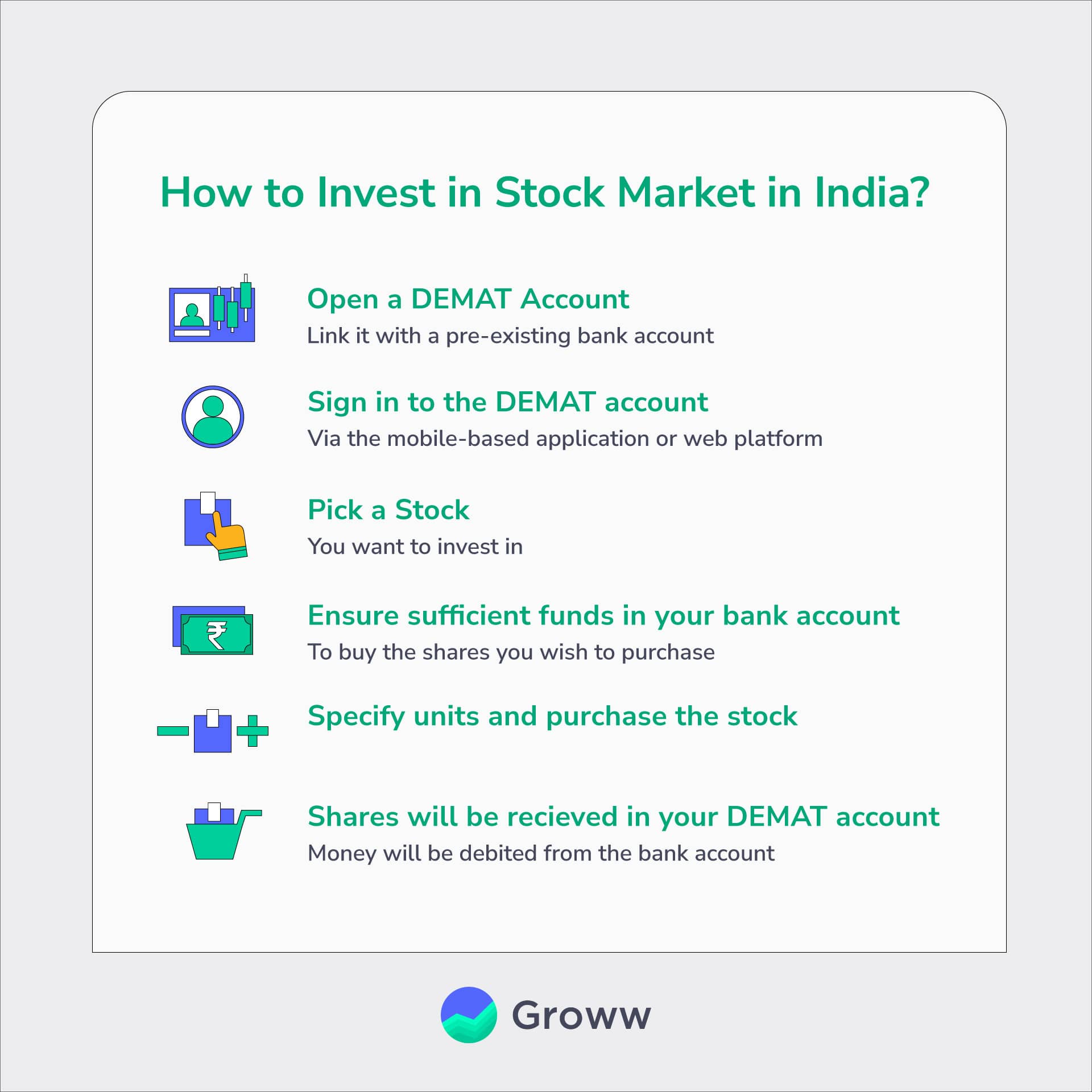
Once you’ve laid the groundwork with clear goals and a sound financial footing, the next phase involves the practical steps of entering the share market. This includes selecting the right platform, understanding how to execute trades, and, crucially, building a resilient portfolio. These operational aspects are where your theoretical knowledge begins to translate into actionable steps.
Choosing a Brokerage Account
To buy and sell shares, you’ll need an investment account with a licensed brokerage firm. There are two main types: full-service brokers and discount brokers. Full-service brokers offer personalized advice, research, and comprehensive financial planning, often at a higher cost. Discount brokers provide a platform for you to execute trades independently, with lower fees, making them popular for self-directed investors. When choosing a broker, consider factors such as fees (commissions, maintenance fees), available investment products (stocks, ETFs, mutual funds), research tools, customer service quality, and the user-friendliness of their trading platform. Ensure the broker is regulated by relevant financial authorities in your region for security.
Understanding Basic Order Types
When you place a trade, you’re not just buying or selling; you’re specifying how you want that transaction to occur. The two most fundamental order types are market orders and limit orders. A market order instructs your broker to buy or sell shares immediately at the best available price. While it guarantees execution, the exact price might vary slightly, especially in volatile markets. A limit order, conversely, allows you to specify the maximum price you’re willing to pay to buy or the minimum price you’re willing to accept to sell. This gives you more control over the price but doesn’t guarantee the order will be executed if the market price doesn’t reach your specified limit. Understanding these and other order types (e.g., stop-loss orders) is crucial for managing your trades effectively.
The Importance of Diversification
Diversification is perhaps the most fundamental principle of risk management in investing. It means spreading your investments across various assets, industries, and geographies to reduce the impact of any single investment’s poor performance. “Don’t put all your eggs in one basket” is the adage. If you invest only in one company, your entire portfolio is vulnerable to that company’s specific challenges. By diversifying, you smooth out portfolio volatility. This can involve investing in different sectors (e.g., tech, healthcare, consumer staples), different asset classes (stocks, bonds, real estate), and different types of companies (large-cap, small-cap, international). Diversification doesn’t eliminate risk entirely, but it significantly reduces the likelihood of substantial losses.
Developing Your Investment Strategy
With the operational aspects covered, the focus shifts to the intellectual heart of investing: strategy. A well-defined investment strategy provides a roadmap, guiding your decisions and helping you navigate the market with purpose. There isn’t a one-size-fits-all approach; the best strategy aligns with your personal goals, risk tolerance, and investment horizon.
Common Investment Styles: Value, Growth, and Dividend Investing
Investors often gravitate towards specific styles. Value investing, popularized by Benjamin Graham and Warren Buffett, involves seeking out companies whose shares appear to be trading below their intrinsic value. Value investors believe the market has undervalued these companies and expect their prices to eventually correct upwards. Growth investing focuses on companies expected to grow at an above-average rate compared to the rest of the market. These companies often reinvest profits back into the business, leading to rapid expansion, though they may carry higher risk and volatility. Dividend investing prioritizes companies that regularly distribute a portion of their earnings to shareholders as dividends. This strategy provides a steady income stream and can be particularly appealing to retirees or those seeking consistent cash flow. Each style has its merits and risks, and a balanced portfolio might incorporate elements of multiple styles.
Passive Investing: Index Funds and ETFs
For many, especially those new to investing or with limited time for active research, passive investing offers a compelling alternative. This strategy involves investing in funds that track a specific market index, such as the S&P 500. Index funds and Exchange Traded Funds (ETFs) are popular vehicles for passive investing. They hold a diversified basket of securities that mirror the composition of a chosen index, providing instant diversification at a low cost. The goal is not to outperform the market, but to match its returns. This approach benefits from the long-term upward trend of the overall market and requires minimal active management, making it an excellent option for long-term wealth building with lower fees than actively managed funds.

Monitoring and Emotional Discipline
Investing is a marathon, not a sprint. While active day trading is a high-risk endeavor, even long-term investors need to monitor their portfolios periodically. This doesn’t mean obsessing over daily fluctuations, but rather reviewing your investments regularly (e.g., quarterly or annually) to ensure they still align with your goals and risk tolerance. Rebalancing your portfolio—adjusting asset allocations back to your target percentages—is a key part of this process. Crucially, emotional discipline is paramount. Market downturns are inevitable, and panic selling can lock in losses. Conversely, euphoria during bull markets can lead to irrational exuberance. Stick to your long-term plan, avoid making impulsive decisions based on news headlines or social media hype, and remember that market volatility is a normal part of investing.
Embarking on the journey of share market investing is a powerful step towards financial independence and wealth accumulation. It demands patience, continuous learning, and a steadfast commitment to your well-defined strategy. By understanding the fundamentals, preparing diligently, making informed choices about brokers and order types, diversifying your portfolio, and developing a suitable investment strategy, you can confidently navigate the complexities of the market. Remember that the share market is not a get-rich-quick scheme, but a tool for sustained growth, rewarding those who approach it with a professional mindset, insightful analysis, and unwavering discipline.
aViewFromTheCave is a participant in the Amazon Services LLC Associates Program, an affiliate advertising program designed to provide a means for sites to earn advertising fees by advertising and linking to Amazon.com. Amazon, the Amazon logo, AmazonSupply, and the AmazonSupply logo are trademarks of Amazon.com, Inc. or its affiliates. As an Amazon Associate we earn affiliate commissions from qualifying purchases.