
The year 2008 stands as a stark reminder of the fragility of financial markets and the profound impact of systemic risk. For investors and economists alike, it represents a pivotal moment in modern financial history, marking the onset of the Great Recession. The stock market experienced one of its most severe contractions in decades, leaving a lasting imprint on investment strategies, regulatory frameworks, and public perception of financial institutions. Understanding the extent of this downturn, its underlying causes, and its enduring lessons is crucial for navigating future economic cycles.
The Stark Numbers: A Market in Freefall
The magnitude of the stock market’s decline in 2008 was staggering. Major indices plummeted, wiping out trillions of dollars in market capitalization and shattering investor confidence. The year began with ominous signs, but by the autumn, the financial system was on the brink of collapse, leading to an accelerated sell-off.
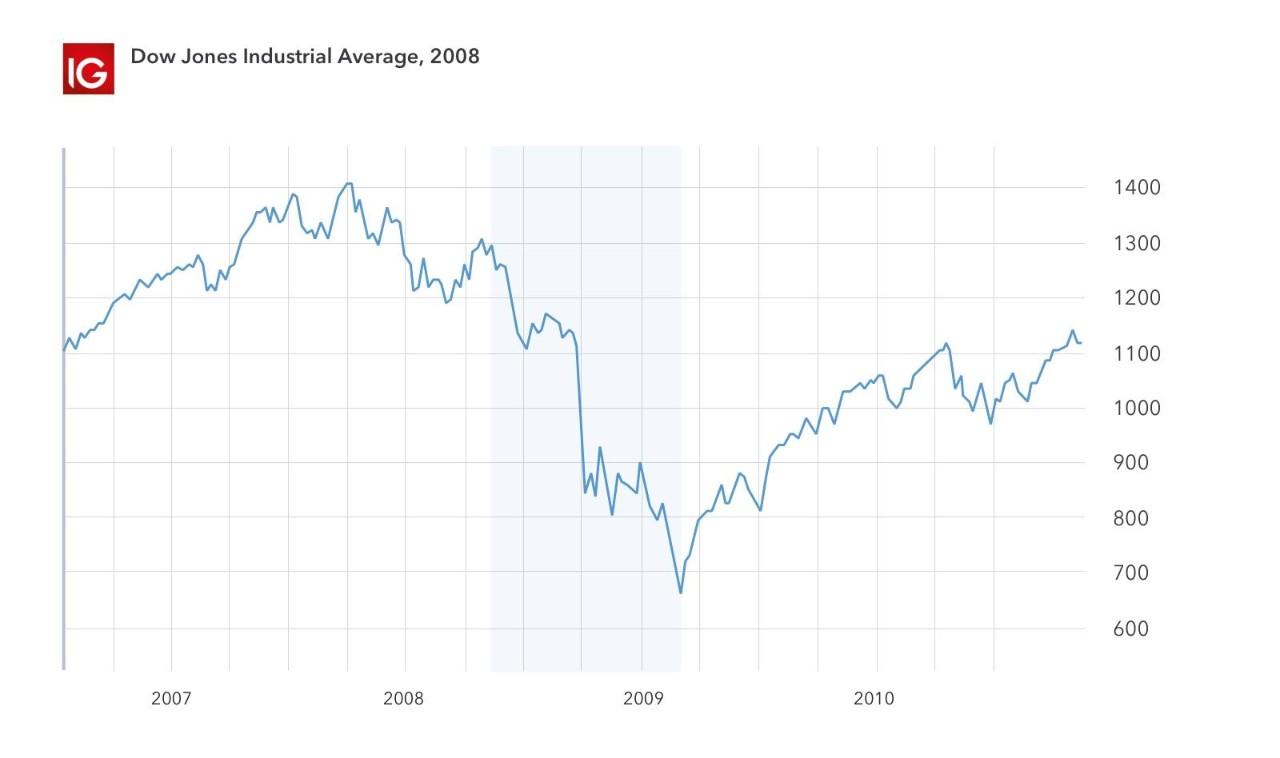
Key Index Performance in 2008:
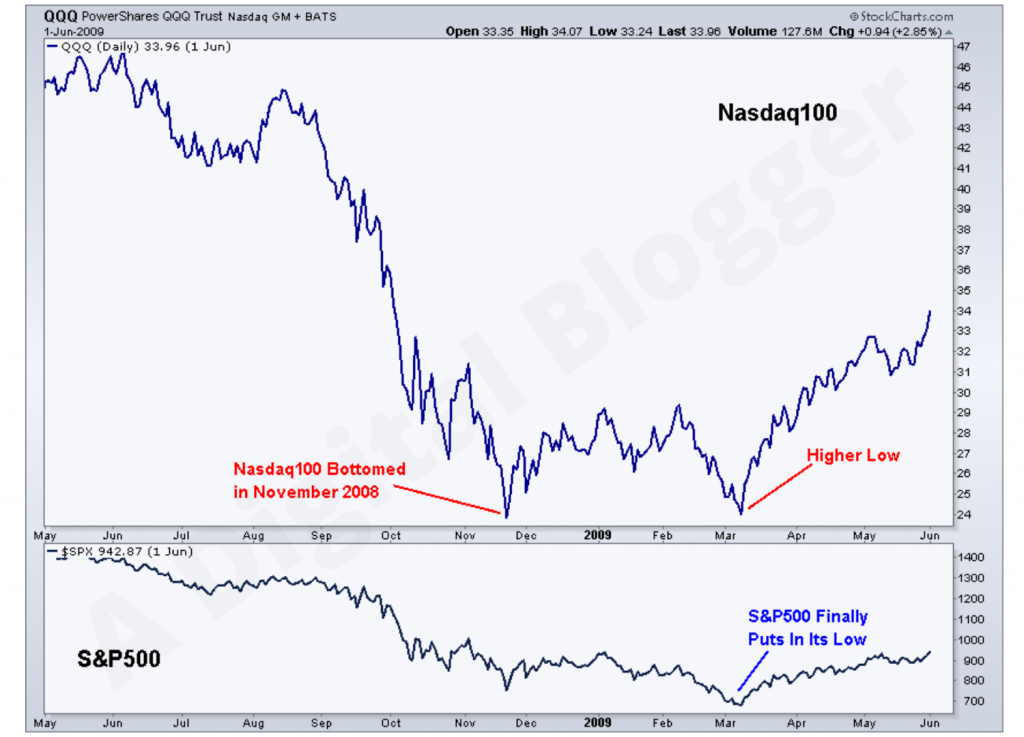
- S&P 500 (Standard & Poor’s 500): Often considered the best gauge of large-cap U.S. equities, the S&P 500 finished 2008 down 38.49%. This was its worst annual performance since 1937, eclipsing even the dot-com bust of the early 2000s. The index reached its peak in October 2007 and then entered a prolonged bear market, with its ultimate bottom occurring in March 2009.
- Dow Jones Industrial Average (DJIA): The Dow, a price-weighted index of 30 significant American companies, saw a decline of 33.84% for the year. This represented a substantial loss for many individual investors who typically follow this benchmark. Its daily volatility reached extreme levels, with several record-setting point drops and gains.
- NASDAQ Composite: Heavily weighted towards technology and growth stocks, the NASDAQ Composite experienced the steepest percentage decline among the major indices, falling 40.54% in 2008. While it had suffered greater percentage losses in the dot-com bubble burst, the 2008 fall was particularly brutal due to the systemic nature of the crisis.
These figures illustrate a market-wide capitulation, reflecting deep-seated fears about the solvency of financial institutions, the health of the global economy, and the stability of the capitalist system itself. The daily headlines chronicled unprecedented market swings, frozen credit markets, and emergency government interventions, all contributing to a climate of extreme uncertainty and panic selling.
Unraveling the Causes of the Financial Crisis
The stock market’s dramatic fall in 2008 was not an isolated event but the culmination of several interconnected financial imbalances and regulatory failures that had been brewing for years. The crisis had its roots in the U.S. housing market and quickly metastasized into a global financial contagion.
The Subprime Mortgage Meltdown
At the core of the crisis was the proliferation of subprime mortgages during the early to mid-2000s. Lenders, driven by aggressive sales targets and a belief that housing prices would always rise, extended mortgages to borrowers with poor credit histories and insufficient income, often with adjustable-rate terms that became unaffordable once interest rates reset. This created a housing bubble, fueled by speculative buying and lax lending standards.
Securitization and Systemic Risk
The problem was exacerbated by the securitization of these mortgages. Investment banks bundled thousands of individual mortgages into complex financial instruments known as Mortgage-Backed Securities (MBS) and Collateralized Debt Obligations (CDOs). These instruments were then sold to institutional investors worldwide, including pension funds, hedge funds, and foreign banks. Credit rating agencies, often paid by the very institutions issuing these securities, frequently assigned high ratings to even the riskiest tranches, obscuring the true level of danger. When housing prices began to fall in 2006-2007, defaults on subprime mortgages surged, leading to massive losses for holders of MBS and CDOs.
The Credit Crunch and Institutional Failures
As the value of these toxic assets collapsed, financial institutions that held them faced significant write-downs and liquidity crises. Banks became increasingly wary of lending to one another, fearing that counterparties might be holding undisclosed amounts of impaired assets. This “credit crunch” froze interbank lending, the lifeblood of the financial system.
- Bear Stearns (March 2008): One of the first major casualties, Bear Stearns, a prominent investment bank, collapsed and was acquired by JPMorgan Chase at a fire-sale price, backed by Federal Reserve guarantees. This sent shockwaves through the market.
- Fannie Mae and Freddie Mac (September 2008): These government-sponsored enterprises (GSEs), critical to the U.S. housing finance system, held or guaranteed trillions in mortgages. They were placed into conservatorship by the government to prevent their collapse.
- Lehman Brothers Bankruptcy (September 15, 2008): This event was the tipping point. The failure of Lehman Brothers, a 158-year-old investment bank, due to its exposure to subprime mortgages and other illiquid assets, marked the largest bankruptcy in U.S. history. The government’s decision not to bail out Lehman triggered a full-blown panic across global financial markets.
- AIG Bailout (September 16, 2008): Immediately following Lehman, the massive insurance conglomerate American International Group (AIG) faced imminent collapse due to its exposure through credit default swaps (CDS) – a form of insurance against bond defaults. The U.S. government intervened with an $85 billion bailout to prevent a cascade of failures among AIG’s counterparties, which included many of the world’s largest banks.
These events, occurring in rapid succession, demonstrated the profound interconnectedness of the global financial system and the severe consequences of systemic risk.
Broader Economic Reverberations and Global Impact
The stock market’s collapse and the ensuing credit crisis quickly spilled over into the real economy, initiating what became known as the Great Recession. This period was characterized by widespread job losses, declining consumer spending, and a sharp slowdown in economic activity.
The Great Recession
From December 2007 to June 2009, the U.S. economy experienced its longest and deepest recession since World War II. Unemployment rates surged, peaking at 10% in October 2009. Millions of Americans lost their jobs, their homes, and significant portions of their retirement savings. Consumer confidence plummeted, leading to a contraction in retail sales and investment. Businesses faced tighter credit conditions, making it difficult to finance operations, expand, or even meet payroll, exacerbating the economic downturn.
Global Contagion
The crisis was not confined to U.S. borders. Through securitization, interbank lending, and complex derivatives, financial institutions worldwide were exposed to the same toxic assets. European banks, in particular, suffered substantial losses, leading to liquidity issues and government interventions across the Eurozone. Emerging markets also felt the pinch, as global demand for their exports waned and access to international capital markets became constrained. The synchronized nature of the global recession underscored the interconnectedness of modern economies.
Policy Responses and the Road to Recovery
In response to the deepening crisis, governments and central banks around the world unleashed an unprecedented series of interventions aimed at stabilizing the financial system and stimulating economic activity.
Government Bailouts and Fiscal Stimulus
The U.S. government, through the Treasury Department and the Federal Reserve, implemented a range of measures:
- Troubled Asset Relief Program (TARP): Passed in October 2008, TARP authorized $700 billion (later reduced to $475 billion) to purchase distressed assets and inject capital into struggling banks and auto companies. This controversial program was credited with preventing a complete meltdown of the financial system.
- Auto Industry Bailout: General Motors and Chrysler received significant government loans to avoid bankruptcy, preserving millions of jobs in the manufacturing sector and its supply chain.
- American Recovery and Reinvestment Act (ARRA) of 2009: A massive fiscal stimulus package totaling $787 billion (later revised to $831 billion), designed to boost the economy through infrastructure spending, tax cuts, and aid to states.
Federal Reserve Actions and Unconventional Monetary Policy
The Federal Reserve played a critical role, acting as the lender of last resort and deploying new tools:
- Interest Rate Cuts: The Fed aggressively cut the federal funds rate, eventually bringing it down to a range of 0% to 0.25% by December 2008.
- Liquidity Facilities: The Fed established several emergency lending programs to unfreeze credit markets and provide liquidity to financial institutions.
- Quantitative Easing (QE): Starting in late 2008, the Fed embarked on a program of large-scale asset purchases, buying MBS and Treasury securities. The goal of QE was to lower long-term interest rates, stimulate borrowing and investment, and inject liquidity directly into the financial system.
These decisive, albeit often criticized, interventions ultimately helped to stabilize the financial markets, allowing them to bottom out in March 2009. The recovery was slow and arduous, but the stock market began its long ascent from those lows, reflecting a gradual return of investor confidence and economic growth.
Enduring Lessons for Investors
The 2008 financial crisis imparted several critical lessons for investors, underscoring the importance of prudence, perspective, and diversification.
The Perils of Excessive Risk-Taking
The crisis highlighted the dangers of opaque financial instruments, excessive leverage, and a lack of proper risk management. It reinforced the notion that chasing abnormally high returns often comes with disproportionately high risks. For individual investors, this translates to understanding the true nature of their investments and avoiding overly speculative ventures.
The Importance of Diversification
Investors whose portfolios were heavily concentrated in specific sectors (e.g., financial stocks or real estate) or lacked geographical diversification suffered disproportionately. The crisis reaffirmed the timeless principle that a well-diversified portfolio across different asset classes, industries, and geographies can help cushion the blow during downturns.
Long-Term Perspective and Avoiding Panic Selling
While emotionally challenging, selling off holdings during a market freefall often locks in losses and prevents participation in the subsequent recovery. Investors who maintained a long-term perspective, continued to invest consistently (e.g., through dollar-cost averaging), and rebalanced their portfolios were ultimately better positioned to recover their losses and benefit from the market’s eventual rebound. The period post-2008 demonstrated that equity markets, over the long haul, tend to recover and reach new highs, rewarding patient investors.

Regulatory Oversight and Systemic Risk Awareness
The crisis led to significant regulatory reforms, most notably the Dodd-Frank Wall Street Reform and Consumer Protection Act in the U.S. For investors, understanding the regulatory landscape and the efforts to mitigate systemic risk can provide a broader context for evaluating the stability of the financial system. While no regulatory framework can eliminate all risk, increased transparency and oversight are vital.
The fall of the stock market in 2008 was a profoundly painful experience for millions. However, it also served as a powerful, albeit costly, education in financial resilience, risk management, and the cyclical nature of markets, forever changing how investors and policymakers approach economic challenges.
aViewFromTheCave is a participant in the Amazon Services LLC Associates Program, an affiliate advertising program designed to provide a means for sites to earn advertising fees by advertising and linking to Amazon.com. Amazon, the Amazon logo, AmazonSupply, and the AmazonSupply logo are trademarks of Amazon.com, Inc. or its affiliates. As an Amazon Associate we earn affiliate commissions from qualifying purchases.