
The year 1929 is etched into financial history as the crucible of the most catastrophic stock market crash in modern memory, setting the stage for the Great Depression. While often condensed to a single “crash,” the financial meltdown of 1929 was a prolonged and agonizing process, beginning with an intense initial drop that cascaded into sustained market erosion over several years. Understanding the magnitude of this decline requires examining not just the immediate, dramatic plummet but also the subsequent, enduring financial destruction.
The Immediate Financial Impact: Black Tuesday and Beyond
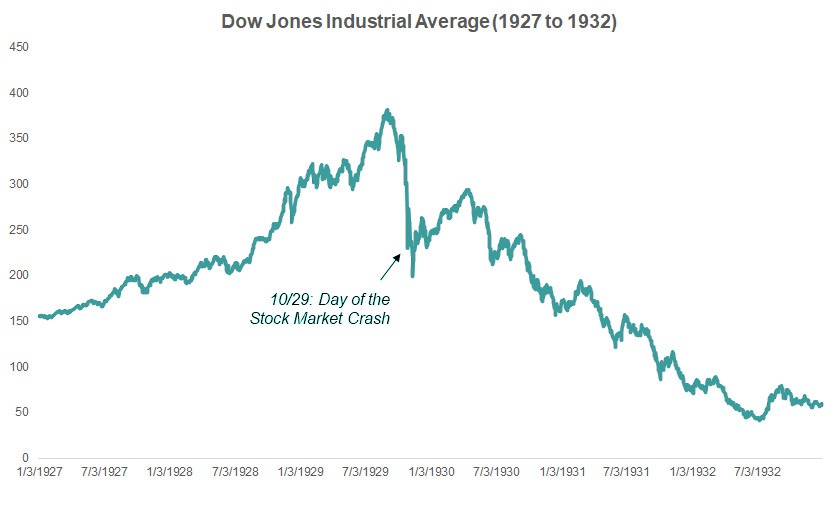
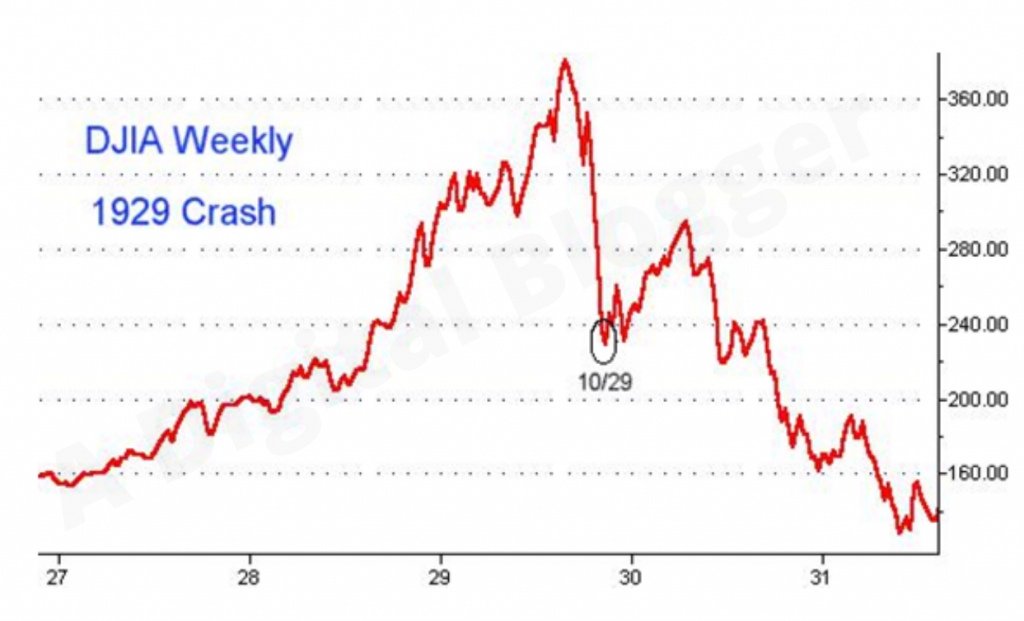
The most infamous days of the 1929 crash occurred in late October, but the market’s decline had already signaled trouble. By early September, the Dow Jones Industrial Average (DJIA) had peaked at 381.17. What followed was an unprecedented unraveling.
The Sheer Scale of the Initial Plunge
The initial tremors began on “Black Thursday,” October 24, 1929. The DJIA opened sharply lower, and selling pressure quickly escalated to panic. Approximately 12.9 million shares traded hands, a record at the time, indicating the widespread desire to liquidate holdings. Though a consortium of leading bankers intervened by pooling funds to buy stocks and stabilize prices in the afternoon, providing a temporary reprieve, the underlying fear had taken root.
The true cataclysm struck the following week. On “Black Monday,” October 28, the market plunged relentlessly. The DJIA shed nearly 13% of its value in a single trading session, closing at 260.64. This was not merely a correction; it was a market in freefall, driven by margin calls, fear, and a complete loss of confidence.
The very next day, “Black Tuesday,” October 29, witnessed an even more devastating collapse. Trading volume soared to an unimaginable 16.4 million shares as investors desperately tried to exit their positions. The DJIA plummeted another 11.7%, closing at 230.07. In just two trading days, the index lost nearly a quarter of its value. For context, the peak of 381.17 just two months prior now seemed an impossible dream. The total market capitalization lost on Black Tuesday alone was estimated to be between $8 billion and $9 billion—a staggering sum at the time, equivalent to tens of billions today.
Cumulative Losses Over Weeks and Months
While Black Tuesday marked the most intense single-day collapse, the market did not recover. Instead, it continued its downward trajectory, albeit with occasional minor rallies. By mid-November 1929, the DJIA had fallen to 198.69, representing a total decline of approximately 48% from its September peak. This initial phase of the crash alone wiped out nearly half of the market’s value.
However, the pain was far from over. The bear market that ensued was relentless. The DJIA continued its descent for almost three more years, finally bottoming out on July 8, 1932, at a dismal 41.22. From its September 1929 peak to its 1932 trough, the stock market had plummeted a staggering 89.2%. This protracted decline devastated not only the fortunes of individual investors but also the balance sheets of corporations, banks, and the wider economy, ushering in the darkest period of American economic history.
The Precursors to the Crash: An Unstable Financial Landscape
The severity of the 1929 crash was not solely due to a sudden panic; it was the culmination of several interconnected economic and financial imbalances that had been building throughout the “Roaring Twenties.”
Speculative Fever and Margin Buying
A primary driver of the inflated market was rampant speculation. Many investors, fueled by a belief that stock prices would only ever go up, poured their savings into the market. Crucially, a significant portion of this investment was done on “margin.” Margin buying allowed investors to purchase stocks by paying only a small percentage of the stock’s price (often as little as 10%) and borrowing the rest from their brokers. As long as stock prices rose, this leveraged approach amplified returns.
However, margin buying created a dangerous feedback loop. As prices began to fall, brokers issued “margin calls,” demanding investors deposit more funds to cover their losses. Unable to meet these calls, investors were forced to sell their holdings, further driving down prices and triggering more margin calls, creating a downward spiral of forced selling. This speculative bubble, propped up by borrowed money, was inherently unstable and ripe for collapse.
Lack of Regulatory Oversight
The financial markets of the 1920s operated with minimal governmental regulation. There was no Securities and Exchange Commission (SEC) to oversee trading practices, prevent fraud, or ensure transparency. Information disclosure was often lax, and market manipulation was not uncommon. Insider trading was widespread, and investment trusts often engaged in highly speculative practices without adequate oversight. This absence of a regulatory framework allowed risky behaviors to proliferate unchecked, contributing to the market’s vulnerability.
Furthermore, the Federal Reserve’s policies played a role. While the Fed attempted to curb speculative lending by raising interest rates in 1928 and 1929, these measures were often too little, too late, and some argue they inadvertently contributed to a tightening of credit that hastened the economic downturn.
Economic Weaknesses: Agriculture and Industry
Beneath the veneer of prosperity, several sectors of the American economy were struggling. Agriculture, in particular, had been in a depression for much of the decade following World War I, with overproduction leading to falling commodity prices and widespread farmer debt. This depressed agricultural sector reduced the purchasing power of a significant portion of the population.

Simultaneously, industrial production had begun to slow in the months leading up to the crash, leading to an accumulation of inventories. Wage growth for many workers lagged behind productivity gains and corporate profits, contributing to an uneven distribution of wealth and a potential underconsumption problem. These underlying economic fragilities meant that the economy was poorly positioned to absorb a shock of the stock market’s magnitude.
The Rippling Effects: Beyond Wall Street’s Ticker
The stock market crash was not an isolated event; its shockwaves reverberated throughout the entire financial system and the broader economy, leading to a decade of hardship known as the Great Depression.
The Erosion of Wealth and Consumer Confidence
The immediate and most direct impact was the staggering destruction of wealth. Millions of Americans, from small-time investors to wealthy magnates, saw their savings and investments evaporate. This immediate loss of capital had a profound psychological effect, shattering consumer and business confidence. People stopped spending, businesses halted investment, and economic activity ground to a halt. The “wealth effect” worked in reverse, as perceived poverty led to a sharp contraction in aggregate demand.
Companies found it difficult to raise capital through stock issuance, hindering expansion and leading to layoffs. The decline in consumer spending, in turn, led to further cuts in production and employment, creating a vicious cycle of economic contraction.
Banking System Failures
The crash severely weakened the banking system. Many banks had invested heavily in the stock market themselves or had lent money to individuals and corporations for stock purchases. As stock prices plummeted, these loans became unrecoverable, leading to massive write-offs. Furthermore, the widespread fear and uncertainty caused by the crash led to “runs” on banks, where depositors, fearing for their savings, rushed to withdraw their money.
The banking system of the era lacked federal deposit insurance, meaning that when a bank failed, depositors lost everything. This triggered a wave of bank failures across the country, further exacerbating the financial crisis. Between 1929 and 1933, thousands of banks collapsed, wiping out billions in savings and effectively freezing credit markets, making it nearly impossible for businesses to secure loans and for the economy to recover.
Global Economic Contagion
The United States was a major global economic power, and its financial distress quickly spread internationally. American banks recalled loans made to European countries, particularly Germany and Austria, which were struggling with post-World War I reparations and reconstruction. This capital flight triggered banking crises and economic downturns across Europe, particularly in countries heavily reliant on U.S. credit.
The adoption of protectionist trade policies, such as the Smoot-Hawley Tariff Act of 1930, further choked international trade, worsening the global economic slump. The intertwining of financial markets and trade relationships meant that the U.S. stock market crash became a catalyst for a worldwide depression.
Lessons Learned: Financial Regulation and Investor Psychology
The trauma of 1929 and the subsequent Great Depression served as a stark, albeit painful, lesson for policymakers and financial markets, leading to fundamental reforms that shaped modern financial regulation.
The Birth of Modern Financial Regulation
One of the most significant long-term outcomes of the 1929 crash was the creation of a robust regulatory framework designed to prevent a similar catastrophe. In the aftermath, Congress passed a series of landmark legislative acts:
- The Securities Act of 1933: Mandated that investors receive financial information about public securities being offered for sale.
- The Securities Exchange Act of 1934: Created the Securities and Exchange Commission (SEC) to regulate stock exchanges, brokers, and dealers, and to prevent manipulation and fraud. This act also introduced margin requirements, making speculative buying on credit more difficult and less pervasive.
- The Banking Act of 1933 (Glass-Steagall Act): Separated commercial banking from investment banking to prevent banks from engaging in risky speculative activities with depositor funds. It also established the Federal Deposit Insurance Corporation (FDIC), guaranteeing bank deposits and restoring public confidence in the banking system, effectively ending bank runs.
These reforms laid the groundwork for a more stable and transparent financial system, emphasizing investor protection and market integrity.
The Psychological Scars on Investors
The experience of 1929 left deep psychological scars on generations of investors. It fostered a cautious, sometimes overly conservative, approach to investing. Many who lived through the period avoided the stock market for decades, preferring safer, albeit lower-yielding, investments. This collective memory shaped investor behavior for much of the 20th century, reminding future generations of the inherent risks of unchecked speculation and market volatility. While market crashes have occurred since, none have matched the sustained, devastating impact and the associated economic depression of 1929.
Market Mechanics and Protective Measures
Beyond regulation, the crash led to a re-evaluation of market mechanics. Today, circuits breakers are in place on stock exchanges to temporarily halt trading during severe market declines, providing a cooling-off period to prevent panic selling from spiraling out of control. Enhanced transparency requirements, real-time data dissemination, and stricter oversight of trading practices are all legacies of the lessons learned from the chaos of 1929. While market downturns remain an inevitable part of economic cycles, the institutional infrastructure developed in response to the Great Crash aims to mitigate their severity and prevent a complete systemic collapse.
aViewFromTheCave is a participant in the Amazon Services LLC Associates Program, an affiliate advertising program designed to provide a means for sites to earn advertising fees by advertising and linking to Amazon.com. Amazon, the Amazon logo, AmazonSupply, and the AmazonSupply logo are trademarks of Amazon.com, Inc. or its affiliates. As an Amazon Associate we earn affiliate commissions from qualifying purchases.