
For active traders and long-term investors alike, understanding the operational schedule of the stock market is far more than a mere calendar curiosity. It’s a fundamental aspect of financial planning, risk management, and strategic execution. While the world spins 365 days a year, the doors of major stock exchanges like the New York Stock Exchange (NYSE) and NASDAQ are open for business on a significantly fewer number of days. This deliberate rhythm of trading and rest periods is designed to maintain market stability, allow for operational processing, and accommodate national observances.
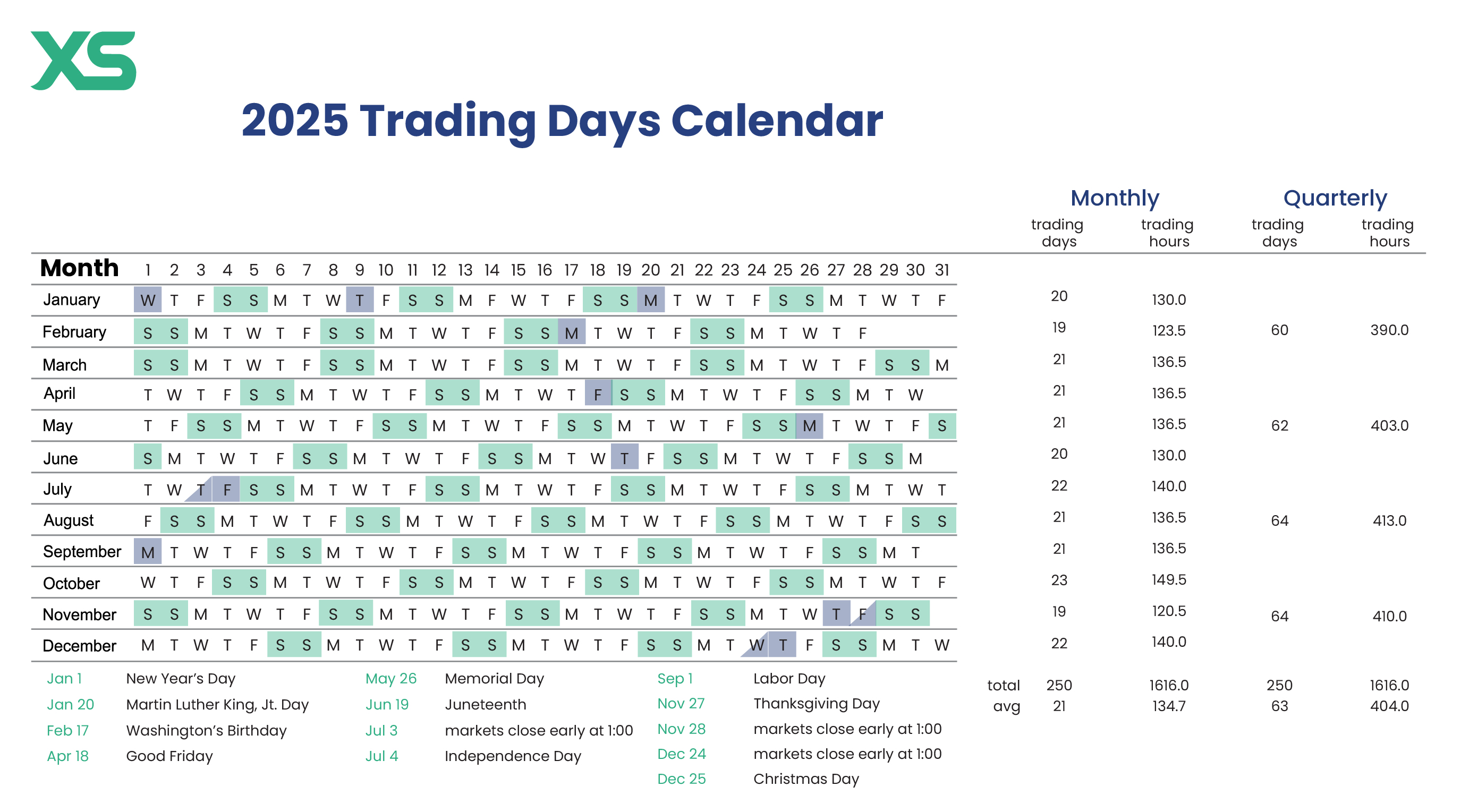
On average, investors can expect the U.S. stock market to be open for approximately 252 to 253 days each year. This figure is derived by subtracting weekends and a set number of national holidays from the total 365 days. These closures are not arbitrary; they are deeply ingrained in the functioning of financial systems and have profound implications for market participants. From the timing of economic data releases to the psychological impact on investor sentiment, every non-trading day subtly shapes the financial landscape. Grasping the nuances of market hours and holiday schedules is essential for anyone looking to navigate the complexities of investing effectively, whether they are monitoring daily fluctuations or setting long-term portfolio goals.
This comprehensive guide will delve into the specifics of stock market operating days, explore the reasons behind these schedules, detail the major holidays that halt trading, and discuss how these closures impact investment strategies and financial planning. By the end, you’ll have a clearer, more insightful understanding of the rhythm that governs the world’s most dynamic financial markets.
The Core Mechanics: Understanding Standard Stock Market Operations
The perception that the stock market is a perpetual, always-on entity is quickly dispelled once one examines its structured operational calendar. Unlike some digital platforms that run 24/7, traditional stock exchanges adhere to a rigorous schedule, opening and closing their physical and digital doors at specified times and on designated days. This structured approach is a cornerstone of market integrity and efficiency.
The Rationale Behind Weekends and Holidays
The primary reason the stock market isn’t open 365 days a year is straightforward: weekends and holidays. Saturdays and Sundays are non-trading days across most major global exchanges, serving multiple critical functions. Firstly, they provide a necessary pause for market participants—traders, analysts, brokers, and institutional investors—to rest, reflect, and prepare for the upcoming week. This downtime helps prevent burnout and allows for more considered decision-making rather than continuous, high-pressure trading. Secondly, weekends are crucial for the back-office operations of financial institutions. Banks, clearinghouses, and brokerage firms use this time to settle trades, reconcile accounts, perform system maintenance, and process a myriad of administrative tasks that are difficult to execute during live trading hours. Without this dedicated period, the intricate machinery of the financial system would struggle to keep pace, leading to potential errors and systemic risks.
Beyond weekends, a defined set of national holidays further reduces the number of trading days. These holidays often commemorate significant historical events or cultural observances, reflecting a broader societal rhythm. For the financial markets, they represent days when a substantial portion of the workforce is off, making full market participation impractical and inefficient. Moreover, closing on these holidays helps to align financial market operations with the broader economic and governmental sectors that also observe these days.
Standard Trading Hours: A Daily Rhythm
While the number of open days is important, understanding the daily trading rhythm is equally critical. For the major U.S. stock exchanges, the New York Stock Exchange (NYSE) and NASDAQ, standard trading hours are from 9:30 AM to 4:00 PM Eastern Time (ET), Monday through Friday. This 6.5-hour window is when the vast majority of trading activity occurs.
However, the market’s influence isn’t strictly confined to these hours. Investors can also engage in pre-market trading (typically 4:00 AM to 9:30 AM ET) and after-hours trading (typically 4:00 PM to 8:00 PM ET). These extended hours allow institutional investors and sophisticated individual traders to react to news released outside of regular market hours, such as corporate earnings announcements or major economic reports. While these sessions offer flexibility, they often feature lower liquidity and wider bid-ask spreads, making them potentially riskier for less experienced participants. The concentration of trading within standard hours ensures maximum liquidity and price discovery, providing a fair and efficient environment for most market activity.
Navigating the Calendar: Key Holidays and Their Implications
The exact number of trading days in a given year fluctuates slightly due to how holidays fall on the calendar. Some years, a holiday might land on a weekend, meaning the market might close on the preceding Friday or following Monday in observance, or simply observe it on its true calendar date. Understanding these specific closures is paramount for planning trades and managing portfolios.
Major U.S. Stock Market Holidays
The U.S. stock market (NYSE and NASDAQ) observes a standard set of nine to ten federal holidays each year, leading to full-day closures. These typically include:
- New Year’s Day (January 1)
- Martin Luther King, Jr. Day (Third Monday in January)
- Presidents’ Day (Third Monday in February)
- Good Friday (Varies, typically March or April)
- Memorial Day (Last Monday in May)
- Juneteenth National Independence Day (June 19)
- Independence Day (July 4)
- Labor Day (First Monday in September)
- Thanksgiving Day (Fourth Thursday in November)
- Christmas Day (December 25)
It’s also important to note that occasionally, the market may observe early closures on days adjacent to major holidays, such as the day after Thanksgiving (Black Friday) or on Christmas Eve if it falls on a weekday. These early closures typically mean trading ends at 1:00 PM ET. While not full closure days, they still impact trading strategies by shortening the active market window. These specific holiday schedules are typically published well in advance by the exchanges and brokerage firms, making it easy for investors to plan.
The Impact of Holiday Closures on Trading Strategies
Holiday closures are more than just days off; they introduce specific dynamics that can influence trading strategies and market behavior. Leading up to a long weekend or holiday, market activity can often slow down as investors reduce their positions to avoid exposure to unforeseen news or events that might occur while the market is closed. This phenomenon is sometimes referred to as “holiday effect” or “long-weekend risk aversion.”
Conversely, the days immediately following a holiday can see increased volatility as pent-up demand or supply rushes into the market, reacting to news that accumulated over the closure. For day traders and swing traders, these periods require careful attention, as liquidity might be lower and price movements more exaggerated. Long-term investors, while less impacted by day-to-day volatility, still need to consider how holidays might affect the timing of dividend payments, corporate announcements, or the execution of limit orders placed over a weekend. Furthermore, if a critical economic report is scheduled for release on a day the market is closed, its impact will only be fully realized when trading resumes, potentially leading to a “gap” in prices.
Beyond the Basics: Global Variations and Unexpected Pauses
While the focus often defaults to U.S. markets, the global financial landscape is a complex tapestry of diverse schedules, each with its own set of rules and potential for deviation. Understanding these broader contexts and the rare instances of unexpected pauses adds another layer of sophistication to an investor’s knowledge base.
International Markets: A Mosaic of Schedules

The U.S. stock market’s schedule is but one example in a global network. Other major exchanges around the world operate on different timelines, reflecting their respective time zones, national holidays, and cultural practices. For instance:
- London Stock Exchange (LSE): While generally aligned with a Monday-Friday workweek, the LSE observes different national holidays, such as Good Friday, Easter Monday, and various bank holidays throughout the year. Its trading hours are typically 8:00 AM to 4:30 PM GMT.
- Tokyo Stock Exchange (TSE): The TSE operates from 9:00 AM to 3:00 PM JST, with a lunch break from 11:30 AM to 12:30 PM. It observes numerous Japanese national holidays, many of which are unique to the country.
- Shanghai Stock Exchange (SSE): Similar to the TSE, the SSE also has a lunch break and observes Chinese national holidays, including Chinese New Year, Qingming Festival, and National Day.
Investors with diversified portfolios that include international stocks or ETFs need to be acutely aware of these varying schedules. A market in one part of the world might be closed for a holiday while another is actively trading, creating arbitrage opportunities or presenting challenges in managing global exposures. Researching the specific calendar of each exchange relevant to one’s investments is a critical due diligence step.
Early Closures and Emergency Halts: Rare but Real
In addition to scheduled full-day and early closures, there are rare instances where markets might close unexpectedly or halt trading for specific reasons. Early closures, beyond the planned holiday-adjacent ones, can sometimes be initiated for logistical or weather-related issues, though these are extremely uncommon for major exchanges.
More notably, trading halts can occur for individual stocks or even the entire market. For individual stocks, a halt might be triggered by major news pending release, significant price volatility, or to correct an erroneous trade. For the entire market, extreme volatility can trigger circuit breakers, leading to temporary halts or even a full closure for the remainder of the day. For example, during periods of severe market downturns, like those seen in 1987 or early 2020, circuit breakers are designed to pause trading to prevent panic selling and allow investors to absorb information. While these are infrequent, they underscore the dynamic nature of market operations and the mechanisms in place to maintain order during times of stress. These emergency measures are always in the interest of market stability and investor protection.
Why Knowing the Schedule Matters for Investors
Understanding when the stock market is open or closed goes far beyond simple trivia; it’s a foundational element for informed decision-making in the world of finance. For both novice and seasoned investors, this knowledge directly influences planning, strategy, and even psychological well-being.
Planning Trades and Portfolio Management
For active traders, knowing the market schedule is indispensable. It dictates when orders can be placed and executed, when specific technical analysis patterns might be invalidated by a long closure, and when to expect heightened volatility upon reopening. A trader might choose to reduce positions before a long weekend to mitigate “event risk” – the possibility of negative news emerging while markets are shut. Conversely, they might look for opportunities to enter positions immediately after a holiday if they anticipate a positive reaction to accumulated news.
For long-term investors, while daily market hours might seem less critical, holiday closures still play a role. They can affect the timing of dividend payouts, the ability to reinvest, or the execution of standing orders like dollar-cost averaging contributions. More strategically, understanding the rhythm of closures helps in planning when to review one’s portfolio, rebalance assets, or make significant adjustments based on broader economic trends that might be punctuated by market holidays.
Impact on Economic Data Releases and Corporate Earnings
Key economic indicators (like inflation reports, unemployment figures, and GDP growth) and corporate earnings reports are often scheduled around market hours, but their impact can be amplified or delayed by closures. If a crucial economic report is released on a Friday before a long weekend, the market’s full reaction won’t be seen until Monday, potentially leading to significant price gaps. Similarly, companies often time their earnings releases to coincide with market closures (after hours or before market open) to allow investors time to digest the information before trading resumes, but holiday schedules can further complicate this timing. Investors must track these release calendars in conjunction with market open days to anticipate potential market movements.
Psychological Aspects: The “Off-Market” Effect
Market closures also have a psychological dimension. For some investors, especially those prone to over-monitoring their portfolios, market holidays offer a forced break, preventing impulsive reactions to short-term news. This can be beneficial for maintaining a long-term perspective. However, for others, the inability to act on breaking news during a closed period can create anxiety, particularly if global markets are trading and showing volatility. Understanding these psychological effects can help investors manage their emotions and stick to their pre-defined investment plans, rather than being swayed by the “fear of missing out” or the “fear of losing money” when markets are inactive.
Maximizing Your Investment Strategy Around Market Closures
Equipping oneself with a thorough understanding of stock market open days and closures isn’t just about avoiding surprises; it’s about leveraging this knowledge to enhance investment strategies. By anticipating market rhythms, investors can make more informed decisions and potentially mitigate risks while identifying opportunities.
Pre-Market and After-Hours Trading
For those who wish to extend their trading window beyond the standard 9:30 AM to 4:00 PM ET, pre-market and after-hours trading offer avenues. These sessions allow investors to react to news, earnings reports, or economic data that are often released outside of regular hours. For instance, a company might announce stellar earnings at 5:00 PM ET on a Tuesday. Investors aware of after-hours trading can potentially buy shares before the official market open on Wednesday, hoping to capitalize on a positive reaction.
However, these extended hours come with caveats. Liquidity is generally lower, meaning there are fewer buyers and sellers, which can lead to wider bid-ask spreads and increased price volatility. This makes it challenging to execute trades at desired prices, and sudden price swings are more common. These sessions are typically favored by institutional investors and experienced individual traders who understand the risks involved. For the average retail investor, careful consideration and a clear strategy are essential before venturing into pre- and after-market trading.

Long-Term Investing vs. Short-Term Trading Considerations
The significance of market closures differs markedly between long-term investors and short-term traders. For long-term investors, who focus on compounding returns over years or even decades, daily fluctuations and holiday closures have minimal direct impact on their core strategy. Their focus remains on the fundamental strength of the companies they own and the overall economic trajectory. While they might note how market closures align with dividend payments or rebalancing schedules, the primary goal is not to time market entries and exits around these periods. Instead, they might use the downtime to conduct deeper research, review their asset allocation, or simply enjoy a break from constant market monitoring.
For short-term traders, including day traders and swing traders, market holidays and the surrounding periods demand acute attention. These traders thrive on volatility and liquidity, both of which can be affected by market closures. They need to manage “gap risk” – the potential for stock prices to open significantly higher or lower than their previous close after an overnight or holiday closure, due to new information. This might involve reducing positions before holidays to avoid unexpected movements, or strategically planning entries/exits immediately after a market reopens. Understanding holiday calendars is integrated into their risk management protocols and tactical decision-making process.
In conclusion, the stock market’s operational schedule, characterized by its approximately 252-253 trading days a year, is a cornerstone of its function and integrity. From the logical necessity of weekend breaks for operational processing to the cultural importance of national holidays, every non-trading day serves a purpose. For investors, this rhythm is not merely a constraint but a fundamental aspect of market dynamics that, when understood and respected, can significantly inform and enhance their financial strategies, helping them navigate the market with greater confidence and insight.
aViewFromTheCave is a participant in the Amazon Services LLC Associates Program, an affiliate advertising program designed to provide a means for sites to earn advertising fees by advertising and linking to Amazon.com. Amazon, the Amazon logo, AmazonSupply, and the AmazonSupply logo are trademarks of Amazon.com, Inc. or its affiliates. As an Amazon Associate we earn affiliate commissions from qualifying purchases.