
Embarking on the journey of stock investment can seem daunting at first glance. The financial markets, with their intricate terminologies and fluctuating numbers, might appear impenetrable to the uninitiated. However, understanding how to purchase stock is a fundamental step towards building wealth, achieving financial independence, and participating in the growth of companies you believe in. This guide will demystify the process, offering a clear, step-by-step roadmap for individuals looking to make their first foray into the stock market. Investing in stocks is not merely about buying shares; it’s about becoming a fractional owner of a business, sharing in its successes, and strategically planning for your financial future. With the right knowledge and a disciplined approach, anyone can navigate the stock market effectively.

Understanding the Fundamentals of Stock Investing
Before you even consider placing your first order, it’s crucial to grasp what a stock truly represents and why it holds such a significant place in the financial world. A solid foundation of knowledge will empower you to make informed decisions and build a resilient investment portfolio.
What Exactly is a Stock?
At its core, a stock (also known as equity or a share) represents a fractional ownership in a company. When you purchase stock, you become a shareholder, meaning you own a tiny piece of that corporation. This ownership typically comes with certain rights, such as the right to vote on corporate matters (like electing the board of directors) and the right to a share of the company’s profits (if the company pays dividends). The value of your stock is tied to the performance and perception of the company. As the company grows, innovates, and increases its profitability, the value of its stock generally tends to rise, offering capital appreciation to its shareholders. Conversely, if a company struggles, its stock value may decline.
Why Consider Investing in Stocks?
Investing in stocks offers several compelling advantages for long-term wealth creation. Firstly, stocks have historically provided higher returns compared to other asset classes like bonds or savings accounts, especially over extended periods. This growth potential is a primary draw for investors looking to outpace inflation and significantly grow their capital. Secondly, many companies pay dividends, which are regular payments to shareholders from the company’s profits. These dividends can provide a steady stream of passive income or be reinvested to compound your returns over time. Lastly, stock ownership allows you to participate in the economic growth of industries and companies you admire, aligning your financial interests with innovation and progress. It’s an opportunity to put your money to work for you, rather than letting it sit idly and lose purchasing power to inflation.
Differentiating Between Stocks and Other Investments
It’s important to understand that stocks are just one piece of the investment puzzle. While they offer high growth potential, they also come with higher volatility compared to other investment vehicles.
- Bonds, for example, are essentially loans made to governments or corporations, offering fixed interest payments and generally lower risk than stocks, but also lower returns.
- Mutual Funds and Exchange-Traded Funds (ETFs) are collections of stocks, bonds, or other securities managed by professionals. They offer diversification and convenience, as you own a small piece of many different assets with a single investment. While they contain stocks, they are distinct from buying individual company shares.
- Real Estate involves purchasing physical property, which can provide rental income and property appreciation, but typically requires more capital and is less liquid than stocks.
Each investment type serves a different purpose within a diversified portfolio, balancing risk and return to meet various financial goals.
Preparing for Your First Stock Purchase
Successful investing isn’t a spontaneous act; it’s a planned endeavor. Before diving into the market, a crucial preparatory phase ensures you’re financially ready and have a clear strategy. This foundational work can significantly influence the success and sustainability of your investment journey.
Assessing Your Financial Readiness
Before allocating funds to the stock market, ensure your personal finances are in order. This means having an adequate emergency fund (typically 3-6 months’ worth of living expenses saved in an easily accessible account) to cover unforeseen circumstances without having to sell investments at an inopportune time. Additionally, prioritize paying down high-interest debt, such as credit card balances, as the interest saved often outweighs potential stock market returns. Understanding your personal risk tolerance—how comfortable you are with the possibility of losing money—is also vital. This assessment will guide your investment choices, helping you select assets and strategies that align with your comfort level.
Defining Your Investment Goals
What do you hope to achieve with your investments? Clearly defined investment goals are the compass for your financial journey. Are you saving for a down payment on a house in five years (short-term)? Funding a child’s education in fifteen years (medium-term)? Or building a retirement nest egg for thirty years down the line (long-term)? Your timeframe and specific objectives will dictate the types of stocks you might consider, your risk appetite, and your overall investment strategy. Short-term goals typically call for less volatile investments, while long-term goals can accommodate higher-risk, higher-reward equity investments. Without clear goals, your investments lack direction and purpose.
Researching the Market and Companies
Once your financial house is in order and your goals are set, thorough research becomes paramount. This involves two main components:
- Market Research: Understanding broader economic trends, industry outlooks, and geopolitical events that can impact stock performance.
- Company-Specific Research: Delving into individual companies. This often involves reading annual reports (10-K filings for public companies), earnings call transcripts, analyst reports, and financial news. Look for companies with strong management teams, competitive advantages, consistent revenue growth, healthy balance sheets, and a clear business model. Assess their industry position, potential for future growth, and valuation metrics (like Price-to-Earnings ratio) to determine if they are currently a good investment. Fundamental analysis (looking at a company’s financial health) and technical analysis (studying price charts and market sentiment) are two common approaches to research.
The Step-by-Step Process of Buying Stocks
With your preparation complete, you’re ready to engage directly with the market. The actual process of purchasing stock has been streamlined significantly by technology, making it accessible to virtually anyone with an internet connection.
Choosing the Right Brokerage Account
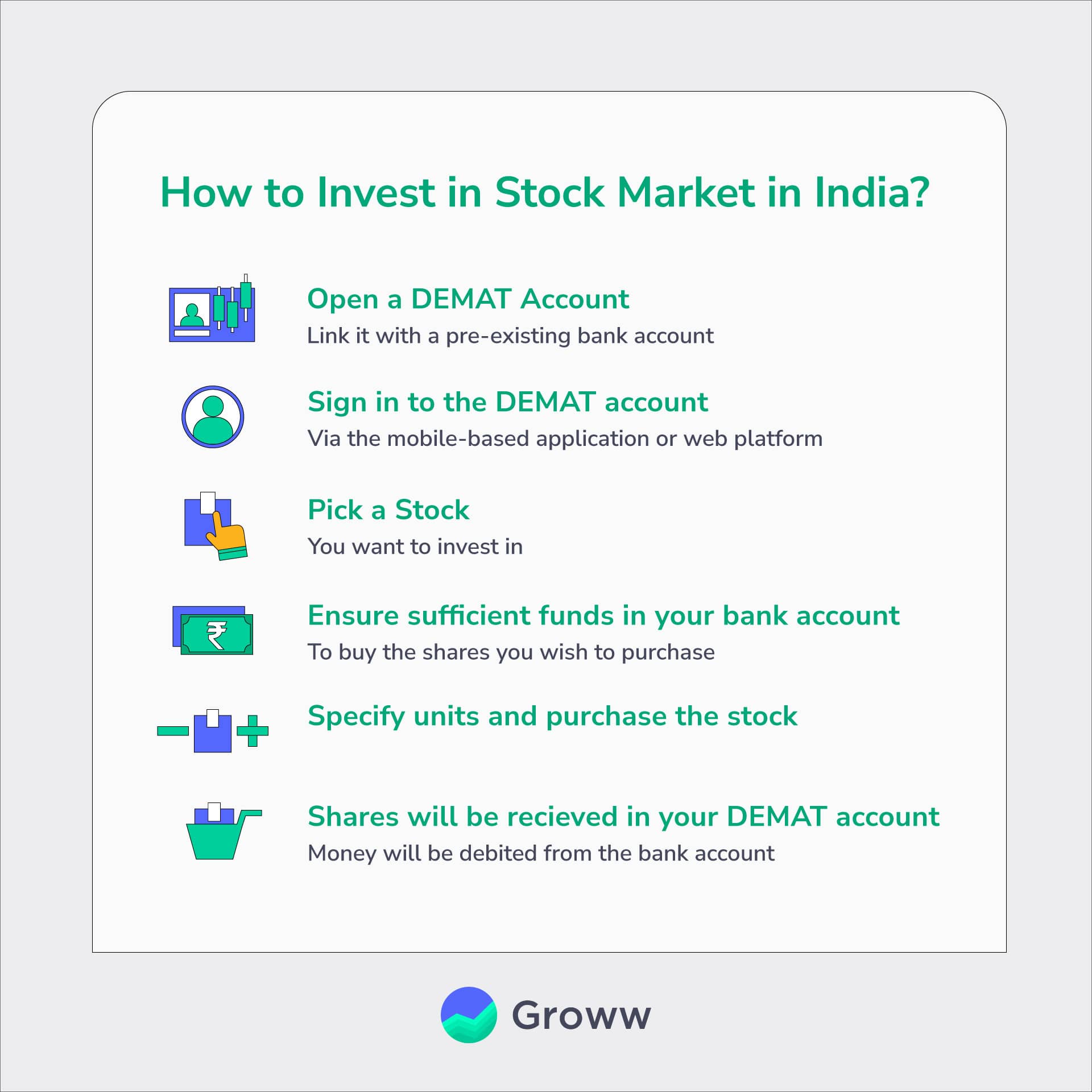
The first practical step is to open a brokerage account. A brokerage firm acts as an intermediary, facilitating the buying and selling of securities on your behalf. There are several types to consider:
- Online Discount Brokers: These are the most popular choice for individual investors. They offer low fees (often commission-free trades), robust online platforms, and a wide array of investment options. Examples include Fidelity, Charles Schwab, E*TRADE, Vanguard, and Robinhood.
- Full-Service Brokers: These firms offer personalized advice, financial planning, and a broader range of services, but come with significantly higher fees. They are typically suited for high-net-worth individuals or those who prefer a hands-off approach to managing their investments.
- Robo-Advisors: These platforms use algorithms to build and manage diversified portfolios based on your financial goals and risk tolerance. They are a cost-effective option for beginners seeking automated investment management.
When choosing, consider fees, minimum deposit requirements, available investment products, research tools, customer service quality, and ease of use of their platform.
Funding Your Brokerage Account
Once your brokerage account is open, you’ll need to fund it. Most brokerages offer several ways to deposit money:
- Electronic Funds Transfer (EFT): Linking your bank account to your brokerage account for seamless transfers. This is the most common method.
- Wire Transfer: For larger sums, wire transfers offer speed but usually incur fees.
- Check Deposit: You can mail a physical check, though this is the slowest option.
- Rollover from a Retirement Account: If you’re transferring funds from an old 401(k) or IRA.
Be aware of any initial funding minimums and the time it takes for funds to clear and become available for trading.
Placing Your First Stock Order

With funds in your account, you can now place an order. This is where you specify which stock you want to buy and under what conditions.
- Market Order: This is the simplest type of order. You instruct your broker to buy or sell a stock immediately at the best available current price. While quick, the exact price you pay may differ slightly from what you saw moments before, especially in volatile markets.
- Limit Order: You set a maximum price you’re willing to pay for a stock (for buying) or a minimum price you’re willing to accept (for selling). Your order will only execute if the stock reaches your specified price or better. This gives you more control over the price, but there’s no guarantee the order will execute if the stock never hits your limit.
- Stop-Loss Order: This order helps limit potential losses. You set a specific price (the stop price) at which your stock will be sold if it falls to that level. Once the stock hits the stop price, it converts into a market order to sell.
- Stop-Limit Order: A variation of the stop-loss order that converts into a limit order instead of a market order once the stop price is triggered, offering more control over the selling price.
Most online platforms provide clear interfaces for selecting these order types and entering the ticker symbol (a unique abbreviation for a stock, e.g., AAPL for Apple), the number of shares, or the dollar amount you wish to invest.
Understanding Different Investment Vehicles
Beyond individual stocks, your brokerage account can provide access to other vital investment vehicles:
- ETFs (Exchange-Traded Funds): These are baskets of securities (like stocks or bonds) that trade like individual stocks on an exchange. They offer instant diversification, often with lower expense ratios than mutual funds.
- Mutual Funds: Professionally managed portfolios of stocks, bonds, or other investments. They offer diversification and convenience but are typically bought and sold once a day at the closing net asset value.
- Fractional Shares: Some brokers allow you to buy fractions of a share, meaning you can invest a specific dollar amount into a company, even if one share costs more than your available capital. This lowers the barrier to entry for expensive stocks and facilitates dollar-cost averaging.
Diversifying your investments across different vehicles is a cornerstone of sound investment strategy.
Navigating the Landscape of Stock Investment Strategies
Once you’ve mastered the mechanics of buying stock, the next layer of sophistication involves understanding and implementing various investment strategies. These approaches help define how you select, manage, and hold your investments in pursuit of your financial goals.
Growth Investing vs. Value Investing
These are two of the most fundamental investment philosophies:
- Growth Investing: Focuses on companies expected to grow at an above-average rate compared to the market. Growth investors prioritize companies with strong earnings growth, innovative products, and expanding market share, often accepting higher valuations for future potential. Think technology companies or emerging industries.
- Value Investing: Involves identifying companies whose stock prices appear to be trading below their intrinsic value. Value investors look for “bargains”—companies that might be temporarily out of favor but have solid fundamentals and strong long-term prospects. This often means investing in mature companies or those in cyclical industries when their stock prices are low.
Your choice between these strategies (or a blend of both) will largely depend on your risk tolerance and investment horizon.
Dividend Investing
For investors seeking regular income, dividend investing is a popular strategy. It involves purchasing stocks of companies that consistently pay a portion of their earnings back to shareholders in the form of dividends. These companies are often mature, stable businesses with strong cash flows. Dividend income can be a significant component of total returns, especially if reinvested, allowing for the power of compounding. This strategy can be particularly attractive for retirees or those looking to supplement their income.
Diversification and Asset Allocation
Perhaps the most critical risk management strategy, diversification involves spreading your investments across various asset classes, industries, and geographies. The goal is to avoid putting all your eggs in one basket, reducing the impact if a single investment performs poorly.
- Asset Allocation: Refers to the strategic distribution of your investment portfolio among different asset categories like stocks, bonds, and cash. A common guideline is to allocate a higher percentage to stocks when you’re young (due to a longer time horizon to recover from downturns) and gradually shift more towards bonds as you approach retirement.
- Diversification within Stocks: Beyond asset allocation, diversify across different industries (e.g., tech, healthcare, consumer staples), company sizes (large-cap, mid-cap, small-cap), and geographical regions. ETFs and mutual funds are excellent tools for achieving instant diversification with minimal effort.
Long-Term vs. Short-Term Trading
Your investment horizon dictates a great deal about your strategy:
- Long-Term Investing (Buy and Hold): This strategy involves holding investments for many years, often decades, to benefit from compounding returns and to ride out short-term market fluctuations. It aligns well with wealth-building goals like retirement and generally involves less active management.
- Short-Term Trading: This includes day trading, swing trading, and other strategies focused on profiting from rapid price movements over short periods (minutes, hours, days, or weeks). It requires significant time commitment, advanced analytical skills, and carries substantially higher risk. For most individual investors, especially beginners, long-term investing is generally recommended due to its lower stress and higher historical probability of success.
Key Considerations and Risk Management
Investing in the stock market is not without its risks. Acknowledging and understanding these risks, along with developing strategies to mitigate them, is crucial for protecting your capital and ensuring your long-term success.
The Inherent Risks of Stock Investing
While stocks offer significant potential for growth, they are inherently volatile. The value of your investments can fluctuate dramatically due to various factors:
- Market Risk: The overall stock market can decline, impacting even fundamentally sound companies.
- Company-Specific Risk (Idiosyncratic Risk): Issues specific to a company, such as poor management, product failures, or legal troubles, can cause its stock price to fall independently of the broader market.
- Economic Risk: Recessions, inflation, interest rate changes, and other macroeconomic factors can negatively affect corporate profits and stock valuations.
- Liquidity Risk: While most major stocks are highly liquid, some smaller or less frequently traded stocks might be difficult to sell quickly without impacting their price.
- Inflation Risk: The risk that your investment returns might not keep pace with inflation, eroding your purchasing power over time.
Understanding these risks isn’t meant to deter you but to prepare you to make prudent decisions and manage expectations.
The Importance of Continuous Learning and Due Diligence
The financial markets are dynamic and constantly evolving. To remain a successful investor, continuous learning is non-negotiable. Stay informed about global economic developments, industry trends, and the performance of companies in your portfolio. Read financial news, follow reputable analysts, and understand basic financial statements. Never stop performing due diligence on your holdings; regularly review their performance, assess their competitive landscape, and ensure they still align with your investment thesis and goals. Investment is not a one-time decision but an ongoing process of assessment and adjustment.
Taxation on Stock Investments
Understanding the tax implications of stock investments is essential for maximizing your net returns. In most jurisdictions, profits from selling stocks are subject to capital gains tax.
- Short-term Capital Gains: Profits from selling investments held for one year or less are typically taxed at your ordinary income tax rate, which can be higher.
- Long-term Capital Gains: Profits from investments held for more than one year are usually taxed at a lower, preferential rate.
- Dividends: Dividends received from stocks are also typically taxable, often at different rates depending on whether they are “qualified” or “unqualified.”
It’s crucial to consult with a tax professional to understand the specific tax rules applicable to your situation and to plan your investment strategies tax-efficiently, especially when realizing gains or harvesting losses.
Seeking Professional Guidance
While this guide provides a comprehensive overview, some investors may benefit from professional financial advice. A qualified financial advisor can help you:
- Develop a personalized financial plan.
- Assess your risk tolerance and set realistic goals.
- Construct a diversified portfolio tailored to your needs.
- Navigate complex tax implications.
- Provide emotional support during market downturns.
If you feel overwhelmed or unsure, don’t hesitate to seek guidance from a Certified Financial Planner (CFP) or a fee-only fiduciary advisor who prioritizes your best interests.
Purchasing stock is a potent way to build wealth, but it demands patience, discipline, and a commitment to ongoing education. By understanding the fundamentals, preparing thoroughly, executing trades wisely, strategizing intelligently, and managing risks diligently, you can confidently navigate the stock market and work towards achieving your financial aspirations.
aViewFromTheCave is a participant in the Amazon Services LLC Associates Program, an affiliate advertising program designed to provide a means for sites to earn advertising fees by advertising and linking to Amazon.com. Amazon, the Amazon logo, AmazonSupply, and the AmazonSupply logo are trademarks of Amazon.com, Inc. or its affiliates. As an Amazon Associate we earn affiliate commissions from qualifying purchases.