
The stock market, in its contemporary form, stands as a cornerstone of the global economy, a powerful engine driving capital allocation, fostering innovation, and facilitating wealth creation. For many, it represents a complex yet indispensable mechanism for investment and financial growth. Yet, behind its modern-day sophistication lies a rich and winding history, a gradual evolution shaped by necessity, ingenuity, and the relentless pursuit of opportunity. The question “who created the stock market?” doesn’t point to a single individual or a precise moment of invention, but rather to a fascinating journey of financial innovation that began centuries ago, culminating in the intricate systems we interact with today.

Understanding the genesis of the stock market is not merely an academic exercise; it offers profound insights into the fundamental principles of finance, risk-sharing, and the enduring human desire to pool resources for collective enterprise. It reveals how diverse entities, from ancient merchants to powerful trading companies, incrementally forged the concepts of shared ownership, tradable instruments, and regulated exchanges. This exploration delves into the historical catalysts, the geographical epicenters, and the pioneering institutions that collectively laid the groundwork for one of humanity’s most impactful financial inventions.
The Nascent Seeds of Exchange: Precursors to Modern Markets
Before the formal establishment of stock markets, rudimentary forms of trade and financial instruments existed across various civilizations, driven by the imperatives of commerce and resource distribution. These early practices, though far removed from the electronic trading platforms of today, contained the foundational elements of market exchange.
Early Trading Practices and Mercantile Roots
From ancient Mesopotamia to the Roman Empire, sophisticated trading networks facilitated the exchange of goods and commodities. Merchants, farmers, and artisans gathered in designated areas – early marketplaces – to buy, sell, and negotiate prices. These interactions, while primarily focused on tangible goods, often involved credit arrangements, forward contracts, and even the informal pooling of resources for large ventures. For instance, Roman societies saw the emergence of publicani, groups of private individuals who would bid for contracts to provide services to the state, effectively sharing the risks and profits of large-scale enterprises. These were early, albeit unstructured, forms of joint ventures that hinted at the concept of shared investment.
In medieval Europe, the bustling trade fairs, particularly in cities like Champagne, became significant hubs for international commerce. Here, merchants from across the continent would not only exchange goods but also settle debts, issue bills of exchange, and establish systems of credit. The bills of exchange, essentially written orders to pay a specified sum to a specified person on a specified date, served as an early form of negotiable instrument, allowing for the transfer of funds without the physical movement of coin. These practices built a crucial framework of trust and standardized financial dealings necessary for more complex market structures to emerge.
From Ancient Barter to Bills of Exchange
The evolution from simple barter to more sophisticated financial instruments was a critical step. Barter was inherently inefficient, requiring a “double coincidence of wants.” The introduction of currency solved this, but large-scale trade, especially across long distances, still posed challenges regarding security, liquidity, and risk. This led to the development of early banking practices and negotiable instruments. Italian city-states like Venice and Florence, at the heart of the Renaissance, were pioneers in this regard. Their merchants and bankers developed double-entry bookkeeping, sophisticated credit systems, and a vibrant market for loans and foreign exchange.
While not directly stock markets, these early financial innovations created an environment where the abstract value of future profits or claims could be understood and traded. The concept of a merchant taking on a share of a shipping venture, bearing a portion of the risk for a portion of the profit, was a precursor to modern shareholding. The need for capital to finance increasingly ambitious voyages and commercial undertakings laid the groundwork for a more formalized system of attracting and distributing investment.
The Birthplace of Formal Stock Trading: Amsterdam’s Groundbreaking Innovation
While precursors existed, the widely accepted consensus points to Amsterdam in the 17th century as the birthplace of the modern stock market. Here, a unique confluence of economic power, colonial ambition, and financial ingenuity led to the creation of the first organized exchange for trading company shares.
The Dutch East India Company and the Dawn of Shareholding
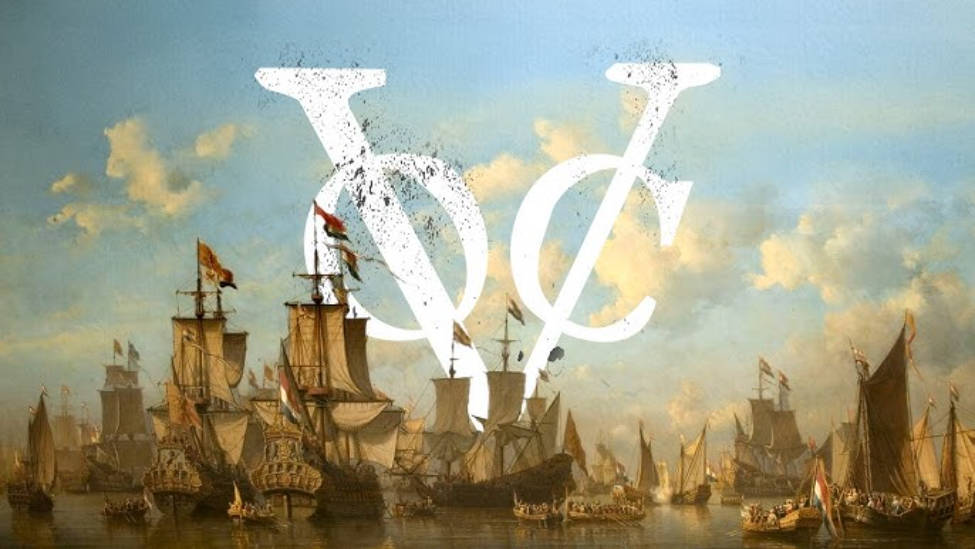
The catalyst for this financial revolution was the United East India Company (Verenigde Oostindische Compagnie, VOC), established in 1602. The VOC was a mega-corporation, formed by the amalgamation of several smaller Dutch trading companies, to consolidate efforts in the immensely profitable, yet incredibly risky, spice trade with Asia. Financing such an enormous and long-term venture required unprecedented levels of capital, far exceeding what any single wealthy individual or even a group of private investors could provide.
The solution was groundbreaking: the VOC issued shares of its company to the general public. These shares represented a proportionate claim on the company’s future profits and assets. This was a radical departure from previous ventures, which were typically financed by a limited group of wealthy individuals for a single voyage or project. By issuing shares, the VOC democratized investment to a degree previously unseen, allowing thousands of ordinary citizens, as well as wealthy merchants, to become partial owners of a vast colonial enterprise. This mechanism effectively allowed for “limited liability” for the investors, meaning they were only responsible for the capital they invested, a crucial element for encouraging widespread participation.
The Amsterdam Bourse: A Blueprint for the Future
The issuance of VOC shares created an immediate demand for a secondary market. Investors needed a way to buy and sell these shares after their initial offering, either to realize profits, cut losses, or adjust their portfolios. In response, the trading activities for these shares gravitated towards specific locations in Amsterdam. By 1602-1606, the Amsterdam Bourse (Beurs van Hendrick de Keyser, built 1611) became the first formal stock exchange where shares could be openly bought and sold.
Unlike earlier commodity markets, the Amsterdam Bourse was specifically designed to facilitate the trading of shares, alongside bills of exchange and commodities. This provided transparency, liquidity, and a centralized meeting place for buyers and sellers. It was here that many of the fundamental practices of stock trading emerged: brokers acting as intermediaries, the concept of market prices fluctuating based on supply and demand, and even the early forms of speculative trading, including short selling and futures contracts. The Amsterdam Bourse became the blueprint upon which all future stock exchanges would be modeled, demonstrating the immense power of organized markets to mobilize capital.
The Concept of Tradable Shares and Public Ownership
The innovation of the VOC and the Amsterdam Bourse lay in making company ownership tradable and public. Before this, ownership in enterprises was typically private, illiquid, and transferred through direct negotiation. The VOC’s shares, however, could change hands easily, providing liquidity to investors. This liquidity was a critical factor in attracting capital; investors were more willing to commit funds knowing they could divest if needed.

The concept of public ownership transformed business finance. It allowed companies to raise capital from a broad base of investors, enabling them to undertake projects of a scale previously unimaginable. It also established the principle that a business entity could be owned by many individuals who had no direct involvement in its day-to-day operations but shared in its financial success. This separation of ownership from management became a defining characteristic of modern corporate structures and capital markets.
Evolution and Expansion: Stock Markets Across Continents
The success of the Amsterdam Bourse quickly demonstrated the power and potential of organized share trading, leading to the gradual establishment of similar institutions across Europe and eventually, the world. Each new market built upon the Amsterdam model, adapting it to local economic conditions and legal frameworks.
London’s Coffee Houses and the Royal Exchange
In England, financial activity initially centered around commodity trading and foreign exchange. By the late 17th and early 18th centuries, the demand for capital to finance growing mercantile companies and government debt led to the emergence of share trading. A significant hub for this activity was Jonathan’s Coffee-House in Change Alley, London. Merchants, brokers, and investors would gather there to exchange information, negotiate deals, and trade shares of burgeoning companies, most notably the East India Company (British counterpart to the Dutch VOC) and later, the Bank of England.
These informal gatherings eventually led to more structured operations. In 1773, a group of brokers formally established the Stock Exchange at Sweeting’s Alley, leading to the development of the London Stock Exchange. While the Royal Exchange served as a hub for commodity and foreign exchange for centuries, the specific trading of company shares found its dedicated home through these broker-led initiatives, driven by increasing public interest in investment and the need for organized trading rules.
The Buttonwood Agreement and the Birth of Wall Street
Across the Atlantic, early American financial markets were initially focused on government bonds and bank shares. The decisive moment for the formation of the New York Stock Exchange came in 1792 with the Buttonwood Agreement. Twenty-four stockbrokers and merchants met under a buttonwood tree on Wall Street and signed an agreement to trade securities only among themselves and to charge a commission rate of 0.25%. This informal agreement marked the beginnings of organized securities trading in New York.
This pact, driven by the need for regulation and trust amidst a growing market for federal and state bonds (especially after the Revolutionary War), created a more structured and exclusive trading environment. What began as a small gathering under a tree rapidly evolved into the New York Stock & Exchange Board in 1817, eventually becoming the powerful New York Stock Exchange (NYSE). The NYSE would grow to become the world’s largest and most influential stock exchange, a symbol of American capitalism and global finance.
Regulatory Frameworks and Market Maturity
As stock markets expanded and became more complex, the need for formal regulation became increasingly apparent. Early markets were often rife with speculation, manipulation, and occasional panics. The South Sea Bubble of 1720 in England, a notorious speculative frenzy, highlighted the dangers of unregulated markets and led to the “Bubble Act,” an early attempt at curbing reckless financial innovation.
Over time, governments and market participants recognized that investor confidence and market stability required clear rules, oversight, and enforcement. The late 19th and early 20th centuries saw the gradual establishment of regulatory bodies and legislation designed to protect investors, ensure fair trading practices, and maintain market integrity. In the United States, the Securities and Exchange Commission (SEC), established after the 1929 stock market crash and the subsequent Great Depression, became a pivotal institution in regulating securities markets, setting a precedent for similar bodies globally. These regulatory frameworks were crucial in transforming stock markets from speculative arenas into mature, trustworthy engines of economic growth.
The Enduring Legacy: How Stock Markets Shape Our World
From its rudimentary beginnings to its current sophisticated global network, the stock market has evolved into an indispensable component of the modern financial landscape. Its creation, while not attributable to a single individual, represents a collective human achievement in financial engineering, with profound and lasting impacts on economies and societies worldwide.
Facilitating Capital Formation and Economic Growth
The primary function and enduring legacy of the stock market is its unparalleled ability to facilitate capital formation. It allows companies, from nascent startups to established conglomerates, to raise vast sums of money from a wide array of investors to fund expansion, research and development, and operational needs. This access to capital is crucial for economic growth, as it enables businesses to innovate, create jobs, and produce goods and services that drive societal progress. Without a mechanism for pooling and deploying large-scale investment, many of the technological advancements and industrial revolutions of the past few centuries would have been severely hampered.
Investment Opportunities and Wealth Creation
For individuals and institutions, the stock market offers unparalleled investment opportunities. It provides a means to participate in the growth of leading companies and entire economies, allowing investors to potentially grow their wealth over time. Through diversified portfolios, mutual funds, and exchange-traded funds (ETFs), even small investors can gain exposure to a broad range of assets and mitigate risk. This democratization of investment, rooted in the VOC’s original model of public share ownership, empowers individuals to secure their financial futures, fund retirements, and accumulate capital that can be passed down through generations.
Challenges, Innovations, and the Future of Markets
Despite its triumphs, the stock market is not without its challenges. It is prone to volatility, bubbles, and crises, as demonstrated by numerous historical events. However, the market has consistently adapted and innovated. From the introduction of electronic trading and algorithmic strategies to the rise of globalized markets and new asset classes, the evolution continues. Today, decentralized finance (DeFi), tokenized assets, and blockchain technology are presenting new paradigms that could once again redefine how capital is raised, traded, and owned, offering both opportunities and regulatory challenges. The underlying principles, however, remain tethered to the foundational concepts established centuries ago in Amsterdam: the pooling of capital, the sharing of risk, and the pursuit of collective enterprise.
In conclusion, the “creation” of the stock market was a historical process rather than a singular event. It emerged from the ingenuity of merchants and financiers seeking better ways to fund large ventures, culminating in the groundbreaking innovations of the Dutch East India Company and the Amsterdam Bourse. From these humble yet revolutionary beginnings, the idea of publicly traded shares and organized exchanges spread globally, evolving into the complex, regulated, and indispensable financial institutions that continue to shape our world, driving economic prosperity and offering avenues for individual wealth creation. Understanding its origins is key to appreciating its enduring power and its ongoing transformation.
aViewFromTheCave is a participant in the Amazon Services LLC Associates Program, an affiliate advertising program designed to provide a means for sites to earn advertising fees by advertising and linking to Amazon.com. Amazon, the Amazon logo, AmazonSupply, and the AmazonSupply logo are trademarks of Amazon.com, Inc. or its affiliates. As an Amazon Associate we earn affiliate commissions from qualifying purchases.