
The term “market crash” strikes a distinct fear into the hearts of investors, conjuring images of plummeting portfolios, economic turmoil, and widespread financial distress. Yet, in the lexicon of finance, not every downturn or significant drop in asset prices qualifies as a crash. Understanding what truly constitutes a market crash, its characteristics, causes, and implications is crucial for investors seeking to navigate the inherent volatility of financial markets. It’s more than just a bad day on Wall Street; it’s a profound systemic event that often signals deeper underlying issues and recalibrates investor psychology for years to come.

Defining a Market Crash: Beyond the Headlines
Distinguishing between normal market fluctuations, corrections, and full-blown crashes is fundamental for any investor. While all involve a decline in asset values, the magnitude, speed, and underlying causes are what set them apart.
Market Corrections vs. Crashes: The Numerical Distinction
A market correction is typically defined as a decline of 10% or more from a recent peak in a broad market index, such as the S&P 500. Corrections are a normal and relatively frequent occurrence, often healthy for markets as they prune speculative excesses and reset valuations. They can last anywhere from a few days to several months, and historically, markets tend to recover relatively quickly from them.
A market crash, however, is far more severe. While there’s no universally agreed-upon precise numerical definition, it generally refers to a sudden, dramatic, and often unexpected drop in market prices, typically 20% or more, occurring within a very short period (e.g., a few days or weeks). The key here is not just the percentage decline, but the speed and the widespread panic that accompanies it. A 20% decline spread over a year might be a bear market, but a 20% decline in a week is heading towards crash territory. Some definitions even push for a 30% or greater decline in a very short timeframe to truly qualify as a “crash.”
The Psychological Impact: Fear and Panic
Beyond the numbers, the psychological impact is a defining feature of a market crash. Corrections often see investors “buy the dip” or remain relatively calm, understanding their cyclical nature. A crash, conversely, triggers widespread fear, panic selling, and a profound loss of confidence among market participants. This emotional contagion can exacerbate declines, as investors dump assets regardless of fundamental value, leading to a vicious cycle. News headlines become alarmist, pundits predict doomsday scenarios, and the public’s trust in financial institutions can be severely shaken. This widespread psychological shift makes recovery more challenging and prolonged.
Key Characteristics of a Crash
Several characteristics tend to accompany a true market crash:
- Speed and Magnitude: Rapid and significant declines, often exceeding 20%, within a short timeframe.
- Widespread Impact: Affecting a broad range of assets and market sectors, rather than being confined to a single industry.
- Increased Volatility: Extreme swings in asset prices, with days of sharp declines often followed by brief, sharp rallies that fail to hold.
- High Trading Volume: Panic selling often drives extraordinarily high trading volumes as investors rush to exit positions.
- Loss of Liquidity: In severe cases, some assets may become difficult to sell at any price, leading to liquidity crunches.
- Economic Contagion: Crashes often coincide with, or precede, broader economic downturns, recessions, or financial crises.
Historical Precedents: Lessons from Major Crashes
History offers invaluable insights into the nature of market crashes, demonstrating their varied origins, impacts, and the resilience of markets over the long term.
Black Monday (1987)
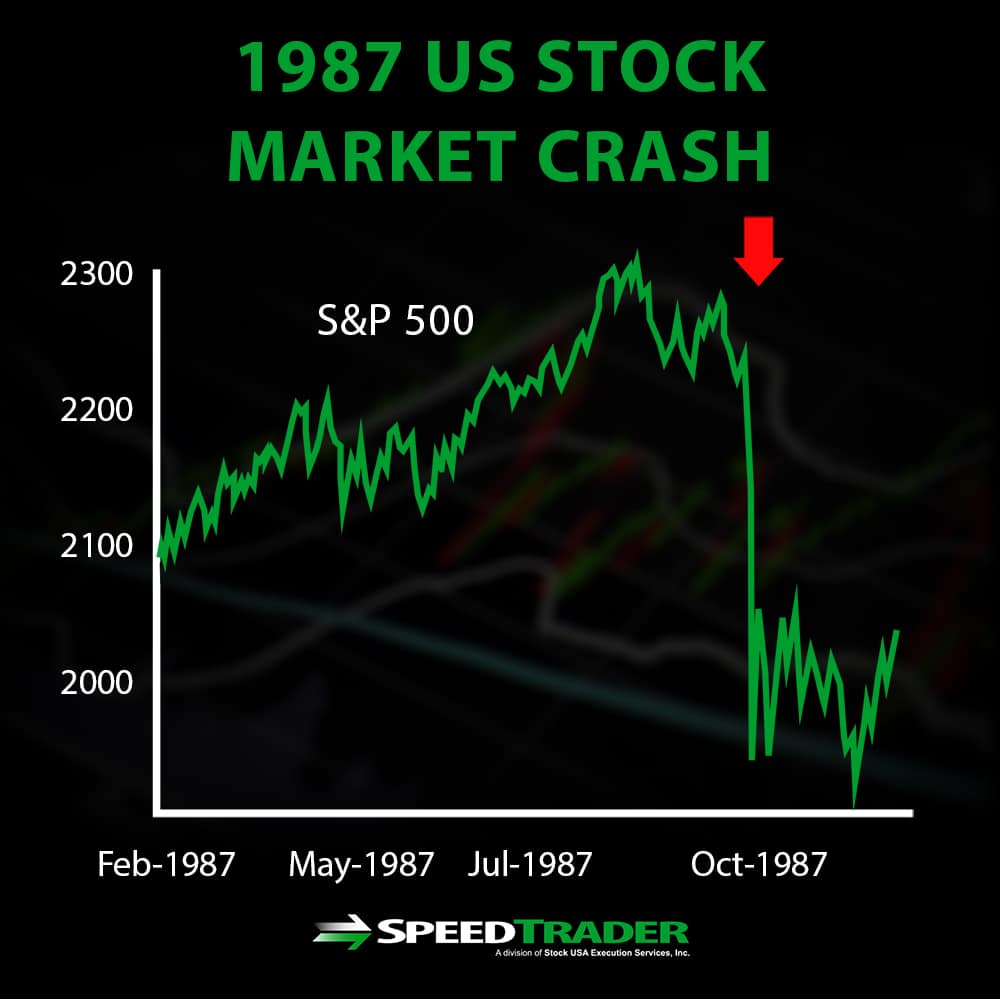
On October 19, 1987, global stock markets crashed, with the Dow Jones Industrial Average plummeting 22.6% in a single day—its largest one-day percentage drop in history. There was no single obvious cause; instead, a confluence of factors including high valuations, trade deficits, program trading (then a new technology), and a strong dollar contributed to the rapid decline. The crash highlighted the interconnectedness of global markets and led to reforms in trading mechanisms, such as circuit breakers, to prevent future free falls.
Dot-com Bubble Burst (2000-2002)
The late 1990s saw an explosion in internet-related companies, many with little to no revenue but stratospheric valuations based on speculation. The “dot-com bubble” began to deflate in early 2000, leading to a prolonged bear market. The tech-heavy Nasdaq Composite index lost nearly 78% of its value over two and a half years. This crash underscored the dangers of speculative bubbles and the importance of fundamental analysis over hype.
The Great Financial Crisis (2008)
Fueled by a housing market bubble, subprime mortgage lending, and complex financial instruments, the 2008 crisis was one of the most severe since the Great Depression. The collapse of major financial institutions like Lehman Brothers triggered widespread panic, credit freezes, and a global recession. The S&P 500 fell over 50% from its peak. This crash led to significant regulatory overhaul (Dodd-Frank Act) and fundamentally changed the landscape of financial services.
The COVID-19 Market Plunge (2020)
In early 2020, as the COVID-19 pandemic spread globally, markets experienced an unprecedented rapid decline. The S&P 500 dropped approximately 34% in just over a month—the fastest bear market entry in history. This crash was unique in its external trigger (a global public health crisis) and the equally rapid rebound, largely thanks to swift and massive monetary and fiscal interventions by governments and central banks worldwide. It demonstrated that even unexpected “black swan” events can trigger crashes and that policy responses can significantly influence recovery trajectories.
Underlying Causes and Early Warning Signs
Market crashes are rarely random; they are often the culmination of various economic, financial, and psychological pressures. Recognizing these underlying causes and potential warning signs can help investors prepare, though timing the market perfectly remains an elusive goal.
Economic Bubbles and Overvaluation
One of the most common precursors to a crash is an asset bubble, where prices for a particular asset class (e.g., stocks, housing, commodities) surge far beyond their intrinsic value, driven by speculative fervor rather than fundamentals. When the belief system underpinning the bubble breaks, often triggered by a small event, a rapid and painful correction or crash ensues. Indicators include extremely high Price-to-Earnings (P/E) ratios, historical comparisons, and a prevalent “fear of missing out” (FOMO) among investors.
Geopolitical Events and Global Shocks
Major geopolitical events, such as wars, terrorist attacks, or significant political instability, can trigger market sell-offs due to increased uncertainty and perceived risks to global trade, supply chains, or stability. Similarly, global shocks like pandemics, natural disasters, or commodity price spikes (e.g., oil) can suddenly alter economic forecasts and investor sentiment, leading to rapid market contractions.
Policy Missteps and Regulatory Failures
Government and central bank policies play a crucial role in market stability. Overly loose monetary policy (low interest rates, quantitative easing) can fuel asset bubbles, while sudden tightening can prick them. Regulatory failures or inadequate oversight, as seen in the lead-up to the 2008 crisis, can allow excessive risk-taking to proliferate throughout the financial system, creating systemic vulnerabilities that, once exposed, lead to catastrophic outcomes.
Technical Indicators to Monitor
While not foolproof predictors, several technical and economic indicators can signal periods of increased risk:
- Inverted Yield Curve: When short-term government bond yields are higher than long-term yields, it often signals an impending recession, which can precede market downturns.
- High Market Volatility: Sustained periods of elevated volatility, as measured by indices like the VIX (“fear index”), can indicate nervousness and a higher probability of sharp moves.
- Declining Economic Data: Weakening GDP growth, rising unemployment, falling consumer confidence, and manufacturing slowdowns are red flags for corporate earnings and economic health.
- Credit Spreads Widening: An increasing difference between the yields on corporate bonds and government bonds suggests investors are demanding higher compensation for risk, indicating concerns about corporate solvency.
Navigating the Storm: Investor Strategies During a Crash
While impossible to predict precisely, preparing for and reacting intelligently to a market crash is paramount for long-term financial success. Panic is the enemy of prosperity during these periods.
Maintaining a Long-Term Perspective
One of the most critical strategies is to maintain a long-term investment horizon. For most investors saving for retirement or other distant goals, market crashes are temporary setbacks within a broader upward trend. Focusing on the long game helps resist the urge to sell out of fear, which often locks in losses. History shows that markets always recover, though the timeline can vary.
Diversification and Asset Allocation
A well-diversified portfolio across different asset classes (stocks, bonds, real estate, commodities), geographies, and sectors can cushion the blow of a crash. When one asset class falls, others may perform better, or at least decline less severely. Proper asset allocation, tailored to your risk tolerance and time horizon, is key to weathering volatility. Rebalancing your portfolio periodically ensures it stays aligned with your initial strategy.
The Role of Cash Reserves
Having adequate cash reserves—both for emergencies and for potential investment opportunities—is vital. An emergency fund prevents you from being forced to sell investments at a loss to cover unexpected expenses. Additionally, a modest cash position can be strategically deployed to buy high-quality assets at discounted prices during a downturn, a strategy often referred to as “buying the dip” when applied judiciously.
Rebalancing and Value Investing Opportunities
Market crashes often present incredible opportunities for value investors. Companies that were slightly overvalued might become significantly undervalued, offering attractive entry points for those with conviction and capital. Rebalancing during a crash means selling assets that have performed relatively well (or fallen less) and buying more of those that have been hit hardest but retain strong fundamentals. This counter-intuitive approach can significantly boost long-term returns.
The Aftermath: Recovery and Resilience
Every market crash, no matter how severe, has been followed by a recovery. Understanding this cyclical nature and how markets rebuild themselves is essential for maintaining optimism and building financial resilience.
The Path to Market Recovery
Market recoveries are rarely V-shaped (a sharp drop followed by an equally sharp rebound), though the COVID-19 crash was an exception due to unprecedented intervention. More often, recoveries are U-shaped (a prolonged period of low activity before a rebound) or W-shaped (a double dip). The recovery is driven by improving economic conditions, restored investor confidence, corporate earnings growth, and supportive monetary and fiscal policies. Patience is a virtue during this phase, as market sentiment can remain fragile for some time.
Regulatory Reforms and Market Lessons
Crashes often act as painful but necessary catalysts for change. Policymakers and regulators typically respond by implementing new rules and safeguards designed to address the vulnerabilities exposed by the crisis. Examples include the creation of the SEC after the 1929 crash, circuit breakers after 1987, and the Dodd-Frank Act after 2008. These reforms aim to enhance market stability and protect investors, though new challenges invariably emerge.

Building Financial Resilience
Ultimately, learning from market crashes involves more than just understanding economic theory; it’s about building personal financial resilience. This includes:
- Continuous Education: Staying informed about economic trends and investment principles.
- Prudent Debt Management: Avoiding excessive leverage, especially on speculative investments.
- Emergency Savings: Maintaining a robust emergency fund.
- Diversified Income Streams: Reducing reliance on a single source of income.
- Emotional Discipline: Cultivating the ability to make rational decisions under pressure, rather than succumbing to fear or greed.
In conclusion, a market crash is a significant and often traumatic event marked by rapid, substantial declines in asset prices, widespread panic, and systemic implications. While they are an inherent part of capital markets, understanding their nature, historical context, causes, and appropriate responses empowers investors to weather the storm and emerge stronger, reinforcing the timeless wisdom that long-term perspective and disciplined strategy are the bedrock of enduring financial success.
aViewFromTheCave is a participant in the Amazon Services LLC Associates Program, an affiliate advertising program designed to provide a means for sites to earn advertising fees by advertising and linking to Amazon.com. Amazon, the Amazon logo, AmazonSupply, and the AmazonSupply logo are trademarks of Amazon.com, Inc. or its affiliates. As an Amazon Associate we earn affiliate commissions from qualifying purchases.