
Understanding the true cost of air travel, especially with ultra-low-cost carriers like Spirit Airlines, is a cornerstone of effective personal finance. The advertised “bare fare” can often seem incredibly attractive, but the final price tag after all taxes, fees, and optional add-ons can tell a very different story. For the financially savvy traveler, learning how to meticulously examine and understand a Spirit Airlines fare breakdown isn’t just about curiosity; it’s about empowering smarter budgeting, avoiding unwelcome surprises, and ensuring that you’re genuinely getting the best value for your money. This guide will walk you through the intricacies of Spirit’s pricing structure and show you how to uncover every penny before you commit.
The Anatomy of a Spirit Airlines Fare: Unpacking the Layers of Cost
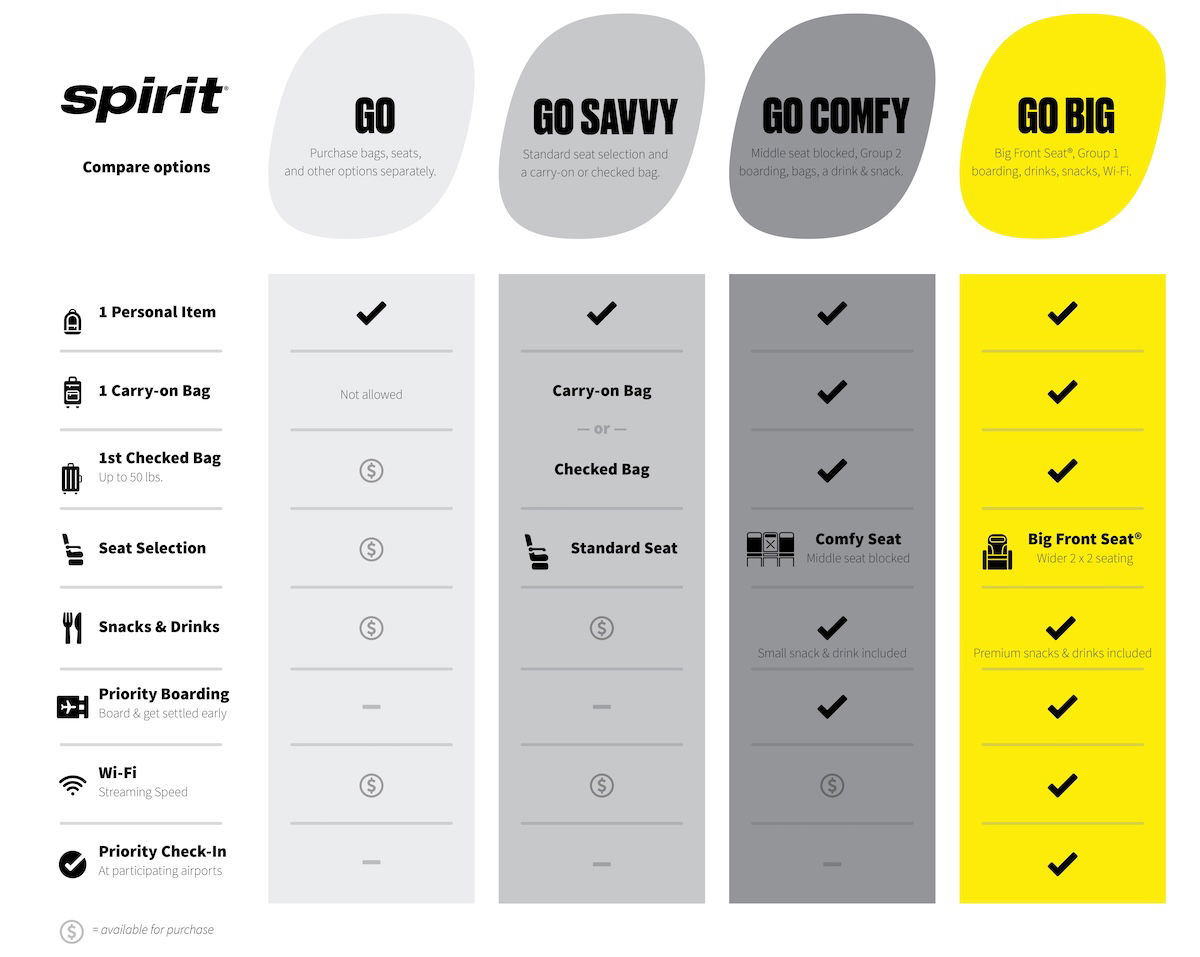
Spirit Airlines is renowned for its “unbundled” pricing model, which presents a low base fare and then allows passengers to add only the services they need, or so the theory goes. From a financial perspective, this model demands a keen eye and a proactive approach to cost analysis. The key to mastering your Spirit fare breakdown is to recognize the distinct components that contribute to your final bill.
Base Fare: The Illusion of Ultra-Low Cost
The base fare is what initially catches the eye. It’s the price Spirit advertises, the headline number that often makes booking seem irresistible. However, in the context of Spirit Airlines, the base fare typically covers only the seat and the privilege of carrying one small personal item that fits under the seat in front of you. Financially, it’s critical to understand that this is rarely the total cost for most travelers. Think of it as the price of admission to the flight, not the all-inclusive package. Any additional comfort, convenience, or baggage will invariably add to this initial figure. For budgeting purposes, never assume the base fare is your final expenditure.
Government Taxes and Fees: Non-Negotiable Necessities
Like all airlines, Spirit is mandated to collect various government-imposed taxes and fees. These are non-negotiable and apply universally, regardless of the airline or fare type. They typically include:
- Segment Fees: A federal excise tax per flight segment.
- Passenger Facility Charges (PFCs): Airport-imposed fees for facility improvements.
- Federal Excise Tax: A percentage-based tax on the base fare.
- International Departure/Arrival Taxes: For flights crossing international borders.
- Security Fees: Charges related to aviation security measures.
When examining your fare breakdown, these line items will always be present. While you can’t avoid them, understanding their existence prevents sticker shock and allows you to accurately budget for the mandated portion of your travel expenses. They are a fixed cost component that adds to the overall financial commitment of your trip.
Optional Services and Ancillary Fees: Where the Real Costs Accumulate
This is arguably the most financially significant section when flying Spirit Airlines. The airline generates a substantial portion of its revenue from ancillary fees, which are charges for services many travelers consider standard on other airlines. For the financially astute passenger, this is where careful calculation and strategic decision-making are paramount. These fees can quickly inflate your initial “low” fare, making it comparable to, or even more expensive than, a full-service carrier if not managed wisely. Examples include:
- Baggage Fees: For carry-on bags (beyond the personal item), checked bags, and oversized/overweight bags. These fees often increase if paid at the airport versus during online booking.
- Seat Selection Fees: For choosing a specific seat, especially those with extra legroom or at the front of the plane. If you don’t pay, a seat will be assigned at check-in.
- Printing Boarding Passes: A fee if you require an agent to print your boarding pass at the airport.
- Priority Boarding: For early access to the plane and overhead bin space.
- Change or Cancellation Fees: Significantly high for changes made close to departure.
- In-flight Refreshments: Food and beverages are available for purchase, not complimentary.
From a personal finance perspective, a critical step is to identify which of these “optional” services are truly necessary for your travel style and budget for them accordingly before you even search for flights.
Navigating Spirit’s Digital Platforms for Transparent Fare Breakdowns
Spirit Airlines provides mechanisms on its website and mobile app to display the fare breakdown, but knowing where to look and what to scrutinize is key. Financial transparency hinges on your ability to access this detailed information at various stages of your booking journey.
The Initial Booking Process: Your First Look at the Full Picture
The most opportune time to see a comprehensive fare breakdown is during the online booking process. As you progress through selecting your flights and passengers, Spirit’s website or app will typically display a running tally or a summary panel.
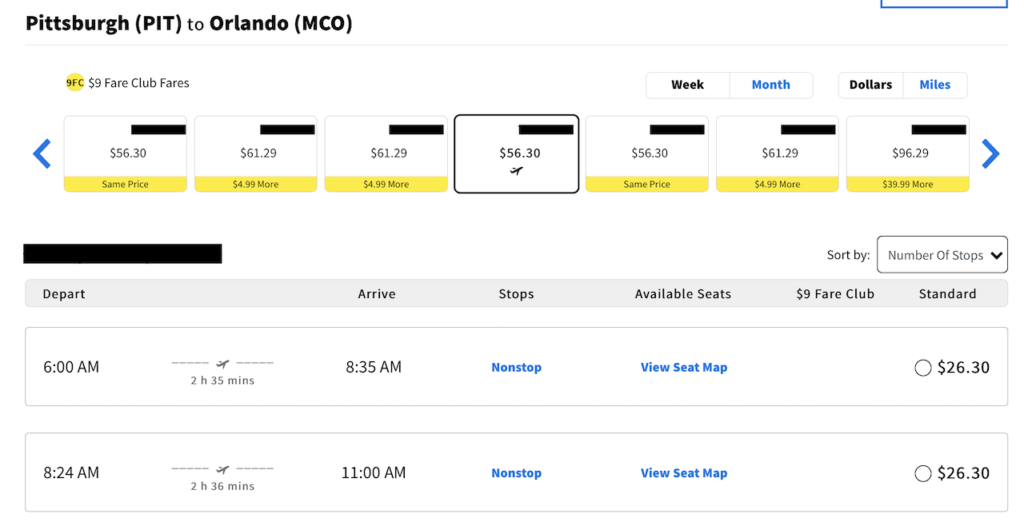
- Flight Selection Page: After choosing your departure and arrival cities and dates, you’ll see a list of available flights and their initial base fares. At this stage, some basic taxes and fees might be subtly included in an “estimated total,” or shown in a small, expandable section.
- Add-Ons Page: This is the crucial stage where you’re prompted to add baggage, select seats, and choose other services. As you add each item, the summary panel (usually on the side or bottom of the screen) will dynamically update, itemizing the cost for each selection. It’s essential to click on “details” or expand any “total cost” sections to see the line-by-line breakdown of the base fare, taxes, and each ancillary service you’ve chosen. Pay close attention to the small print indicating per-segment or per-passenger charges.
- Review Trip Details Page: Before final payment, there is almost always a “Review Trip” or “Summary” page. This page should provide the most complete fare breakdown, clearly separating the base fare, government taxes and fees, and all selected optional services. This is your last chance to review every charge and ensure it aligns with your budget. If you don’t see a clear itemized list, look for a “View Details” or “Fare Rules” link.
Post-Booking Access: Reviewing Your Financial Commitment
Even after you’ve booked your flight, you can still access your fare breakdown. This is important for record-keeping, budgeting reconciliation, or if you need to double-check a charge.
- Confirmation Email: Your booking confirmation email from Spirit Airlines should include a summary of your fare. While it might not be as granular as the breakdown seen during the booking process, it will typically list the total fare, often with a clear distinction between the base fare, taxes, and the total for optional services purchased.
- “My Trips” Section on the Website/App: Log in to your Spirit Airlines account or use the “My Trips” or “Manage Travel” feature on their website or mobile app by entering your confirmation code and last name. Within your trip details, there should be an option to view your itinerary and a detailed cost summary. This section allows you to see what you paid for, sometimes even detailing each bag or seat selection charge. This is also where you would see any additional charges for changes or extra services purchased post-booking.
Understanding the “My Trips” Section: A Deeper Dive
Once you’re in the “My Trips” section, specifically look for tabs or links that say “View Receipt,” “Itinerary & Receipt,” or “Payment Details.” These are designed to provide a financial overview of your booking. It should itemize the amounts paid for:
- Base Fare
- Taxes & Fees
- Baggage Fees (often broken down by type: carry-on, checked)
- Seat Selection Fees
- Other Optional Services
This level of detail is crucial for reconciling your travel expenses and ensuring no discrepancies exist between what you intended to pay and what was actually charged.
Decoding the Ancillary Fee Structure: Strategic Cost Management
The unbundled model means ancillary fees are not just an afterthought; they are central to Spirit’s business model and, consequently, to your budget. Understanding how these fees are structured and when they apply is essential for effective financial planning.
Baggage Fees: A Variable Expense
Spirit’s baggage policy is perhaps the most significant financial consideration for many travelers.
- Personal Item: One small personal item (e.g., a backpack, purse) that fits under the seat in front of you is typically free.
- Carry-On Bags: These incur a fee. The cost varies based on when you purchase it (cheapest online during booking, more expensive at check-in, most expensive at the gate).
- Checked Bags: Also incur a fee, with prices increasing for additional bags, overweight bags, and oversized bags. Again, timing matters significantly for the price.
Financial Strategy: Always pre-pay for any bags you anticipate needing during the initial booking process. Measure and weigh your bags before you leave home to avoid costly airport surprises. Consider if the cost of checking a bag on Spirit might negate the savings compared to an airline where one checked bag is included.
Seat Selection: Comfort vs. Cost
Choosing a specific seat on Spirit comes with a charge.
- Standard Seats: Basic seats will have a modest fee.
- Big Front Seats: These are premium seats with extra legroom and are significantly more expensive.
Financial Strategy: If seat selection isn’t a priority and you’re comfortable with a randomly assigned seat at check-in, you can save money by opting out. However, if traveling with family or needing specific seating arrangements, factor this cost into your total budget.
Other Add-ons: The Accumulation Factor
Numerous other services can quickly add up:
- Priority Boarding: For those who want to board first and secure overhead bin space.
- Shortcut Security & Boarding: Expedited airport experience.
- Travel Insurance: An optional add-on that provides coverage for trip interruptions.
Financial Strategy: Critically evaluate each add-on. Do you truly need priority boarding if you’re only bringing a personal item? Is the convenience worth the additional cost? Always consider third-party travel insurance if needed, as it might offer better value or coverage than airline-specific options.
The “Bare Fare” vs. The “Bundled Fare”: Calculating True Value
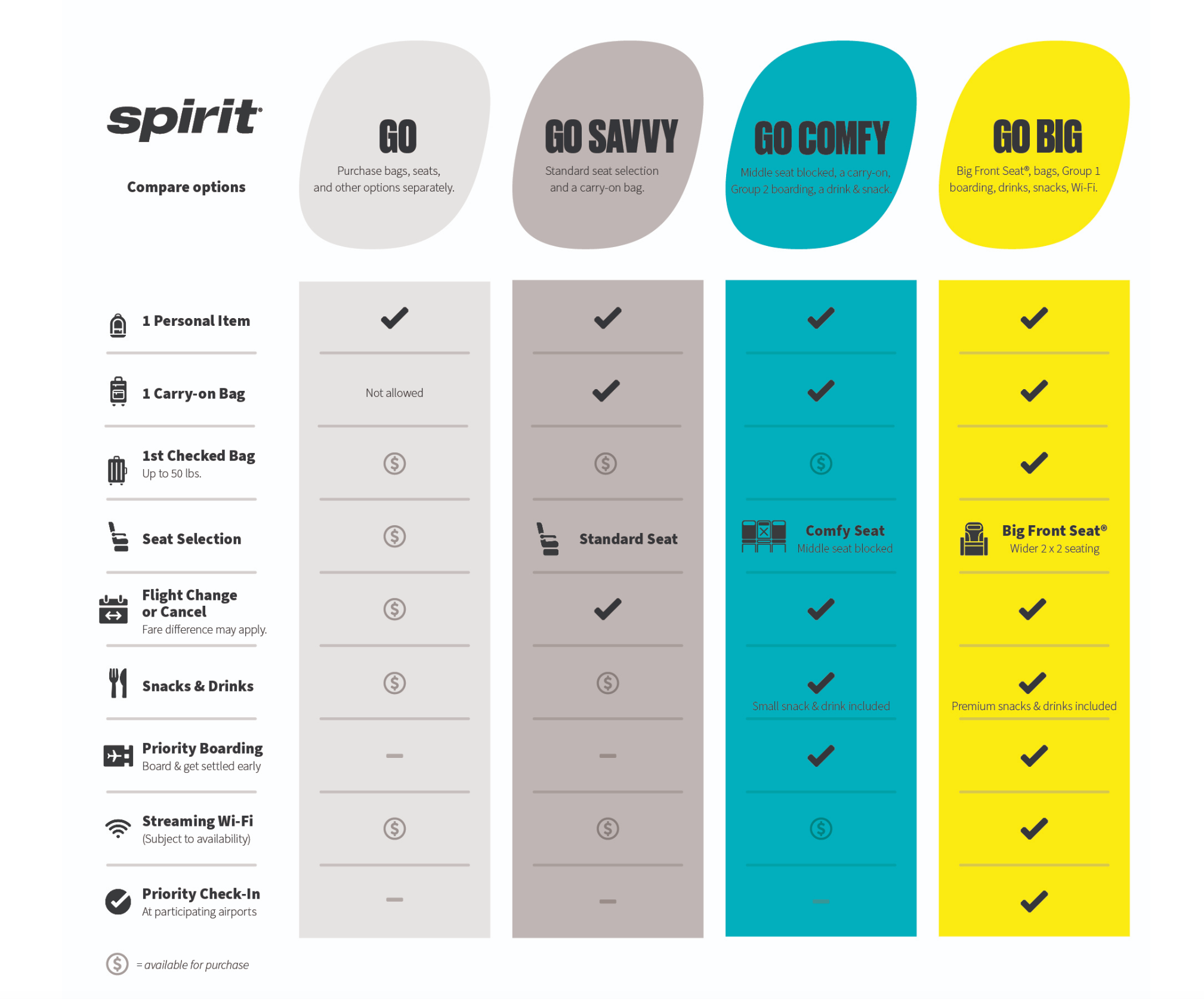
Spirit offers options like the “Bare Fare” (base + taxes) and occasionally “bundles” or “packages” (e.g., “Flight + Bags + Seats”).
- Bare Fare: Economical if you travel extremely light and don’t require seat selection.
- Bundles: Sometimes offer a slight discount compared to buying each add-on individually.
Financial Strategy: Perform a quick calculation. Add up the base fare, taxes, and all the necessary ancillary fees you anticipate. Compare this total to the price of any available bundles. Also, compare this total to what a full-service airline might charge for a similar route, including baggage. This “apples to apples” comparison is vital for identifying genuine savings.
Strategies for Managing and Minimizing Your Spirit Costs
Mastering the Spirit fare breakdown isn’t just about understanding costs; it’s about actively implementing strategies to control them. Proactive financial planning can significantly reduce your overall travel expenditure.
Pre-planning and Packing Smart: Your First Line of Defense
The golden rule for saving money on Spirit is to plan meticulously.
- Know Your Needs: Before booking, determine exactly what you’ll carry. If you need a checked bag, factor that cost in immediately.
- Pack Efficiently: Utilize space-saving techniques, wear bulky items, and consolidate toiletries to fit within personal item dimensions. Weigh your bags at home to avoid overweight fees.
- Print Boarding Passes: Always check in online and print your boarding pass or use the mobile app to avoid airport printing fees.
Membership Programs and Credit Cards: Potential Savings Avenues
Spirit offers avenues for additional savings for frequent flyers.
- Spirit Saver$ Club: A paid membership that provides discounts on fares, bags, and seat selection. If you fly Spirit frequently, the annual fee might pay for itself after a few trips. Calculate the potential savings based on your travel habits.
- Spirit Airlines Credit Card: Co-branded credit cards often come with perks like priority boarding, baggage fee waivers for the cardholder, or bonus points that can be redeemed for flights or future add-ons. Analyze the annual fee and benefits against your spending patterns to determine if it’s a financially sound choice.
The Total Cost Approach: Budgeting Beyond the Advertised Fare
When budgeting for a Spirit flight, never stop at the base fare.
- Build a Realistic Travel Budget: Include the base fare, mandatory taxes, all anticipated ancillary fees, ground transportation, meals, and accommodation.
- Allocate Contingency Funds: Unexpected travel costs can arise. Having a small buffer in your budget is always a wise financial move.
- Track Expenses: Use a budgeting app or spreadsheet to track your actual spending against your planned budget.
Comparing Apples to Apples: The True Cost Comparison
To genuinely assess if Spirit is the most economical choice, you must compare its total estimated cost (base fare + all anticipated fees) against the total cost of other airlines for the same route and travel dates.
- Factoring In Inclusions: Many full-service airlines include a carry-on bag and seat selection in their standard economy fares. Ensure you’re adding these costs back into Spirit’s price for an accurate comparison.
- Consider Comfort and Convenience: While not directly financial, the value of included perks (e.g., in-flight entertainment, complimentary snacks, more legroom) should also implicitly factor into your “value” assessment if the total prices are similar.
Conclusion
Navigating the financial landscape of Spirit Airlines requires diligence, foresight, and a solid understanding of its unbundled pricing model. By meticulously deconstructing the fare breakdown—from the appealing base fare to the crucial government taxes and the often-significant ancillary fees—travelers can make genuinely informed decisions. The “how to see fare breakdown Spirit” isn’t merely about locating a section on a website; it’s about adopting a proactive financial mindset, ensuring that every dollar spent aligns with your travel needs and budgetary goals. With the insights provided in this guide, you are now equipped to approach your next Spirit booking with confidence, transparency, and strategic financial wisdom, ensuring your travel is not only affordable but also free from unexpected financial burdens.
aViewFromTheCave is a participant in the Amazon Services LLC Associates Program, an affiliate advertising program designed to provide a means for sites to earn advertising fees by advertising and linking to Amazon.com. Amazon, the Amazon logo, AmazonSupply, and the AmazonSupply logo are trademarks of Amazon.com, Inc. or its affiliates. As an Amazon Associate we earn affiliate commissions from qualifying purchases.