
In the complex ecosystem of modern business, every significant initiative, project, or investment demands a robust justification. The days of making decisions based purely on intuition are long gone, replaced by a data-driven imperative that requires demonstrating tangible value and measurable returns. This is where the business case comes into play: a foundational document for strategic financial decision-making, offering a comprehensive rationale for embarking on a particular course of action.
A well-crafted business case isn’t just a formality; it’s a strategic financial instrument designed to secure stakeholder buy-in, allocate resources efficiently, and ultimately drive profitability and growth. It bridges the gap between a compelling idea and its successful execution, providing a clear roadmap for financial investment and expected returns. For anyone involved in corporate strategy, project management, or financial planning, understanding how to construct a powerful business case is an indispensable skill in the “Money” domain.
Understanding the Imperative of a Business Case
At its core, a business case is a formal argument presented to decision-makers, outlining the benefits, costs, risks, and alternatives associated with a proposed project or initiative. It serves as the bedrock for financial approval, ensuring that capital is deployed wisely and aligned with organizational objectives. Without a meticulously detailed business case, even the most promising ventures risk being dismissed due to a lack of clear financial justification or perceived risk.
Defining the “Why” and “What”
The primary purpose of a business case is to address a specific business problem or opportunity, detailing why a particular solution is the most advantageous path forward. It answers critical questions: Why should we invest in this now? What are the financial implications? What is the expected return on investment (ROI)? What happens if we do nothing?
A robust business case offers:
- Justification for Investment: It provides a clear, data-backed rationale for allocating financial resources, human capital, and time.
- Informed Decision-Making: It empowers executives and stakeholders to make strategic choices by presenting a balanced view of potential outcomes.
- Risk Mitigation: By systematically identifying and analyzing potential risks, it allows for proactive planning and mitigation strategies, protecting financial stability.
- Performance Benchmarking: It establishes clear metrics and expectations against which the project’s success can be measured post-implementation, ensuring accountability for financial targets.
- Resource Prioritization: In environments with finite resources, a compelling business case helps prioritize initiatives that offer the highest strategic and financial value.
The Strategic Role in Business Finance
From a financial perspective, the business case is a critical tool for capital expenditure planning, budget allocation, and financial forecasting. It allows organizations to assess the long-term financial viability and strategic alignment of a project, preventing costly missteps and ensuring that investments contribute positively to the bottom line. It’s not just about spending money; it’s about investing money smartly to generate future value, making it a cornerstone of prudent business finance.
Deconstructing the Core Components of an Effective Business Case
While the specific details may vary depending on the project and industry, a well-structured business case typically includes several key sections, each contributing to a holistic financial and strategic narrative. These components are designed to guide the reader through the problem, proposed solution, and ultimately, the compelling financial argument for proceeding.
The Executive Summary: Your Financial Elevator Pitch
This is perhaps the most crucial section, often written last but presented first. It’s a concise, high-level overview of the entire business case, summarizing the problem, the recommended solution, key financial benefits (ROI, payback period), associated costs, and the overall recommendation. For busy executives, this summary might be the only part they read in detail, so it must be impactful, clear, and immediately convey the financial value proposition. It needs to grab attention and articulate the compelling financial reason for further consideration.
Problem Statement and Opportunity Analysis
Clearly articulate the business problem that the proposed initiative seeks to solve or the opportunity it aims to capitalize on. This section sets the stage, providing context and demonstrating the urgency or strategic advantage. Quantify the impact of the problem where possible (e.g., “current system causes $X loss in productivity annually” or “missed market opportunity valued at $Y”). This financial quantification immediately establishes the baseline for improvement or gain.
Analysis of Options and Recommendations
This section is vital for demonstrating due diligence. It explores various alternatives to address the identified problem or opportunity, including the “do nothing” scenario. For each option, present a brief analysis of its benefits, costs, risks, and feasibility. This allows decision-makers to understand why your recommended solution is superior from a financial and strategic standpoint. Your recommendation should clearly state the preferred course of action, grounded in the preceding analysis, focusing on its financial superiority or strategic alignment.
Benefits Realization: Financial and Non-Financial Returns
Detail all anticipated benefits. While non-financial benefits (e.g., improved customer satisfaction, enhanced brand reputation) are important, the primary focus in a business finance context must be on quantifiable financial benefits. These include:
- Increased revenue (e.g., new sales, market expansion)
- Cost reductions (e.g., operational efficiencies, reduced waste)
- Improved productivity leading to labor cost savings
- Risk reduction (e.g., avoiding regulatory fines, data breach costs)
- Asset utilization improvements
Provide clear metrics and projections for each financial benefit, explaining how they will be measured and realized.
Cost Analysis and Resource Requirements
Present a comprehensive breakdown of all costs associated with the proposed solution. This includes:
- Capital Expenditure (CapEx): Initial investment costs (e.g., hardware, software licenses, infrastructure).
- Operational Expenditure (OpEx): Ongoing costs (e.g., maintenance, subscriptions, salaries, utilities, training).
- Opportunity Costs: The value of the next best alternative foregone when a decision is made.
- Hidden Costs: Often overlooked costs like downtime during implementation, change management, or integration expenses.
Be transparent and realistic. Overlooking costs can significantly undermine the credibility of your financial projections and lead to budget overruns.
Risk Assessment and Mitigation Strategies
No project is without risk. Identify potential risks – financial, operational, technological, market, regulatory – and assess their likelihood and potential impact. Crucially, outline specific mitigation strategies for each identified risk. This demonstrates foresight and a proactive approach to protecting the investment. For example, a financial risk like fluctuating exchange rates could be mitigated through hedging strategies.
Quantifying Value: Financial Analysis and Beyond
The true power of a business case, especially in the “Money” category, lies in its ability to translate concepts into compelling financial metrics. This section moves beyond qualitative arguments to provide hard numbers that justify the investment.
Key Financial Metrics for Decision-Making

To gain approval, your business case must speak the language of finance. Include detailed calculations and projections for key financial indicators:
Return on Investment (ROI)
ROI is a widely used profitability metric that evaluates the efficiency of an investment. It measures the financial gain or loss in relation to the initial cost.
- Formula:
ROI = (Net Profit / Cost of Investment) x 100% - Importance: A higher ROI indicates a more favorable investment, making it a critical metric for comparing different initiatives.
Net Present Value (NPV)
NPV is a sophisticated capital budgeting technique that calculates the present value of future cash flows generated by a project, minus the initial investment. It accounts for the time value of money, meaning a dollar today is worth more than a dollar tomorrow.
- Formula:
NPV = Σ [Cash Flow_t / (1 + r)^t] - Initial Investment(wheretis the period,ris the discount rate) - Importance: A positive NPV indicates that the project is expected to generate more value than it costs, making it a financially attractive option.
Payback Period
The payback period is the time it takes for an investment to generate enough cash flow to cover its initial cost.
- Formula:
Payback Period = Initial Investment / Annual Cash Inflow - Importance: While simpler than NPV, it’s useful for assessing liquidity and risk, as projects with shorter payback periods are generally preferred, especially in volatile environments.
Internal Rate of Return (IRR)
IRR is the discount rate at which the NPV of all cash flows from a particular project equals zero. It is essentially the effective interest rate of an investment.
- Importance: If the IRR is greater than the company’s required rate of return (hurdle rate), the project is generally considered acceptable. It provides a single percentage value that can be easily compared to other investment opportunities.
Sensitivity Analysis and Scenario Planning
Financial projections are rarely certain. Incorporate sensitivity analysis to show how changes in key assumptions (e.g., sales volume, cost of materials, interest rates) might impact the financial outcomes (ROI, NPV). Presenting best-case, worst-case, and most-likely scenarios demonstrates a thorough understanding of potential financial volatility and builds confidence in your analysis. This proactive approach to financial uncertainty is a hallmark of a mature business case.
The Strategic Process: Crafting Your Business Case Step-by-Step
Writing a compelling business case is an iterative process that requires thorough research, collaboration, and a strategic mindset. It’s not just about compiling data; it’s about building a convincing financial narrative.
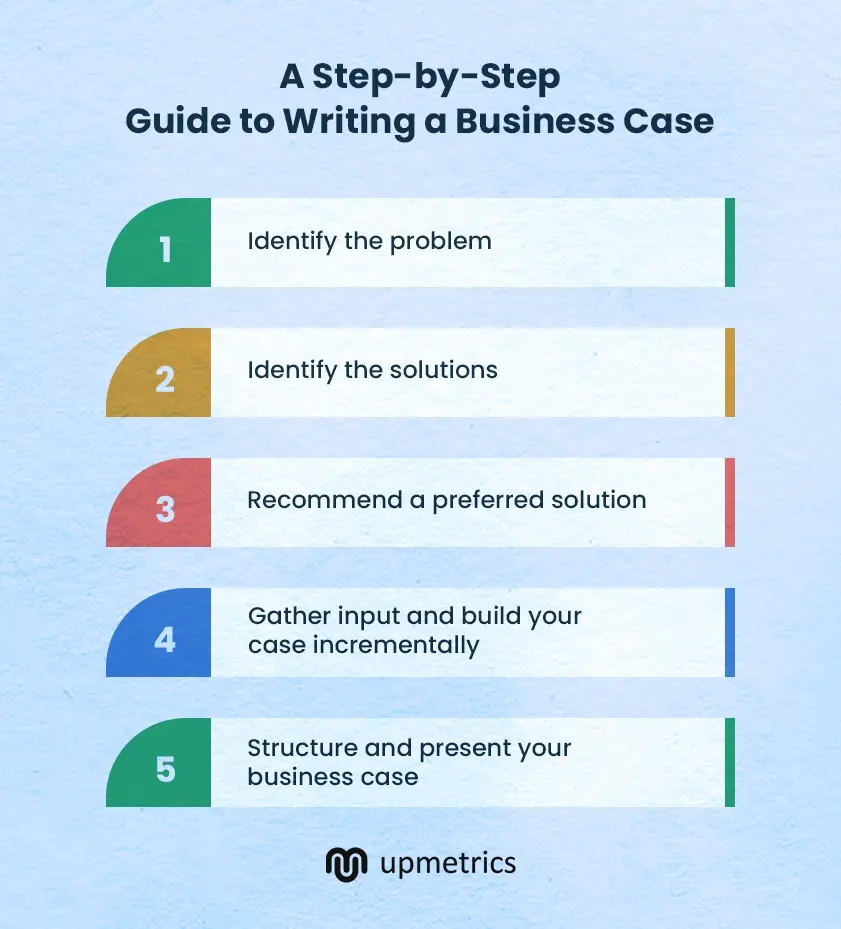
1. Define the Problem and Solution Scope
Before writing, clearly articulate the specific problem you’re addressing or the opportunity you’re seizing. What are the current financial inefficiencies? What market gap exists? Then, define the scope of your proposed solution. What exactly will it achieve? What are its boundaries? A clear understanding here prevents scope creep and ensures your financial estimates are accurate.
2. Identify and Engage Key Stakeholders
Success hinges on securing buy-in. Identify all relevant stakeholders—executives, department heads, finance teams, IT, legal—and involve them early. Their insights are crucial for gathering data, understanding departmental impacts, and identifying potential roadblocks. Engaging them early also fosters a sense of ownership, making it easier to gain approval later. Their input on financial constraints, operational costs, and potential revenue streams is invaluable.
3. Gather Comprehensive Data and Evidence
Data is the backbone of your business case. Collect hard evidence to support every claim:
- Financial Data: Historical costs, revenue figures, market trends, competitor analysis, current budget allocations.
- Operational Data: Productivity metrics, process efficiency reports, resource utilization.
- Market Data: Customer surveys, industry reports, growth projections.
- Technical Data: System performance, infrastructure costs, security requirements.
Every financial projection, every cost estimate, and every benefit claim must be substantiated by reliable data.
4. Develop Detailed Financial Projections
Work closely with finance professionals to develop realistic and transparent financial forecasts. This includes:
- Revenue Projections: Based on market analysis, pricing strategies, and sales forecasts.
- Cost Estimates: Detailed breakdown of all CapEx and OpEx, including contingencies.
- Cash Flow Projections: A multi-year forecast of cash inflows and outflows.
Ensure assumptions are clearly stated and justifiable. This is where the core “Money” aspect of the business case truly shines.
5. Structure, Write, and Refine
Organize your findings into the logical structure outlined above. Write clearly, concisely, and professionally. Use precise financial terminology. Avoid jargon where possible, or explain it. Once drafted, refine the language, check for consistency, and ensure all arguments are logically connected. Pay particular attention to the Executive Summary, ensuring it encapsulates the entire financial story effectively.
6. Present Your Case with Confidence
When presenting your business case, be prepared to defend your assumptions and projections. Focus on the financial benefits and the strategic alignment. Anticipate questions about costs, risks, and alternatives. Practice your presentation to convey confidence and expertise in the financial implications of your proposal.
Mastering the Presentation and Avoiding Common Pitfalls
Even the most meticulously researched business case can fall flat if not presented effectively or if common errors are made. The final stage is about communication and persuasion, ensuring your financial narrative resonates with decision-makers.
Tips for a Persuasive Presentation
- Know Your Audience: Tailor your presentation to their level of financial acumen and their priorities. Executives are often most interested in the top-line financial impact and strategic fit.
- Start with the “So What?”: Immediately articulate the core financial benefit or strategic imperative in your Executive Summary.
- Visual Aids: Use charts, graphs, and tables to illustrate complex financial data (e.g., cash flow projections, ROI trends). Visuals make financial information easier to digest and remember.
- Focus on Benefits, Not Just Features: Continuously link the proposed solution back to tangible financial and strategic benefits for the organization.
- Be Prepared for Questions: Anticipate tough questions, especially around cost overruns, timeline delays, and the accuracy of financial forecasts. Have data ready to back up your responses.
- Convey Confidence: Your belief in the financial viability and strategic value of the project will significantly influence your audience.
Common Pitfalls to Avoid
- Lack of Clarity: An overly complex or jargon-filled business case can obscure its financial merits. Keep it straightforward and easy to understand.
- Insufficient Data or Evidence: Hazy assumptions or a lack of supporting data will quickly erode credibility, particularly for financial projections. Every financial claim must be backed by research.
- Overly Optimistic Projections: Unrealistic revenue forecasts or underestimated costs are a common pitfall. Be conservative in your financial estimates, and build in contingencies.
- Ignoring Risks: Failing to address potential financial, operational, or market risks shows a lack of foresight and can undermine confidence in your ability to manage the investment.
- Poor Structure and Flow: A disorganized document makes it difficult for readers to follow your financial arguments and grasp the overall picture.
- Focusing Only on Costs: While cost is important, a business case primarily justifies an investment by demonstrating the value it will create, both financially and strategically.
- Not Accounting for Opportunity Costs: Overlooking the value of the next best alternative implies an incomplete financial analysis.
In conclusion, mastering the art of writing a business case is an invaluable skill for anyone navigating the financial landscape of modern organizations. It’s more than just a document; it’s a strategic tool that justifies investment, manages risk, and drives financial success. By meticulously crafting a compelling narrative, backed by rigorous financial analysis and a clear understanding of stakeholder needs, you can transform ambitious ideas into profitable realities.
aViewFromTheCave is a participant in the Amazon Services LLC Associates Program, an affiliate advertising program designed to provide a means for sites to earn advertising fees by advertising and linking to Amazon.com. Amazon, the Amazon logo, AmazonSupply, and the AmazonSupply logo are trademarks of Amazon.com, Inc. or its affiliates. As an Amazon Associate we earn affiliate commissions from qualifying purchases.