
The simple question, “How large are the Shake Shack burgers?” might seem like a straightforward query about culinary dimensions, easily answered with a tape measure or a weighing scale. However, within the realm of brand strategy, this seemingly innocuous question opens a profound discussion about corporate identity, market positioning, customer perception, and the intricate dance between product offering and brand narrative. For Shake Shack, a brand synonymous with the “better burger” movement, the size of its flagship product is far more than a physical attribute; it is a meticulously crafted element of its brand promise and a critical component in its competitive differentiation. This article delves into how Shake Shack leverages its burger dimensions not just as a menu item, but as a strategic asset, shaping its brand perception and value proposition in the fiercely competitive fast-casual landscape.

The Strategic Imperative of Burger Dimensions in Fast-Casual Branding
In an industry often characterized by aggressive portioning and value-driven messaging, Shake Shack has carved out a unique niche. Its approach to burger size is not an accident but a deliberate brand decision, reflecting a broader philosophy that prioritizes quality, experience, and a specific kind of indulgence over sheer volume.
Beyond the Bite: Size as a Brand Differentiator
Shake Shack emerged at a time when consumers were growing weary of mass-produced, often bland, fast food offerings but still desired convenience. The “better burger” segment aimed to bridge this gap, offering higher-quality ingredients, more thoughtful preparation, and a more elevated dining experience. Within this context, burger size becomes a powerful, albeit subtle, brand differentiator.
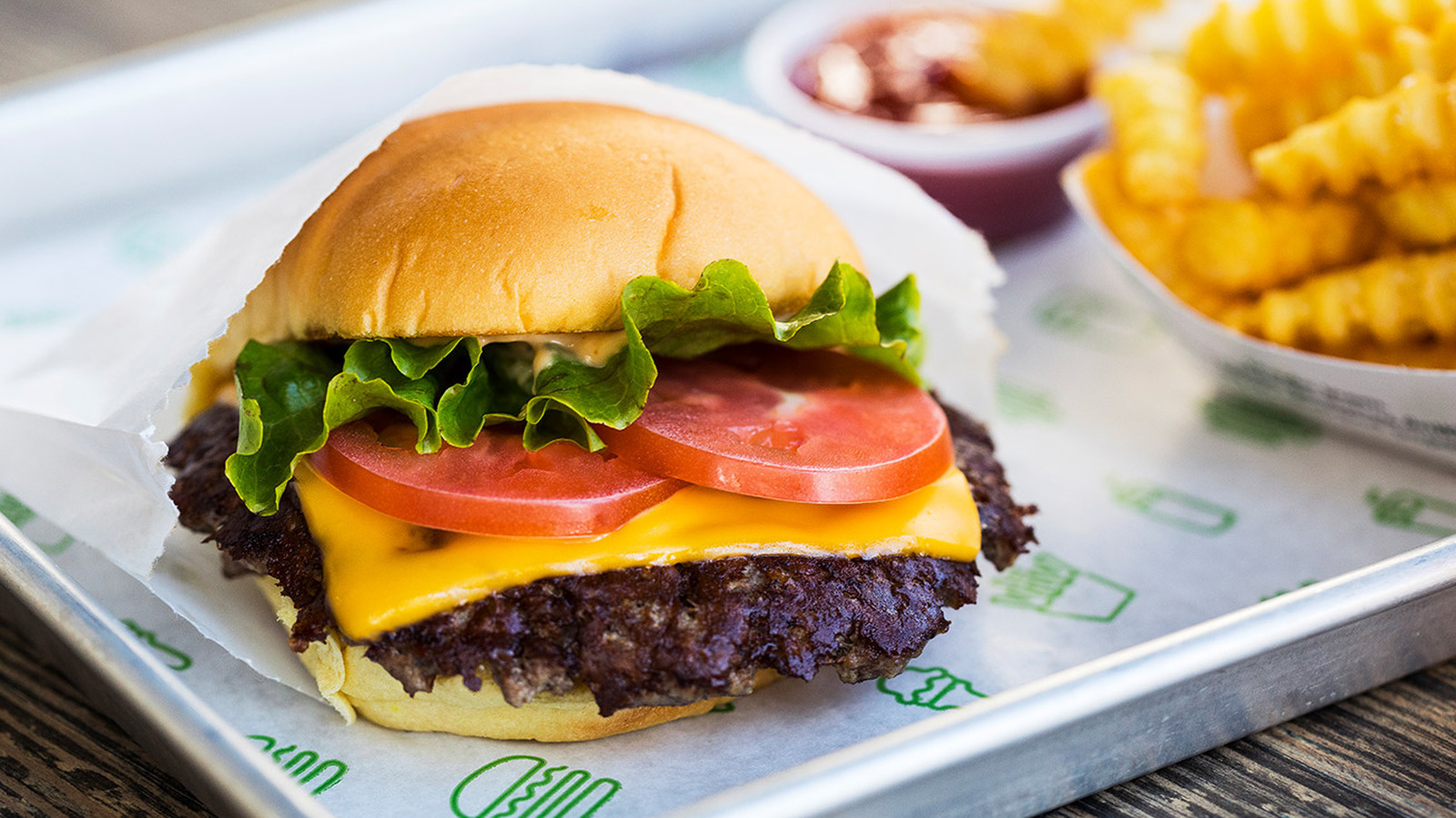
While many competitors lean into the “bigger is better” ethos, offering towering, multi-patty creations that challenge the diner’s capacity, Shake Shack consciously opted for a more moderate, some might even say “snack-sized,” patty. This choice is not about being stingy; it’s about signaling a different value proposition. A smaller, yet premium-quality, burger suggests an emphasis on taste intensity, ingredient integrity, and a more refined culinary experience rather than simply filling a void. It subtly communicates that the brand trusts its product to satisfy through quality, not just quantity. This deliberate restraint in size allows the flavor profiles of the 100% all-natural Angus beef, the custom-baked potato bun, and the signature ShackSauce to shine through, unburdened by overwhelming bulk.
Furthermore, this sizing strategy aligns with a growing consumer trend towards mindful eating and an appreciation for well-executed, perfectly portioned dishes. By not over-promising on gargantuan size, Shake Shack sets an expectation that it will deliver a perfectly balanced, immensely satisfying burger experience, rather than an intimidating caloric challenge. This positions the brand as sophisticated and discerning, appealing to a customer base that values quality and experience over mere bulk.
The “Better Burger” Philosophy and Portion Control
The “better burger” movement isn’t just about ingredient sourcing; it’s also about a holistic approach to the eating experience. Part of this philosophy involves a re-evaluation of portion sizes, moving away from the supersizing trends that dominated earlier decades of fast food. Shake Shack’s original stand in Madison Square Park, envisioned by restaurateur Danny Meyer, was built on a foundation of hospitality and quality often associated with fine dining, adapted for a casual setting.
Portion control, therefore, becomes an extension of this fine-dining sensibility. A smaller, well-crafted burger allows customers to enjoy the full experience without feeling overly stuffed or guilty. It encourages a focus on the sensory pleasure of each bite – the juiciness of the patty, the crispness of the lettuce, the tang of the sauce, the softness of the bun – rather than the sheer volume of food. This is a subtle yet powerful brand message: Shake Shack is about enjoyment and quality of experience, not just sustenance.
This philosophy also extends to menu engineering. By offering a single patty (the “ShackBurger”) and a double patty (the “Double ShackBurger”), Shake Shack provides options without resorting to excessively large, novelty burgers. The double remains substantial but still manageable, fitting within the brand’s ethos of premium, balanced indulgence. This measured approach to portioning reinforces the brand’s commitment to a refined fast-casual experience, distancing it from competitors who might use extreme sizing as a primary marketing tactic.
Shake Shack’s Burger Size: A Deep Dive into Customer Perception and Expectation
Customer perception is the bedrock of any successful brand. For Shake Shack, the size of its burgers often sparks discussion, highlighting the delicate balance between delivering a premium product and managing consumer expectations, especially in a market conditioned by alternative fast-food norms.
Managing the Paradox: Premium Quality vs. Perceived Quantity
The relatively modest physical size of a Shake Shack burger, particularly the single ShackBurger, can sometimes be a point of discussion or even initial surprise for first-time customers accustomed to larger, often cheaper, alternatives. This creates a paradox: a premium-priced burger that isn’t overwhelmingly large. Managing this perception is crucial for brand longevity.
Shake Shack addresses this not by increasing size, but by consistently reinforcing its brand narrative around quality, taste, and the overall experience. The perceived “smallness” is countered by the undeniable deliciousness and satisfying richness of the product. The brand’s marketing subtly pivots from quantity to quality – emphasizing the 100% all-natural beef, the proprietary blend, the fresh toppings, and the iconic potato bun. The goal is to shift the customer’s focus from “how much food am I getting?” to “how good is this food, and how satisfying is this experience?”
This strategy relies heavily on the burger delivering an exceptional taste experience that justifies its price and size. When a customer takes that first bite and experiences the burst of flavor and texture, any initial reservations about size tend to dissipate, replaced by an appreciation for the quality. The brand essentially trains its customers to associate “Shake Shack burger” not with “large,” but with “deliciously satisfying,” thereby redefining their value metrics.
The Role of Social Media and Word-of-Mouth in Shaping Size Perceptions
In the digital age, social media and word-of-mouth are powerful forces in shaping brand perception. Discussions about Shake Shack burger size frequently appear online, ranging from praise for the “perfect” size to comments about its perceived smallness relative to price. Shake Shack, like any modern brand, must navigate this digital discourse.
Crucially, these online conversations, even those initially questioning the size, often conclude with an acknowledgment of the burger’s superior taste and quality. This organic, user-generated content acts as a powerful endorsement, affirming the brand’s strategic choice. When an influencer or a regular customer shares their Shake Shack experience, the accompanying visual, even if showcasing a modestly sized burger, is usually paired with glowing reviews of its flavor and satisfaction.
Moreover, the “smallness” can sometimes become part of its charm or mystique, fostering a sense of insider knowledge among its loyal fan base. Those who “get it” understand that Shake Shack is about a particular kind of indulgence, not an all-you-can-eat challenge. This creates a community around the brand, where customers share tips (e.g., “get the Double ShackBurger if you’re really hungry!”) and reinforce the brand’s unique value proposition through their shared experiences and digital commentary.
Competitive Landscape: How Shake Shack’s Size Strategy Stacks Up
The fast-casual burger market is fiercely competitive, with numerous players vying for consumer attention. Shake Shack’s deliberate sizing strategy is a key element in its competitive positioning, enabling it to stand apart from rivals with vastly different approaches.
Navigating the “Bigger is Better” Culture of Competitors

Many of Shake Shack’s direct and indirect competitors operate under the “bigger is better” mantra. Chains like Five Guys, for example, are known for their generous portions, including overflowing fries and burgers that can be customized with numerous toppings, often resulting in massive creations. Other traditional fast-food giants periodically introduce limited-time, oversized burgers to attract attention.
Shake Shack’s decision to maintain a more moderate size directly counters this prevailing trend. This is not a weakness but a strategic strength. By not attempting to compete on sheer volume, Shake Shack avoids a race to the bottom that could compromise its premium ingredients or higher-quality preparation methods. Instead, it signals that its value proposition lies elsewhere – in the superior taste, the quality of its components, and the overall sophisticated experience. This differentiation prevents Shake Shack from being directly compared on a “price per ounce” basis, allowing it to command a premium price for its product.
This strategy also positions Shake Shack as a more thoughtful and perhaps even “health-conscious” indulgence compared to its behemoth-burger-producing counterparts. While not a health food by any means, the manageable portion size allows customers to feel satisfied without the excessive caloric load associated with some larger burgers, appealing to a segment of consumers looking for quality without extreme excess.
Reinforcing Brand Identity Through Consistent Product Offering
Consistency is paramount in brand building. For Shake Shack, maintaining a consistent burger size across all its locations, from its original Madison Square Park stand to its international outposts, is vital. This consistency reinforces its brand identity as a reliable provider of a specific, high-quality product.
When customers know what to expect in terms of both taste and portion, it builds trust and strengthens brand loyalty. A Shake Shack burger, whether a single or a double, looks and feels exactly as a Shake Shack burger should – perfectly proportioned, visually appealing, and engineered for maximum flavor impact. This unwavering consistency in product offering, including its size, becomes a hallmark of the brand’s commitment to its standards.
This consistency also extends to the brand’s operational efficiency. Standardized patty sizes contribute to streamlined kitchen operations, ensuring faster service and consistent quality control, which are critical elements of the fast-casual experience. Thus, the decision on burger size is not just a marketing ploy but is deeply intertwined with the brand’s operational excellence and its ability to scale while maintaining its core identity.
The Operational and Marketing Implications of Burger Size
Beyond perception and competitive positioning, the chosen size of Shake Shack’s burgers has significant implications for its operations, menu engineering, and marketing communications, all of which are meticulously aligned to support its overarching brand strategy.
Menu Engineering and the Economics of Scale
The standardized size of Shake Shack’s burger patties plays a crucial role in its menu engineering and overall economics. By specifying precise patty weights and dimensions, the brand ensures efficient procurement, reduces waste, and allows for accurate cost analysis per serving. This is particularly important for a brand that prides itself on using high-quality, often more expensive, ingredients. Every gram of beef is accounted for, allowing for optimal pricing strategies that support profit margins while maintaining perceived value.
The limited options for patty sizes (single or double) simplify the cooking process, allowing kitchen staff to achieve consistent doneness and assembly speed. This operational efficiency directly translates into a better customer experience through shorter wait times and a reliable product. From a branding perspective, this streamlined approach reinforces the idea of a finely tuned operation, focused on delivering perfection rather than variety at the expense of quality. It speaks to a brand that has mastered its core product.
Furthermore, offering a single and double option provides a natural upsell opportunity. Customers who might find the single patty insufficient can easily upgrade to the double, often without feeling they are “supersizing” in an unrefined way. This strategic offering caters to different appetites while keeping the brand’s core identity intact, preventing the menu from becoming overly complex or diluting its focus.
Crafting the Brand Narrative Around a Deliberate Product Size
Shake Shack’s marketing strategy is intrinsically linked to its product characteristics, including burger size. The brand narrative doesn’t shy away from the burger’s size; rather, it frames it within the context of quality, craftsmanship, and a superior eating experience. Marketing materials often feature close-up shots of the perfectly formed burgers, emphasizing their juicy interior, crisp edges, and fresh toppings, rather than their expansive circumference.
The language used in Shake Shack’s branding reinforces this. Terms like “thoughtfully sourced,” “100% all-natural Angus beef,” and “classic American roadside burger” evoke a sense of heritage, quality, and an intentional approach to food, where every component, including size, is purposeful. The brand’s messaging focuses on the satisfaction derived from the burger, implying a holistic experience that transcends mere calorie count.
In essence, Shake Shack has successfully crafted a brand narrative that convinces consumers that its burger’s size is not a limitation but a deliberate choice that enhances the overall quality and enjoyment. It’s a testament to effective branding when a product’s seemingly “smaller” attribute can be transformed into a point of pride and differentiation, speaking volumes about the brand’s philosophy and its commitment to a specific kind of culinary excellence.
Future-Proofing the Brand: Adapting Burger Size to Evolving Consumer Demands
The fast-casual landscape is constantly evolving, driven by shifting consumer preferences, health consciousness, and a growing demand for customization. Shake Shack’s approach to burger size must remain agile, ensuring its brand remains relevant and resilient.
Health Consciousness and the Demand for “Right-Sized” Portions
As consumers become increasingly health-conscious, there is a growing appreciation for “right-sized” portions that offer satisfaction without overwhelming caloric intake. Shake Shack’s moderate burger size, even the double, inherently aligns with this trend better than many of its “supersize-me” competitors. This positions the brand favorably for future consumer shifts towards more balanced eating habits.
While Shake Shack is not marketed as a “healthy” option, its portioning allows for a degree of mindful indulgence. For many consumers, a Shake Shack burger represents an occasional treat that can be enjoyed without excessive guilt, fitting into a balanced lifestyle. This is a subtle yet powerful brand advantage, enabling it to appeal to a broader demographic that values both taste and a degree of moderation. The brand could further capitalize on this by subtly highlighting the satisfying nature of its portions as part of its wellness-oriented messaging, without compromising its indulgent appeal.
Maintaining Brand Loyalty in a Dynamic Market
In a dynamic market, maintaining brand loyalty requires continuous introspection and a willingness to subtly adapt while preserving core identity. Shake Shack’s burger size, as a fundamental aspect of its product, contributes significantly to its brand recognition and customer expectations. Any drastic alteration would risk alienating its loyal customer base.
However, adaptation can come in various forms beyond simply changing patty weight. This might include introducing limited-time offers with unique, perhaps slightly different, patty formats (e.g., smaller sliders for tasting menus or larger, specialty patties for specific promotions), as long as they align with the brand’s commitment to quality. The brand can also explore offering diverse complementary items (salads, chicken sandwiches) that cater to varying dietary needs and appetites, making the overall meal customizable while keeping the core burger experience consistent.
Ultimately, “how large are the Shake Shack burgers?” transcends a simple measurement. It is a question that unveils the intricate layers of Shake Shack’s brand strategy – a testament to how a seemingly minor product detail can become a cornerstone of corporate identity, market differentiation, and enduring customer appeal. By embracing a philosophy of quality over quantity, Shake Shack has successfully crafted a brand that resonates deeply with consumers seeking a premium, perfectly portioned, and undeniably delicious burger experience, solidifying its position as a distinctive leader in the fast-casual dining landscape.
aViewFromTheCave is a participant in the Amazon Services LLC Associates Program, an affiliate advertising program designed to provide a means for sites to earn advertising fees by advertising and linking to Amazon.com. Amazon, the Amazon logo, AmazonSupply, and the AmazonSupply logo are trademarks of Amazon.com, Inc. or its affiliates. As an Amazon Associate we earn affiliate commissions from qualifying purchases.