
In an increasingly complex financial landscape, the question “how much should I save each month?” stands as a cornerstone of personal finance. It’s a query that resonates with individuals at every stage of life, from recent graduates embarking on their careers to seasoned professionals planning for retirement. While there’s no universal magic number, understanding the principles behind monthly savings, setting realistic goals, and implementing effective strategies are paramount to building a robust financial future. This guide will delve into the critical aspects of determining your ideal monthly savings, offering practical advice and actionable steps to help you achieve your financial aspirations.
The Foundation of Financial Wellness: Why Monthly Saving is Non-Negotiable
Saving money isn’t merely about accumulating wealth; it’s about building resilience, achieving freedom, and securing peace of mind. Without a consistent savings habit, individuals are vulnerable to unforeseen circumstances and often struggle to reach significant life goals. Monthly saving acts as a financial buffer, a growth engine, and a pathway to autonomy.
Beyond the Emergency Fund: Diverse Saving Goals
While an emergency fund is arguably the most critical initial savings goal, it’s just one piece of the puzzle. Our lives are punctuated by various financial milestones and aspirations, each requiring dedicated savings:
- Emergency Fund: This is your primary safety net, typically covering 3 to 6 months’ worth of essential living expenses. It protects you from job loss, medical emergencies, unexpected home repairs, or car breakdowns without resorting to high-interest debt.
- Retirement: Planning for life after work is non-negotiable. Consistent monthly contributions to retirement accounts (like 401(k)s, IRAs, or personal pensions) leverage the power of compound interest over decades, transforming modest regular savings into substantial nest eggs.
- Down Payments: Whether it’s for a house, a car, or even a significant investment, a substantial down payment can reduce loan amounts, lower interest payments, and improve your financial standing.
- Education: Saving for a child’s future education or your own continued learning can alleviate the burden of student loans.
- Large Purchases: Dream vacations, home renovations, or new technology often require dedicated savings to avoid debt.
- Financial Independence/Early Retirement: For those with ambitious goals, aggressive monthly savings and smart investing can accelerate the path to financial independence, allowing for greater freedom and flexibility.
The Power of Compound Interest: Your Money’s Best Friend
One of the most compelling reasons to start saving early and consistently is the phenomenon of compound interest. This “interest on interest” effect means that your earnings from savings and investments also begin to earn interest, creating an exponential growth trajectory over time. The earlier you start, and the more consistently you contribute, the greater the impact of compounding. A small amount saved consistently over 30-40 years can easily outperform much larger, but later, contributions. This foundational principle underscores the importance of not just how much you save, but when you start.
Setting Your Savings Targets: Benchmarks and Personalization
Determining an exact monthly savings figure can feel daunting, but various benchmarks offer excellent starting points. These general guidelines can then be personalized to fit your unique financial situation, income level, and life goals.
The 50/30/20 Rule: A Popular Starting Point
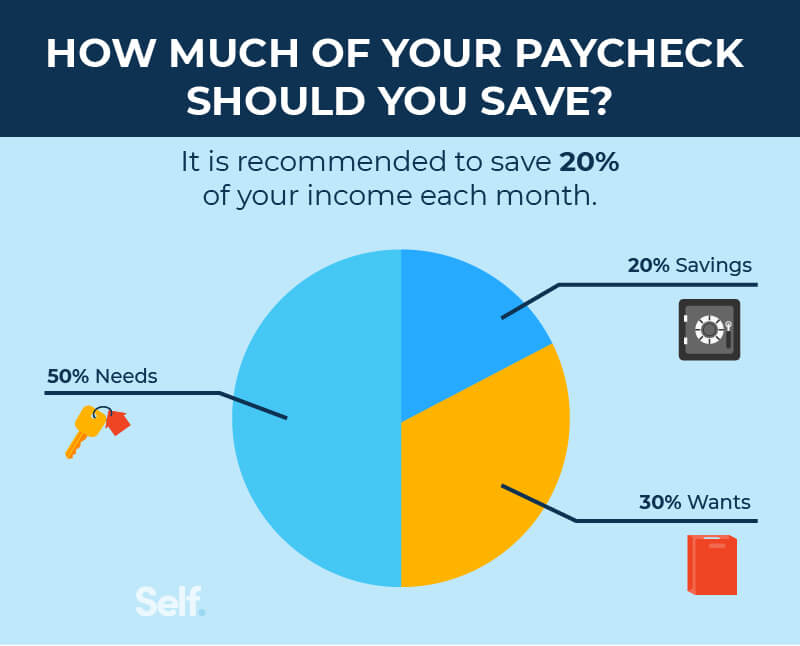
A widely recommended budgeting guideline is the 50/30/20 rule, which dictates how to allocate your after-tax income:
- 50% for Needs: This covers essential expenses like housing (rent/mortgage), utilities, groceries, transportation, insurance, and minimum loan payments.
- 30% for Wants: This category includes discretionary spending such as dining out, entertainment, hobbies, travel, shopping, and subscriptions.
- 20% for Savings & Debt Repayment: This crucial portion is dedicated to building your emergency fund, retirement contributions, investing, and any debt payments above the minimums (e.g., accelerating credit card or student loan repayment).
While the 50/30/20 rule is a fantastic framework, it’s a guideline, not a rigid law. Some individuals might find themselves spending more on needs, especially in high cost-of-living areas, while others might choose to allocate a much larger percentage to savings.
Tailoring Savings to Life Stages and Goals
Your ideal monthly savings percentage will naturally fluctuate throughout different life stages:
- Early Career (20s): Focus on building an emergency fund and starting retirement contributions. Even 10-15% can make a huge difference over the long term.
- Mid-Career (30s-40s): This stage often involves balancing larger goals like buying a home, starting a family, or saving for children’s education. You might aim for 15-20% or more, potentially increasing contributions as your income grows.
- Pre-Retirement (50s-60s): If you’ve fallen behind, this is the time to aggressively boost savings, perhaps aiming for 20-30% or more, to catch up before retirement.
Ultimately, your savings target should be ambitious yet achievable. Start by identifying your immediate and long-term financial goals, then work backward to determine the monthly amount required to reach them within a reasonable timeframe.
The Emergency Fund Imperative: Your First Financial Commandment
Before aggressively pursuing other savings or investments, establishing a robust emergency fund is paramount. This fund should be easily accessible (e.g., in a high-yield savings account) and liquid. The general recommendation is 3-6 months of essential living expenses, though some financial advisors suggest up to 9-12 months, especially for those with less stable incomes or dependents. Building this buffer offers invaluable psychological and financial security, preventing you from derailing your long-term plans when life inevitably throws a curveball.
Strategies for Boosting Your Monthly Savings
Once you’ve established your savings targets, the next step is to implement practical strategies that make consistent saving a reality. This involves a combination of mindful spending, income optimization, and strategic automation.
Mastering Your Budget: Tracking Income and Expenses
You can’t manage what you don’t measure. A detailed budget is the bedrock of effective financial management. Begin by tracking all your income and expenses for at least a month or two. This will reveal exactly where your money is going and highlight areas where you can potentially cut back. Tools like spreadsheets, budgeting apps (e.g., Mint, YNAB), or even a simple notebook can help. Categorize your spending into needs, wants, and savings, ensuring your allocations align with your financial goals and the 50/30/20 rule (or your personalized version). A well-maintained budget illuminates opportunities for increased savings that might otherwise go unnoticed.
Automating Your Savings: The Path of Least Resistance
One of the most effective strategies for consistent saving is automation. Set up automatic transfers from your checking account to your savings, investment, or retirement accounts on or immediately after payday. Treat your savings contributions as a non-negotiable bill, ensuring that money is moved before you have a chance to spend it. This “pay yourself first” approach eliminates the need for willpower each month and builds consistent habits effortlessly. Even small automated transfers add up significantly over time.
Trimming Expenses Without Sacrificing Quality of Life
Reviewing your “wants” category often reveals significant opportunities for savings. This doesn’t necessarily mean living a life of deprivation; rather, it’s about mindful consumption and identifying areas where you can get similar value for less. Consider:

- Subscription Audit: Cancel unused streaming services, gym memberships, or app subscriptions.
- Dining Out: Reduce the frequency of restaurant meals and take-out, opting for home-cooked alternatives.
- Transportation: Explore carpooling, public transport, cycling, or walking where feasible.
- Shopping Habits: Practice mindful purchasing, avoid impulse buys, and seek out sales or second-hand options.
- Utility Efficiency: Optimize energy and water usage at home.
- Negotiate Bills: Call your internet, cable, or insurance providers to negotiate better rates.
Small, consistent reductions in discretionary spending can free up substantial funds for savings each month.
Exploring Additional Income Streams
If cutting expenses isn’t enough to meet your savings goals, or if you simply want to accelerate your progress, consider boosting your income. This doesn’t necessarily mean getting a second full-time job. Explore various side hustles or income-generating activities that align with your skills and availability:
- Freelancing: Offer services like writing, graphic design, web development, or social media management.
- Gig Economy: Drive for a ride-sharing service, deliver food, or perform tasks through platforms like TaskRabbit.
- Selling Goods: Clear out unused items on online marketplaces or explore crafting and selling handmade products.
- Consulting: Leverage your professional expertise for paid consultations.
- Investing in Skills: Acquire new skills that can lead to higher-paying opportunities or allow for more lucrative side gigs.
Even a few hundred extra dollars a month from a side hustle can significantly impact your savings potential.
Allocating Your Savings: Where Should Your Money Go?
Once you’ve managed to free up funds each month, the next critical decision is where to allocate them. Strategic allocation ensures that your money is working effectively towards your most pressing financial objectives.
Prioritizing High-Interest Debt Repayment
If you carry high-interest debt (e.g., credit card debt, personal loans), this should often be your top priority after establishing a basic emergency fund. The interest rates on such debts can be incredibly high, effectively negating any returns you might earn on savings or investments. By aggressively paying down this debt, you reduce your overall interest burden and free up more cash flow for future savings and investments. Consider strategies like the debt snowball or debt avalanche methods.
Building Your Emergency Safety Net
As mentioned earlier, establishing a fully funded emergency fund (3-6 months of essential expenses) is non-negotiable. This money should be kept in a separate, easily accessible, and liquid account, such as a high-yield savings account, to ensure it’s available when needed. Do not invest your emergency fund in volatile assets like stocks, as you might need it when the market is down.
Investing for Long-Term Growth: Retirement and Beyond
After tackling high-interest debt and securing your emergency fund, allocate a significant portion of your monthly savings to long-term investments.
- Retirement Accounts: Maximize contributions to tax-advantaged accounts like 401(k)s (especially if your employer offers a match – that’s free money!), IRAs (Traditional or Roth), or other pension schemes. These accounts offer significant tax benefits and are designed for long-term growth.
- Brokerage Accounts: For savings beyond retirement accounts, consider investing in a diversified portfolio of stocks, bonds, and exchange-traded funds (ETFs) through a standard brokerage account. This allows your money to grow over the long term, outpacing inflation.
- Real Estate: While more complex, investing in real estate can also be a long-term wealth-building strategy.
The key is diversification and a long-term perspective. Resist the urge to frequently check your investments or panic during market downturns.
Saving for Short-to-Medium Term Goals
Finally, dedicate specific savings for your short-to-medium-term goals (e.g., a down payment for a house in 3 years, a new car in 1 year, a vacation next summer). These funds should typically be held in a separate high-yield savings account or a low-risk investment vehicle appropriate for the time horizon of the goal. Keeping these funds separate from your emergency fund and long-term investments helps maintain clarity and prevents “borrowing” from one goal to fund another.
Maintaining Momentum and Adapting Your Plan
Financial planning is not a one-time event; it’s an ongoing process. Life changes, income fluctuates, and goals evolve. Regularly reviewing and adjusting your savings plan is crucial for sustained success.
Regular Reviews and Adjustments
Schedule a monthly or quarterly financial check-in. Review your budget, track your progress towards your savings goals, and assess your overall financial health. Ask yourself:
- Am I meeting my monthly savings targets?
- Are my allocations still appropriate for my current goals?
- Have there been any significant changes in my income or expenses?
- Are there new opportunities to save more or invest better?
These regular reviews allow you to catch deviations early, make necessary adjustments, and ensure you remain on track.
Celebrating Milestones and Staying Motivated
Financial journeys can be long, and it’s easy to lose motivation. Celebrate your milestones, no matter how small. Reaching your first $1,000 in savings, fully funding your emergency fund, paying off a credit card, or hitting a certain investment threshold are all significant achievements. Acknowledge your progress, and consider a small, budget-friendly reward to keep yourself engaged and motivated for the next phase.
Seeking Professional Guidance
If you find yourself overwhelmed, unsure about investment strategies, or facing complex financial situations, consider consulting a certified financial planner. A professional can provide personalized advice, help you create a comprehensive financial plan, and guide you toward achieving your specific goals. While there’s a cost involved, the long-term benefits of expert guidance often outweigh the fees, especially for significant financial decisions.
Determining how much to save each month is a personal journey, but by understanding the core principles, setting clear goals, implementing effective strategies, and regularly reviewing your progress, you can build a robust financial future. Start today, be consistent, and watch your financial security grow.
aViewFromTheCave is a participant in the Amazon Services LLC Associates Program, an affiliate advertising program designed to provide a means for sites to earn advertising fees by advertising and linking to Amazon.com. Amazon, the Amazon logo, AmazonSupply, and the AmazonSupply logo are trademarks of Amazon.com, Inc. or its affiliates. As an Amazon Associate we earn affiliate commissions from qualifying purchases.