
It’s a question almost everyone asks at some point in their financial journey, and for good reason. The amount you should be saving each month is not just a number; it’s a critical component of your financial security, your ability to achieve life goals, and ultimately, your peace of mind. Yet, despite its importance, there’s no single, universally applicable answer. What’s right for one person could be entirely insufficient or even unrealistic for another.
The true answer lies in a confluence of factors: your income, expenses, current debt, age, lifestyle, and most importantly, your financial aspirations. Are you saving for a down payment on a house, a child’s education, retirement, a dream vacation, or simply to build a robust emergency fund? Each goal dictates a different saving strategy and, consequently, a different monthly saving target.
In this comprehensive guide, we’ll delve into the various methods and considerations for determining your ideal monthly savings. We’ll explore popular rules of thumb, discuss the crucial role of budgeting and goal setting, and outline the different avenues for your saved funds. By the end, you’ll have a clear framework to not only calculate your personal saving target but also to build sustainable saving habits that align with your financial future.
Understanding Your Personal Financial Landscape
Before you can determine how much to save, you need to understand the terrain you’re operating in. This involves a thorough, honest assessment of your current financial situation. Ignoring this foundational step is like trying to navigate a new city without a map – you might get somewhere, but it’s unlikely to be your intended destination.
Assess Your Current Income and Expenses
The bedrock of any sound financial plan is a clear understanding of your cash flow. This means knowing precisely how much money comes in and how much goes out each month.
- Track Your Income: This might seem straightforward, but ensure you account for all sources – salary, freelance income, bonuses, passive income, etc. If your income varies, use an average or a conservative estimate.
- Budgeting is Key: A budget isn’t about restricting yourself; it’s about gaining control and making conscious choices about your money. Categorize your expenses into fixed (rent/mortgage, loan payments, insurance) and variable (groceries, entertainment, dining out, utilities). Numerous apps, spreadsheets, or even pen and paper can help you track every dollar.
- Identify Spending Habits: Where is your money actually going? You might be surprised to find how much you spend on non-essentials. This analysis isn’t to shame you, but to highlight potential areas for optimization and to free up funds for saving. A common revelation for many is the “death by a thousand cuts” from small, frequent purchases.
Define Your Financial Goals
Saving without a purpose can feel aimless and lead to a lack of motivation. Your financial goals are the engine that drives your saving efforts. They provide direction and a tangible finish line.
- Short-Term Goals (1-3 years): This might include building an emergency fund (your absolute first priority), saving for a new gadget, a vacation, or a modest down payment. These goals require liquidity and typically reside in high-yield savings accounts.
- Mid-Term Goals (3-10 years): Consider saving for a larger down payment on a house, a new car, a child’s education fund, or significant home improvements. These might involve a mix of savings accounts and low-risk investments.
- Long-Term Goals (10+ years): Retirement planning is the quintessential long-term goal. Other examples include major investments, a second property, or leaving an inheritance. These goals benefit immensely from the power of compound interest and typically involve diversified investment portfolios within tax-advantaged accounts.
For each goal, quantify it (how much money do you need?) and set a realistic timeline. This will help you break down large sums into manageable monthly contributions.
Account for Debt and Other Obligations
Debt significantly impacts your ability to save. High-interest debt, in particular, can erode your financial progress by consuming a large portion of your income in interest payments.
- Prioritize High-Interest Debt: Credit card debt, personal loans, or payday loans often carry exorbitant interest rates. Paying these down aggressively can be considered a form of “saving” because you’re preventing future interest payments, which is equivalent to earning a guaranteed return. Strategies like the debt snowball or debt avalanche can be effective.
- Manage Lower-Interest Debt: Mortgage, student loans, or car loans typically have lower interest rates. While it’s still wise to pay them off, balancing these payments with concurrent saving for other goals is often a more balanced approach.
- Student Loan Repayment: For many, student loan payments are a significant monthly obligation. Evaluate refinancing options or income-driven repayment plans to free up cash flow if possible, without negatively impacting your overall financial health.
Popular Saving Rules and Benchmarks
While your personal situation dictates the ultimate answer, several established financial guidelines can provide excellent starting points and benchmarks for your saving efforts. These rules of thumb offer a general framework that you can then adapt to your specific circumstances.
The 50/30/20 Rule
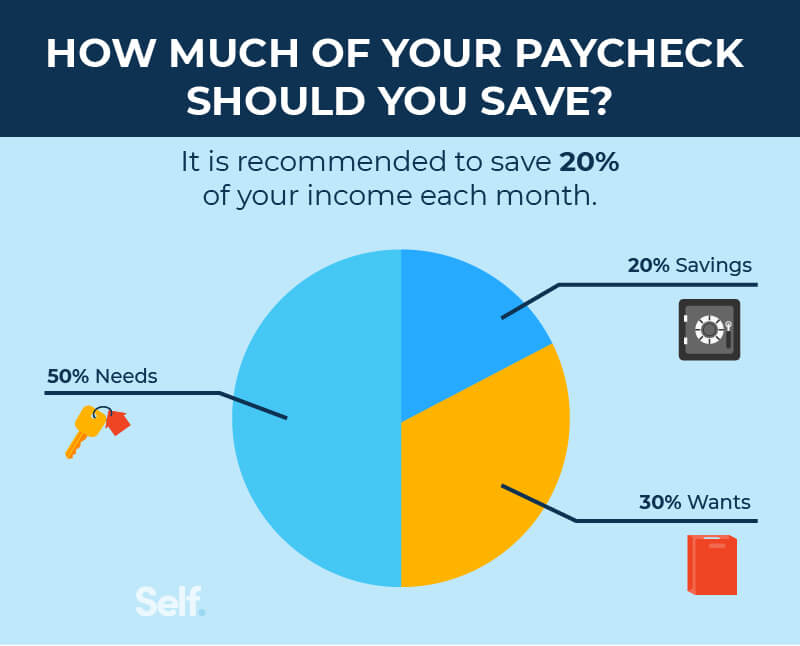
This rule, popularized by Senator Elizabeth Warren and her daughter Amelia Warren Tyagi in their book All Your Worth: The Ultimate Lifetime Money Plan, is one of the most widely cited and practical budgeting frameworks. It suggests dividing your after-tax income into three main categories:
- 50% for Needs: This covers essential living expenses like housing (rent/mortgage), utilities, groceries, transportation, insurance, and minimum loan payments. These are the expenses you cannot avoid.
- 30% for Wants: This category includes discretionary spending that improves your quality of life but isn’t strictly necessary. Examples are dining out, entertainment, hobbies, subscriptions, shopping, and vacations.
- 20% for Savings & Debt Repayment: This is your dedicated allocation for financial growth and security. It includes contributions to an emergency fund, retirement accounts (401k, IRA), investment accounts, and any debt payments beyond the minimums (especially high-interest debt).
The 50/30/20 rule provides a balanced approach, allowing for both current enjoyment and future financial security. If you find your “Needs” category exceeding 50%, it’s a clear signal to re-evaluate your essential expenses, perhaps by downsizing or finding more affordable alternatives.
The 10% or 15% Guideline
A simpler, often recommended starting point for savings is to allocate a fixed percentage of your income specifically to savings. Many financial advisors suggest a minimum of 10% to 15% of your gross income.
- As a Starting Point: If 20% feels too aggressive initially, starting with 10% and gradually increasing it as your income grows or expenses decrease is a sustainable strategy.
- The Power of Consistency: Even small, consistent contributions can accumulate significantly over time due to compound interest. The key is to make it a regular habit.
- Aiming Higher: If your financial goals are ambitious (e.g., early retirement, buying a house in an expensive market), you might need to aim for 20%, 25%, or even more. The younger you start, the less you might need to save percentage-wise, thanks to the longer time horizon for compounding.
The “Age Multiplier” for Retirement
While a percentage of income is good for monthly planning, the “Age Multiplier” provides a long-term benchmark for your total retirement savings. Fidelity, for example, suggests benchmarks like:
- By 30: Have 1x your annual salary saved.
- By 40: Have 3x your annual salary saved.
- By 50: Have 6x your annual salary saved.
- By 60: Have 8x your annual salary saved.
- By 67 (Retirement): Have 10x your annual salary saved.
These are general guidelines and assume a typical retirement age and lifestyle. They highlight the importance of starting early and consistently increasing your contributions over your career. Meeting these milestones indicates you are generally on track for a comfortable retirement.
The Emergency Fund Imperative
Regardless of your other financial goals, building an emergency fund should be your absolute first saving priority. This fund acts as a financial safety net, protecting you from unforeseen circumstances like job loss, medical emergencies, or unexpected home/car repairs, preventing you from going into debt.
- How Much? The consensus typically recommends saving 3 to 6 months’ worth of essential living expenses. If you have a less stable income or dependents, aiming for 6-12 months might be more prudent.
- Where to Keep It? An emergency fund should be easily accessible but separate from your everyday checking account. A high-yield savings account (HYSA) is ideal as it offers liquidity and earns a modest amount of interest. It should not be invested in volatile assets like stocks.
- Why It’s First: Without an emergency fund, any unexpected financial hit can derail your other saving goals and push you into debt, making it harder to get back on track.

Tailoring Your Savings Strategy
Once you understand your financial landscape and are familiar with the common benchmarks, it’s time to create a personalized savings strategy. This isn’t just about how much you save, but also how you save it, and where you put it.
Prioritizing Your Saving Goals
With multiple goals competing for your dollars, prioritization is essential.
- Emergency Fund: As discussed, this comes first. Fully fund your emergency savings before aggressively pursuing other goals.
- High-Interest Debt: If you have credit card debt or personal loans with high interest rates, dedicating extra funds to pay these down is often a more financially savvy move than saving in a low-yield account, as the “return” on debt repayment (avoided interest) is typically much higher.
- Employer-Sponsored Retirement Match: If your employer offers a match on your 401(k) contributions, contribute at least enough to get the full match. This is essentially free money and an immediate, guaranteed return on your investment.
- Long-Term Retirement Savings: Max out tax-advantaged accounts like 401(k)s and IRAs up to annual limits, if feasible. The tax benefits and compounding growth are invaluable.
- Other Goals: Once these foundational elements are in place, allocate remaining funds to other goals like a down payment, children’s education, or specific investments, based on their urgency and importance to you.
Automate Your Savings
One of the most powerful strategies for consistent saving is automation. The principle is simple: “pay yourself first.”
- Set Up Recurring Transfers: Arrange for a fixed amount of money to be automatically transferred from your checking account to your savings or investment accounts on payday.
- Remove Temptation: By automating, you remove the decision-making process each month and the temptation to spend the money before you’ve saved it. If you don’t see the money in your checking account, you’re less likely to spend it.
- Adjust Over Time: As your income increases or your expenses change, adjust your automated savings contributions accordingly. Aim to increase your savings percentage with every raise or bonus.
Optimize Your Budget for Savings
Regularly reviewing and optimizing your budget is crucial for finding extra money to save.
- Identify Areas to Cut: Scrutinize your “wants” category. Can you reduce dining out, cancel unused subscriptions, or find cheaper alternatives for entertainment? Even small cuts can add up.
- Increase Income: If cutting expenses isn’t enough, consider ways to boost your income. This could involve asking for a raise, taking on a side hustle, or exploring passive income streams.
- “Found Money” Strategy: Allocate windfalls like tax refunds, bonuses, or unexpected gifts directly to savings or debt repayment instead of spending them.
- Batch Your Spending: For some variable expenses like groceries or certain purchases, planning ahead and buying in bulk (if it makes sense) can help reduce overall costs.
Different Avenues for Your Savings
Once you’ve decided how much to save, the next step is determining where to put that money. Different financial products serve different purposes and offer varying levels of liquidity, risk, and potential returns. Matching the right account to your goal is key.
High-Yield Savings Accounts (HYSAs)
- Purpose: Ideal for your emergency fund and short-term savings goals (e.g., vacation, new appliance).
- Features: Offer higher interest rates than traditional savings accounts, are FDIC-insured (up to $250,000), and provide easy access to your funds.
- Pros: Low risk, liquid, provides some interest growth.
- Cons: Returns typically don’t keep pace with inflation over the long term, not suitable for long-term growth.
Retirement Accounts (401k, IRA, Roth IRA)
- Purpose: Exclusively for long-term retirement savings.
- Features: Offer significant tax advantages.
- 401(k): Employer-sponsored, pre-tax contributions reduce taxable income now, tax-deferred growth. Many offer employer matching.
- Traditional IRA: Individual account, contributions may be tax-deductible, tax-deferred growth.
- Roth IRA/401(k): After-tax contributions, but qualified withdrawals in retirement are tax-free. Excellent for those who expect to be in a higher tax bracket in retirement.
- Pros: Tax benefits, compound growth over decades, employer match (for 401k) is free money.
- Cons: Funds are generally locked until retirement age without penalties, limited contribution amounts.
Investment Accounts (Brokerage, Robo-Advisors)
- Purpose: For mid-to-long term goals that are not retirement (e.g., house down payment, child’s college fund after 529s are maxed out, general wealth building).
- Features:
- Brokerage Account: A taxable investment account where you can buy stocks, bonds, mutual funds, ETFs, etc. Highly flexible.
- Robo-Advisor: Automated investment services that manage your portfolio based on your risk tolerance and goals, often with low fees.
- Pros: Potential for higher returns than savings accounts, diversification, flexibility.
- Cons: Market volatility and risk of losing principal, taxable gains (unless in a tax-advantaged account like a 529 for education).
Debt Repayment as a Form of Saving
While technically not putting money into a savings account, aggressively paying down high-interest debt is financially equivalent to earning a guaranteed, high-interest return on your money.
- Example: If you pay off a credit card with 20% interest, you are effectively “earning” a 20% return by avoiding that interest. This is often a much higher return than you could get in almost any savings or investment account, especially for shorter periods or guaranteed returns.
- Strategy: Allocate extra funds to debt repayment after establishing an emergency fund and securing any employer match on your 401(k).
Overcoming Saving Challenges and Staying Motivated
Saving is a marathon, not a sprint. There will be times when it feels challenging, but persistent effort and smart strategies can help you stay on track and achieve your financial ambitions.
Dealing with Unexpected Expenses
Life is unpredictable. Your emergency fund is your primary defense against unexpected costs. If a major expense depletes your fund, your immediate priority should shift to rebuilding it. This might mean temporarily pausing contributions to other savings goals or tightening your budget until your emergency fund is replenished. Don’t view these setbacks as failures, but rather as instances where your planning effectively protected you from greater financial distress.
Staying Consistent
Consistency is more important than the amount you save in any single month.
- Start Small: If you can only save a modest amount initially, that’s perfectly fine. The habit of saving is what matters most.
- Automate: As mentioned, automation is your best friend here. Set it and forget it.
- Review and Adjust: Periodically (e.g., quarterly or annually) review your progress. Adjust your savings plan as your income, expenses, and goals evolve. Celebrate milestones to stay motivated – reaching your emergency fund goal, paying off a specific debt, or hitting a retirement savings benchmark.
- Track Your Net Worth: Seeing your net worth (assets minus liabilities) grow over time can be a powerful motivator.
Seeking Professional Advice
While this guide provides a solid foundation, there are times when professional guidance is invaluable.
- Complex Situations: If you have a high income, substantial assets, multiple investment properties, or complex tax situations, a certified financial planner (CFP) can offer tailored advice.
- Estate Planning: Financial advisors can assist with estate planning, ensuring your assets are managed and distributed according to your wishes.
- Major Life Changes: Getting married, having children, starting a business, or inheriting money are all good reasons to consult a professional to adjust your financial plan.
- Lack of Confidence: If you feel overwhelmed or unsure about managing your investments, a robo-advisor or a human financial advisor can provide peace of mind and expert guidance.
Conclusion
Determining “how much should I be saving each month” isn’t about finding a magic number, but rather constructing a personalized financial roadmap. It begins with a clear understanding of your current income and expenses, followed by setting well-defined, measurable financial goals. Leveraging established benchmarks like the 50/30/20 rule or the 10-15% guideline provides excellent starting points, which you can then tailor with precision.
The cornerstone of any successful saving strategy is discipline and consistency. Automating your savings, prioritizing an emergency fund, and strategically allocating funds to retirement and other investment vehicles are critical steps. Remember that debt repayment, especially high-interest debt, can be one of the most effective forms of “saving” by preventing future interest expenditures.
Your financial journey will have its ups and downs, but by committing to a thoughtful savings plan, regularly reviewing your progress, and adapting as life evolves, you empower yourself to achieve significant financial security and realize your most cherished aspirations. Start today, be consistent, and watch your financial future flourish.
aViewFromTheCave is a participant in the Amazon Services LLC Associates Program, an affiliate advertising program designed to provide a means for sites to earn advertising fees by advertising and linking to Amazon.com. Amazon, the Amazon logo, AmazonSupply, and the AmazonSupply logo are trademarks of Amazon.com, Inc. or its affiliates. As an Amazon Associate we earn affiliate commissions from qualifying purchases.