
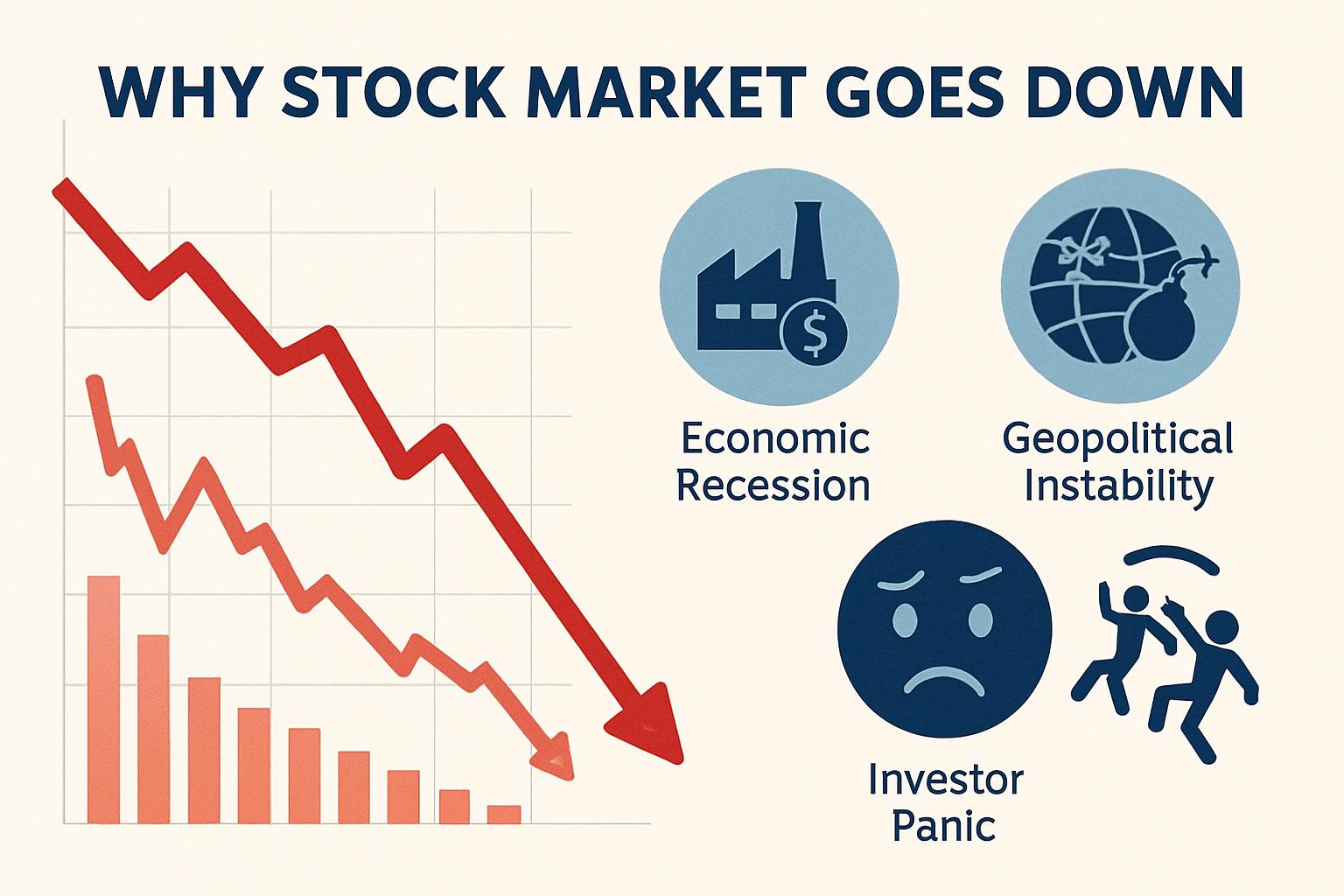
The ebb and flow of financial markets are a constant dance, a complex interplay of economic data, geopolitical events, corporate performance, and human psychology. When the markets take a dive, as they often do, investors are left grappling with the immediate question: “Why?” While the specific catalysts for any given day’s decline can be manifold and often interconnected, a deeper analysis typically reveals underlying macroeconomic trends, geopolitical pressures, corporate fundamentals, and investor sentiment that collectively orchestrate these downturns. Understanding these multifaceted drivers is crucial not just for comprehending the current state of affairs, but also for making informed decisions in a volatile financial landscape.
The Macroeconomic Headwinds Weighing on Investor Sentiment
At the heart of many market downturns are the broader macroeconomic conditions that dictate the health and outlook of global economies. These overarching forces can either fuel growth and confidence or stoke fear and uncertainty, directly impacting asset valuations.
Persistent Inflation and Erosion of Purchasing Power
One of the most insidious threats to economic stability and, consequently, market performance, is persistent inflation. When the cost of goods and services rises steadily, the purchasing power of money erodes. For businesses, higher input costs — raw materials, labor, energy — squeeze profit margins unless they can pass these costs on to consumers. For consumers, their disposable income shrinks, leading to reduced spending, which can slow economic growth. Investors react to inflation fears by shifting capital away from growth stocks, whose future earnings are devalued by higher inflation, and towards assets perceived as inflation hedges, like commodities or real estate, or simply exiting the market in search of safety. The anticipation of continued high inflation often leads to expectations of aggressive monetary policy tightening, further unsettling markets.
Central Bank Policies and Rising Interest Rates
In response to inflation, central banks around the world, most notably the U.S. Federal Reserve, typically resort to tightening monetary policy. The primary tool for this is raising interest rates. While intended to cool an overheating economy and bring inflation under control, rising interest rates have several significant implications for financial markets. Higher rates increase the cost of borrowing for businesses, making capital expenditures and expansion more expensive, which can dampen growth prospects. For consumers, higher rates translate to more expensive mortgages, car loans, and credit card debt, further curbing spending. From an investing perspective, higher interest rates make bonds more attractive relative to equities, as they offer a better risk-free return. This can lead to a rotation out of stocks and into fixed income. Moreover, higher discount rates used in valuation models reduce the present value of future corporate earnings, particularly impacting growth stocks with earnings projected far into the future. The pace and magnitude of these rate hikes, along with guidance on future policy, are meticulously watched by the market, with any hawkish surprises often triggering immediate declines.
Global Economic Slowdown Fears
Beneath the surface of inflation and interest rate concerns often lies the specter of a broader economic slowdown or even a recession. Various indicators, such as declining manufacturing output, weakening consumer confidence, inverted yield curves, and falling corporate earnings, can signal an impending contraction. A global slowdown implies reduced demand for goods and services across borders, impacting multinational corporations and export-oriented economies. Such fears lead investors to anticipate lower corporate revenues and profits, prompting a repricing of assets downwards. The interconnectedness of global economies means that a significant slowdown in one major region, such as China or Europe, can have ripple effects that reverberate across markets worldwide, contributing to widespread bearish sentiment.
Geopolitical Tensions and Supply Chain Disruptions
Beyond the realm of pure economics, geopolitical events and their tangible consequences can introduce profound uncertainty and volatility into financial markets. These external shocks often have far-reaching implications that can disrupt trade, inflate costs, and erode confidence.
Impact of International Conflicts on Commodity Prices
International conflicts, regional instabilities, and diplomatic impasses are potent sources of market anxiety. Wars and sanctions, in particular, can have an immediate and dramatic impact on commodity markets. Energy prices (oil, natural gas) and agricultural commodities (wheat, corn) are particularly vulnerable to supply disruptions caused by conflict in key producing or transit regions. A surge in these prices translates directly into higher operational costs for businesses across virtually every sector and higher living costs for consumers, exacerbating inflation and putting additional pressure on central banks to tighten monetary policy. The uncertainty surrounding the duration and escalation of conflicts also discourages investment, as capital seeks safer havens.
Fragile Global Supply Chains and Manufacturing Output
The COVID-19 pandemic vividly exposed the fragility and complexity of global supply chains. Geopolitical tensions, trade disputes, and even localized lockdowns or natural disasters can severely disrupt the flow of goods and components across borders. When supply chains become snarled, factories face delays, production costs rise, and finished products become scarce, leading to inflationary pressures and reduced corporate output. Companies that rely heavily on international supply chains find their profit margins squeezed, and their ability to meet demand compromised. This can lead to downward revisions in earnings forecasts, prompting investors to sell off shares of affected companies and, by extension, weigh down broader market indices. The effort to reshore or nearshore manufacturing, while offering long-term resilience, can also be costly and inflationary in the short to medium term.
Trade Policies and Currency Volatility
Government trade policies, including tariffs, quotas, and trade agreements, can significantly impact international commerce and corporate profitability. Protectionist measures can disrupt established trade routes, raise import costs, and ignite retaliatory actions, leading to trade wars that harm global economic growth. Furthermore, geopolitical events often trigger currency volatility. When investors perceive a country or region as becoming less stable or its economic outlook deteriorating, they may move capital out, causing its currency to depreciate. Conversely, safe-haven currencies may strengthen. Significant shifts in exchange rates can impact the profitability of multinational corporations, whose earnings are translated back into their home currency, and influence the competitiveness of exports and imports, adding another layer of complexity and risk for investors.
Corporate Earnings, Valuations, and Sector-Specific Challenges
While macroeconomic and geopolitical forces set the broader stage, the specific performance and valuation of individual companies and sectors ultimately dictate stock market movements. Investor sentiment often coalesces around the perceived health and future prospects of the corporate world.
Disappointing Earnings Reports and Future Projections
The lifeblood of the stock market is corporate earnings. When companies report quarterly earnings that fall short of analyst expectations, or worse, issue a pessimistic outlook for future quarters, it often triggers a sell-off in their stock. These disappointments can be due to a myriad of factors: weaker-than-expected sales, higher operating costs, increased competition, or adverse regulatory changes. A string of poor earnings reports across multiple bellwether companies can signal broader economic weakness, dragging down entire sectors or even the broader market. Investors constantly reassess their valuation models based on current and projected earnings, and any negative surprises force a re-evaluation, often resulting in downward adjustments to stock prices.
Overstretched Valuations and the Search for Value
During periods of sustained market exuberance, valuations can become “stretched,” meaning that stock prices rise faster than the underlying earnings growth of companies. This often occurs when investors are willing to pay a premium for future growth potential, sometimes fueled by low interest rates that make future earnings appear more valuable. However, when macroeconomic conditions sour—inflation rises, interest rates increase, or economic growth slows—investors become less willing to pay such premiums. The focus shifts from growth at any cost to profitability and value. Companies with high price-to-earnings (P/E) ratios or other elevated valuation metrics become vulnerable to significant corrections as investors demand a more reasonable price relative to current fundamentals. This re-evaluation often leads to a broad market decline as assets revert to more historically justifiable valuation levels.
Sectoral Weaknesses and Industry-Specific Headwinds
Even when the broader economy is stable, specific sectors can face unique challenges that contribute to market downturns. For instance, a tech sector grappling with regulatory scrutiny, a real estate sector facing rising interest rates and cooling demand, or a consumer discretionary sector hit by reduced consumer spending power. These industry-specific headwinds can stem from technological obsolescence, shifting consumer preferences, increased competition, or regulatory changes. When a major sector, especially one with a heavy weighting in market indices (like technology), experiences significant weakness, its decline can disproportionately impact the overall market, even if other sectors remain relatively robust. Investors may rotate out of these struggling sectors, exacerbating their decline and pulling down market averages.
Investor Psychology, Technical Factors, and Market Mechanics
Beyond the tangible economic and corporate realities, the psychological ebb and flow of investors, combined with technical market factors, play a significant role in determining daily market movements and often amplify trends.
Fear, Uncertainty, and Herd Behavior
Financial markets are not purely rational entities; they are heavily influenced by human emotions. Fear and uncertainty are powerful drivers of selling pressure. When headlines are negative, economic data is poor, or geopolitical tensions escalate, investors tend to become risk-averse. This can lead to “herd behavior,” where individuals, fearing further losses, follow the crowd in selling off assets, regardless of underlying fundamentals. Panic selling can create a downward spiral, as falling prices trigger more selling. Conversely, a lack of clear direction or an abundance of conflicting information can lead to paralysis, with investors holding back capital, thus reducing buying interest and allowing even minor selling to have a disproportionate impact. Investor sentiment indicators, surveys, and anecdotal evidence often reflect this prevailing mood, which can amplify or mitigate market movements.
Technical Breakdowns and Algorithmic Trading
Beyond fundamental analysis, technical analysis plays a role, especially in short-term market movements. Traders and investors often look at chart patterns, moving averages, and support/resistance levels. When key technical support levels are breached, it can trigger automatic selling orders (stop-loss orders), leading to cascading declines. The proliferation of algorithmic trading, where computer programs execute trades based on pre-defined criteria and real-time market data, can accelerate these movements. Algorithms reacting to price changes, volume spikes, or news feeds can exacerbate volatility, turning a modest decline into a rapid sell-off as programmed orders are triggered in quick succession, often without the human element of hesitation or re-evaluation. While designed to enhance efficiency, algorithmic trading can amplify herd behavior in moments of stress.
Liquidity Concerns and Market Depth
Liquidity refers to how easily an asset can be bought or sold without affecting its price. In a healthy, liquid market, there are ample buyers and sellers. However, during periods of heightened uncertainty or significant selling pressure, liquidity can dry up. If there are many sellers but few buyers, even small selling orders can have a substantial impact on prices, as there isn’t enough demand to absorb the supply. This lack of market depth can exacerbate downturns. Certain market structures, such as derivatives markets or leveraged positions, can also introduce systemic risks. A sudden need for collateral or margin calls, triggered by falling asset prices, can force investors to sell other assets to raise cash, creating a feedback loop that further depresses prices across the board.
Navigating the Volatility: A Long-Term Perspective
While the daily fluctuations and underlying reasons for market downturns can be unsettling, understanding the “why” is the first step towards navigating these turbulent waters effectively. Acknowledging the complexity and interconnectedness of economic, geopolitical, corporate, and psychological factors empowers investors to adopt a more resilient and strategic approach.
Diversification as a Key Risk Mitigation Strategy
One of the most fundamental principles of investing is diversification. Spreading investments across different asset classes (equities, bonds, real estate, commodities), geographies, industries, and company sizes can help cushion the blow of downturns in any single area. When one part of a portfolio is struggling due to specific headwinds, other parts might be holding steady or even performing well. Diversification doesn’t eliminate risk, but it helps manage it, ensuring that no single event or factor can decimate an entire portfolio. Rebalancing a diversified portfolio periodically helps maintain the desired asset allocation and risk profile.
The Importance of Fundamental Analysis
In times of market stress, it becomes even more critical to focus on the long-term fundamentals of investments rather than succumbing to short-term noise and fear. For equities, this means scrutinizing a company’s financial health, competitive advantages, management quality, earnings power, and growth prospects. For bonds, it means evaluating creditworthiness and interest rate sensitivity. While market sentiment can drive prices far from intrinsic value in the short run, over the long term, fundamentals tend to prevail. Downturns can often present opportunities for disciplined investors to acquire high-quality assets at more attractive valuations, provided they have done their due diligence.
Patience and Discipline in Challenging Times
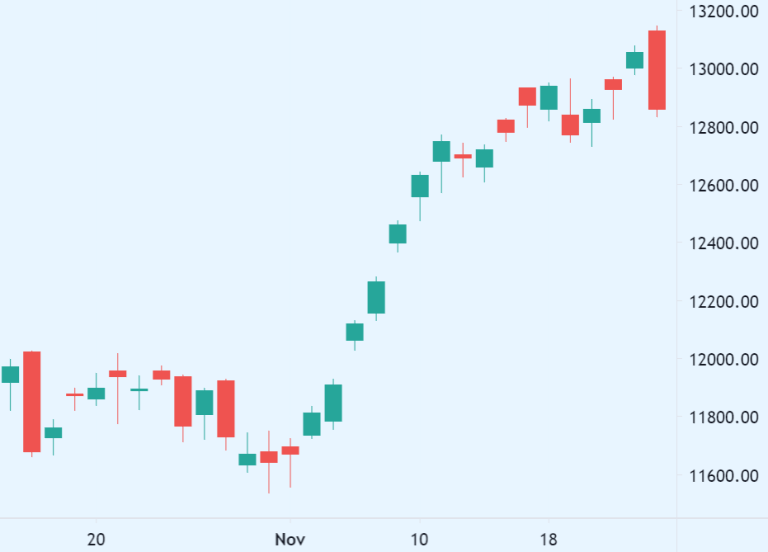
Perhaps the most challenging, yet crucial, advice during market downturns is to exercise patience and maintain discipline. Panicking and selling indiscriminately at the bottom of a market cycle often lock in losses and prevent participation in the eventual recovery. History has shown that markets are cyclical, and even the most severe downturns are eventually followed by periods of recovery and growth. Having a clear investment plan, sticking to it through periods of volatility, and avoiding emotional decisions are hallmarks of successful long-term investing. Rather than reacting impulsively to daily headlines, a long-term perspective allows investors to ride out the storm, often emerging stronger on the other side. Understanding why markets are down today is a step towards cultivating this essential discipline.
aViewFromTheCave is a participant in the Amazon Services LLC Associates Program, an affiliate advertising program designed to provide a means for sites to earn advertising fees by advertising and linking to Amazon.com. Amazon, the Amazon logo, AmazonSupply, and the AmazonSupply logo are trademarks of Amazon.com, Inc. or its affiliates. As an Amazon Associate we earn affiliate commissions from qualifying purchases.