
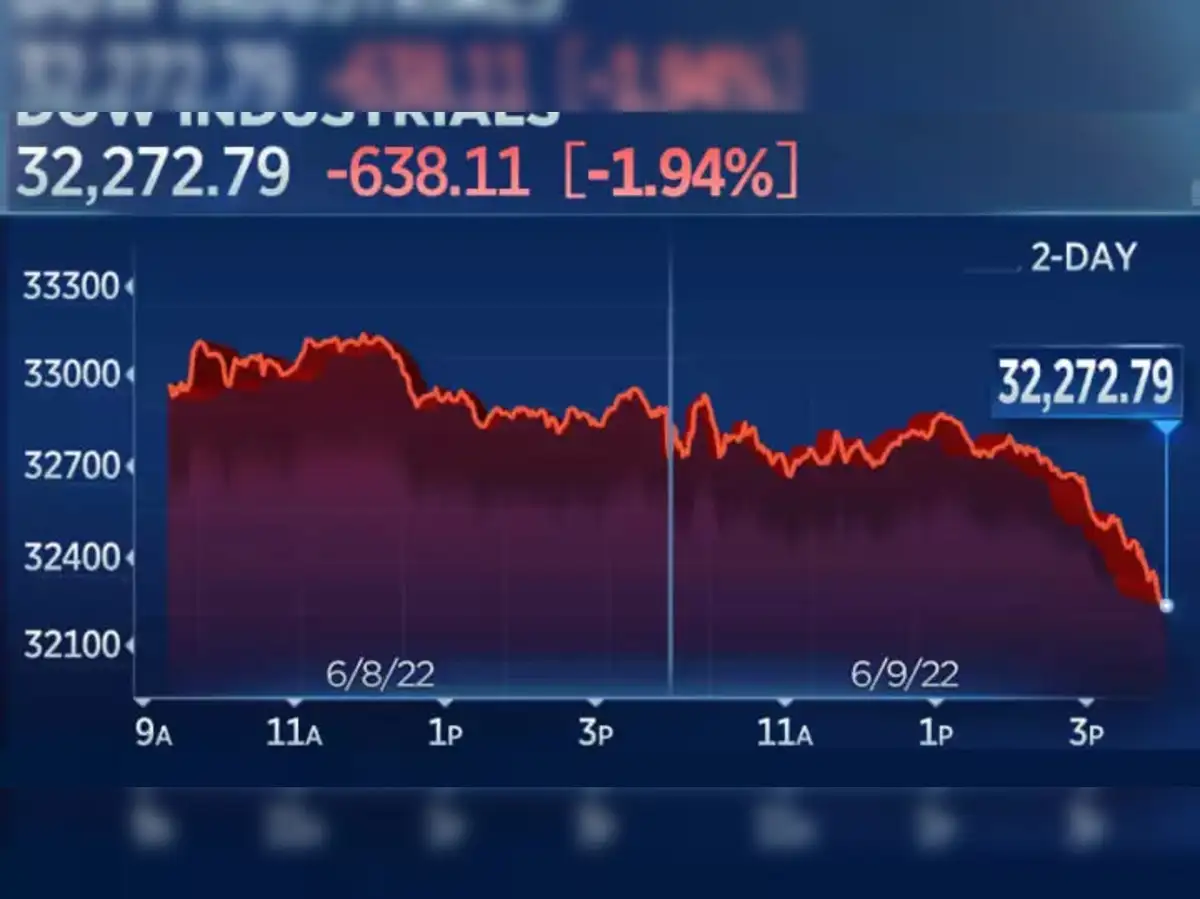
The Dow Jones Industrial Average (DJIA), often simply called “the Dow,” stands as one of the most widely recognized and oldest stock market indices in the world. Representing 30 large, publicly traded U.S. companies across diverse industries, it serves as a crucial barometer for the health of the American economy and the broader market. When the Dow experiences a significant downturn, it triggers widespread concern among investors, financial analysts, and the general public, prompting the inevitable question: “Why is the Dow Jones down?” Understanding the multifaceted reasons behind such movements is essential for investors seeking to navigate market volatility and make informed decisions. Market fluctuations are rarely attributable to a single cause; instead, they typically result from a complex interplay of macroeconomic forces, corporate performance, geopolitical events, and investor sentiment. This article delves into the primary drivers that can lead to a decline in the Dow Jones, offering a comprehensive perspective for those looking to comprehend these market dynamics.

Understanding the Dow Jones Industrial Average (DJIA)
Before dissecting the reasons for its decline, it’s vital to grasp what the Dow represents and why its movements carry such weight. The DJIA is not merely a collection of stocks; it’s a carefully curated index designed to reflect the performance of leading U.S. industrial companies.
What is the DJIA?
The Dow Jones Industrial Average is a price-weighted index, meaning that stocks with higher share prices have a greater impact on the index’s value than those with lower share prices, regardless of their market capitalization. Established in 1896 by Charles Dow, it initially comprised twelve industrial companies. Today, it tracks thirty “blue-chip” companies chosen by the editors of The Wall Street Journal. These companies are generally large, well-established, and financially sound, making them bellwethers for their respective sectors and the economy as a whole. Companies like Apple, Microsoft, Johnson & Johnson, and JPMorgan Chase are perennial components, reflecting a broad spectrum of economic activity from technology and healthcare to finance and consumer goods. While its weighting methodology differs from market-capitalization-weighted indices like the S&P 500, the Dow’s long history and prominent constituents give it significant influence and visibility.
Its Significance as a Market Barometer
The Dow’s movements are closely watched because it’s perceived as a snapshot of the U.S. economic landscape. A rising Dow generally signals economic expansion, robust corporate profits, and strong investor confidence. Conversely, a falling Dow can indicate economic contraction, weakening corporate earnings, or growing pessimism among investors. While some critics argue that its price-weighting and limited number of components make it a less comprehensive indicator than broader indices, its psychological impact and historical relevance are undeniable. Its status as a prominent financial headline means that its performance often shapes public perception about the state of the economy, influencing both consumer and business confidence. Therefore, when the Dow is down, it’s not just an abstract number; it’s often seen as a signal of underlying economic shifts that could affect everyone.
Macroeconomic Factors Driving Downturns
The most potent forces capable of pulling the Dow Jones lower are often macro-level economic trends and global events that impact the entire financial system. These broad strokes can create systemic pressures that no individual company, regardless of its strength, can fully withstand.
Inflationary Pressures and Interest Rate Hikes
One of the most common catalysts for a market downturn is persistent inflation. When the cost of goods and services rises significantly, it erodes purchasing power for consumers and increases operational costs for businesses, ultimately squeezing profit margins. Central banks, particularly the U.S. Federal Reserve, typically respond to high inflation by raising benchmark interest rates. Higher interest rates make borrowing more expensive for businesses, potentially slowing down expansion plans and reducing investment. For consumers, higher rates translate to more expensive loans for homes, cars, and other purchases, which can dampen demand. Furthermore, higher interest rates make fixed-income investments, like bonds, more attractive compared to stocks, as they offer a higher guaranteed return. This can lead investors to reallocate capital away from equities, putting downward pressure on stock prices, and consequently, the Dow. The prospect of an aggressive rate-hiking cycle can trigger significant market corrections as investors brace for slower economic growth and reduced corporate profitability.
Economic Slowdown and Recession Fears
The specter of an economic slowdown or outright recession is a powerful market depressant. A recession is characterized by a significant decline in economic activity spread across the economy, lasting more than a few months, normally visible in real GDP, real income, employment, industrial production, and wholesale-retail sales. Indicators such as declining manufacturing output, weak retail sales, rising unemployment rates, and contraction in the services sector can signal an impending downturn. During such periods, consumer spending typically falls, and businesses face reduced demand for their products and services. This directly impacts corporate earnings, leading to lower stock valuations. Investors often preemptively sell off equities in anticipation of weaker future profits, driving the Dow lower. Recession fears are often intertwined with other macroeconomic concerns, such as high debt levels, asset bubbles, or a global economic contagion, creating a vicious cycle of pessimism and selling pressure.
Geopolitical Instability and Global Events
Beyond purely economic metrics, geopolitical events can inject substantial uncertainty and volatility into financial markets. Wars, trade disputes between major economic powers, political unrest in key regions, terrorist acts, and even large-scale natural disasters can disrupt supply chains, impact commodity prices, and undermine investor confidence. For example, an armed conflict in an oil-producing region could cause crude oil prices to surge, increasing costs for businesses and consumers worldwide. Trade wars can lead to tariffs, making imports more expensive and potentially reducing international trade volumes. Such events create an environment of unpredictability, making it difficult for businesses and investors to plan for the future. This uncertainty often leads to a “risk-off” sentiment, where investors flock to safer assets like government bonds or gold, pulling capital out of equities and contributing to a decline in the Dow. The interconnectedness of the global economy means that a crisis in one part of the world can quickly ripple across borders, affecting even geographically distant markets.
Corporate Performance and Sectoral Headwinds
While macroeconomic factors set the stage, the individual performance of the 30 companies within the Dow Jones Industrial Average also plays a direct role in its movements. Challenges specific to these corporate giants, or the sectors they operate in, can weigh heavily on the index.
Disappointing Earnings Reports and Revenue Guidance
At the heart of stock valuations are a company’s earnings and its future growth prospects. When Dow components release quarterly earnings reports that fall short of analyst expectations, or when they provide weak revenue and profit guidance for upcoming periods, it can trigger a sharp sell-off in their shares. This negative sentiment can spread across the index, especially if several large components report similar woes. Disappointing results might stem from various factors, including decreased consumer demand, increased competition, rising operational costs, or ineffective management strategies. Analysts and investors continually adjust their financial models based on these reports, and a downward revision of future earnings estimates can significantly depress a stock’s price, dragging the Dow down with it. Furthermore, if a bellwether company in a particular sector performs poorly, it can signal broader issues for that entire industry, prompting investors to reassess other companies within the same sector.

Supply Chain Disruptions and Input Costs
Modern globalized supply chains are highly complex and interdependent. Disruptions to these chains, whether from natural disasters, geopolitical conflicts, pandemics, or labor shortages, can severely impact a company’s ability to produce goods and deliver services. Delays in receiving raw materials, components, or finished products can lead to production bottlenecks, lost sales, and increased transportation costs. Similarly, a significant rise in input costs—such as energy, labor, or raw materials—can squeeze profit margins, even if demand remains strong. For instance, a surge in semiconductor prices can cripple the electronics and automotive industries, affecting giants like Apple or Intel. Companies may try to pass these costs onto consumers, but this risks reducing demand. If they absorb the costs, it hits their bottom line. Either scenario can lead to lower profitability, a less attractive investment profile, and subsequent pressure on their stock prices, contributing to a Dow decline.
Sector-Specific Challenges and Regulatory Changes
Sometimes, an entire industry or sector faces unique challenges that specifically impact Dow components operating within that space. This could be due to disruptive technological shifts, changing consumer preferences, or new regulatory frameworks. For example, an unexpected shift in consumer taste away from traditional retail towards e-commerce can hurt retail-focused Dow companies. Similarly, stricter environmental regulations might increase compliance costs for industrial firms, or new antitrust legislation could impact technology giants. Regulatory changes, while sometimes necessary, often introduce uncertainty and can significantly alter a company’s business model or competitive landscape. These sector-specific headwinds can lead to widespread selling within that industry, and if that industry is heavily represented in the Dow, its poor performance can drag the entire index down.
Investor Psychology and Market Sentiment
Beyond the tangible economic data and corporate performance, the collective psychology of investors and the prevailing market sentiment play a profound role in day-to-day and even longer-term market movements. Fear and greed are powerful emotions that can override logical analysis, particularly in times of uncertainty.
Fear, Uncertainty, and Doubt (FUD)
Markets are not purely rational entities; they are driven by human participants. When negative news abounds – whether it’s concerning inflation, potential recession, geopolitical tensions, or corporate scandals – it can foster an environment of Fear, Uncertainty, and Doubt (FUD) among investors. This collective pessimism can lead to panic selling, where investors sell off their holdings not based on fundamental analysis, but on the fear of further losses. The herd mentality often takes over, as investors see others selling and feel compelled to do the same, even if their underlying investments remain fundamentally sound. This downward spiral of selling can accelerate market declines, pushing the Dow lower than what fundamentals alone might suggest. Rumors, misinformation, or even exaggerated media headlines can amplify FUD, leading to irrational market behavior.
Technical Analysis and Market Corrections
Many professional traders and institutional investors use technical analysis to guide their decisions, studying historical price patterns and trading volumes to predict future movements. When key technical support levels are breached, it can trigger automatic sell orders and signal to technically-minded traders that further declines are likely. This can exacerbate downward momentum. A market correction, typically defined as a 10% or more drop from a recent peak, can be a healthy part of the market cycle, often driven by a combination of fundamental concerns and technical triggers. However, these corrections can feel severe to investors, contributing to the FUD mentioned earlier. When the Dow enters correction territory, it often signifies that investors are re-evaluating risk, and this re-evaluation can lead to sustained selling until new support levels are established.
The Role of Media and Information Flow
In the age of instant information, the media plays an outsized role in shaping investor sentiment. Financial news outlets, social media, and online forums can rapidly disseminate information – or misinformation – influencing millions of investors simultaneously. A sensational headline about an economic downturn, a specific company’s struggles, or a looming global crisis can instantly trigger widespread selling. The constant barrage of updates and expert opinions can create a sense of urgency and amplify existing fears, making it difficult for individual investors to maintain a calm, long-term perspective. While transparency in information is crucial, the way it is framed and disseminated can significantly impact market psychology, contributing to volatility and driving the Dow downward in periods of negative news cycles.
Navigating Volatility: A Long-Term Perspective
Understanding why the Dow Jones is down is the first step; the next is knowing how to respond as an investor. Market downturns, while unsettling, are a normal part of the economic cycle and can even present opportunities for those with a long-term investment horizon.
Diversification and Risk Management
One of the most fundamental principles of investing is diversification. Spreading investments across different asset classes (stocks, bonds, real estate), industries, geographies, and company sizes can help mitigate the impact of a downturn in any single area. While the Dow represents large-cap U.S. companies, a diversified portfolio would also include small-cap stocks, international equities, and fixed-income securities. During a stock market downturn, bonds, for example, often perform differently or even inversely, providing a cushion. Risk management also involves understanding one’s own risk tolerance and aligning investment strategies accordingly, ensuring that one is not overexposed to volatile assets when nearing retirement or needing capital. Rebalancing a portfolio periodically to maintain desired asset allocations can help ensure that risk levels remain appropriate, regardless of market movements.
Focusing on Fundamentals
When the Dow is declining and market sentiment is negative, it’s easy to get caught up in the panic. However, seasoned investors emphasize the importance of focusing on the underlying fundamentals of the companies they own. This means evaluating a company’s revenue growth, profit margins, balance sheet health, competitive advantages, and management quality, rather than simply reacting to daily stock price fluctuations. If a company’s fundamentals remain strong despite a temporary market slump, its stock price is likely to recover and grow over the long term. This approach encourages investors to view market dips as temporary noise and to stick with high-quality businesses that have proven resilience and robust long-term prospects. For Dow components, their status as blue-chip companies often implies a certain level of fundamental strength that can weather various economic storms.
Opportunities in Downturns
While a declining Dow can be a cause for concern, it also presents potential opportunities for savvy investors. Market downturns mean that high-quality stocks are trading at lower prices, effectively offering them “on sale.” For investors with available capital and a long-term outlook, these periods can be opportune times to buy into strong companies at attractive valuations. This strategy, often referred to as “buying the dip,” requires courage and conviction but has historically rewarded patient investors. Historically, every major market downturn has eventually been followed by a recovery, often reaching new highs. By maintaining a disciplined investment approach, continuing to invest regularly (e.g., through dollar-cost averaging), and resisting the urge to sell out of fear, investors can position themselves to benefit when the inevitable recovery takes hold. Understanding the reasons behind a Dow decline can help investors differentiate between temporary setbacks and more systemic issues, enabling them to make more strategic decisions during volatile times.
In conclusion, the Dow Jones Industrial Average can decline due to a complex interplay of macroeconomic forces like inflation and recession fears, corporate-specific challenges such as weak earnings and supply chain issues, and the powerful influence of investor psychology. While these downturns can be unsettling, a well-informed investor understands these dynamics, maintains a diversified portfolio, focuses on fundamental value, and views market corrections as potential opportunities for long-term growth. Navigating the inevitable volatility of financial markets requires patience, discipline, and a deep understanding of the forces that drive the Dow.
aViewFromTheCave is a participant in the Amazon Services LLC Associates Program, an affiliate advertising program designed to provide a means for sites to earn advertising fees by advertising and linking to Amazon.com. Amazon, the Amazon logo, AmazonSupply, and the AmazonSupply logo are trademarks of Amazon.com, Inc. or its affiliates. As an Amazon Associate we earn affiliate commissions from qualifying purchases.