
The stock market, often seen as a barometer of economic health and future prospects, is inherently prone to fluctuations. When significant downturns occur, such as a widespread market fall across major indices like the S&P 500, Dow Jones Industrial Average, or NASDAQ, investors, analysts, and the general public alike are eager to understand the underlying causes. A precipitous drop is rarely attributable to a single factor but rather a complex interplay of macroeconomic forces, geopolitical developments, corporate performance, and evolving investor sentiment. Understanding these drivers is crucial for navigating periods of market volatility and making informed financial decisions.
Today’s market decline is likely a confluence of several significant pressures that have been building or have recently intensified. From the persistent challenge of inflation to the ripple effects of central bank monetary policy, and from global supply chain disruptions to shifts in corporate profitability, the landscape for equities is currently fraught with uncertainty. This article delves into the primary factors contributing to current market anxieties, offering a professional and insightful look into the mechanics behind today’s significant drop.
The Interplay of Macroeconomic Headwinds
Macroeconomic conditions form the bedrock upon which stock valuations are built. When this foundation shows cracks, the entire market edifice can tremble. Today’s decline is significantly influenced by a challenging macroeconomic environment characterized by persistent inflationary pressures, aggressive central bank responses, and growing fears of a global economic slowdown.
Inflationary Pressures and Consumer Spending
One of the most insidious threats to economic stability and corporate profitability is stubborn inflation. When the cost of goods and services rises relentlessly, it erodes the purchasing power of consumers and increases input costs for businesses. This dynamic forces consumers to spend more on necessities, leaving less disposable income for discretionary purchases, which can significantly dampen demand across various sectors. For companies, higher costs for raw materials, labor, and transportation eat into profit margins, even if they manage to pass some of these costs onto consumers through higher prices.
The current inflationary environment is complex, stemming from a combination of robust post-pandemic demand, ongoing supply chain bottlenecks, and geopolitical events impacting commodity prices. Persistent high inflation raises concerns that it may become entrenched, requiring even more drastic measures to bring it under control. This uncertainty directly translates into market apprehension, as investors anticipate reduced corporate earnings and a weaker economic outlook. Declining consumer confidence, fueled by inflation, further exacerbates these fears, as consumer spending is a primary driver of economic growth in many developed nations. When consumers tighten their belts, businesses face an uphill battle, often leading to downward revisions in earnings forecasts and, consequently, stock price declines.
Central Bank Policies and Interest Rate Hikes
In response to surging inflation, central banks worldwide, most notably the U.S. Federal Reserve, have embarked on an aggressive campaign of monetary tightening. Their primary tool in combating inflation is raising benchmark interest rates. Higher interest rates increase the cost of borrowing for both businesses and consumers. For businesses, this means higher financing costs for investments, expansion, and day-to-day operations, potentially slowing growth and reducing profitability. For consumers, higher rates translate into more expensive mortgages, car loans, and credit card debt, further dampening demand and discretionary spending.
The market’s reaction to interest rate hikes is often negative for several reasons. Firstly, higher rates increase the “discount rate” used to calculate the present value of future corporate earnings. This mathematically reduces the intrinsic value of stocks, especially growth stocks whose earnings are heavily weighted towards the future. Secondly, higher rates make fixed-income investments, such as bonds, more attractive relative to equities, drawing capital away from the stock market. Thirdly, the speed and magnitude of rate hikes can signal that central banks are willing to risk a recession to control inflation, intensifying fears of an economic downturn. Today’s market fall likely reflects investor anxiety over the pace and ultimate peak of current rate hikes, and the potential for an economic “hard landing.”
Global Economic Slowdown Fears
The cumulative effect of persistent inflation and aggressive monetary tightening is a heightened risk of a global economic slowdown, or even a recession. Major economies facing similar challenges are seeing their growth forecasts downgraded. When the global economy decelerates, it impacts multinational corporations whose revenues and profits are tied to international trade and consumer demand across various regions. Supply chain issues, which were initially thought to be transitory, have shown stubborn persistence, exacerbating inflationary pressures and hindering global manufacturing output.
Moreover, specific regional slowdowns, such as those potentially stemming from ongoing geopolitical tensions or significant policy shifts in large economies, can send ripples across the interconnected global financial system. Investors are keenly watching indicators like manufacturing PMIs, retail sales figures, and GDP growth forecasts for signs of weakness. A slowdown translates to reduced corporate earnings potential, making investors less willing to pay premium valuations for stocks. The fear of a widespread global economic contraction is a potent catalyst for market declines, as it implies a broad-based reduction in profitability and increased financial risk.
Geopolitical Tensions and Supply Chain Disruptions
Beyond the immediate economic data, the geopolitical landscape plays an increasingly significant role in shaping market sentiment and impacting corporate operations. Global conflicts, trade disputes, and lingering supply chain fragilities introduce layers of uncertainty and risk that directly affect financial markets.
Regional Conflicts and Their Global Reverberations
Geopolitical conflicts, even if seemingly localized, can have far-reaching global economic consequences. These events can disrupt critical trade routes, impact energy and commodity markets, and create significant uncertainty that discourages investment. For instance, conflicts involving major energy producers or transit hubs can lead to sharp spikes in oil and gas prices, which then feed into inflationary pressures and increase operational costs for virtually every industry worldwide. Such price shocks act as a tax on consumers and businesses, further contributing to economic slowdowns.
Furthermore, geopolitical tensions can trigger shifts in international alliances and trade policies, leading to tariffs, sanctions, and restrictions that fragment global commerce. Companies with extensive international operations or complex global supply chains are particularly vulnerable to these disruptions. The prospect of escalating conflicts or prolonged instability injects a high degree of unpredictability into market forecasts, prompting investors to de-risk their portfolios by selling off equities perceived as vulnerable to these external shocks. The current market decline may reflect a re-evaluation of geopolitical risks and their potential for long-term economic disruption.
Energy Market Volatility
Energy prices are a critical input cost for nearly all economic activity. Volatility in the energy markets, whether driven by geopolitical events, supply constraints, or demand fluctuations, has a profound impact on inflation and corporate profitability. When oil and gas prices spike, it directly increases the cost of transportation, manufacturing, and heating for both businesses and consumers. This “energy tax” drains disposable income and reduces corporate margins, especially for energy-intensive industries.
Today’s market fall might be exacerbated by particular concerns around energy security or renewed upward pressure on crude oil and natural gas prices. Speculation, inventory levels, OPEC+ decisions, and the stability of key producing regions all contribute to this volatility. Higher energy costs not only fuel inflation but also present a direct challenge to corporate bottom lines, forcing companies to absorb costs, reduce production, or pass expenses onto consumers, potentially stifling demand further. Investors react to this by anticipating lower earnings and slower economic growth, leading to a sell-off in risk assets.
Supply Chain Fragilities and Corporate Margins
The global supply chain, once largely taken for granted, has proven surprisingly fragile in recent years. While some immediate post-pandemic bottlenecks have eased, new disruptions continually emerge, whether from geopolitical events, labor shortages, natural disasters, or industrial policy shifts. These fragilities mean that companies struggle with inconsistent access to critical components, raw materials, and finished goods, leading to production delays, increased logistics costs, and inventory challenges.
For businesses, unreliable supply chains translate directly into higher operational costs, reduced efficiency, and potential lost sales. Companies may be forced to carry higher inventory levels (tying up capital), diversify suppliers (potentially at higher costs), or even re-shore production (which can be expensive and time-consuming). All these measures impact corporate margins and profitability. Investors, observing these persistent challenges, factor in lower expected earnings and increased operational risk, which can trigger a broad market sell-off. The lingering effects of supply chain issues are a significant headwind for corporate profitability and a contributing factor to the current market jitters.
Corporate Performance and Investor Sentiment
Ultimately, stock market movements are driven by the collective assessment of corporate earnings potential and investor confidence. When earnings disappoint or sentiment sours, even otherwise sound companies can see their stock prices fall.
Disappointing Earnings and Future Guidance
The lifeblood of stock market valuations is corporate earnings. Strong, consistent earnings growth is typically rewarded with higher stock prices, while disappointing results or bleak future guidance can trigger sharp declines. Companies are currently navigating a challenging environment marked by high inflation, rising interest rates, and uncertain demand. This complexity makes it difficult for many firms to maintain robust profit margins or even meet analysts’ earnings expectations.
When companies report quarterly results that miss consensus estimates, or more critically, when they lower their future earnings guidance, it sends a negative signal across the market. Lowered guidance suggests that management anticipates more difficult operating conditions ahead, whether due to slowing consumer demand, increasing input costs, or other macroeconomic headwinds. Investors react by re-evaluating the intrinsic value of these companies, often leading to a sell-off. A series of disappointing earnings reports from bellwether companies or across a broad range of sectors can cascade into a wider market downturn, as investors extrapolate these challenges across the economy.
Valuation Concerns and Profit-Taking
Periods of sustained market growth often lead to elevated stock valuations, where share prices trade at higher multiples relative to earnings, sales, or book value. While high valuations can be justified by strong growth prospects or low interest rates, they become vulnerable when economic conditions deteriorate or interest rates rise. Higher interest rates make future earnings less valuable in present terms and also make fixed-income investments more attractive, prompting a re-evaluation of risk assets.
In an environment of economic uncertainty and rising rates, investors become more scrutinizing of high-multiple stocks. Many investors may decide to take profits from positions that have performed well in previous bull markets, especially if they perceive that the risk-reward balance has shifted unfavorably. This profit-taking activity, particularly in overvalued sectors, can contribute to a broad market correction. The current market fall may reflect a necessary recalibration of valuations to better align with revised earnings expectations and a higher-interest-rate environment, as investors become less willing to pay premium prices for uncertain future growth.
The Role of Investor Psychology and Market Fear
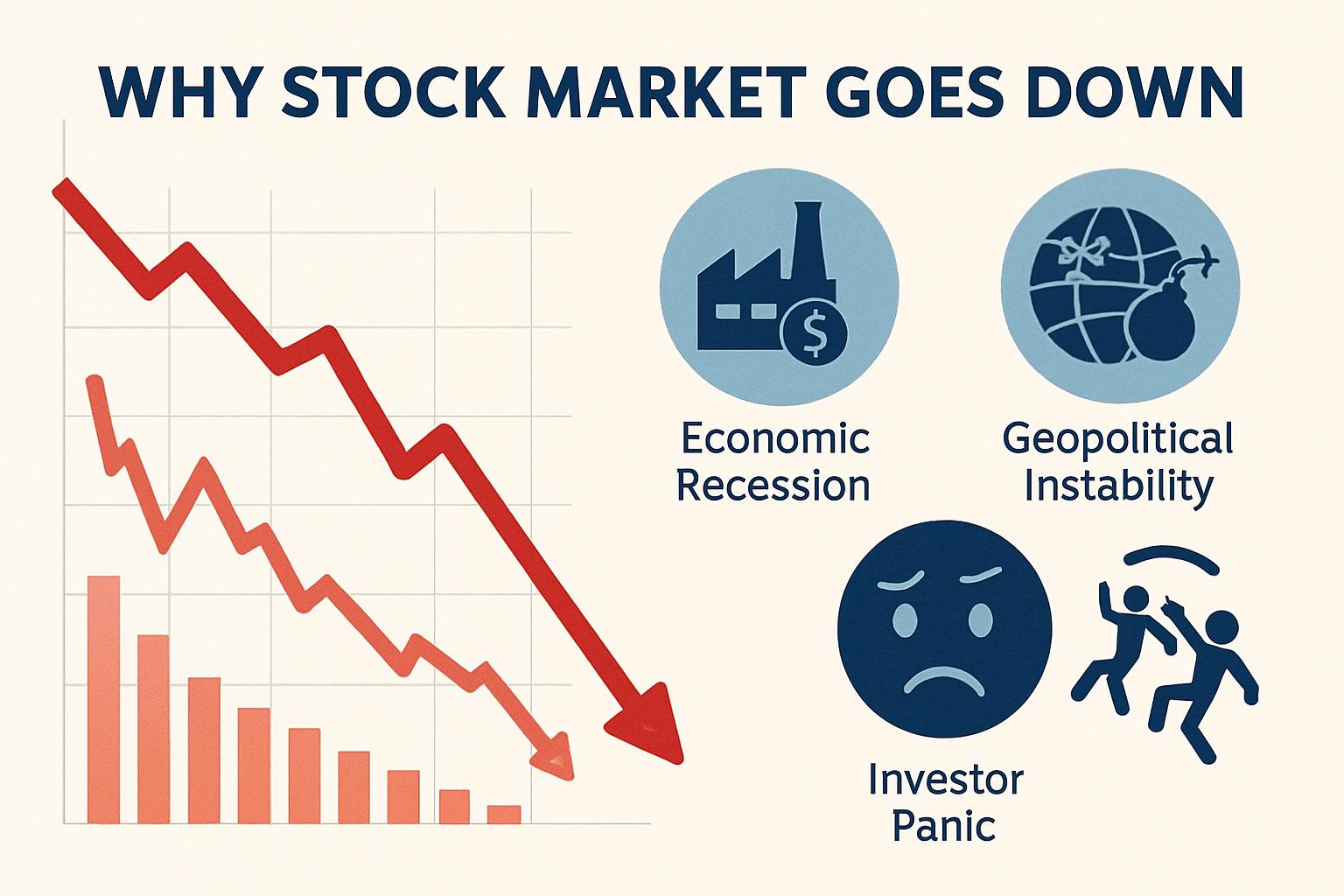
While economic fundamentals and corporate performance provide the logical framework for market movements, investor psychology plays a powerful, often irrational, role. Fear and greed are potent emotions that can amplify market trends. During periods of uncertainty, fear can become contagious, leading to panic selling, where investors sell off assets irrespective of their underlying value. This herd mentality can exacerbate downturns, pushing prices below levels justified by fundamentals alone.
News headlines highlighting negative economic data, geopolitical tensions, or corporate distress can trigger a wave of negative sentiment. As more investors sell, it creates downward momentum, prompting even long-term holders to reconsider their positions. Margin calls, where brokers demand additional funds from investors who borrowed money to buy securities that have fallen in value, can force further selling, creating a vicious cycle. The current market fall might be partly driven by this psychological dynamic, where initial economic concerns have spiraled into broader market fear, leading to an accelerated sell-off as investors rush for the exits.
Navigating the Downturn: Strategies for Investors
While market downturns can be unsettling, they are a normal part of the economic cycle. For long-term investors, understanding the drivers of the fall and maintaining a disciplined approach can transform periods of volatility into opportunities.
Long-Term Perspective and Dollar-Cost Averaging
One of the most effective strategies during a market downturn is to maintain a long-term perspective. Historically, stock markets have recovered from every bear market and gone on to reach new highs. Panicking and selling off investments at the bottom locks in losses and prevents participation in the eventual recovery. Instead, investors should focus on their long-term financial goals and investment horizon.
Dollar-cost averaging is a particularly valuable technique in volatile markets. This involves investing a fixed amount of money at regular intervals, regardless of the market’s performance. When prices are high, your fixed investment buys fewer shares; when prices are low (during a downturn), it buys more shares. Over time, this strategy averages out the purchase price, reducing the risk of buying at a market peak and potentially yielding better returns than attempting to time the market. A falling market, viewed through this lens, presents an opportunity to acquire quality assets at reduced prices.
Diversification and Portfolio Rebalancing
Diversification remains a cornerstone of prudent investing, especially during turbulent times. A well-diversified portfolio spreads risk across various asset classes (stocks, bonds, real estate, commodities), industries, geographies, and company sizes. When one part of the portfolio is underperforming, others may be holding steady or even gaining, thus mitigating overall losses. During a market fall, some sectors or asset classes may be disproportionately affected, while others, like certain defensive stocks or high-quality bonds, might offer more stability.
Portfolio rebalancing is the practice of adjusting your portfolio back to its original target asset allocation. A significant market downturn might cause your equity allocation to shrink as stock values fall. Rebalancing would involve selling some assets that have performed relatively better (if any) and buying more of those that have fallen, bringing your portfolio back into line with your risk tolerance and financial goals. This strategy forces investors to “buy low” and “sell high,” albeit indirectly, and ensures the portfolio remains appropriately diversified for future market conditions.

The Importance of Cash and Value Investing
In a volatile market, having a strategic cash reserve is vital. Cash provides liquidity for emergencies, but also offers the flexibility to seize opportunities when attractive investment options emerge at discounted prices. While inflation erodes the value of cash over time, a modest reserve can prevent forced selling of investments during a downturn and empower opportunistic buying.
Value investing, championed by legendary investors like Warren Buffett, becomes particularly relevant during market corrections. This approach focuses on identifying companies whose intrinsic value is greater than their current market price. During a broad market sell-off, many high-quality companies may be unfairly punished, presenting opportunities to acquire shares at a discount. Value investors focus on strong balance sheets, consistent earnings, sustainable competitive advantages, and reasonable debt levels, rather than speculative growth. While growth stocks may suffer more in a rising interest rate environment, solid value companies with robust fundamentals can offer resilience and long-term appreciation potential.
The stock market’s current decline is a complex phenomenon driven by a confluence of macroeconomic pressures, geopolitical uncertainties, corporate performance challenges, and shifts in investor psychology. While understanding these drivers is crucial, equally important is adopting a disciplined, long-term investment strategy. By embracing diversification, practicing dollar-cost averaging, maintaining a strategic cash position, and focusing on quality value investments, investors can navigate the current volatility and position themselves for future market recoveries.
aViewFromTheCave is a participant in the Amazon Services LLC Associates Program, an affiliate advertising program designed to provide a means for sites to earn advertising fees by advertising and linking to Amazon.com. Amazon, the Amazon logo, AmazonSupply, and the AmazonSupply logo are trademarks of Amazon.com, Inc. or its affiliates. As an Amazon Associate we earn affiliate commissions from qualifying purchases.