
The financial markets are a complex, interconnected system, often reflecting a mosaic of global economic, geopolitical, and psychological factors. When markets experience a significant downturn, particularly across multiple asset classes, it’s rarely due to a single, isolated event. Instead, it’s typically the culmination of various pressures that erode investor confidence and trigger a widespread re-evaluation of risk and asset valuations. Understanding these underlying drivers is crucial for both seasoned investors and those new to the financial landscape, providing context and helping to inform rational decision-making amidst volatility.
A market drop can be unnerving, leading to widespread anxiety and a natural inclination to seek immediate answers. Is it inflation? A looming recession? Geopolitical conflict? The truth is often a nuanced combination. This article will delve into the primary forces at play when markets experience a significant decline, dissecting the macroeconomic headwinds, corporate performance issues, and crucial psychological factors that contribute to these challenging periods. By understanding these dynamics, investors can better equip themselves to navigate turbulent waters and position themselves for long-term financial resilience.
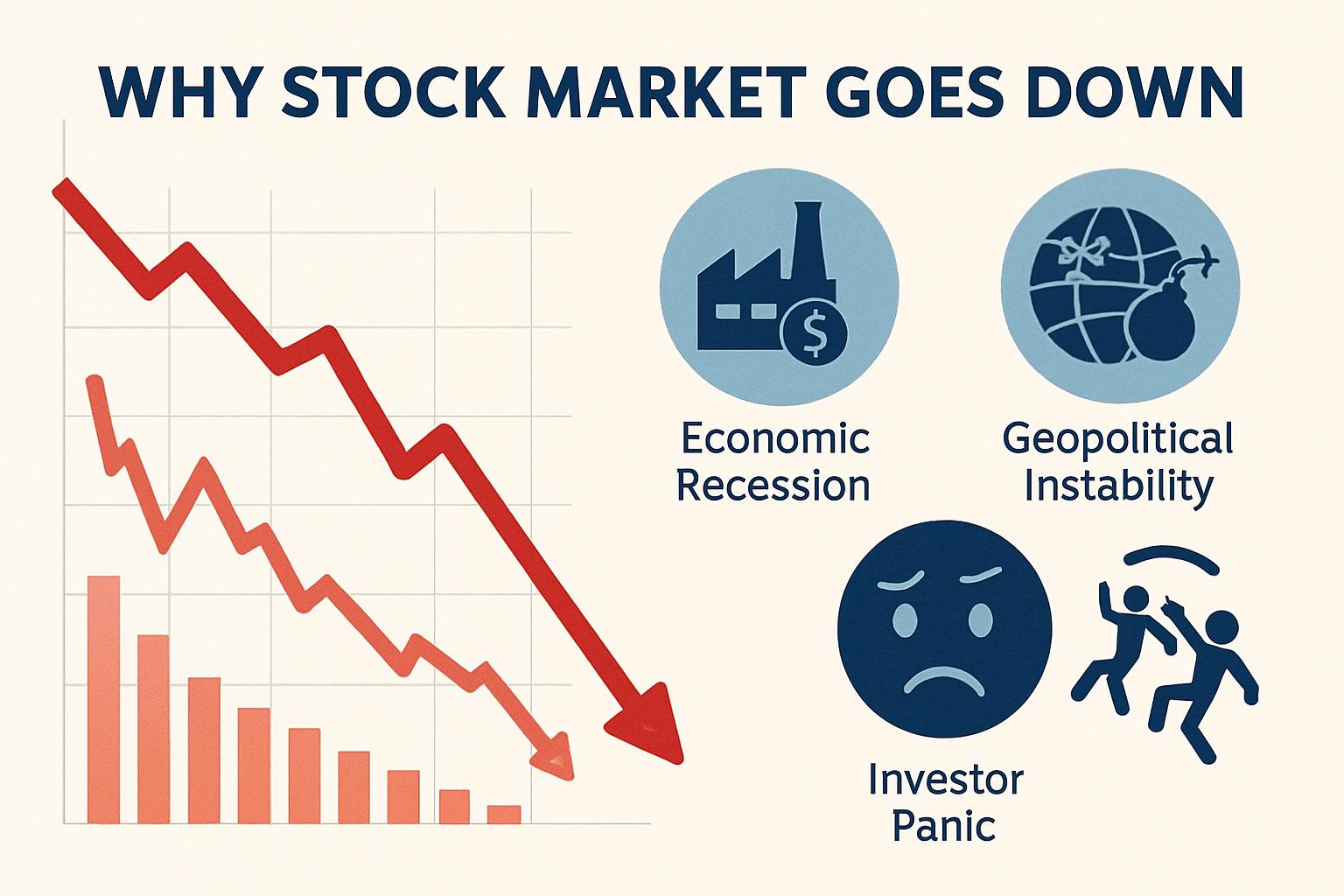
Macroeconomic Headwinds and Their Impact on Valuations
The broader economic environment forms the fundamental backdrop against which financial markets operate. Significant shifts in macroeconomic indicators can quickly translate into widespread selling pressure as investors anticipate changes in corporate earnings, consumer spending, and the overall economic outlook.
Inflationary Pressures and Interest Rate Hikes
One of the most persistent and significant threats to market stability in recent times has been surging inflation. When the cost of goods and services rises rapidly, it erodes the purchasing power of consumers and increases the operational costs for businesses, ultimately squeezing profit margins. Central banks, tasked with maintaining price stability, typically respond to high inflation by raising benchmark interest rates.
These rate hikes have a cascading effect on the economy and financial markets. Firstly, they increase the cost of borrowing for both businesses and individuals. Companies face higher interest payments on their debt, which can dampen investment, slow expansion plans, and reduce profitability. For consumers, higher interest rates translate to more expensive mortgages, car loans, and credit card debt, leading to reduced discretionary spending. Secondly, higher interest rates make fixed-income investments, such as bonds, more attractive relative to equities, particularly growth stocks whose valuations are heavily dependent on future earnings discounted at a higher rate. This “re-rating” of assets can cause a significant rotation out of riskier assets and into safer havens, driving down stock prices. The prospect of sustained higher rates can also lead to a general cooling of economic activity, increasing the risk of a recession.
Geopolitical Tensions and Supply Chain Disruptions
Global political instability and conflicts can send immediate shockwaves through financial markets. Events such as wars, trade disputes, or significant policy shifts in major economies introduce a high degree of uncertainty, making it difficult for businesses and investors to plan for the future. This uncertainty often leads to a “flight to safety,” where investors pull capital from riskier assets like stocks and invest in traditionally safer assets such as gold, government bonds, or certain stable currencies.
Furthermore, geopolitical events often exacerbate or create new supply chain disruptions. The free flow of goods and services across borders is essential for modern globalized economies. When this flow is hampered by conflict, sanctions, or logistical challenges, it can lead to shortages of key components, raw materials, or finished products. These disruptions drive up production costs, reduce corporate profitability, and can fuel inflation, creating a negative feedback loop that further pressures markets. Companies dependent on specific global supply chains can see their earnings forecasts downgraded, directly impacting their stock valuations.
Economic Slowdown Fears and Recession Risks
A pervasive fear of an economic slowdown or outright recession is a powerful catalyst for market downturns. Investors are constantly trying to discount future economic conditions into current asset prices. When leading economic indicators begin to flash warning signs – such as declining manufacturing output, slowing retail sales, a fall in consumer confidence, or an inverted yield curve (where short-term bond yields are higher than long-term yields, historically a reliable recession predictor) – markets react negatively.
The anticipation of an economic contraction means lower corporate earnings, higher unemployment, and reduced demand. Companies that thrive in periods of robust growth suddenly face headwinds, leading analysts to revise down their earnings estimates. This downward revision directly impacts stock valuations, as a company’s stock price is fundamentally linked to its future earnings potential. During such periods, investors tend to de-risk their portfolios, selling off cyclical stocks (companies whose fortunes are closely tied to economic cycles) and even some growth stocks, in favor of defensive sectors (like utilities or consumer staples) or cash. The collective action of investors adjusting their portfolios in anticipation of a recession can create a self-fulfilling prophecy, accelerating the market’s decline.
Corporate Performance and Sector-Specific Challenges
While macroeconomic factors set the stage, the performance of individual companies and specific industries plays a critical role in shaping market sentiment and driving specific sector or broader market movements. Even in a generally stable economic environment, issues within corporate America can trigger significant selling.
Disappointing Earnings Reports
The quarterly earnings season is a crucial period for the stock market. Companies report on their financial performance, providing insights into revenue, profits, and future outlook. When a significant number of bellwether companies or those within a dominant sector fail to meet analyst expectations for earnings or revenue, it can trigger widespread market disappointment. These misses suggest that previous growth assumptions were too optimistic, leading to a re-evaluation of future profitability across similar companies or the entire market.
Beyond just the numbers, forward-looking guidance from company management is equally critical. If companies project a cautious outlook for the coming quarters, citing rising costs, slowing demand, or supply chain issues, it signals potential headwinds for future earnings. Such guidance can be more impactful than past results, as investors trade on future expectations. A cascade of negative guidance from several major firms can quickly dampen overall market sentiment, leading to broad-based selling as investors adjust their models and reduce their exposure to equities.
Regulatory Changes and Policy Uncertainty
Governments and regulatory bodies have a significant influence over industries through policy decisions and new regulations. Unexpected or drastic changes in these areas can create substantial uncertainty and directly impact the profitability and operational models of businesses, causing their stock prices to drop. For instance, stricter environmental regulations might increase compliance costs for manufacturing firms, or new antitrust measures could threaten the market dominance and profit margins of tech giants.
Policy uncertainty refers to situations where future government actions are unclear. This can stem from upcoming elections, debates over significant legislative proposals, or shifts in geopolitical alliances. When companies are unsure about the regulatory landscape they will operate in, it can lead to delayed investment decisions, reduced capital expenditure, and a more cautious approach to growth. This stagnation, fueled by uncertainty, can make investors wary, leading them to sell off shares in affected sectors or even the broader market as they prefer clarity and stability.
Industry-Specific Weaknesses
While some market drops are broad, others originate from specific weaknesses within particular industries. For example, a downturn in the technology sector might be driven by rising interest rates that disproportionately affect growth stocks (whose value is heavily weighted towards future earnings), a slowdown in venture capital funding, or saturation in certain product categories. Similarly, the energy sector is highly volatile, susceptible to swings in commodity prices, geopolitical events impacting oil supply, or shifts in renewable energy policy.
Each industry has its unique set of vulnerabilities. Healthcare might be impacted by drug pricing debates, while retail could suffer from shifts in consumer spending habits or increased competition from e-commerce. When a major industry, especially one with a large market capitalization, faces significant headwinds, it can drag down overall market indices. Investors may rotate out of the struggling sector into more resilient ones, but the overall effect on indices like the S&P 500 can still be negative due to the sheer weight of the affected companies.
Investor Psychology and Market Dynamics

Beyond fundamental economic and corporate factors, the collective behavior and psychological biases of investors play a profound role in market movements, often amplifying both rallies and declines. Emotional responses and market mechanics can transform a mild correction into a more significant downturn.
Fear, Panic, and Herd Mentality
Financial markets are not purely rational entities; they are driven by human participants whose decisions are influenced by emotions. When markets begin to drop, fear can quickly set in. The fear of losing capital can lead investors to sell their holdings, even at a loss, rather than risk further declines. This initial wave of selling can trigger more selling as others observe the downward trend and succumb to the same fears, creating a “panic selling” scenario.
This phenomenon is often compounded by “herd mentality,” where individual investors or institutions follow the actions of the majority, even if those actions contradict their own rational analysis or long-term investment strategy. If everyone else is selling, there’s a strong psychological pull to join in, lest one be left holding assets that continue to fall in value. This collective, emotionally charged behavior can create a downward spiral, pushing prices far below their fundamental value and accelerating the market drop beyond what underlying economic conditions might initially suggest.
Technical Factors and Algorithmic Trading
Modern markets are also heavily influenced by technical factors and the pervasive presence of algorithmic trading. Technical analysis involves studying past market data, primarily price and volume, to identify patterns and predict future movements. When key technical support levels (price points where buying interest has historically emerged) are broken during a downturn, it can trigger further selling as traders who rely on these indicators close positions or initiate new short trades.
Algorithmic trading, which involves computer programs executing trades based on predefined rules and market conditions, amplifies these technical movements. If algorithms are programmed to sell when certain price thresholds are crossed, or when volatility spikes, they can execute massive sell orders far faster than human traders. This can create rapid, dramatic drops in prices, sometimes without any immediate fundamental news, exacerbating market volatility and accelerating the downward trend. The speed and scale of algorithmic trading mean that small downturns can quickly be amplified into significant drops as automated systems react instantly to market signals.
Liquidity Concerns and Margin Calls
Market liquidity refers to the ease with which an asset can be bought or sold without significantly affecting its price. During periods of intense market stress, liquidity can quickly dry up. If there are far more sellers than buyers, it becomes difficult to execute trades without accepting significantly lower prices, further pushing down asset values. Illiquidity can turn a sharp drop into a steeper decline.
Margin calls are another potent accelerant of market downturns. Many investors use borrowed money (margin) to purchase securities. If the value of these securities falls below a certain threshold, brokers issue a “margin call,” requiring the investor to deposit additional funds or sell off existing holdings to bring their account back into compliance. If an investor cannot meet a margin call, their broker will forcibly sell assets from their account. A wave of margin calls, particularly among highly leveraged investors, can lead to forced selling that further depresses prices, creating a vicious cycle of falling asset values and increasing margin calls across the market.
Navigating a Down Market: Strategies for Investors
While market drops can be unsettling, they are a normal and inevitable part of the investment cycle. Historically, markets have always recovered and reached new highs over the long term. For discerning investors, downturns can even present unique opportunities.
Long-Term Perspective and Diversification
The most crucial strategy during a down market is to maintain a long-term perspective. Panicking and selling during a downturn often locks in losses and prevents participation in the inevitable recovery. Instead, investors should remember their original investment goals and time horizons. For long-term goals like retirement, short-term market fluctuations are less significant than the cumulative growth over decades.
Diversification remains a bedrock principle of investing. A well-diversified portfolio, spread across different asset classes (equities, bonds, real estate, commodities), geographies, and sectors, helps to mitigate risk. While a broad market drop might impact all assets, some will typically perform better than others, cushioning the overall portfolio. It’s also important to diversify within equities, avoiding overconcentration in a single stock or sector, as industry-specific weaknesses can be particularly painful.
Rebalancing and Dollar-Cost Averaging
A down market provides an excellent opportunity for portfolio rebalancing. If some assets have fallen significantly, they might now represent a smaller portion of your portfolio than initially intended. Rebalancing involves selling some assets that have performed relatively well and buying more of those that have underperformed, bringing your portfolio back to its target asset allocation. This strategy inherently involves buying low and selling high.
Dollar-cost averaging is another powerful strategy for down markets. This involves investing a fixed amount of money at regular intervals, regardless of market conditions. When prices are high, your fixed investment buys fewer shares; when prices are low, it buys more. Over time, this strategy averages out your purchase price, reducing the risk of making a large investment at an unfavorable peak. In a falling market, dollar-cost averaging allows investors to acquire more shares at lower prices, setting them up for greater returns when the market eventually recovers.
Cash Reserves and Opportunity
Having adequate cash reserves is prudent financial planning in any environment, but it becomes particularly valuable during a market downturn. A strong emergency fund ensures that you don’t have to sell investments at a loss to cover unexpected expenses. Beyond that, having some “dry powder” (cash available for investment) allows you to capitalize on opportunities when market valuations become more attractive.
When markets drop, many high-quality companies may see their stock prices fall below their intrinsic value. For investors with available cash, this presents an opportunity to buy these assets “on sale.” This contrarian approach – being greedy when others are fearful – requires discipline but can lead to substantial long-term gains. Identifying fundamentally sound companies whose stock prices have been indiscriminately hit by broader market sentiment can be a key to successful investing during volatile periods.
Professional Guidance and Emotional Discipline
Navigating complex market conditions can be emotionally taxing. The constant stream of negative news, the sight of portfolio values declining, and the general uncertainty can lead even experienced investors to make rash decisions. This is where professional financial guidance becomes invaluable. A qualified financial advisor can help create a personalized investment plan, review your risk tolerance, and provide objective advice based on your long-term goals, rather than short-term market noise.
Ultimately, emotional discipline is paramount. Resisting the urge to panic sell, sticking to a well-thought-out investment plan, and focusing on long-term objectives are critical for weathering market storms. Understanding that market drops are temporary, cyclical events, and that patience is often the most profitable investment strategy, will serve investors well through any period of market volatility.

Conclusion
Market drops are an inherent feature of the financial landscape, driven by a confluence of macroeconomic forces, corporate performance issues, and the powerful dynamics of investor psychology. Whether it’s the specter of inflation and rising interest rates, the uncertainty of geopolitical tensions, disappointing earnings, or the collective fear of a herd mentality, these factors combine to create periods of significant market contraction.
While such downturns can be unsettling, they are also a crucial mechanism for recalibrating valuations and presenting opportunities for resilient, long-term investors. By understanding the multifaceted reasons behind market drops, maintaining a diversified portfolio, embracing strategies like dollar-cost averaging, and exercising emotional discipline, investors can not only survive these periods but also position themselves for stronger future growth. The key is to view volatility not as a reason for panic, but as a normal part of the economic cycle that, when navigated wisely, can be leveraged for long-term financial success.
aViewFromTheCave is a participant in the Amazon Services LLC Associates Program, an affiliate advertising program designed to provide a means for sites to earn advertising fees by advertising and linking to Amazon.com. Amazon, the Amazon logo, AmazonSupply, and the AmazonSupply logo are trademarks of Amazon.com, Inc. or its affiliates. As an Amazon Associate we earn affiliate commissions from qualifying purchases.