
The world of financial markets can often seem like a complex labyrinth, filled with specialized terminology and intricate instruments. Among the most powerful, yet often misunderstood, tools available to investors and traders are stock market futures. Far from being a niche concept, futures contracts play a crucial role in modern finance, offering unique opportunities for hedging, speculation, and price discovery. Understanding them is paramount for anyone looking to deepen their grasp of the capital markets, manage risk, or potentially capitalize on future price movements.
At its core, a stock market future is a standardized legal agreement to buy or sell a specific financial instrument or commodity at a predetermined price on a specified date in the future. While the concept extends to various assets like oil, gold, or agricultural products, stock market futures specifically pertain to underlying assets tied to the stock market, most commonly stock indexes. Unlike buying a share of stock outright, which represents ownership in a company, a futures contract is an obligation to transact at a later time, with its value deriving from the expected future price of its underlying asset. This forward-looking nature, combined with inherent leverage, makes them a distinct and powerful financial derivative.
Understanding the Fundamentals of Stock Market Futures
To truly grasp the significance and functionality of stock market futures, one must first lay a solid foundation of their basic principles. They are not merely an alternative to stocks but represent a fundamentally different approach to market participation, with their own set of rules, benefits, and risks.
Defining Futures Contracts
A futures contract is essentially a forward agreement that is traded on an organized exchange. This standardization is key, as it dictates the quality, quantity, delivery location (if physical), and most importantly, the expiration date of the contract. For stock market futures, the underlying asset is typically a stock index, such as the S&P 500, Nasdaq 100, or Dow Jones Industrial Average, rather than individual company stocks. When you “buy” a futures contract, you are agreeing to purchase the value of that index at a certain price on a future date. Conversely, when you “sell” a futures contract, you are agreeing to sell the value of that index. The actual exchange of the underlying index itself rarely occurs; instead, most futures contracts are cash-settled, meaning profits and losses are exchanged in cash at expiration. This makes them highly liquid and efficient instruments for speculating on broader market movements or hedging against portfolio risk.
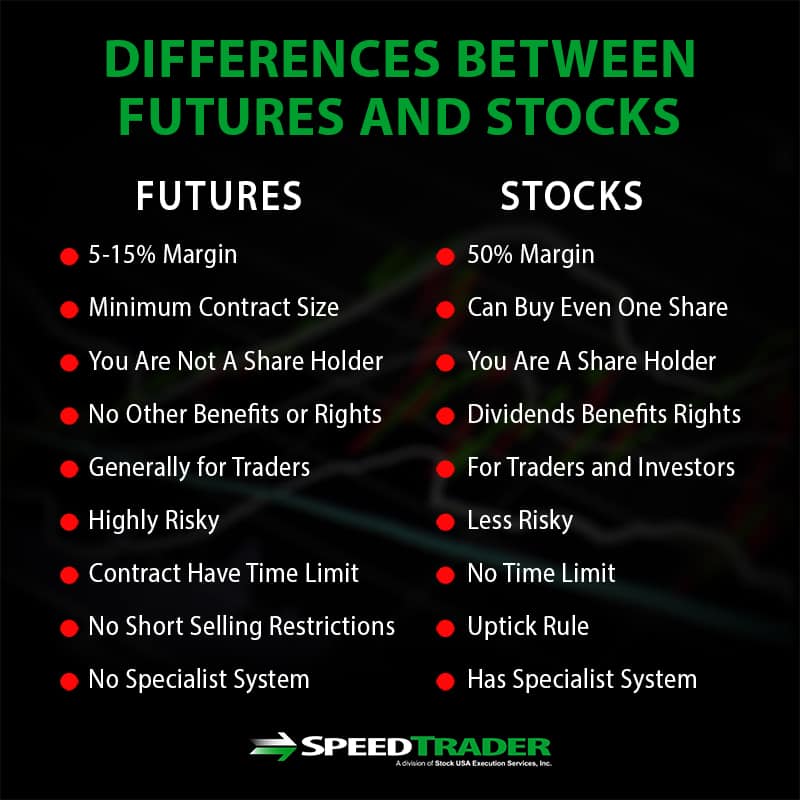
Futures vs. Traditional Stock Investing
The distinction between futures trading and traditional stock investing is crucial. When an investor buys a stock, they acquire a piece of ownership in a company, often with the intent to hold it for long-term capital appreciation, dividend income, or voting rights. The investment is typically fully paid for, or bought on margin with a significant down payment, and there’s no predetermined expiry date for ownership.
Futures contracts, on the other hand, are derivatives. Their value is derived from an underlying asset, and they represent a commitment to a future transaction, not outright ownership. They always have an expiration date, after which the contract ceases to exist. A primary difference lies in leverage: futures trading inherently involves a high degree of leverage, meaning a relatively small amount of capital (margin) can control a much larger notional value of the underlying asset. This amplification of capital allows for potentially larger gains but also carries the risk of significantly larger losses than traditional stock investing. Furthermore, futures markets often trade nearly 24 hours a day during weekdays, offering more flexibility and immediate reaction time to global events compared to the more constrained trading hours of equity markets.
The Underlying Assets of Stock Market Futures
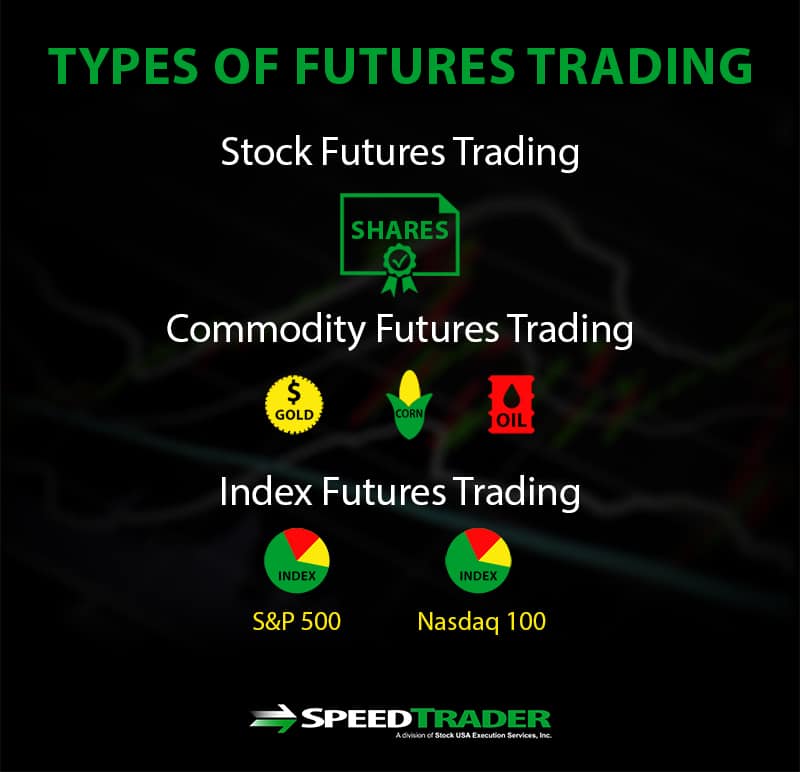
While the term “stock market futures” might suggest contracts on individual stocks, the most prevalent and liquid futures in this category are those based on stock indexes. These indexes represent a basket of stocks and serve as benchmarks for the overall performance of a specific market segment or the economy as a whole. For instance, an S&P 500 futures contract tracks the performance of the 500 large-cap U.S. companies included in the S&P 500 index. Other popular examples include futures on the Euro Stoxx 50 (European equities), Nikkei 225 (Japanese equities), or the FTSE 100 (UK equities).
Trading index futures allows participants to take a position on the broad direction of a market without having to buy or sell all the individual stocks within that index. This provides efficiency and cost-effectiveness, especially for large institutional investors. While less common for retail traders, there are also futures contracts on individual stocks, but these are typically less liquid and primarily used by institutional traders for specific hedging strategies. The focus for most engagement with “stock market futures” remains firmly on the highly liquid, globally recognized index futures.
The Mechanics of Futures Trading
Understanding how futures contracts work in practice requires delving into some specific mechanical aspects that differentiate them from other financial instruments. Leverage, margin, and contract specifications are critical components that every participant must comprehend.
Leverage and Margin: A Double-Edged Sword
One of the most defining characteristics of futures trading is the concept of leverage. Unlike buying stocks, where you pay the full price (or a significant portion on margin), trading futures requires only a fraction of the contract’s total value as initial margin. This initial margin acts as a good-faith deposit to ensure that you can cover potential losses. Because a small amount of capital can control a much larger position, even a small price movement in the underlying index can result in significant percentage gains or losses on the capital invested.
While leverage offers the tantalizing prospect of amplified returns, it is undeniably a double-edged sword. It equally amplifies losses, making futures trading inherently riskier than investing directly in the underlying assets. A trader might put up $5,000 in margin to control an S&P 500 futures contract worth $200,000. A 1% move in the S&P 500 could mean a $2,000 gain or loss, representing a 40% change on the initial margin. This high degree of leverage necessitates strict risk management and a thorough understanding of one’s capital exposure.
Contract Specifications: Expiration and Settlement
Every futures contract comes with standardized specifications set by the exchange where it trades. These include the underlying asset, contract size (e.g., how many points an S&P 500 futures contract represents), minimum price fluctuation (tick size), and most importantly, the expiration date. Stock market index futures typically expire quarterly (March, June, September, December), though some exchanges offer monthly or even weekly contracts for finer-grained exposure.
Upon expiration, futures contracts are typically cash-settled. This means that instead of physically delivering the underlying index (which is impossible), the difference between the contract’s entry price and its final settlement price is paid out in cash. If a trader bought a contract and the index price rose by expiration, they receive a cash payment. If the price fell, they pay out cash. It’s rare for retail traders to hold contracts until expiration; most will close out their positions before the expiry date to realize profits or losses and avoid the settlement process. Understanding these specifications is vital for effective trading and risk management, especially regarding the timing of entry and exit points.
Long and Short Positions Explained
Futures markets facilitate both buying (going long) and selling (going short) with relative ease, a feature that distinguishes them from many other investment vehicles.
- Going Long: When a trader goes long on a futures contract, they are betting that the price of the underlying index will increase. They agree to buy the index at a set price on a future date, expecting to sell the contract for a higher price before expiration, or profit from the cash settlement if the index value is higher at expiry.
- Going Short: Conversely, going short on a futures contract means a trader expects the price of the underlying index to fall. They agree to sell the index at a set price on a future date, anticipating they can buy back the contract at a lower price before expiration, or profit from the cash settlement if the index value is lower at expiry. This ability to easily profit from a declining market, without needing to borrow shares, makes futures a powerful tool for hedging or speculating on market downturns.
Why Trade Stock Market Futures? Key Applications
The versatility of stock market futures makes them attractive to a wide array of market participants, from individual investors to large institutions. Their primary applications fall into three broad categories, each serving a distinct purpose within the financial ecosystem.
Hedging Against Market Volatility
One of the most critical uses of stock market futures is hedging. Large institutional investors, such as pension funds or mutual funds, often hold substantial portfolios of diversified stocks. If they anticipate a broad market downturn but don’t want to sell off their underlying stock holdings (perhaps due to tax implications or long-term investment mandates), they can use futures to offset potential losses. By selling (going short) index futures contracts, they can create a synthetic short position on the overall market. If the market declines, the loss in their stock portfolio may be offset by the gains from their short futures position. This strategy effectively insulates their portfolio from significant short-term market fluctuations, preserving capital during volatile periods. Individual investors with diversified portfolios can also employ similar, albeit smaller-scale, hedging strategies.
Speculation for Profit
Beyond hedging, futures contracts are widely used for speculation. Traders who believe they can accurately predict the short-term or medium-term direction of a stock index will use futures to profit from these movements. Given the inherent leverage, even small price swings can result in substantial returns on the capital invested. Speculators might employ technical analysis, fundamental analysis, or macroeconomic indicators to inform their trading decisions, taking long positions if they expect an upturn or short positions if they anticipate a downturn. This highly active form of trading requires a deep understanding of market dynamics, precise timing, and robust risk management, as the potential for rapid gains is mirrored by an equally rapid potential for losses. Futures markets, with their high liquidity and long trading hours, are ideal venues for such speculative activities.
Price Discovery and Market Efficiency
Futures markets play a crucial, albeit often understated, role in price discovery. The continuous trading of futures contracts on various underlying assets provides real-time expectations about future prices. These expectations are incorporated into current prices, reflecting all available information, beliefs, and sentiments of market participants. For instance, the price of an S&P 500 futures contract for a future month can provide an indication of where market participants believe the S&P 500 index will be at that future date. This constant aggregation of forward-looking information helps contribute to the efficiency of the underlying spot market, ensuring that current prices reflect a comprehensive view of future supply and demand dynamics. By providing a transparent mechanism for participants to express their views on future prices, futures markets enhance overall market efficiency and aid economic decision-making across various industries.
Navigating the Risks and Rewards of Futures
While stock market futures offer compelling opportunities, they are not without significant risks. Acknowledging and managing these risks is paramount for anyone considering engaging with these powerful instruments. The amplified nature of gains and losses, coupled with market volatility, demands a disciplined and informed approach.
Amplified Gains and Losses: The Leverage Effect
As previously discussed, leverage is the defining characteristic of futures trading. For a relatively small initial margin, traders can control a contract with a much larger notional value. This means that if the market moves in their favor, the percentage return on their invested capital can be extraordinarily high. However, the reverse is equally true: if the market moves against their position, losses are amplified at the same rate. This can lead to rapid and substantial capital depletion, often exceeding the initial margin deposited. It’s crucial for traders to understand that while a futures contract might represent, for example, 250 times its point value in the S&P 500, a small adverse move can quickly erode a significant portion of their trading capital. This inherent volatility and amplified risk underscore the necessity of robust risk management strategies, including setting stop-loss orders and determining appropriate position sizes relative to one’s total capital.
Liquidity and Volatility Considerations
Stock market index futures, especially those on major global indexes, are among the most liquid financial instruments in the world. High liquidity means that there are always buyers and sellers, allowing traders to enter and exit positions quickly without significantly impacting the market price. This is a significant advantage, as it reduces slippage and ensures fair execution. However, high liquidity does not equate to low volatility. Futures markets can be extremely volatile, reacting instantaneously to economic data releases, geopolitical events, or corporate news. This volatility, when combined with leverage, can lead to dramatic price swings in very short periods, presenting both opportunities for swift profits and dangers of rapid losses. Traders must be prepared for this inherent volatility and possess the emotional discipline to manage their positions through sharp market movements.
Margin Calls and Account Management
Given the leveraged nature of futures, effective account management, particularly concerning margin, is critical. After the initial margin is posted, a maintenance margin is established, which is a lower threshold than the initial margin. If the market moves against a trader’s position and their account equity falls below the maintenance margin level, they will receive a “margin call.” A margin call is a demand from the broker to deposit additional funds to bring the account equity back up to the initial margin level. Failure to meet a margin call promptly can result in the broker liquidating the trader’s position, often at unfavorable prices, to cover the deficit. This mechanism is designed to protect both the broker and the integrity of the market. Therefore, monitoring account balances, understanding margin requirements, and being prepared to inject additional capital or reduce exposure are fundamental aspects of responsible futures trading.
Getting Started: How to Engage with Stock Market Futures
For those intrigued by the potential of stock market futures, a structured approach to getting started is essential. It involves selecting the right platform, developing a strategic framework, and committing to ongoing education and regulatory compliance.
Choosing a Futures Broker and Platform
The first practical step to trading futures is opening an account with a specialized futures broker. Not all traditional stock brokers offer futures trading. It’s crucial to select a broker that is regulated in your jurisdiction (e.g., by the Commodity Futures Trading Commission (CFTC) in the U.S. and exchanges like the CME Group). Key considerations when choosing a broker include:
- Commissions and Fees: Compare trading costs, including per-contract fees, exchange fees, and data fees.
- Trading Platform: Evaluate the platform’s features, speed, reliability, charting tools, and order execution capabilities. Many brokers offer demo accounts to practice trading without real money.
- Margin Requirements: Understand the initial and maintenance margin requirements, which can vary slightly between brokers for the same contract.
- Customer Support and Educational Resources: Access to responsive support and comprehensive educational materials is invaluable, especially for beginners.
Developing a Trading Strategy
Successful futures trading rarely happens by accident; it’s the result of a well-defined and rigorously tested trading strategy. This strategy should encompass several key elements:
- Market Analysis: Decide whether to use technical analysis (chart patterns, indicators) or fundamental analysis (economic data, news events) to identify trading opportunities. Most traders blend both.
- Entry and Exit Rules: Clearly define the conditions under which you will enter a long or short position, and just as importantly, when you will exit to take profits or cut losses.
- Risk Management: This is paramount. Determine your maximum risk per trade (e.g., 1-2% of your capital), implement stop-loss orders to limit potential downside, and understand how to size your positions appropriately to avoid over-leveraging.
- Trading Journal: Maintain a detailed record of all trades, including the rationale, outcome, and lessons learned. This is vital for continuous improvement.
- Testing and Iteration: Backtest your strategy on historical data and then paper-trade it in a demo environment before committing real capital. Be prepared to adapt and refine your strategy based on market feedback.
Regulatory Oversight and Education
The futures market operates under strict regulatory oversight designed to ensure fairness, transparency, and protect market participants. In the U.S., the CFTC regulates futures and options markets, while the National Futures Association (NFA) is an industry-wide, self-regulatory organization. Similar bodies exist in other major financial jurisdictions. This regulatory framework mandates that brokers adhere to strict capital requirements, disclose risks, and maintain segregated client funds.
For aspiring futures traders, continuous education is not optional; it’s a necessity. This includes:
- Understanding Market Mechanics: A deep comprehension of how futures contracts work, including margin, leverage, and settlement.
- Economic Indicators: Knowledge of key economic reports and how they influence market sentiment and index values.
- Risk Management Principles: Mastering stop-loss placement, position sizing, and capital preservation techniques.
- Psychological Discipline: The ability to stick to a trading plan, manage emotions, and avoid impulsive decisions is often as crucial as analytical skills.
Leveraging resources from reputable financial education platforms, broker-provided materials, and financial news outlets can significantly aid in building a strong foundation. The world of stock market futures offers profound opportunities for informed and disciplined participants, but it demands respect for its power and a commitment to ongoing learning and prudent risk management.
aViewFromTheCave is a participant in the Amazon Services LLC Associates Program, an affiliate advertising program designed to provide a means for sites to earn advertising fees by advertising and linking to Amazon.com. Amazon, the Amazon logo, AmazonSupply, and the AmazonSupply logo are trademarks of Amazon.com, Inc. or its affiliates. As an Amazon Associate we earn affiliate commissions from qualifying purchases.