
The S&P 500 index stands today as arguably the most important benchmark for the U.S. stock market and a critical indicator of the broader American economy. Its name is ubiquitous in financial news, investment portfolios, and economic discussions, yet the precise origin and evolutionary journey of this powerhouse index are often less understood. For investors, financial professionals, and anyone keen on grasping the mechanics of capital markets, understanding when and why the S&P 500 was created offers invaluable context to its present-day significance. This article delves into the fascinating history of the S&P 500, tracing its roots from rudimentary market indicators to the sophisticated, widely followed index we know today, all within the exclusive domain of Money and investing.

The Genesis of a Benchmark: Tracing the S&P 500’s Origins
While the S&P 500 as we understand it officially debuted in the mid-20th century, its conceptual foundation stretches back much further. The need for a reliable measure of market performance became evident as capital markets grew in complexity and scale, prompting financial data providers to devise various methodologies for tracking stock prices.
Early Precursors: Before the “500”
Before the S&P 500, Standard Statistics Company, one of the predecessors to Standard & Poor’s, had already been calculating stock market indices for decades. As early as 1923, the company introduced a daily stock market index tracking a small number of stocks, specifically 233 companies. This initial index was weighted equally across various sectors, providing one of the earliest comprehensive views of market performance beyond individual stock prices.
The journey continued with the 1926 launch of a 90-stock composite index, which became an important stepping stone. This 90-stock index was notably calculated on a weekly basis and later transitioned to daily publication in 1928, marking a significant advancement in real-time market tracking. These early indices, while less expansive than their successor, laid the groundwork for the methodology and data collection infrastructure that would eventually support the S&P 500. They demonstrated the value of a broad, representative market measure and the importance of consistent data analysis in financial decision-making.
The Birth of the Modern Index: 1957 and Beyond
The year that truly marks the creation of the S&P 500 as we know it is 1957. It was in this pivotal year that Standard & Poor’s, formed from the merger of Standard Statistics and Poor’s Publishing, expanded its existing 90-stock index to include 500 large U.S. companies. This expansion was a revolutionary step, transitioning from a smaller, somewhat constrained index to a much broader and more representative gauge of the U.S. equity market.
The 1957 S&P 500 was designed to be a market-capitalization-weighted index, a methodology that was innovative for its time and remains a cornerstone of its calculation today. This means that companies with larger market values have a greater impact on the index’s performance, reflecting their actual influence on the overall market. The goal was to provide an unparalleled snapshot of the industrial composition and economic health of the United States, offering a robust tool for investors and analysts alike. This expansion was not just about increasing the number of companies; it was about enhancing the index’s representativeness and creating a more sophisticated tool for understanding market dynamics.
Why 500 Companies? The Quest for Breadth
The decision to include approximately 500 companies was deliberate and strategic. The creators of the index recognized that to truly capture the essence of the U.S. stock market, they needed to move beyond a limited selection of blue-chip stocks. While the Dow Jones Industrial Average (DJIA), created earlier in 1896, focused on a mere 30 large industrial companies, the S&P 500 aimed for broader market coverage.
The “500” figure was chosen to represent a significant majority of the market capitalization of publicly traded U.S. equities, without becoming unwieldy. It struck a balance between comprehensiveness and manageability. By including companies from diverse sectors and industries, the S&P 500 offered a more diversified and less volatile representation of market trends compared to its predecessors and contemporaries. This breadth ensured that the index was not overly reliant on the performance of a few companies, making it a more reliable indicator of overall market health and a better benchmark for a wider array of investment strategies.
Evolution and Methodology: How the S&P 500 Became What It Is Today
The S&P 500’s initial creation in 1957 was just the beginning. Over the decades, its methodology has evolved, adapting to technological advancements and changes in market structure to maintain its relevance and accuracy.
From Manual Calculations to Digital Dominance
In its early days, calculating and maintaining the S&P 500 was a labor-intensive process, involving manual aggregation of stock prices and market capitalizations. The introduction of computers and sophisticated algorithms fundamentally transformed this process. Today, the S&P 500 is updated in real-time, minute by minute, reflecting market movements with unparalleled precision and speed. This digital evolution allows for instant dissemination of index values, making it an indispensable tool for traders, investors, and financial news outlets globally. The ability to process vast amounts of data quickly and accurately ensures that the S&P 500 remains a dynamic and responsive reflection of market conditions.
Understanding the Capitalization-Weighted Approach
A defining characteristic of the S&P 500 since its inception is its market-capitalization-weighted methodology. This means that each company’s influence on the index is proportional to its total market value (share price multiplied by the number of outstanding shares). Companies like Apple, Microsoft, Amazon, and Alphabet, with their massive market caps, inherently have a greater sway over the index’s movement than smaller constituents.
This approach ensures that the index accurately reflects the aggregate wealth creation and destruction in the economy, as larger companies typically represent a greater portion of economic activity and investor capital. While this weighting can lead to periods where a few mega-cap stocks dominate performance, it is generally considered an accurate representation of the market’s overall value. Understanding this weighting scheme is crucial for investors, as it explains why certain sectors or companies can disproportionately influence the index’s direction, particularly during periods of concentrated growth or decline.
The Role of the Index Committee: Maintaining Relevance
The S&P 500 is not a static list of 500 companies. To maintain its relevance and representativeness, the index is actively managed by a committee at S&P Dow Jones Indices. This committee adheres to a set of stringent, publicly available criteria for selecting companies, ensuring that the index remains a true reflection of leading U.S. companies. Key criteria include:
- U.S. Company: The company must be a U.S. company.
- Market Cap: There is a minimum unadjusted market capitalization requirement (which changes periodically but is typically in the billions of dollars).
- Liquidity: Companies must be highly liquid, with sufficient public float and trading volume.
- Public Float: A significant portion of the company’s shares must be available for public trading (not held by insiders or large blockholders).
- Sector Representation: While not a strict quota, the committee aims for balanced representation across economic sectors to avoid overconcentration.
- Profitability: Companies must have positive earnings in the most recent quarter and over the previous four consecutive quarters (excluding discontinued operations and extraordinary items).
The committee meets regularly to review and update the index, adding companies that meet the criteria and removing those that no longer qualify due to mergers, acquisitions, bankruptcies, or a sustained decline in market capitalization or liquidity. This active management ensures that the S&P 500 remains dynamic, adapting to the ever-changing landscape of corporate America and providing an accurate barometer for the broader economy.
The S&P 500’s Enduring Significance in Financial Markets
Beyond its historical creation and methodological evolution, the S&P 500 holds an unparalleled position in the global financial ecosystem, serving multiple critical functions for investors, economists, and financial institutions.
A Barometer for the U.S. Economy
Perhaps its most widely recognized role, the S&P 500 serves as a crucial barometer for the health and direction of the U.S. economy. Because it includes 500 of the largest and most influential publicly traded companies across virtually all major sectors, its performance often correlates strongly with broader economic trends. A rising S&P 500 typically signals economic growth and corporate prosperity, while a declining index can indicate economic headwinds or recessions. Policymakers, economists, and the general public often look to the S&P 500’s daily movements to gauge investor confidence and the overall economic outlook. It’s a leading indicator, often reflecting market sentiment about future economic conditions, making it an indispensable tool for economic analysis.
A Cornerstone for Passive Investing
The creation and widespread acceptance of the S&P 500 paved the way for the revolution in passive investing. With the advent of index funds and later Exchange Traded Funds (ETFs) that track the S&P 500, individual and institutional investors gained an efficient and low-cost way to gain broad exposure to the U.S. stock market. Rather than attempting to pick individual winning stocks, investors can simply invest in a fund designed to mirror the performance of the S&P 500.
This approach offers immediate diversification across 500 companies, significantly reducing company-specific risk and providing returns that broadly match the market. Funds like the SPDR S&P 500 ETF (SPY), the iShares Core S&P 500 ETF (IVV), and the Vanguard S&P 500 ETF (VOO) are among the largest and most popular investment vehicles globally, managing trillions of dollars based on the S&P 500. This accessibility has democratized investing, allowing even novice investors to participate in the growth of leading U.S. companies with minimal effort and expense.
Guiding Active Management and Performance Benchmarking
For active fund managers and financial advisors, the S&P 500 is the gold standard for performance benchmarking. If an actively managed U.S. equity fund aims to outperform the broader market, its performance is almost invariably compared against the S&P 500. The index sets a high bar; consistently beating the S&P 500 is a significant challenge for professional money managers, especially after accounting for fees.
The S&P 500 acts as a neutral, broad-market reference point, allowing investors to assess whether their chosen active strategies are truly adding value. It helps in evaluating the skill of fund managers, understanding risk-adjusted returns, and making informed decisions about portfolio allocations. Without such a robust and widely accepted benchmark, comparing investment performance would be a far more subjective and challenging endeavor.
Investing in the S&P 500: Accessibility for Every Investor
Given its historical performance and its role as a proxy for the U.S. equity market, investing in the S&P 500 has become a fundamental strategy for countless investors globally. Its accessibility and long-term growth potential make it a cornerstone of many diversified portfolios.
ETFs and Mutual Funds: Democratizing Access
Directly investing in all 500 companies of the S&P 500 would be impractical for most individual investors due to transaction costs and management complexities. Fortunately, the financial industry has developed efficient vehicles to facilitate this. Index mutual funds and Exchange Traded Funds (ETFs) that track the S&P 500 are the primary mechanisms. These funds hold shares of all or a representative sample of the 500 companies in proportion to their weight in the index, allowing investors to buy a single share or fund unit and instantly gain diversified exposure. Their low expense ratios, high liquidity, and ease of trading have made them incredibly popular, effectively democratizing access to the broad U.S. stock market for investors of all sizes.
Understanding the Risks and Rewards
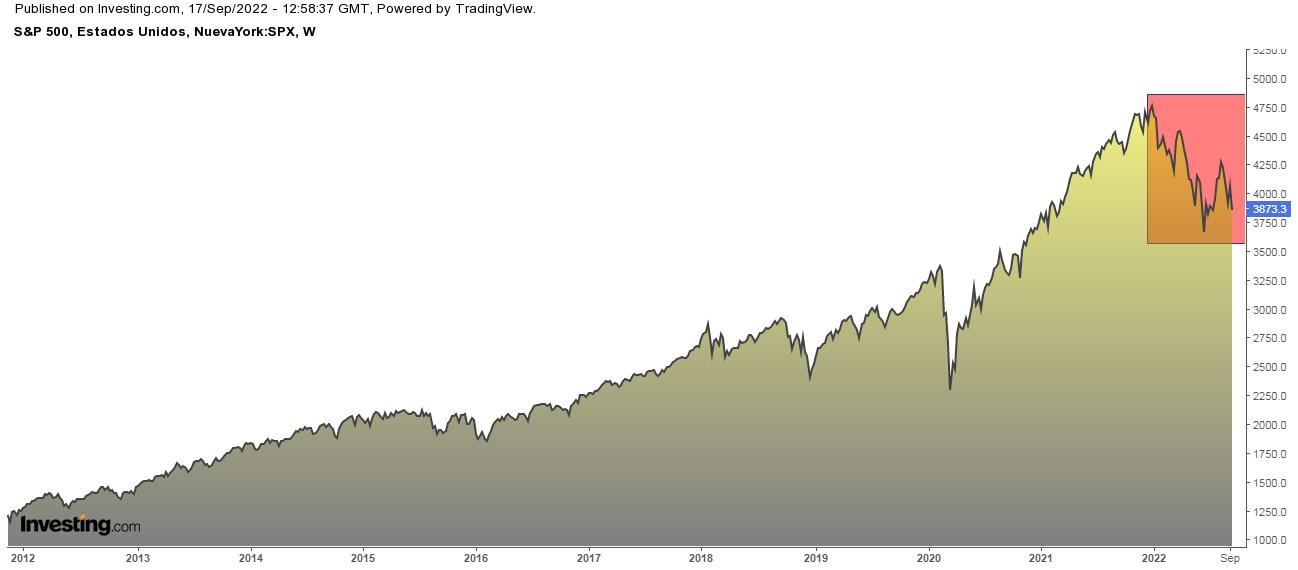
While the S&P 500 offers broad market exposure and a long history of positive returns, it’s crucial to understand the inherent risks. Like any stock market investment, S&P 500-tracking funds are subject to market volatility. Investors can experience significant drawdowns during economic downturns, bear markets, or periods of high uncertainty. While diversification across 500 companies mitigates single-company risk, it does not eliminate systemic market risk.
However, the rewards have historically outweighed the risks for long-term investors. Over multiple decades, the S&P 500 has demonstrated a powerful ability to recover from downturns and achieve substantial capital appreciation, often delivering average annual returns in the high single digits or low double digits. This balance of risk and reward makes it a compelling option for those with a long-term investment horizon.
Long-Term Growth: A Historical Perspective
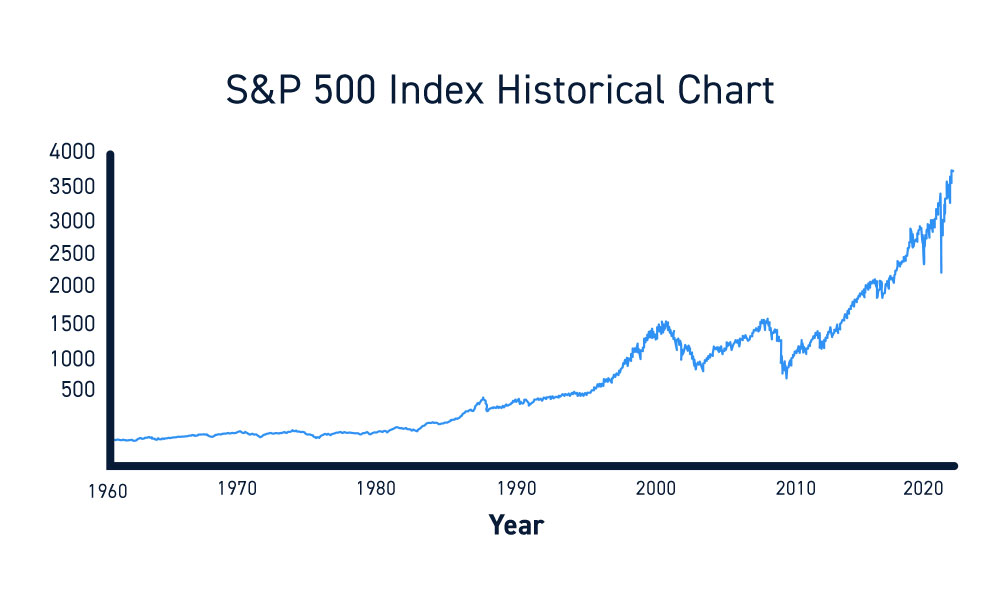
Since its expansion to 500 companies in 1957, the S&P 500 has been a remarkable engine of wealth creation. Despite numerous economic crises, geopolitical events, and technological shifts, the index has consistently reflected the resilience and innovation of American capitalism. Its long-term performance underscores the power of compounding and the underlying growth of the U.S. economy. Investors who have held S&P 500 index funds for extended periods have generally benefited from substantial returns, making it a foundational element in strategies geared towards retirement planning, wealth accumulation, and financial independence.
In conclusion, the S&P 500, officially solidified in its modern 500-company form in 1957, is far more than just a list of stocks. It is the culmination of decades of financial innovation, a testament to the power of robust methodology, and an indispensable tool for navigating the complexities of the U.S. financial markets. From its humble beginnings as a smaller index to its current status as a global benchmark, the S&P 500 continues to be a cornerstone for understanding economic health, guiding investment decisions, and fostering wealth creation for millions.
aViewFromTheCave is a participant in the Amazon Services LLC Associates Program, an affiliate advertising program designed to provide a means for sites to earn advertising fees by advertising and linking to Amazon.com. Amazon, the Amazon logo, AmazonSupply, and the AmazonSupply logo are trademarks of Amazon.com, Inc. or its affiliates. As an Amazon Associate we earn affiliate commissions from qualifying purchases.