
The S&P 500 is more than just a number; it’s a pivotal benchmark, a daily barometer of the American economy, and an indispensable tool for investors worldwide. Its movements are analyzed by financial professionals, discussed by politicians, and impact the retirement plans of millions. Yet, despite its omnipresence, the precise origins of this financial titan are often misunderstood. While its current form and widespread recognition solidified in the mid-20th century, the S&P 500 is the culmination of a longer, more gradual evolution in financial indexing. Understanding its birth date involves tracing a fascinating journey from nascent statistical endeavors to the sophisticated, market-capitalization-weighted index we rely on today. This article delves into the history, composition, and enduring significance of the S&P 500, demystifying its origins and highlighting its profound impact on the world of finance.

The Genesis of a Market Icon: From Humble Beginnings to Global Benchmark
The S&P 500 didn’t spring into existence fully formed. Its creation was a response to the growing need for a more comprehensive and representative measure of the American stock market than previously available. Before the S&P 500, investors and analysts grappled with simpler, often narrower, indicators.
Tracing the Roots: Before the S&P 500
In the late 19th and early 20th centuries, as industrialization boomed and stock markets matured, the need for reliable indices became apparent. The most prominent early measure was the Dow Jones Industrial Average (DJIA), created by Charles Dow in 1896. Initially comprising just 12 industrial stocks, the DJIA provided a valuable, albeit limited, snapshot of the market. Its price-weighted methodology and small number of constituents meant it was susceptible to the fluctuations of a few large companies and often didn’t capture the full breadth of economic activity. As the U.S. economy diversified beyond heavy industry, and the number of publicly traded companies exploded, there was a clear demand for a broader, more sophisticated index that could reflect the performance of a wider array of sectors and corporate giants. This evolving financial landscape set the stage for the innovations that would eventually lead to the S&P 500.
The Birth of the Composite Index: 1923 and Beyond
The true precursors to the modern S&P 500 emerged from the work of the Standard Statistics Company. In 1923, Standard Statistics introduced its first stock market index, initially tracking a mere 233 companies. This was a significant step forward, offering a much broader perspective than the DJIA. The index was divided into several categories, including industrials, rails, and utilities, providing a more granular view of sector performance. By 1926, the company expanded its coverage to 90 stocks, publishing a daily index. This move towards a larger, more diversified sample was critical. It aimed to provide a statistical representation of the market’s overall health, reducing the impact of any single company’s idiosyncratic movements. While not yet the “S&P 500,” these early efforts by Standard Statistics laid the methodological groundwork for a truly comprehensive index, demonstrating the power of aggregating data from a larger pool of companies.
The Official Launch of the S&P 500: March 4, 1957
The definitive birth of the S&P 500, as we know it today, occurred on March 4, 1957. This date marks the official launch of the “Standard & Poor’s 500 Stock Index.” The name itself reflects a crucial merger that happened earlier in 1941, when the Standard Statistics Company merged with Poor’s Publishing Company, forming Standard & Poor’s. This combined entity possessed the analytical prowess and historical data to create an index of unprecedented scope and accuracy.
What made the 1957 launch revolutionary was its methodology:
- 500 Companies: Expanding to 500 of the largest U.S. publicly traded companies provided a vastly more comprehensive representation of the overall market and economy.
- Market-Capitalization Weighting: Crucially, the S&P 500 adopted a market-capitalization-weighted approach. This meant that companies with larger market values had a proportionately greater impact on the index’s movement. This contrasted sharply with the DJIA’s price-weighted method and was seen as a more accurate reflection of the true value and influence of companies within the economy.
- Computerization: The mid-1950s also saw the nascent stages of computer technology being applied to financial data. This allowed for the efficient calculation and maintenance of such a large and complex index, paving the way for its daily updates and widespread dissemination.
The launch of the S&P 500 in 1957 was a landmark moment, providing investors with a robust, diversified, and methodologically sound benchmark that quickly rose to prominence.
What the S&P 500 Represents: A Window into American Economic Health
Beyond its historical origins, understanding what the S&P 500 represents is crucial for any investor or financial observer. It’s not just a collection of 500 stocks; it’s a carefully curated portfolio designed to be a leading indicator of the U.S. equity market and the broader economy.
Understanding the Composition: The Top 500 U.S. Companies
The S&P 500 aims to track the performance of 500 of the largest publicly traded companies in the United States. However, it’s not simply the 500 largest by market capitalization at any given moment. Inclusion in the index is determined by a committee at S&P Dow Jones Indices, which employs a set of stringent criteria:
- U.S. Company: The company must be based in the United States.
- Market Capitalization: While it represents large-cap companies, there’s a minimum market capitalization threshold (which fluctuates but is typically in the billions).
- Liquidity: The stock must be highly liquid, meaning it trades frequently and in high volumes, ensuring that the index can be easily replicated by investment funds.
- Public Float: A substantial portion of the company’s shares must be available for public trading (not held by insiders or governments).
- Profitability: Companies must demonstrate positive reported earnings in the most recent quarter and over the previous four quarters combined.
- Sector Representation: The committee also considers sector balance to ensure the index remains a true reflection of the diversified U.S. economy, avoiding over-concentration in any single industry.
The S&P committee meets regularly to review and update the index’s constituents, adding companies that meet the criteria and removing those that no longer qualify (e.g., due to mergers, bankruptcies, or sustained underperformance). This dynamic nature ensures the index remains relevant and reflective of the current economic landscape. For instance, the rise of tech giants and the decline of traditional industries are naturally reflected in the index’s composition over time.
Market-Capitalization Weighting Explained
One of the S&P 500’s defining characteristics, and a key innovation from its predecessors, is its market-capitalization weighting methodology. This means that the influence of each company on the index’s overall value is proportional to its total market value (share price multiplied by the number of outstanding shares).
For example, if Apple, with its trillion-dollar market cap, moves up by 1%, it will have a far greater impact on the S&P 500’s overall performance than a smaller company like a regional bank, even if the regional bank also moves up by 1%. This methodology is widely accepted as a more accurate representation of the broader market’s wealth and economic impact because the largest companies naturally hold more aggregate capital and economic power. It also means that a diversified portfolio designed to track the S&P 500 will, by definition, have a larger allocation to these dominant companies. This weighting scheme ensures that the index genuinely reflects the aggregate value of the represented market segment.
Beyond a Number: Its Role as a Leading Economic Indicator
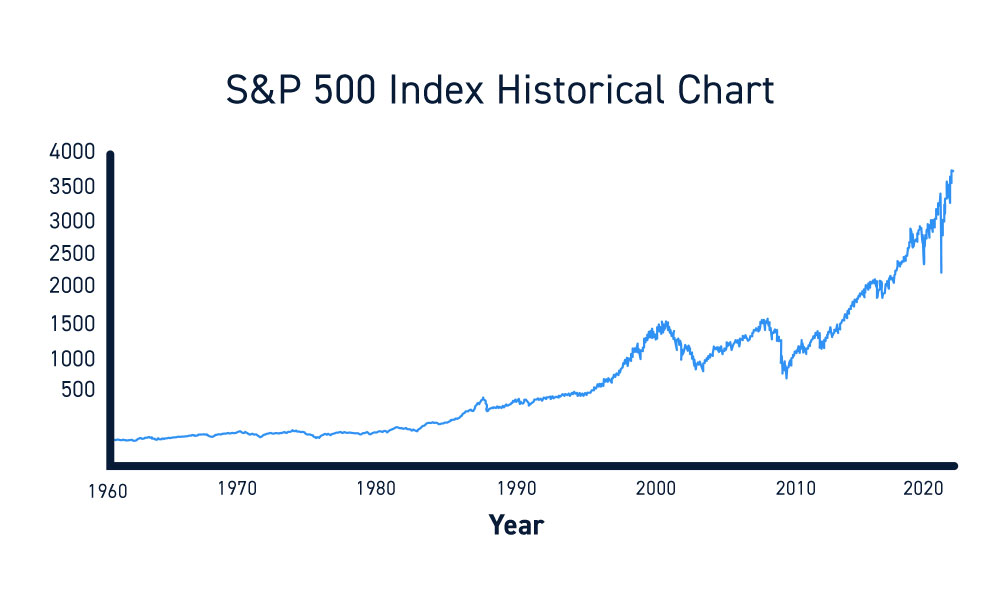
The S&P 500 is far more than just a list of companies or a calculation; it serves as a critical leading economic indicator. Its performance is often seen as a proxy for the health and direction of the broader U.S. economy.
- Investor Sentiment: Rising S&P 500 values typically reflect increasing investor confidence in corporate earnings, economic growth, and the overall business environment. Conversely, declining values can signal economic headwinds, corporate struggles, or geopolitical uncertainty.
- Corporate Earnings: Since the index comprises major corporations, its movements are tightly linked to their collective profitability. Strong earnings reports across a broad range of S&P 500 companies tend to drive the index higher, indicating robust economic activity.
- Consumer Confidence: While indirect, a rising stock market can create a “wealth effect,” making consumers feel more confident about their financial situation, leading to increased spending, which further fuels economic growth.
- Forecasting Tool: Analysts and economists frequently look to the S&P 500’s trajectory as part of their forecasts for GDP growth, inflation, and other macroeconomic variables. Its broad coverage and market-cap weighting make it an excellent reflection of the aggregate expectations for corporate America.
Therefore, when the news reports on the stock market’s performance, the S&P 500 is often the index being referenced due to its depth and breadth, making it a crucial signal for both professional and individual investors alike.
The S&P 500’s Enduring Influence on Investing and Finance
Since its formal inception, the S&P 500 has not only become a standard measure but has also fundamentally reshaped how people invest and analyze financial markets. Its widespread adoption has spurred innovation and democratized access to diversified market exposure.
A Benchmark for Performance
Perhaps the most significant role of the S&P 500 is its status as the primary benchmark for the U.S. stock market. Fund managers, financial advisors, and individual investors constantly compare their portfolios’ returns against the S&P 500.
- Active Management: For actively managed mutual funds and hedge funds, “beating the S&P 500” is the ultimate goal. Their performance fees and reputation often hinge on their ability to generate returns superior to this widely recognized index. This creates a constant competitive pressure within the investment industry.
- Passive Investing: For passive investors, the S&P 500 provides a clear target. Rather than trying to beat the market, they aim to match its performance, often through low-cost index funds.
- Investor Expectations: Over time, the S&P 500’s historical average returns (often cited around 10-12% annually, before inflation, over long periods) have become a widely accepted expectation for long-term equity investing. This provides a baseline against which individuals can plan for retirement and other financial goals.
Its ubiquity means that any discussion about “the market’s” performance almost invariably defaults to the S&P 500.
The Rise of Index Funds and ETFs
The existence and clear methodology of the S&P 500 were instrumental in popularizing passive investing. The concept of an index fund, which simply aims to replicate the performance of a specific index rather than actively picking stocks, was revolutionary.
- Early Innovators: Vanguard’s John Bogle is often credited with popularizing the first S&P 500 index fund for retail investors in 1976. This fund offered diversification across 500 companies at a remarkably low cost, something previously unavailable to the average person.
- Exchange-Traded Funds (ETFs): The evolution continued with the introduction of S&P 500 ETFs (e.g., SPY, IVV, VOO). These funds trade like individual stocks on exchanges, offering even greater liquidity and flexibility than traditional mutual funds.
- Benefits: Index funds and ETFs tracking the S&P 500 offer numerous advantages:
- Low Cost: Minimal management fees compared to actively managed funds.
- Diversification: Instant exposure to 500 major U.S. companies, significantly reducing single-stock risk.
- Market-Like Returns: Investors are guaranteed to receive the market’s average return (minus tiny fees), avoiding the challenge of trying to pick winning stocks or managers.
- Simplicity: A straightforward investment strategy suitable for long-term wealth building.
This democratized access to the stock market, allowing even small investors to participate in the growth of America’s leading companies.
A Global Barometer
While fundamentally a U.S. index, the S&P 500’s influence extends far beyond American borders. It serves as a global barometer for several reasons:
- Interconnected Economies: The U.S. economy is the largest in the world, and many S&P 500 companies are multinational corporations with significant international operations and revenues. Their performance often reflects global economic trends.
- Investor Confidence: A strong S&P 500 can bolster global investor confidence, encouraging investment in other markets. Conversely, a sharp downturn can trigger “risk-off” sentiment worldwide.
- Correlation with Other Markets: While not perfectly correlated, many global equity markets tend to move in tandem with the S&P 500, especially during periods of significant economic news or crises.
- Forex Impact: The performance of the U.S. stock market, particularly the S&P 500, can influence the strength of the U.S. dollar, which in turn affects global trade and commodity prices.
Therefore, financial professionals and news outlets across the globe closely monitor the S&P 500, recognizing its deep connections to international finance and economic stability.
Navigating the Future: The S&P 500 in a Changing World
The world economy and the financial markets are constantly evolving. For an index like the S&P 500 to maintain its relevance, it must demonstrate adaptability and continue to reflect the prevailing economic forces.
Adaptability and Evolution
The S&P 500 is not a static list of companies. Its strength lies in its ability to adapt to changes in the economic landscape. The S&P Dow Jones Indices committee regularly reviews and rebalances the index’s constituents. This means:
- Reflecting New Industries: Companies from emerging sectors (e.g., cloud computing, renewable energy, biotech) are added as they grow and meet the criteria, replacing older, declining companies. For instance, the inclusion of companies like Tesla or Nvidia reflects the shift towards technology and innovation-driven growth, while the removal of once-dominant names like Blockbuster or Kodak illustrates the index’s dynamic nature.
- Maintaining Relevance: This continuous refreshing ensures that the S&P 500 remains a representative snapshot of the leading U.S. public companies, accurately reflecting where economic power and innovation reside. Without this adaptability, the index would quickly become outdated and less useful as a benchmark.
- Methodological Adjustments: While market-cap weighting remains core, the committee also makes subtle adjustments to its rules over time (e.g., changes to float adjustment calculations) to ensure the index remains robust and reflective of modern market practices.
This ongoing evolution is crucial for the S&P 500’s continued credibility and utility in a rapidly changing world.
Critiques and Considerations
Despite its widespread acceptance, the S&P 500 is not without its critics and inherent limitations:
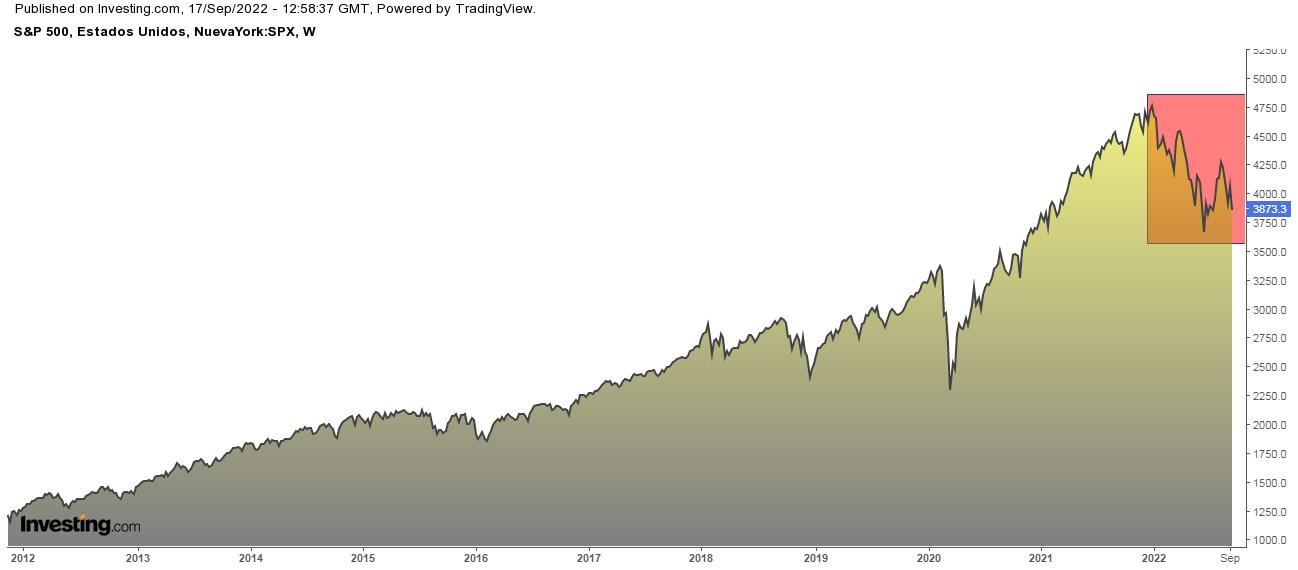
- Concentration Risk: Due to its market-capitalization weighting, the index can become heavily concentrated in a few mega-cap companies, particularly in sectors like technology. This means the performance of the top 5-10 companies can disproportionately influence the entire index, potentially masking underperformance in other areas. This raises questions about true diversification for some investors.
- Active vs. Passive Debate: While the S&P 500 underpins passive investing, the debate between active and passive management persists. Proponents of active management argue that skilled managers can still identify mispriced assets and outperform the index, especially in volatile or niche markets.
- Bias Towards Large-Cap Growth: Historically, the index has shown a strong correlation with large-cap growth stocks due to the weighting methodology. This means it may not fully capture the performance of small-cap companies or value-oriented investment strategies.
- Backward-Looking: Like all indices, the S&P 500 is inherently backward-looking in its constituent selection (based on past performance and size). While it adapts, it cannot perfectly predict future market leaders.
Understanding these critiques helps investors contextualize the S&P 500 and consider other investment options for a truly diversified portfolio.
Its Continued Relevance for Investors
Despite its limitations, the S&P 500 will almost certainly remain a cornerstone of financial planning and market analysis for the foreseeable future.
- Accessibility and Simplicity: For many investors, particularly those saving for retirement, investing in an S&P 500 index fund remains one of the simplest, most cost-effective, and historically proven ways to build long-term wealth.
- Transparent Methodology: Its clear and publicly available rules for inclusion and weighting foster trust and understanding.
- Global Standard: As a globally recognized standard, it provides a common language for financial discourse and comparison across borders.
- Foundation for Innovation: The S&P 500 has also paved the way for more specialized indices (e.g., S&P 400 MidCap, S&P 600 SmallCap, sector-specific indices), which cater to different investment objectives but often use similar methodological principles.
Its deep integration into the financial ecosystem, from institutional portfolios to individual retirement accounts, ensures its continued prominence.
The journey of the S&P 500 from an early 20th-century statistical experiment to its formal launch in 1957, and its subsequent evolution, is a testament to the financial world’s constant quest for better measures of economic reality. It stands as a powerful symbol of innovation in finance, offering unparalleled insight into the American economy and serving as an indispensable guide for investors navigating the complexities of the global market. Its story is not just about a date, but about the relentless pursuit of precision and representation in the world of money.
aViewFromTheCave is a participant in the Amazon Services LLC Associates Program, an affiliate advertising program designed to provide a means for sites to earn advertising fees by advertising and linking to Amazon.com. Amazon, the Amazon logo, AmazonSupply, and the AmazonSupply logo are trademarks of Amazon.com, Inc. or its affiliates. As an Amazon Associate we earn affiliate commissions from qualifying purchases.