
The S&P 500 is one of the most widely recognized and influential stock market indices globally, often cited as a premier benchmark for the health of the U.S. economy and its equity markets. The answer to the question “how many companies are in the S&P 500?” is, straightforwardly, 500. However, the nuance behind this simple number, the methodology of its compilation, and its dynamic nature reveal a deeper story crucial for anyone interested in investing, market analysis, or corporate finance. Understanding the S&P 500 goes beyond just its constituent count; it delves into the strategic underpinnings of modern portfolio theory, economic indicators, and the intricate dance of market forces.
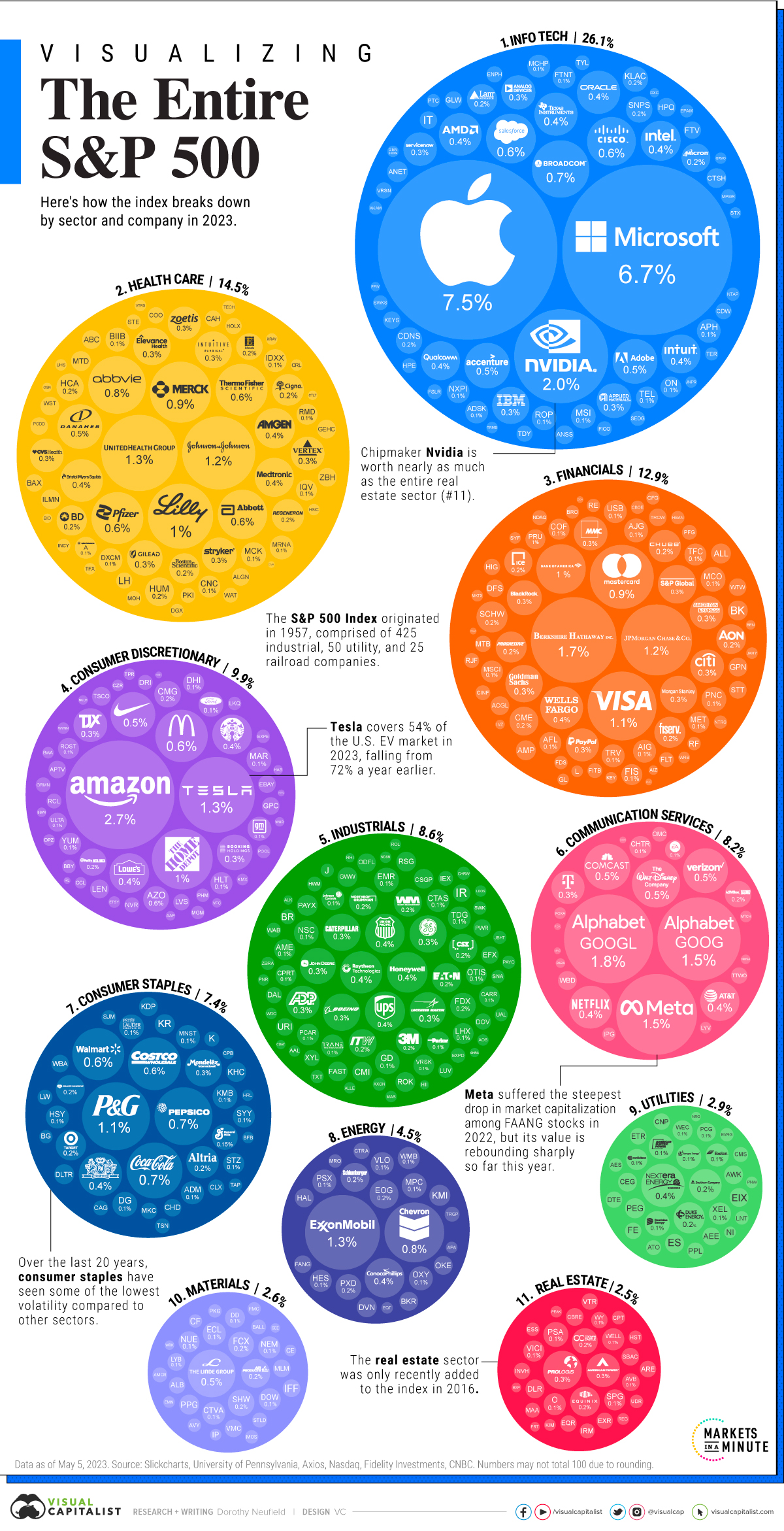
The S&P 500 is a market-capitalization-weighted index maintained by S&P Dow Jones Indices. It is designed to be a leading indicator of U.S. equities, reflecting the performance of 500 of the largest publicly traded companies in the United States. Its composition is not static; it is a meticulously curated list that evolves with the economy, reflecting shifts in industry dominance, corporate performance, and market trends. For investors, financial professionals, and economists alike, the S&P 500 serves as an indispensable tool for benchmarking portfolio performance, assessing market sentiment, and making informed financial decisions.
The S&P 500: More Than Just a Number
While the name explicitly states “500,” the actual number of individual stocks within the index can occasionally fluctuate slightly above or below 500 at any given moment due to corporate actions like mergers, acquisitions, or spin-offs, and the index committee’s rebalancing process. These temporary discrepancies are usually resolved quickly, bringing the total back to its intended 500. This inherent dynamism is a testament to the index’s commitment to accurately reflecting the continually changing landscape of the U.S. equity market.
A Premier Benchmark of U.S. Equities
The S&P 500 is not merely a collection of stocks; it is a highly regarded barometer of large-cap U.S. equities and a proxy for the broader U.S. stock market. Its broad market coverage, encompassing various sectors like technology, healthcare, financials, and consumer discretionary, makes it an excellent indicator of overall economic performance and investor confidence. When financial news outlets report on “the market’s performance,” they are often referring to the S&P 500’s movement. Its performance is tracked by countless index funds and exchange-traded funds (ETFs), making it accessible to individual and institutional investors worldwide.
Selection Criteria and Methodology
The S&P Dow Jones Indices committee employs a stringent set of criteria to determine which companies earn a coveted spot in the S&P 500. These criteria ensure that the index truly represents the large-cap segment of the U.S. market and remains investable. Key factors considered include:
- Market Capitalization: Companies must have an unadjusted market capitalization of at least $14.5 billion (this threshold changes over time).
- Liquidity: The company’s stock must be highly liquid, meaning a sufficient number of shares trade frequently without significantly impacting the price. A stock must have traded a minimum of 250,000 shares in each of the six months leading up to the evaluation date.
- Public Float: A significant portion of the company’s shares must be available for public trading (not held by insiders or restricted shareholders). At least 50% of the float must be publicly tradable.
- Domicile: The company must be a U.S. company, though its global operations are irrelevant.
- Sector Representation: The committee strives for appropriate sector balance within the index, ensuring it reflects the general composition of the U.S. economy.
- Profitability: Companies must have positive reported earnings in the most recent quarter and positive aggregate earnings over the prior four consecutive quarters.
- Exchange Listing: The stock must be listed on a major U.S. exchange (NYSE or NASDAQ).
These rigorous selection rules distinguish the S&P 500 from other indices and ensure its quality and relevance as a benchmark. It is not an arbitrary list but a carefully curated representation of market leadership.
The “500” vs. The Actual Count
As mentioned, while the target is 500, the precise number of companies can occasionally deviate. This is typically temporary and a result of the operational realities of market dynamics. For example:
- Mergers and Acquisitions: When two S&P 500 companies merge, the combined entity often takes up only one slot, temporarily reducing the count. If an S&P 500 company acquires a non-S&P 500 company, the count remains the same.
- Spin-offs: A single company might spin off a division into a new, separate public company. If both the original and new company meet the criteria, both might briefly be included, increasing the count until a rebalance.
- Index Rebalancing: The index committee announces changes, often quarterly. Between the announcement and the effective date, the count remains stable, but once changes are executed, it may shift temporarily.
These small, transient deviations do not diminish the index’s integrity or its fundamental identity as a collection of “approximately 500” leading U.S. companies.
Why the S&P 500 Matters to Investors
For individual and institutional investors, the S&P 500 holds profound significance, serving multiple critical functions within portfolio construction and financial analysis. Its ubiquitous presence in investment products and financial media underscores its importance as a foundation for many investment strategies.
Diversification and Risk Management
Investing in the S&P 500, typically through an index fund or ETF, offers immediate, broad diversification across 500 large-cap U.S. companies and numerous sectors. This inherent diversification helps mitigate specific company risk, as the performance of any single stock has a relatively small impact on the overall index. For investors seeking broad market exposure without the complexity of selecting individual stocks, S&P 500-tracking vehicles provide a straightforward path to participating in the growth of the U.S. economy. This strategy aligns with the principles of modern portfolio theory, which advocates for diversification to optimize risk-adjusted returns.
A Barometer of Economic Health
Economists and analysts frequently use the S&P 500 as a real-time gauge of economic health and investor confidence. A rising S&P 500 often indicates a robust economy, strong corporate earnings, and optimistic future expectations. Conversely, a declining index can signal economic headwinds, corporate challenges, or increased investor uncertainty. While not a perfect predictor, its broad representation of leading industries makes it a powerful coincident indicator, reflecting the current state and near-term outlook of the U.S. corporate sector.
Historical Performance and Long-Term Growth
Over the long term, the S&P 500 has demonstrated a remarkable track record of growth, weathering numerous economic cycles, recessions, and global crises. Historically, it has delivered an average annual return (including dividends) of around 10-12% since its inception, making it an attractive option for long-term wealth creation. This consistent, albeit volatile, upward trend supports the buy-and-hold philosophy for many investors who believe in the enduring growth potential of the U.S. economy and its leading corporations.
Passive Investing Strategy
The rise of passive investing, where investors aim to match the performance of a market index rather than trying to beat it, is largely centered around the S&P 500. Low-cost S&P 500 index funds and ETFs allow investors to capture market returns with minimal effort and expense. This strategy is lauded by many financial advisors, including Warren Buffett, for its simplicity, cost-effectiveness, and historical effectiveness for the average investor. Rather than requiring extensive research into individual stocks, passive investing in the S&P 500 leverages the collective wisdom of the market and the inherent growth of the broader economy.
The Dynamics of Index Maintenance
The S&P 500 is not a static list; it is a living entity that continuously adapts to the ever-changing corporate and economic landscape. This constant refinement ensures that the index remains relevant and accurately reflects the U.S. large-cap market. The index committee’s decisions are crucial and can have significant implications for the companies involved.
Quarterly Rebalancing and Ad Hoc Changes
The S&P Dow Jones Indices committee typically reviews the index’s composition quarterly, usually in March, June, September, and December. During these reviews, they assess companies against the selection criteria and decide on additions and deletions. However, changes can also occur on an ad hoc basis if a company undergoes a significant corporate action (like a merger or bankruptcy) that necessitates an immediate adjustment to maintain the index’s integrity. These changes are typically announced in advance, giving fund managers time to adjust their portfolios.
Impact of Corporate Actions
Corporate actions play a major role in the S&P 500’s evolution:
- Mergers and Acquisitions: When an S&P 500 company is acquired, it is removed from the index. If an acquiring company is not in the S&P 500, its market cap might become large enough to warrant inclusion, or another company might take its place.
- Bankruptcies: Companies that file for bankruptcy are typically removed from the index as they no longer meet the liquidity and financial viability criteria.
- Spin-offs: A company might split into two or more independent entities. The committee then evaluates whether the spun-off entities (and the original company, if applicable) meet the S&P 500 criteria for inclusion.
These actions ensure that the S&P 500 remains composed of healthy, actively traded, and significant U.S. corporations, reflecting the dynamic nature of capitalism itself.
Evolution of the Index
Looking back over decades, the S&P 500’s composition vividly illustrates the profound shifts in the U.S. economy. Industries that once dominated, such as manufacturing or energy, have seen their representation shrink, while technology, healthcare, and consumer services have grown exponentially. This evolution is a crucial aspect of the index’s strength; it doesn’t cling to the past but rather adapts, ensuring it continually mirrors the companies driving economic growth and innovation. This adaptability makes it a forward-looking, rather than backward-looking, economic indicator.
Investing in the S&P 500
For most individual investors, directly buying all 500 S&P 500 stocks is impractical. Fortunately, several accessible and cost-effective financial tools allow investors to gain exposure to the index.
ETFs and Mutual Funds
The most common and efficient way to invest in the S&P 500 is through S&P 500 exchange-traded funds (ETFs) or mutual funds. These funds hold the stocks of the companies in the S&P 500 in the same proportion as the index itself, effectively mimicking its performance.
- ETFs: Traded like stocks on exchanges throughout the day, offering flexibility. Examples include SPDR S&P 500 ETF Trust (SPY), iShares Core S&P 500 ETF (IVV), and Vanguard S&P 500 ETF (VOO).
- Mutual Funds: Purchased directly from fund providers, typically at the end-of-day net asset value. Examples include Vanguard 500 Index Fund Admiral Shares (VFIAX) and Fidelity 500 Index Fund (FXAIX).
Both options provide instant diversification and track the index’s performance with remarkable accuracy, making them cornerstones of many long-term investment portfolios.
Understanding Expense Ratios
When choosing an S&P 500 index fund or ETF, a critical factor is the expense ratio. This is the annual fee charged as a percentage of your investment to cover the fund’s operational costs. Since these funds are passively managed, they typically have very low expense ratios, often less than 0.10%. Minimizing expense ratios is crucial because, over decades, even small differences can significantly impact your total returns due to compounding.

Considerations for Investors
While S&P 500 investing offers many benefits, investors should consider a few points:
- Long-Term Horizon: The S&P 500 is best viewed as a long-term investment. Market fluctuations are normal, and patience is key to realizing its historical average returns.
- Dollar-Cost Averaging: Investing a fixed amount regularly, regardless of market highs or lows, can smooth out returns and reduce the risk of investing a lump sum at an inopportune time.
- Market Risk: While diversified, S&P 500 funds are still subject to overall market risk. A broad market downturn will affect these investments.
- No Outperformance: By definition, an S&P 500 index fund aims to match the market’s performance, not beat it. Investors seeking to actively outperform the market might pursue other strategies (though often with higher risk and fees).
In conclusion, the S&P 500, with its 500 (or approximately 500) constituent companies, stands as a pillar of the financial world. It’s more than just a list; it’s a dynamic, carefully curated benchmark that provides a window into the U.S. economy’s most powerful corporations. For investors, it offers a diversified, cost-effective, and historically rewarding pathway to participating in the growth of the American market, embodying a cornerstone principle of sound financial planning and long-term wealth accumulation.
aViewFromTheCave is a participant in the Amazon Services LLC Associates Program, an affiliate advertising program designed to provide a means for sites to earn advertising fees by advertising and linking to Amazon.com. Amazon, the Amazon logo, AmazonSupply, and the AmazonSupply logo are trademarks of Amazon.com, Inc. or its affiliates. As an Amazon Associate we earn affiliate commissions from qualifying purchases.