
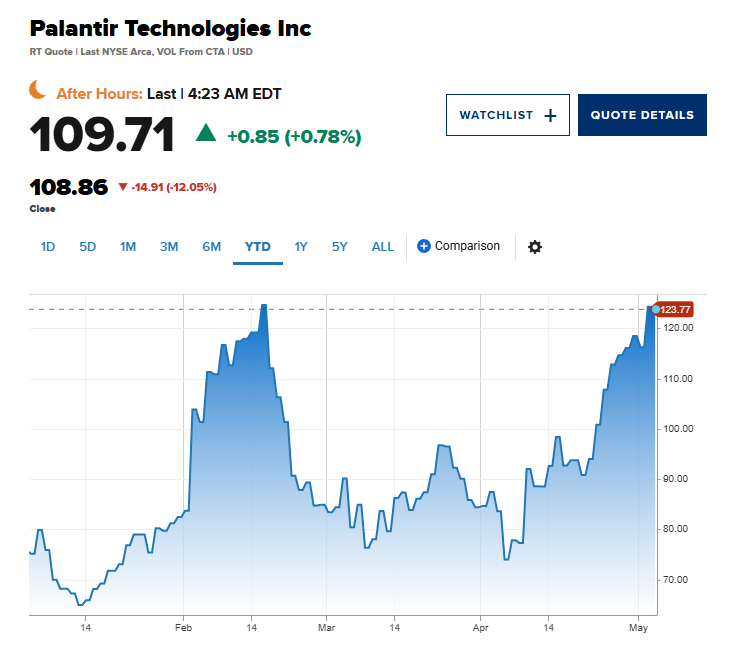
Palantir Technologies (NYSE: PLTR), once a darling of the direct listing phenomenon and a poster child for disruptive data analytics, has experienced significant volatility and substantial drops in its stock price since its public debut. For investors, understanding these downturns is crucial for informed decision-making. The reasons are multifaceted, stemming from a confluence of macroeconomic shifts, company-specific financial performance, evolving market sentiment, and unique business model challenges, all of which resonate deeply within the “Money” category of investing and business finance. This analysis delves into the core financial and market dynamics that have contributed to Palantir’s stock performance, offering insights for current and prospective shareholders.
Navigating Macroeconomic Headwinds and Shifting Market Sentiment
The broader economic environment and prevailing market sentiment play an outsized role in the valuation of growth stocks like Palantir. Recent years have presented a challenging landscape that has disproportionately impacted companies promising future growth over immediate profitability.
The Impact of Rising Interest Rates on Growth Stocks
A primary driver behind the decline of many growth stocks, including Palantir, has been the shift in monetary policy, particularly rising interest rates. When interest rates are low, investors are more willing to pay a premium for future earnings, as the present value of those distant profits is higher. Companies like Palantir, which are often valued based on their long-term growth potential rather than current robust profitability, thrive in such environments. However, as central banks began aggressively raising interest rates to combat inflation, the discount rate applied to future earnings increased significantly. This mathematical reality means that the further out a company’s expected profits lie, the more their present value erodes in a higher interest rate regime.
For Palantir, a company that has historically prioritized aggressive revenue growth and market penetration over consistent GAAP profitability, this shift was particularly impactful. Its high price-to-sales (P/S) ratio, once celebrated as a sign of its disruptive potential, became a liability. Investors rotated out of long-duration assets (stocks whose value relies heavily on distant future cash flows) and into more rate-sensitive, value-oriented companies or fixed-income assets that offered competitive yields. This fundamental re-evaluation of valuation metrics within the financial markets exerted immense downward pressure on Palantir’s stock.
Broader Market Corrections and Risk Aversion
Beyond specific interest rate effects, the period has also witnessed broader market corrections and a general increase in risk aversion among investors. Fears of a looming recession, persistent inflation, geopolitical instability, and supply chain disruptions have collectively dampened investor enthusiasm for riskier assets. During periods of heightened uncertainty, capital tends to flow out of speculative or growth-oriented sectors and into more defensive, stable industries or even cash.
Palantir, despite its essential software platforms, is often perceived as a growth-stage company with a volatile revenue stream, particularly given its reliance on large government contracts and its nascent commercial expansion. When the tide of overall market confidence recedes, even fundamentally sound companies can see their stock prices decline simply due to sector-wide or market-wide de-risking. This “beta” effect means that Palantir’s stock often amplifies the movements of the broader market, experiencing larger drops during downturns. Investors prioritize capital preservation and seek companies with strong balance sheets, consistent profitability, and reliable dividends, characteristics not always associated with Palantir in its current phase.
Valuation Scrutiny in a Changing Economic Landscape
Palantir’s direct listing in 2020 came with a significant amount of hype and a rich valuation. For a period, the market was willing to assign premium multiples based on the company’s unique technology, deep relationships with government agencies, and potential to disrupt enterprise software. However, as the economic landscape changed, so too did the criteria by which investors judged companies. The focus shifted from “growth at any cost” to “profitable growth.”
Investors began scrutinizing Palantir’s valuation more critically, comparing its metrics against more established software giants that demonstrated consistent free cash flow and dividends. Concerns emerged regarding the sustainability of its growth rate, particularly in the commercial sector, and the path to consistent GAAP profitability without relying heavily on stock-based compensation. The market became less forgiving of companies that reported large non-GAAP profits but significant GAAP losses. This heightened valuation scrutiny led to multiple compression, where the market began to assign lower price-to-sales or enterprise-value-to-revenue multiples to Palantir’s financial performance, directly contributing to the stock drop.
Scrutinizing Palantir’s Financial Performance and Guidance
While macroeconomic factors set the stage, Palantir’s own financial performance, or lack thereof, relative to market expectations has been a significant contributor to its stock volatility. Investors react sharply to missed earnings, weaker guidance, and shifts in key growth metrics.
Earnings Misses and Revenue Guidance
A common catalyst for immediate stock price drops for any public company is missing analyst expectations on key financial metrics such as revenue or earnings per share (EPS). Palantir has, at times, either reported results that fell short of consensus estimates or, perhaps more critically, provided forward-looking revenue or profit guidance that was lower than what the market anticipated. Even when revenue growth remained strong in absolute terms, if it didn’t meet the high bar set by analyst models or the company’s own historical trajectory, the stock often suffered.
These “misses” can erode investor confidence, suggesting that the company’s growth narrative might be slowing down or facing unforeseen challenges. The market is forward-looking; therefore, even slight adjustments to future revenue expectations or a more cautious outlook from management can lead to a disproportionate negative reaction in the stock price, especially for a company whose valuation is predicated on robust future expansion.
Deceleration in Government Segment Growth
Historically, Palantir’s government segment has been its most stable and predictable revenue driver, characterized by large, multi-year contracts with agencies like the U.S. Army, Space Force, and NIH. While this segment continues to grow, there have been periods where its growth rate has decelerated or its expansion failed to meet the lofty expectations of some investors. Any sign of slowing within this foundational segment raises questions about the company’s core strength and future revenue predictability.
Investors look for consistent, accelerating growth, particularly in a company positioned as a leader in vital national security and data intelligence. Delays in contract awards, increased competition for government spending, or the natural lumpiness of large government deals can all contribute to quarter-to-quarter variability that impacts investor perception and, consequently, the stock price. While Palantir continues to secure significant government contracts, the market scrutinizes the rate of new contract acquisition and the pace of revenue recognition from existing ones.
Challenges in Commercial Business Expansion and Profitability
Palantir’s long-term growth narrative hinges significantly on its ability to successfully expand its commercial business. The company has invested heavily in scaling its commercial sales force and client acquisition efforts, aiming to diversify its revenue base beyond government contracts. However, this expansion has come with its own set of challenges that have impacted profitability and investor sentiment.
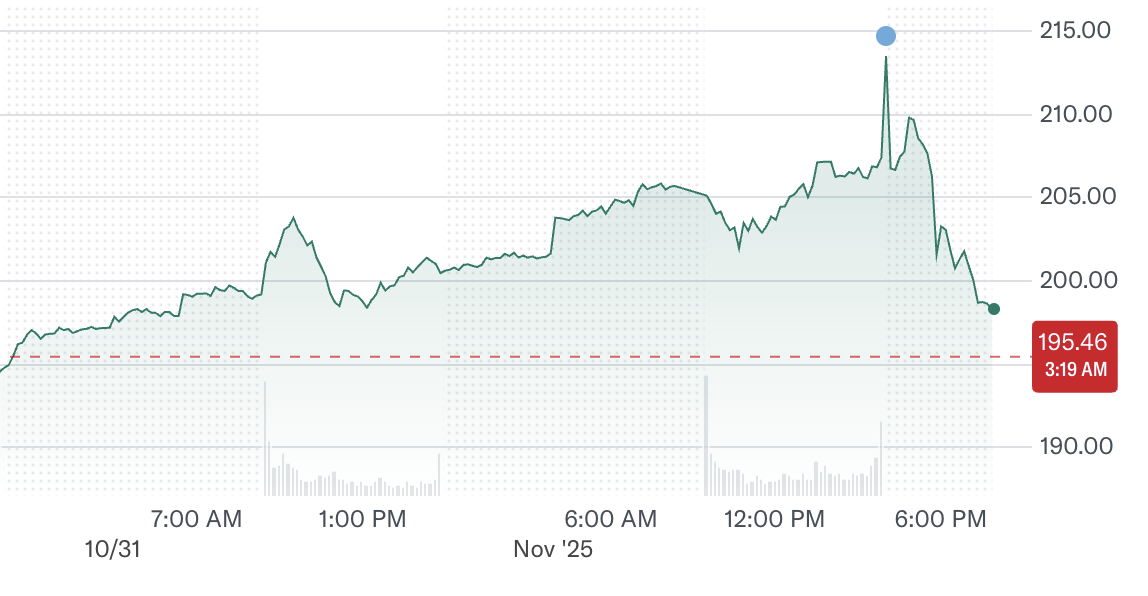
The sales cycles for large enterprise software deals can be long and complex, requiring significant upfront investment in sales and marketing. Furthermore, commercial clients often demand more tailored solutions and have different procurement processes compared to government entities. While Palantir has reported encouraging growth in its commercial customer count and revenue, the rate of growth, the cost associated with acquiring these customers, and the profitability of these contracts have been areas of concern. High levels of stock-based compensation, while a non-cash expense, have also consistently weighed on GAAP profitability, leading to substantial net losses even as the company reported positive adjusted (non-GAAP) operating income. Investors increasingly demand a clear path to sustainable GAAP profitability and robust free cash flow, especially from a company that has been publicly traded for several years.
Evolving Investor Confidence and Business Model Concerns
Beyond financial figures, the fundamental understanding and confidence in Palantir’s unique business model and its potential for long-term scalability have also played a role in its stock performance.
Investor Skepticism Around Commercial Adoption
Despite Palantir’s claims of powerful, transformative software platforms like Foundry and Gotham, a degree of investor skepticism persists regarding their widespread commercial adoption. While its government work is well-established, many investors question whether Palantir can replicate this success broadly across diverse commercial industries at a scale that justifies its valuation. The perceived complexity of implementing Palantir’s platforms, the need for deep technical expertise, and the potential for long customization periods have led some to wonder if its software is truly a “product” that can be easily sold and scaled, or if it remains a highly bespoke “service” requiring extensive human capital.
For investors focused on software-as-a-service (SaaS) models known for high margins and easy scalability, Palantir’s approach, particularly in its early commercial push, has sometimes appeared less streamlined. Demonstrating consistent, broad-based commercial uptake, accompanied by efficient customer acquisition costs and clear return on investment for clients, is paramount to fully assuaging this skepticism and boosting investor confidence in the commercial segment’s long-term potential.
Customer Concentration Risk and Contract Volatility
While Palantir’s large, multi-year contracts, particularly with government entities, provide a stable revenue base, they also introduce customer concentration risk. A significant portion of its revenue can come from a relatively small number of large clients. The loss or non-renewal of even one major contract, or significant delays in new contract awards, can have a material impact on quarterly and annual results. This inherent lumpiness and potential volatility can make Palantir’s revenue stream less predictable than that of a SaaS company with thousands of smaller, recurring subscriptions.
Investors tend to penalize companies with high customer concentration because it introduces a degree of operational and financial risk. While Palantir has been working to diversify its client base, both within government and increasingly in the commercial sector, this risk remains a factor in how the market values the company and contributes to periods of stock price weakness when contract news is uncertain or negative.
The Path to Sustainable Free Cash Flow
In the current investment climate, free cash flow (FCF) has become a paramount metric for investors. Unlike GAAP net income, FCF provides a clearer picture of the actual cash generated by a business that can be used for reinvestment, debt repayment, or shareholder returns. For Palantir, while the company has often highlighted its adjusted operating income or free cash flow (which often excludes stock-based compensation), investors are increasingly scrutinizing GAAP profitability and the sustainability of positive free cash flow over the long term.
Generating consistent and growing free cash flow is essential for Palantir to demonstrate its financial maturity and its ability to fund future growth without excessive reliance on dilutive equity financing. Any perceived struggles or inconsistencies in reaching and maintaining robust FCF can trigger concerns among investors, leading them to question the company’s operational efficiency and its long-term financial health, thereby impacting the stock price.
The Influence of Insider Activities and Market Dynamics
Beyond fundamental business performance and macroeconomic factors, specific market dynamics and insider actions can also exert significant pressure on a stock’s price, particularly for a relatively new public company like Palantir.
Lock-up Expirations and Insider Selling
Upon going public, many companies have “lock-up” periods during which company insiders (founders, employees, early investors) are restricted from selling their shares. When these lock-up periods expire, a substantial volume of shares can become eligible for sale. For Palantir, the expiration of lock-up periods following its direct listing, combined with planned share sales by insiders, generated significant selling pressure. While often pre-arranged (e.g., through 10b5-1 plans) and not necessarily indicative of a lack of confidence in the company, a large influx of shares onto the market can temporarily overwhelm demand, leading to a noticeable drop in stock price.
Furthermore, ongoing insider selling, even when permissible and for personal financial planning, can be interpreted negatively by the market if it is perceived as excessive or sustained. Investors often look to insider buying as a sign of confidence; conversely, sustained selling can raise questions about management’s long-term belief in the stock’s appreciation potential.
Analyst Ratings and Price Target Revisions
Wall Street analysts play a significant role in influencing investor sentiment and institutional capital flows. Their buy/hold/sell ratings and price targets are closely watched. For Palantir, as the macroeconomic environment shifted and its financial performance evolved, many analysts revised their ratings and lowered their price targets. Downgrades from “buy” to “hold” or “sell,” or substantial reductions in price targets, can trigger sell-offs.
These revisions often reflect analysts’ updated financial models, changing market assumptions, or a more conservative outlook on the company’s growth trajectory and valuation multiples. When multiple analysts revise their outlooks negatively around the same time, it can create a cascading effect, prompting institutional investors to reduce their positions and retail investors to follow suit, leading to further stock depreciation.
Institutional Investor Flows and Sector Rotation
Large institutional investors, such as mutual funds, hedge funds, and pension funds, manage trillions of dollars and their investment decisions have a profound impact on stock prices. These institutions frequently engage in “sector rotation,” shifting capital from one industry or investment style to another based on economic outlooks, market trends, and their own investment mandates.
As the market transitioned from a “growth-at-any-cost” mentality to one prioritizing profitability and value, institutional money flowed out of high-growth tech stocks, including Palantir, and into more defensive or value-oriented sectors. This large-scale capital reallocation can create sustained selling pressure, independent of a specific company’s daily news flow. Palantir, being firmly positioned within the tech growth sector, was inevitably caught in this broader market dynamic, with institutional outflows contributing significantly to its stock decline.
In conclusion, Palantir’s stock drops are not attributable to a single factor but rather a complex interplay of challenging macroeconomic conditions, evolving investor expectations regarding financial performance and profitability, ongoing questions about the scalability of its unique business model, and specific market dynamics. For investors, understanding these intertwined forces is key to assessing Palantir’s future trajectory and making prudent investment decisions within the volatile realm of growth equity.
aViewFromTheCave is a participant in the Amazon Services LLC Associates Program, an affiliate advertising program designed to provide a means for sites to earn advertising fees by advertising and linking to Amazon.com. Amazon, the Amazon logo, AmazonSupply, and the AmazonSupply logo are trademarks of Amazon.com, Inc. or its affiliates. As an Amazon Associate we earn affiliate commissions from qualifying purchases.