
The question “who invented the Cybertruck” might seem straightforward, implying a single individual or a Eureka moment. However, the reality of modern technological innovation, especially in complex fields like automotive engineering, is far more nuanced. The Cybertruck, an audacious foray into the electric pickup truck segment by Tesla, is not merely the brainchild of one person but the culmination of a distinctive vision, advanced technological development, and a collaborative engineering effort. At its core, the invention of the Cybertruck represents a profound statement on design, material science, electric powertrain evolution, and the very definition of a utility vehicle in the 21st century. Its origins are deeply rooted in Tesla’s ethos of disruption and its relentless pursuit of pushing the boundaries of automotive technology, making it a quintessential subject for exploration within the realm of tech.

The Visionary Behind the Wheel: Elon Musk and Tesla’s Genesis
While invention is often attributed to a lone genius, the Cybertruck’s genesis is best understood as emanating from the singular vision of Elon Musk, amplified and actualized by the collective ingenuity of Tesla’s design and engineering teams. Musk’s personal involvement in the conceptualization and direction of Tesla’s products is well-documented, making him the primary driver of its most radical innovations.
The Incubation of an Idea: Musk’s Initial Concepts
Elon Musk has frequently spoken about his long-held desire to create a futuristic pickup truck, one that fundamentally rethinks what such a vehicle could be. The idea was not born overnight but evolved over years, fueled by a dissatisfaction with the incremental evolution of traditional trucks and a yearning to apply Tesla’s electric vehicle expertise to a segment ripe for disruption. Musk envisioned a truck that was not only electric but also virtually indestructible, with a utilitarian aesthetic that eschewed conventional automotive styling. His initial sketches and conceptual directives laid the groundwork, pushing his design and engineering teams to challenge established norms and embrace radical solutions. This personal conviction and persistent conceptualization by Musk were the sparks that ignited the Cybertruck project, setting an ambitious trajectory from the very beginning. He often cited inspirations ranging from science fiction films like Blade Runner to the armored personnel carriers of military designs, fusing a dystopian aesthetic with robust functionality. This vision required a complete rethinking of material choices, structural integrity, and manufacturing processes, moving beyond mere aesthetic changes to a foundational redesign.
Tesla’s Collaborative Engineering Ecosystem
The translation of Musk’s audacious vision into a tangible product required an extraordinary collaborative effort from Tesla’s diverse engineering and design teams. While Musk provided the overarching direction and pushed for seemingly impossible feats, it was the legions of engineers, material scientists, software developers, and industrial designers who painstakingly worked to bring the Cybertruck to life. This ecosystem is characterized by a high degree of vertical integration, where Tesla designs many of its components in-house, from battery cells and electric motors to advanced driver-assistance systems. This integrated approach allows for tighter control over innovation and a faster iterative design process. The “invention” of the Cybertruck, therefore, is not a singular event but a continuous process of problem-solving, prototyping, and refining within this highly specialized environment. The teams tackled immense challenges related to the unique exoskeleton design, the integration of advanced battery technology, and the development of sophisticated software that underpins the vehicle’s functionality and connectivity. It’s a testament to collective innovation, where individual expertise converges to realize a shared, ambitious goal.
A Radical Departure: Design Philosophy and Engineering Innovations
The Cybertruck stands out not just for its electric powertrain but, more strikingly, for its utterly unconventional design. This radical departure from traditional automotive aesthetics is a direct consequence of a deliberate design philosophy intertwined with groundbreaking engineering innovations, challenging established norms in vehicle manufacturing and material science.
Influences and Inspirations: Sci-Fi Meets Automotive
The Cybertruck’s polarizing aesthetic is a deliberate statement, drawing heavily from science fiction and utilitarian military designs rather than the incremental evolution typical of the automotive industry. Elon Musk has openly cited the aesthetics of the 1982 film Blade Runner and the sleek, angular designs of certain armored vehicles as primary inspirations. This approach dictated a form-follows-function philosophy, where the vehicle’s appearance is a direct result of its structural and material choices, rather than being an overlaid stylistic decision. The absence of traditional paint and the sharp, unadorned angles are not merely artistic choices but are intrinsically linked to the engineering decisions, particularly the choice of cold-rolled stainless steel. This blend of futuristic vision and brutalist functionality resulted in a vehicle that looks unlike anything else on the road, provoking strong reactions and cementing its status as a technological curiosity and a design marvel. It represents an intellectual rebellion against the smoothed-over, aerodynamic curves that dominate contemporary car design, opting instead for a raw, industrial aesthetic.
The Exoskeleton Revolution: Form, Function, and Material Science
Perhaps the most significant engineering innovation central to the Cybertruck’s design is its “exoskeleton” construction. Unlike traditional body-on-frame or unibody vehicles where a body is attached to a separate frame or forms a structural cage covered by non-structural panels, the Cybertruck’s exterior shell is its primary structure. This radical approach uses ultra-hard 30X cold-rolled stainless steel, a material chosen for its extreme durability and strength. The decision to use such robust steel directly influenced the angular design, as stamping complex curves into this material is incredibly challenging and cost-prohibitive. Instead, the design leans into straight lines and flat planes, making the material itself an integral part of the vehicle’s protective and structural integrity. This exoskeleton design promises unparalleled resilience against dents, dings, and corrosion, fundamentally altering the traditional repair paradigm. It’s an invention in the truest sense—a novel application of materials and structural principles to automotive design, offering both enhanced safety and reduced manufacturing complexity in specific areas. The unpainted stainless steel finish also eliminates the need for a paint shop, a major capital expense and environmental consideration in traditional car manufacturing.
Unconventional Manufacturing: Reinventing the Assembly Line
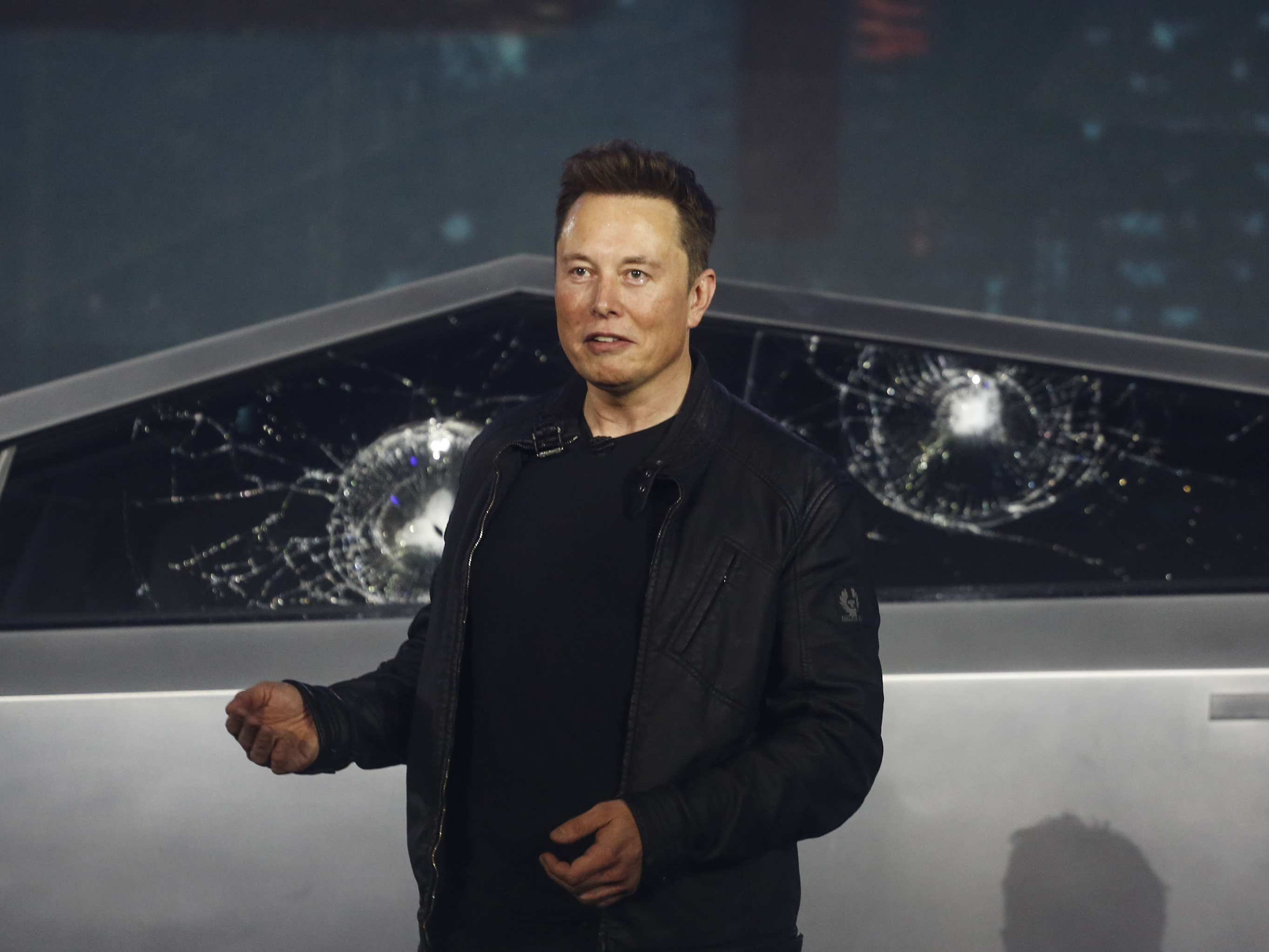
The Cybertruck’s unique design and material choice necessitated a complete rethinking of manufacturing processes. Traditional automotive assembly lines are optimized for stamping and welding softer steel or aluminum into complex shapes, followed by extensive painting and finishing. The Cybertruck’s exoskeleton, however, requires entirely different tooling and techniques. The challenges involve working with a material so hard that conventional stamping processes are largely unsuitable for its primary structural components, leading to innovative approaches in bending and joining. Tesla is known for its ambition to reinvent manufacturing, viewing the factory itself as a “machine that builds machines.” For the Cybertruck, this philosophy has been pushed further, with new processes developed to handle the ultra-hard stainless steel, significantly simplifying the body shop in some respects while introducing new complexities in others. The focus is on leveraging the material’s inherent strength and finish to streamline production steps, potentially leading to faster assembly times and reduced capital expenditure once the processes are fully scaled. This manufacturing revolution is as much a part of the Cybertruck’s invention as its design and powertrain, aiming to redefine how vehicles are built.
Beyond the Blueprint: Bringing the Cybertruck to Life
The invention of the Cybertruck extends far beyond its initial conceptualization and radical design; it encompasses the arduous process of bringing such a technologically advanced and structurally unique vehicle into mass production. This phase involves intensive prototyping, integration of cutting-edge features, and the development of sophisticated software systems that define the modern electric vehicle experience.
Prototyping and Iteration: From Concept to Reality
Translating the Cybertruck’s bold vision into a production-ready vehicle required extensive prototyping and iterative development. Early prototypes, first unveiled in 2019, showcased the vehicle’s striking form and core capabilities. However, moving from a demonstration model to a mass-producible, road-legal, and safe vehicle involved countless hours of engineering refinement. This process included rigorous testing of the exoskeleton’s crashworthiness, optimizing the rigidity and structural integrity, and perfecting the fit and finish of its unique panels. Every component, from the unique structural battery pack to the steer-by-wire system, underwent numerous revisions to meet performance targets, regulatory requirements, and manufacturing feasibility. Tesla’s approach often involves rapid iteration, leveraging data from testing and early production runs to continuously improve the design and engineering, reflecting a software-development mindset applied to hardware. The journey from initial concept to a deliverable product is a testament to persistent problem-solving within an intense engineering environment, ensuring that the inventive ideas are robustly implemented.
Key Technological Features: Power, Performance, and Practicality
Beyond its distinctive exterior, the Cybertruck is packed with advanced technological features that underscore its “invention” status in the automotive world. Its electric powertrain, leveraging Tesla’s proven battery technology and high-efficiency motors, promises astonishing performance figures for a truck, including rapid acceleration that rivals sports cars. The vehicle integrates an adaptive air suspension system, allowing for significant ride height adjustment to enhance off-road capability and cargo loading convenience. The steer-by-wire system, a feature rarely seen in production vehicles, eliminates a mechanical connection between the steering wheel and the front wheels, enabling precise control and potentially unlocking more advanced autonomous driving functionalities. Furthermore, the Cybertruck boasts a comprehensive suite of onboard power capabilities, with outlets providing up to 11.5 kW of power, effectively turning the vehicle into a mobile power station – a game-changing feature for work sites, camping, and emergency situations. These practical innovations, combined with its robust structure, position the Cybertruck as a highly capable and versatile tool, reinventing utility for the electric age.
Software Integration and Autonomous Aspirations
As with all Tesla vehicles, the Cybertruck’s “invention” is incomplete without acknowledging the profound role of software. The vehicle’s infotainment system, vehicle controls, and advanced driver-assistance features are all deeply integrated and continuously improved through over-the-air (OTA) updates. This software-defined approach means the Cybertruck is not a static product; its capabilities and user experience can evolve and improve over its lifespan. The hardware platform is designed to support Tesla’s ambitious Full Self-Driving (FSD) capabilities, with an array of cameras, sensors, and powerful onboard computing enabling sophisticated autonomous functions. The seamless integration of software not only enhances user interaction and safety but also represents a fundamental shift in how vehicles are developed and maintained. It ensures that the Cybertruck remains at the forefront of automotive technology, constantly adapting and expanding its utility through digital innovation, making its “invention” an ongoing process of technological refinement.
Defining ‘Invention’ in the Modern Tech Landscape
The story of the Cybertruck forces a re-evaluation of what “invention” truly means in the context of large-scale technology and complex product development. It transcends the romantic notion of a solitary figure in a garage, evolving into a multifaceted process driven by vision, collective expertise, and persistent innovation.
Individual Genius vs. Collective Innovation
While Elon Musk’s visionary leadership and audacious directives were undeniably the catalyst for the Cybertruck, its realization is a testament to the power of collective innovation. In the modern tech landscape, truly groundbreaking products rarely emerge from a single individual’s effort. Instead, they are the result of thousands of engineers, designers, scientists, and technicians collaborating intensely, each contributing specialized knowledge to solve intricate problems. Musk’s role was perhaps more akin to an architect sketching a revolutionary blueprint and an unyielding conductor ensuring the orchestra played his demanding score. The actual “invention” then becomes a distributed phenomenon, where breakthroughs occur at various levels—from material science innovations in the exoskeleton, to novel manufacturing processes, to sophisticated software algorithms governing the vehicle’s operation. This collaborative model underscores how large-scale technological inventions are a synthesis of individual genius driving a collective, highly specialized effort. It’s a hallmark of the modern tech sector, where interdisciplinary teams are crucial for tackling complex engineering challenges.

The Legacy of Disruption: Cybertruck’s Place in Automotive History
The Cybertruck’s invention is poised to leave an indelible mark on automotive history, primarily through its disruptive approach to design, engineering, and manufacturing. It represents a bold challenge to over a century of conventional vehicle design and production. By pushing boundaries with its exoskeleton structure, choice of ultra-hard stainless steel, and steer-by-wire technology, Tesla has not only created a unique product but has also showcased alternative pathways for future vehicle development. Its polarizing aesthetics might not appeal to everyone, but its existence undeniably sparks conversations about the future of transportation, material innovation, and sustainable manufacturing. The Cybertruck’s legacy will be defined not just by its sales figures, but by its ability to inspire further innovation, force competitors to rethink their own design philosophies, and fundamentally alter consumer perceptions of what a truck—and indeed, any vehicle—can be. It is an invention that embodies Tesla’s core mission: to accelerate the world’s transition to sustainable energy by demonstrating what is technologically possible when traditional constraints are challenged. Its true invention lies in its comprehensive re-imagining of a product category, pushing technological and aesthetic boundaries simultaneously.
aViewFromTheCave is a participant in the Amazon Services LLC Associates Program, an affiliate advertising program designed to provide a means for sites to earn advertising fees by advertising and linking to Amazon.com. Amazon, the Amazon logo, AmazonSupply, and the AmazonSupply logo are trademarks of Amazon.com, Inc. or its affiliates. As an Amazon Associate we earn affiliate commissions from qualifying purchases.