
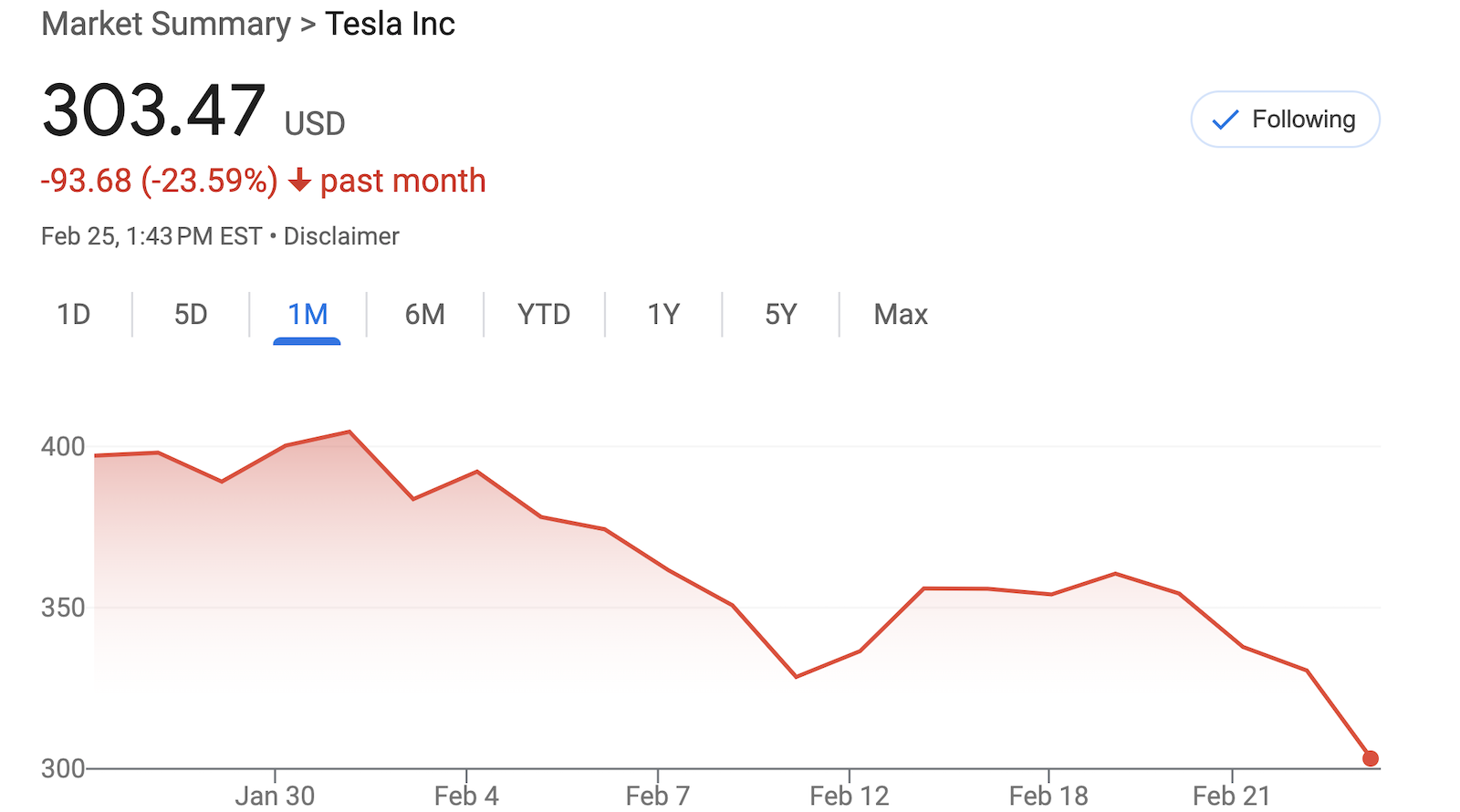
For the better part of a decade, Tesla was the undisputed darling of Wall Street. Its stock price defied conventional financial gravity, trading at multiples that made traditional legacy automakers look like relics of a bygone era. However, the recent trajectory of TSLA has been a sobering reminder that even the most innovative companies are subject to the cold realities of the balance sheet, macroeconomic shifts, and the unforgiving nature of the public markets.
To understand why Tesla’s stock is going down, one must look beyond the daily news cycle and examine a convergence of financial factors: narrowing profit margins, a slowdown in global electric vehicle (EV) demand, intense competition in key markets, and a fundamental shift in investor sentiment regarding the company’s valuation.
The Erosion of Profit Margins and the Price War Dilemma
For years, Tesla’s primary competitive advantage—aside from its technology—was its industry-leading profit margins. While legacy manufacturers struggled with the high overhead of internal combustion engine (ICE) production and the expensive transition to electric, Tesla enjoyed high margins that allowed it to reinvest aggressively. However, that cushion has begun to thin significantly.
The Strategy of Price Cutting
In an effort to sustain delivery growth and defend its market share, Tesla has engaged in a series of aggressive price cuts across its major markets, including the United States, China, and Europe. From a business finance perspective, this is a double-edged sword. While lower prices can stimulate volume in the short term, they have a direct and immediate impact on gross margins. Investors who once valued Tesla as a high-margin software-adjacent tech company are now forced to re-evaluate it as a hardware manufacturer sensitive to pricing pressures.
Inventory Buildup and Operating Expenses
Financial reports have recently indicated a growing gap between the number of vehicles Tesla produces and the number it delivers. This inventory buildup is a red flag for analysts. Stagnant inventory ties up capital, increases storage costs, and suggests that the “infinite demand” narrative that once propelled the stock is no longer valid. When production outpaces demand, the financial pressure to further reduce prices increases, creating a feedback loop that continues to weigh on the stock’s performance.
The High Cost of the Cybertruck Ramp-up
The Cybertruck was intended to be a flagship of innovation, but its financial impact has been a drag on the short-term bottom line. Scaling production for a vehicle with such a radical design and specialized materials is notoriously expensive. The capital expenditure required to bring the Cybertruck to volume production has coincided with a period of lower revenue growth, further squeezing the free cash flow that investors monitor so closely.
Macroeconomic Headwinds and Interest Rate Sensitivity
Tesla does not operate in a vacuum. The broader economic environment has shifted dramatically from the low-interest-rate “easy money” era that saw Tesla’s valuation skyrocket.
The Impact of High Interest Rates on Consumer Financing
The vast majority of consumers purchase vehicles through financing. As the Federal Reserve and other central banks raised interest rates to combat inflation, the monthly cost of owning a Tesla increased significantly, even if the sticker price remained the same. For a company that targets the “mass-market luxury” segment, these interest rate hikes serve as a direct deterrent to sales. From an investing standpoint, Tesla is more sensitive to interest rate fluctuations than many other tech stocks because its core product is a high-ticket capital purchase for households.
Global Economic Slowdown and Inflationary Pressures
In addition to borrowing costs, general inflationary pressures have reduced the discretionary income of potential EV buyers. While the early adopters of EVs were often insulated from economic shifts, the “next wave” of buyers is much more price-sensitive. As the global economy flirts with stagnation, the appetite for a new $45,000 to $60,000 vehicle has dampened, leading institutional investors to lower their growth projections for the company.

The China Factor and Intensifying Global Competition
For a long time, Tesla was the “only game in town” for premium electric vehicles. That era has officially ended, particularly in China, which is the world’s largest and most competitive EV market.
The Rise of BYD and Local Manufacturers
In China, Tesla faces a formidable opponent in BYD, along with other domestic players like Xiaomi, Li Auto, and Nio. These companies benefit from lower labor costs, integrated supply chains, and strong government support. Crucially, they are producing vehicles that are often more technologically integrated with the Chinese digital ecosystem at a lower price point than Tesla’s aging lineup. The loss of market share in China is a major driver of the stock’s downward trend, as China was previously seen as Tesla’s most significant growth engine.
Legacy Automakers Catching Up
In the West, legacy manufacturers like Hyundai, Kia, and even Ford have begun to produce viable EV alternatives. While Tesla still maintains a superior charging network (the Supercharger system), the gap in range and performance is closing. As consumers gain more options, Tesla’s “brand moat” is being tested. Financial analysts are increasingly viewing Tesla not as an untouchable monopoly, but as one player in a crowded and competitive automotive sector.
Valuation Realignment and Investor Sentiment
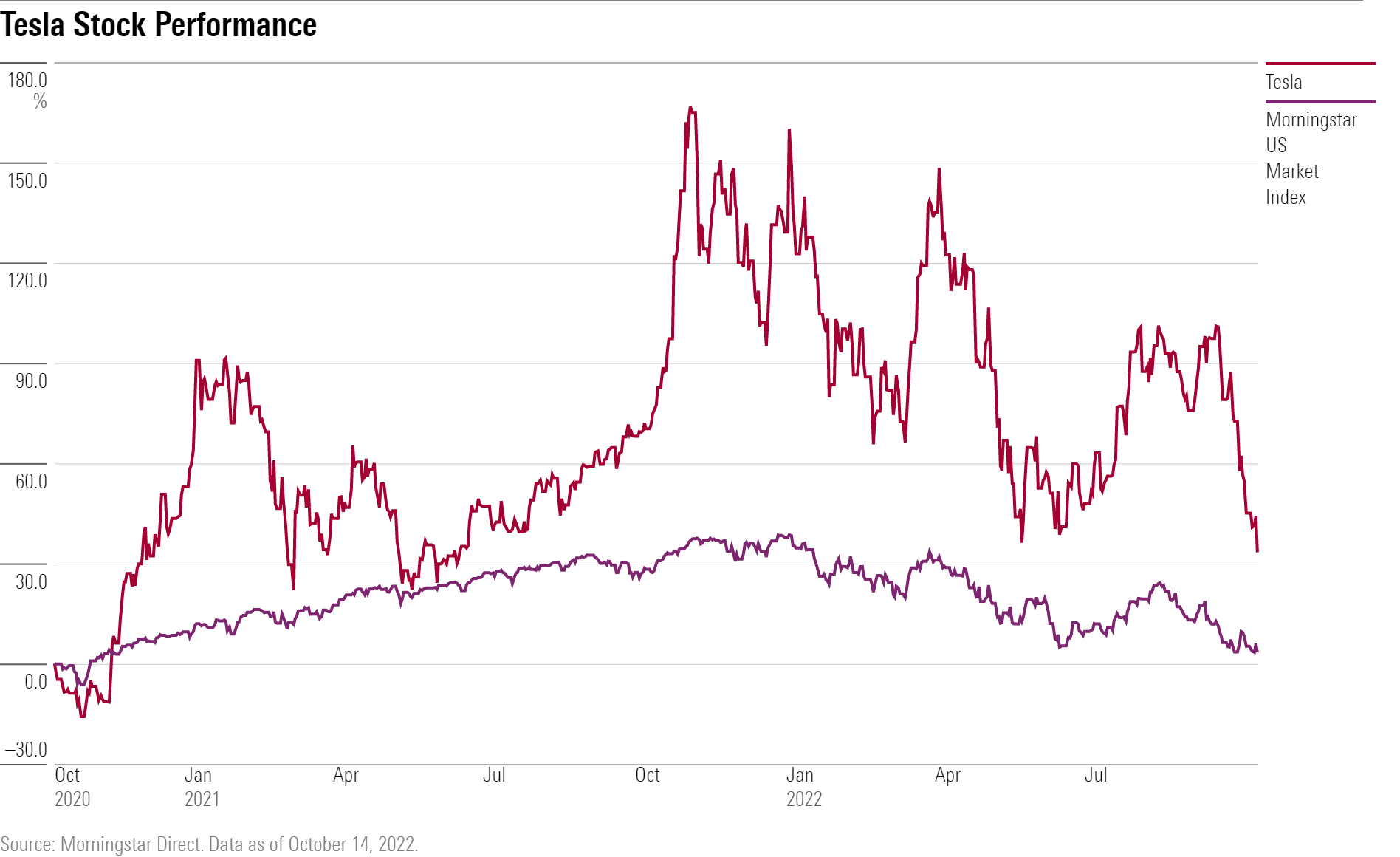
Perhaps the most significant reason for the stock’s decline is a fundamental shift in how the market values the company. For years, Tesla was valued using “tech multiples”—trading at a Price-to-Earnings (P/E) ratio that was 10 to 20 times higher than that of Ford or Toyota.
From Growth Stock to Value Uncertainty
A high P/E ratio is predicated on the expectation of hyper-growth. When Tesla’s delivery growth targets began to slip from the promised 50% compound annual growth rate (CAGR), the justification for its premium valuation began to crumble. If Tesla is “just” a car company, its stock is still significantly overvalued by traditional metrics. The current downward trend reflects the market’s attempt to find a new, more realistic price floor that balances Tesla’s automotive business with its future potential in AI and robotics.
The “Key Man” Risk and Brand Dilution
In the realm of personal branding and corporate identity, Elon Musk has always been inextricably linked to Tesla’s stock price. However, in recent years, his involvement with other ventures—specifically the acquisition of X (formerly Twitter)—has introduced what institutional investors call “key man risk.” Concerns over Musk’s divided attention, coupled with his increasingly polarizing public persona, have led some ESG-focused (Environmental, Social, and Governance) funds to reduce their holdings. When the face of a company becomes a source of volatility rather than a source of confidence, the stock inevitably suffers.
The Pivot to AI and Robotaxis
To counter the narrative of slowing car sales, Tesla has pivoted its messaging toward artificial intelligence, autonomous driving (FSD), and the “Robotaxi” concept. While this offers high upside, these are long-term bets with significant regulatory and technical hurdles. For many investors, the shift feels like a move to “change the goalposts” when the core automotive business is struggling. The market is currently demanding tangible financial results from these AI ventures, and until those results appear on the quarterly earnings reports, the stock remains under pressure.
Conclusion: A Transition Toward Maturity
Tesla is currently in a difficult transition period. It is moving from its “hyper-growth” phase into a more mature phase of its corporate lifecycle. The decline in stock price is a reflection of the friction inherent in this transition. The company is facing a “perfect storm” of high interest rates, thinning margins due to competition, and a valuation that is being re-indexed to reflect its reality as a manufacturing giant.
For investors, the question is no longer whether Tesla can build cars, but whether it can maintain its status as a high-margin technology leader in a world where everyone else is now playing the same game. Until Tesla can demonstrate a clear path to stabilizing its margins or successfully monetizing its AI and software services, the stock is likely to remain sensitive to every piece of data that suggests the EV market is maturing. The current downward trend is not necessarily a sign of failure, but rather a market-driven recalibration of what a sustainable, profitable future looks like for the world’s most famous electric vehicle manufacturer.
aViewFromTheCave is a participant in the Amazon Services LLC Associates Program, an affiliate advertising program designed to provide a means for sites to earn advertising fees by advertising and linking to Amazon.com. Amazon, the Amazon logo, AmazonSupply, and the AmazonSupply logo are trademarks of Amazon.com, Inc. or its affiliates. As an Amazon Associate we earn affiliate commissions from qualifying purchases.