
For businesses with employees, navigating the landscape of federal tax obligations can often feel like deciphering a complex code. Among the myriad forms and deadlines, the IRS Form 941, Employer’s QUARTERLY Federal Tax Return, stands as a critical pillar of compliance. This form isn’t merely a bureaucratic requirement; it’s a fundamental mechanism through which employers report and remit the taxes withheld from their employees’ paychecks, alongside their own share of certain payroll taxes. Understanding the Form 941 is not just about avoiding penalties; it’s about robust financial management, maintaining good standing with federal authorities, and ensuring the smooth operation of your business’s financial processes.

This comprehensive guide will demystify the Form 941, exploring its purpose, who needs to file it, the essential information it collects, and the critical timelines and best practices associated with its completion.
The Cornerstone of Employer Payroll Tax Compliance
At its core, Form 941 is the IRS’s primary tool for monitoring and collecting federal income tax, Social Security tax, and Medicare tax that employers are mandated to withhold from their employees’ wages. It also accounts for the employer’s matching contributions to Social Security and Medicare. This quarterly reporting ensures a steady flow of tax revenue to the government and provides a structured method for businesses to fulfill their employment tax responsibilities.
Defining Form 941: More Than Just a Number
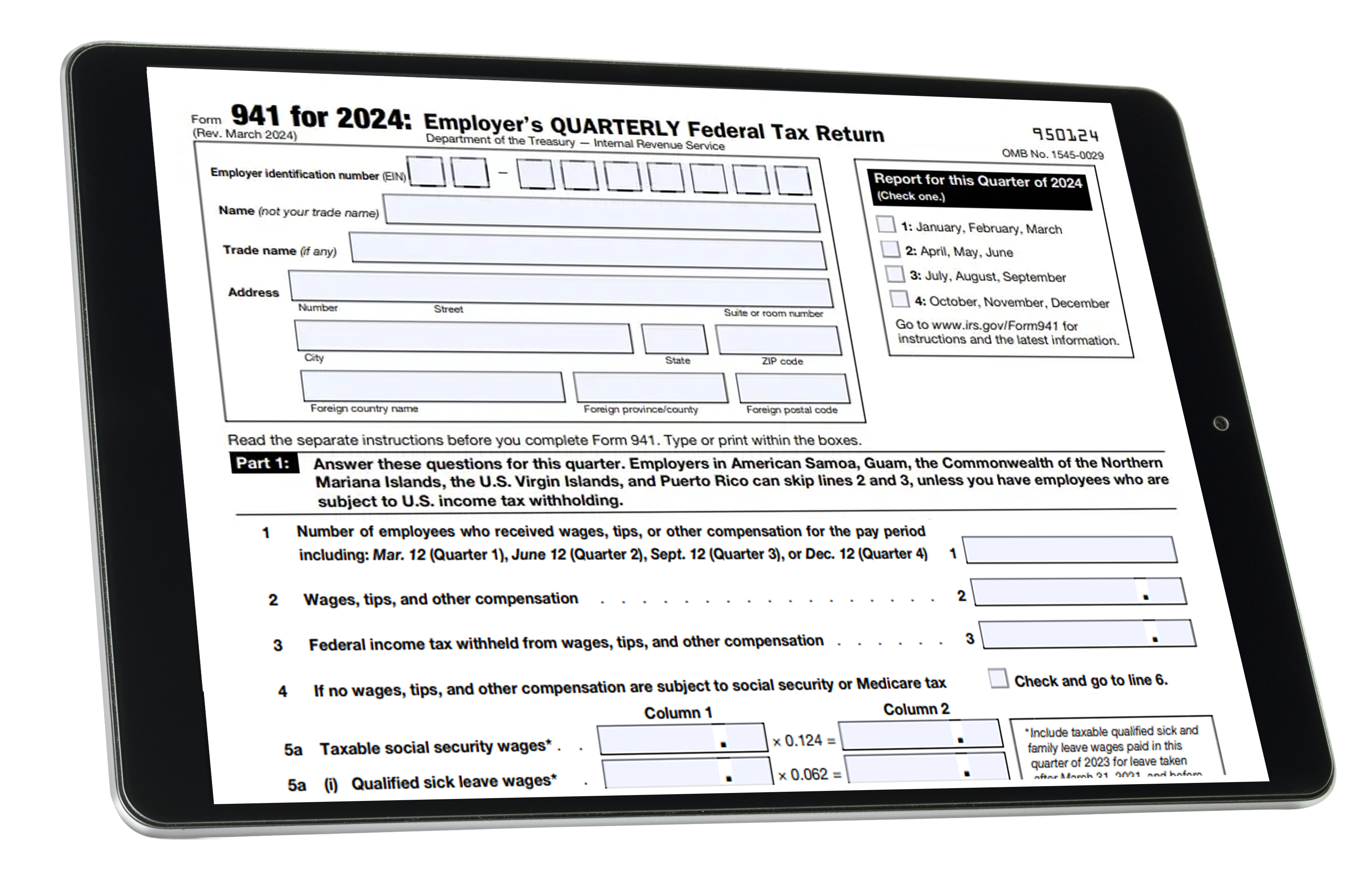
Form 941 is titled “Employer’s QUARTERLY Federal Tax Return” for a reason. Unlike annual forms, this document requires businesses to summarize their payroll tax activities every three months. It captures a snapshot of the total wages paid, tips reported, and the corresponding federal income tax, Social Security tax, and Medicare tax that have been either withheld from employees’ earnings or contributed directly by the employer. Think of it as a crucial financial health check, not just for the government, but for your own business’s accounting accuracy.
Who Needs to File: Understanding Your Employer Obligations
Generally, if you pay wages to one or more employees (and are not specifically exempt from filing), you are required to file Form 941. This includes most businesses, whether sole proprietorships, partnerships, or corporations, that withhold federal income tax, Social Security, or Medicare taxes from employee paychecks. There are a few exceptions:
- Seasonal Employers: If you hire employees for only part of the year, you may not need to file for quarters when you pay no wages. However, you must indicate on the form that you are a seasonal employer.
- Employers of Household Employees: If you only employ household workers (like nannies or housekeepers), you typically report and pay these taxes on Schedule H (Form 1040) with your personal income tax return, not Form 941.
- Agricultural Employers: If you only employ farm workers, you generally use Form 943, Employer’s Annual Federal Tax Return for Agricultural Employees.
- Very Small Employers: Businesses with very small annual employment tax liabilities (typically less than $1,000 per year) may be eligible to file Form 944, Employer’s ANNUAL Federal Tax Return, instead of Form 941. This is an elective option and not automatic.
For the vast majority of businesses with employees, Form 941 is a non-negotiable part of their quarterly financial routine.
The Core Purpose: Ensuring Federal Withholding and Contributions
The primary purpose of Form 941 is twofold:
- Reporting Withheld Taxes: To accurately report the federal income tax and both employee and employer portions of Social Security and Medicare taxes that were either withheld from employees’ wages or contributed by the employer during the quarter.
- Facilitating Payment: To ensure that these collected and contributed taxes are deposited with the U.S. Treasury on a regular basis, typically through the Electronic Federal Tax Payment System (EFTPS). The 941 acts as the reconciliation document for these deposits.
By fulfilling these obligations, businesses play a vital role in funding Social Security and Medicare benefits, as well as general government operations, while ensuring their employees meet their individual income tax responsibilities.
Deconstructing the Form: Key Information and Sections
While the Form 941 itself is relatively short (just one page plus instructions), each line item carries significant weight, requiring meticulous attention to detail. Understanding what each section asks for is crucial for accurate reporting and financial integrity.
Wages, Tips, and Other Compensation: The Foundation
Part 1, Line 1 of Form 941 requires you to report the total amount of wages, tips, and other compensation paid to all employees during the quarter. This figure is the bedrock upon which subsequent tax calculations are built. It’s essential to ensure this number aligns with your payroll records and eventually, with the W-2 forms you’ll issue at year-end.
Federal Income Tax Withheld: Employee Contributions
Line 2 reports the total amount of federal income tax you withheld from your employees’ paychecks during the quarter. This is tax that employees owe, but you, as the employer, are responsible for collecting and remitting to the IRS. Accuracy here directly impacts your employees’ tax liabilities come tax season.
Social Security and Medicare Taxes: Shared Responsibility
This section details both the employee and employer portions of Social Security and Medicare taxes.
- Social Security Tax (Lines 5a-5a(i)): This is typically 6.2% for employees and 6.2% for employers on wages up to the annual Social Security wage base limit. The form calculates the total and any adjustments.
- Medicare Tax (Lines 5c-5c(i)): This is typically 1.45% for employees and 1.45% for employers on all wages, with no wage base limit. It also includes the Additional Medicare Tax, a 0.9% tax employers must withhold from an employee’s wages paid in excess of $200,000 for the calendar year, although the employer does not contribute to this additional tax.
Understanding these percentages and the wage base limits is critical, as errors can lead to significant discrepancies.
Taxable Social Security and Medicare Wages and Tips: The Calculation Base
Lines 5a and 5c specifically ask for the total wages and tips subject to Social Security and Medicare taxes, respectively. These figures are crucial for calculating the correct tax amounts. For Social Security, it’s important to remember the annual wage base limit, meaning wages above this threshold are not subject to Social Security tax, though they remain subject to Medicare tax.
Adjustments and Credits: Nuances in Reporting
Form 941 also provides sections for various adjustments and credits. These can include adjustments for fractions of cents, sick pay, group-term life insurance, or qualified small business payroll tax credit for increasing research activities. These nuances highlight the complexity of payroll tax and the importance of accurate record-keeping to justify any adjustments.
Determining Your Tax Liability: A Detailed Breakdown
Part 2 of Form 941, “Tell us about your deposit schedule and tax liability for this quarter,” is where you detail your total tax liability for the quarter and indicate your deposit schedule (either monthly or semi-weekly). This section requires you to break down your total liability month-by-month and, for semi-weekly depositors, even specific dates. This part is vital for reconciling your actual tax deposits with your reported liability and is a key area the IRS scrutinizes for compliance.
Navigating Filing Deadlines and Payment Requirements
Missing deadlines or making incorrect payments can result in penalties and interest. Therefore, understanding the quarterly filing schedule and associated payment requirements is paramount for any business.
Quarterly Filing: The Calendar for Compliance
Form 941 is due by the last day of the month following the end of the quarter.
- Quarter 1 (January 1 – March 31): Due April 30
- Quarter 2 (April 1 – June 30): Due July 31
- Quarter 3 (July 1 – September 30): Due October 31
- Quarter 4 (October 1 – December 31): Due January 31 of the next year
If any due date falls on a weekend or legal holiday, the deadline shifts to the next business day. It’s always prudent to file well before the deadline to avoid any last-minute issues.
Payment Schedules: How and When to Deposit Taxes
The frequency of your tax deposits (monthly or semi-weekly) is determined by your total tax liability from a lookback period.
- Monthly Depositor: If your total tax liability during the lookback period was $50,000 or less, you are a monthly depositor. You must deposit taxes by the 15th day of the next month.
- Semi-weekly Depositor: If your total tax liability during the lookback period was more than $50,000, you are a semi-weekly depositor. If your payday is Wednesday, Thursday, or Friday, you must deposit taxes by the following Wednesday. If your payday is Saturday, Sunday, Monday, or Tuesday, you must deposit taxes by the following Friday.
- Accumulated Liability of $100,000 or More: If you accumulate $100,000 or more in tax liability on any day during a monthly or semi-weekly deposit period, you must deposit the tax by the next business day. This is known as the “one-day rule.”
All federal tax deposits must be made electronically, primarily through the Electronic Federal Tax Payment System (EFTPS).
Electronic Filing vs. Paper Submission: Choosing Your Method
While it’s possible to paper file Form 941, the IRS strongly encourages and often mandates electronic filing for most businesses, especially if using a payroll provider. Electronic filing (e-file) through authorized e-file providers or software offers advantages such as faster processing, immediate confirmation of receipt, and reduced errors. For modern businesses, embracing digital solutions for tax compliance is not just convenient but often a best practice for accuracy and efficiency.
Dealing with Underpayments or Overpayments: Corrections and Refunds
Mistakes happen. If you discover an error on a previously filed Form 941, you’ll need to file Form 941-X, Adjusted Employer’s QUARTERLY Federal Tax Return or Claim for Refund. This form allows you to correct errors related to wages, tips, and taxes for a specific quarter. Whether you owe additional taxes (underpayment) or are due a refund (overpayment), Form 941-X is the correct channel to rectify past filings. Promptly addressing errors is critical to minimize penalties and interest.
Beyond the Basics: Common Pitfalls and Best Practices
Navigating Form 941 requires more than just understanding the lines; it demands strategic financial planning and diligent execution to avoid costly errors and maintain financial health.
The High Cost of Non-Compliance: Penalties and Interest
The IRS imposes significant penalties for failure to file on time, failure to pay on time, and failure to make accurate deposits. These penalties can compound, quickly becoming a substantial financial burden for businesses.
- Failure to Deposit Penalty: Can range from 2% to 15% of the unpaid amount, depending on how late the deposit is.
- Failure to File Penalty: 5% of the unpaid tax for each month or part of a month that a return is late, capped at 25%.
- Failure to Pay Penalty: 0.5% of the unpaid taxes for each month or part of a month that taxes remain unpaid, also capped at 25%.
Beyond monetary penalties, repeated non-compliance can lead to more severe IRS actions, including liens or levies, severely impacting a business’s operational capacity and creditworthiness.
Record-Keeping Essentials: Your Audit Trail
Thorough and organized record-keeping is not just a best practice; it’s a legal requirement. You must keep all employment tax records for at least four years after the date the tax becomes due or is paid, whichever is later. This includes:
- Amounts and dates of wage, annuity, and pension payments.
- Amounts of tips reported.
- The fair market value of in-kind wages paid.
- Employee names, addresses, and Social Security numbers.
- Dates of employment.
- Copies of Forms W-4, W-2, 941, and deposit records.
These records serve as your defense in the event of an audit and are indispensable for accurate quarterly and annual reporting.
Leveraging Payroll Software and Professionals: Smart Financial Management
For many businesses, especially as they grow, attempting to manage payroll taxes manually can be overwhelming and prone to error. Leveraging modern payroll software or engaging a professional payroll service or accountant offers significant advantages:
- Automation: Software can automatically calculate withholdings, track liabilities, and generate forms.
- Accuracy: Reduces human error in calculations and reporting.
- Compliance: Stays up-to-date with changing tax laws and regulations.
- Time-Saving: Frees up valuable time for business owners to focus on core operations.
- Expertise: Payroll professionals offer specialized knowledge and can provide peace of mind.
This investment in financial tools and expertise can prevent costly mistakes and ensure seamless compliance.
Differentiating from Other Forms: 940 vs. 944
It’s important not to confuse Form 941 with other employer tax forms:
- Form 940, Employer’s Annual Federal Unemployment (FUTA) Tax Return: This form is filed annually to report and pay federal unemployment taxes, which fund unemployment benefits for workers. It’s distinct from the Social Security and Medicare taxes reported on Form 941.
- Form 944, Employer’s Annual Federal Tax Return: As mentioned earlier, this is for very small employers whose annual employment tax liability is $1,000 or less. It’s an annual return, replacing the quarterly 941, but requires explicit permission from the IRS to file. Most employers will file Form 941.
Understanding these distinctions ensures you’re filing the correct forms at the correct times.
The Strategic Importance of Accurate 941 Reporting for Businesses
Beyond mere compliance, accurate and timely Form 941 reporting carries strategic financial implications for any business.
Impact on Cash Flow and Financial Planning
Properly managing payroll tax liabilities directly impacts your business’s cash flow. Taxes withheld and employer contributions represent significant outflows of cash. Accurate forecasting and timely deposits prevent sudden, large tax bills that can strain working capital. Integrating 941 requirements into your financial planning ensures adequate funds are set aside, preventing liquidity issues.
Maintaining Good Standing with the IRS
A clean record with the IRS is invaluable. Consistent and accurate filing of Form 941 helps build a history of compliance, which can be beneficial in future interactions with tax authorities. Conversely, a history of late filings or underpayments can flag your business for increased scrutiny.
Facilitating Year-End Reporting (W-2s)
The data reported on your quarterly 941 forms is the foundation for the annual Forms W-2, Wage and Tax Statement, that you provide to your employees and the Social Security Administration. Inconsistencies between your 941s and W-2s will raise red flags with the IRS and SSA, potentially leading to audits and penalties. Ensuring accuracy throughout the year simplifies year-end processes.
Empowering Informed Business Decisions
Understanding your total payroll tax burden through accurate 941 reporting provides critical data for informed business decisions. It helps in budgeting for new hires, analyzing labor costs, and understanding the true cost of employment. This financial clarity is essential for sustainable growth and strategic planning.
In conclusion, Form 941 is far more than just another piece of paperwork. It is a vital component of federal tax law that dictates how businesses manage their payroll, fulfill their tax obligations, and contribute to the nation’s economic infrastructure. Mastering its requirements is not just about avoiding penalties; it’s about sound financial governance, fostering employee trust through accurate tax withholding, and ensuring the long-term viability and success of your enterprise. Businesses that prioritize meticulous Form 941 compliance demonstrate a commitment to financial responsibility and operational excellence.
aViewFromTheCave is a participant in the Amazon Services LLC Associates Program, an affiliate advertising program designed to provide a means for sites to earn advertising fees by advertising and linking to Amazon.com. Amazon, the Amazon logo, AmazonSupply, and the AmazonSupply logo are trademarks of Amazon.com, Inc. or its affiliates. As an Amazon Associate we earn affiliate commissions from qualifying purchases.