
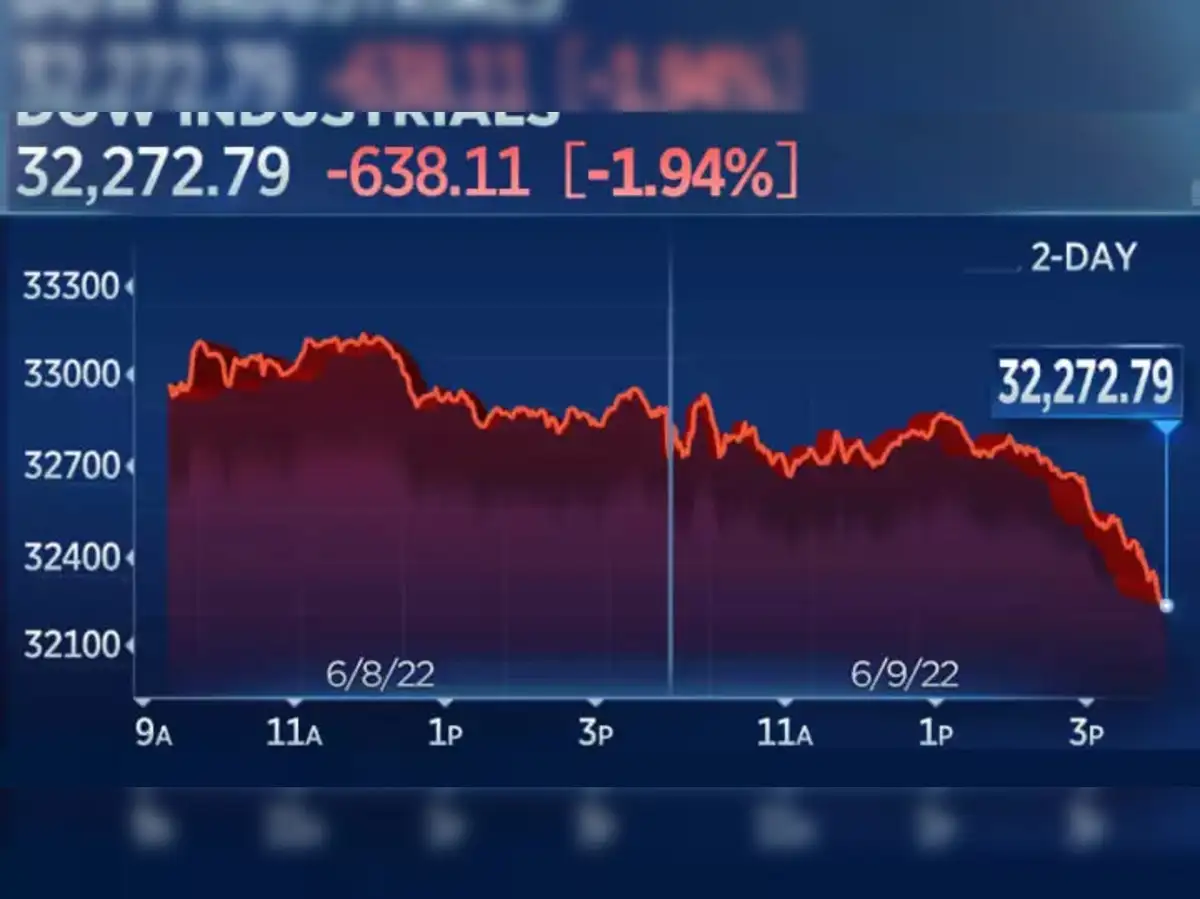
The Dow Jones Industrial Average (DJIA), often simply called “the Dow,” stands as one of the most widely recognized barometers of the U.S. stock market and the broader economic health of the nation. Comprising 30 of America’s largest and most influential publicly traded companies, its daily movements are keenly watched by individual investors, financial professionals, and policymakers alike. When the Dow experiences a decline, especially a significant one, it invariably sparks questions: “Why is the Dow down today?” The answer is rarely singular; instead, it typically involves a complex interplay of macroeconomic forces, corporate performance, geopolitical developments, and market psychology. Understanding these underlying drivers is crucial not only for interpreting daily market fluctuations but also for making informed investment decisions. A drop in the Dow can signal various things, from temporary profit-taking to deeper concerns about the economy’s trajectory, interest rate policy, or global stability. This article delves into the common catalysts behind a “down day” for the Dow, providing a professional and insightful perspective for navigating market volatility.
Macroeconomic Headwinds Weighing on Investor Sentiment
One of the most potent forces influencing the Dow’s direction is the prevailing macroeconomic environment. Investors constantly assess a myriad of economic indicators and policies to gauge the future prospects for corporate earnings and economic growth. Negative signals in these areas can quickly translate into selling pressure across the market.
Inflationary Pressures and Interest Rate Expectations
Perhaps the most significant macroeconomic concern in recent times has been inflation. When consumer prices rise persistently and rapidly, it erodes purchasing power and increases the cost of doing business, which can squeeze corporate profit margins. Central banks, most notably the U.S. Federal Reserve, typically respond to high inflation by tightening monetary policy – primarily by raising interest rates. Higher interest rates make borrowing more expensive for businesses and consumers, slowing down economic activity and potentially dampening demand.
Investors react to inflation reports (such as the Consumer Price Index, or CPI, and Producer Price Index, or PPI) and Federal Reserve announcements with extreme sensitivity. A hotter-than-expected inflation report or a more hawkish stance from the Fed (indicating more aggressive rate hikes) can trigger a market sell-off, as investors anticipate slower economic growth and reduced corporate profitability in a higher interest rate environment. Moreover, future interest rate expectations directly impact the valuation of equities, especially growth stocks, as higher discount rates reduce the present value of future earnings. A strong dollar, often a consequence of higher U.S. interest rates, can also make U.S. exports more expensive, potentially hurting multinational corporations that derive a significant portion of their revenue from overseas.
Labor Market Dynamics and Consumer Confidence
The health of the labor market provides critical insights into the broader economy. Robust job growth and rising wages typically signal a strong economy with healthy consumer spending. However, the picture can be nuanced. If wage growth outpaces productivity, it can fuel inflation, prompting the Fed to act. Conversely, unexpected rises in unemployment or a significant slowdown in job creation can signal an impending economic contraction, leading investors to anticipate weaker consumer demand and corporate earnings. Data points like the monthly jobs report (Non-Farm Payrolls), unemployment rate, and average hourly earnings are closely scrutinized.
Consumer confidence, often measured by indices from the Conference Board or the University of Michigan, reflects how optimistic consumers are about current and future economic conditions. A decline in consumer confidence suggests that people may be less inclined to spend, invest, or take on debt, which can dampen economic activity and subsequently impact corporate revenues. When consumers feel less secure about their financial future or the economy, they tend to retrench, which can have a ripple effect across various sectors, from retail to manufacturing, eventually putting downward pressure on the Dow.
Global Economic Slowdown Fears and International Trade
The U.S. economy does not operate in a vacuum. A significant portion of the revenue generated by Dow components comes from international markets. Consequently, economic conditions in major global economies like China, Europe, or other emerging markets can profoundly impact the Dow. Concerns about a global economic slowdown, perhaps triggered by recessions in key trading partners, geopolitical instability, or supply chain disruptions, can lead investors to pare back their risk exposure.
International trade policies and disputes also play a crucial role. Trade wars, tariffs, or protectionist measures can disrupt global supply chains, increase the cost of goods, and reduce market access for multinational corporations. For example, tensions between major economic powers can lead to uncertainty and reduced corporate investment, directly affecting companies within the Dow that have extensive international operations and revenue streams. Currency fluctuations, particularly a strengthening U.S. dollar, can also make American goods more expensive abroad, further impacting the international competitiveness and profitability of Dow components.
Corporate Performance and Sectoral Weakness
While macroeconomic factors set the stage, the performance of individual companies within the Dow and specific sectors can directly explain daily declines. The Dow is an index composed of 30 specific companies, and their fortunes directly dictate the index’s movement.
Disappointing Earnings Reports from Dow Components
Earnings season is a critical period for the stock market. Companies release their quarterly financial results, providing insights into their revenue, profits, and future outlook. When a significant Dow component, especially one with a heavy weighting in the index (like Apple, Microsoft, or Johnson & Johnson), reports earnings or revenue that miss analyst expectations, or provides a weaker-than-anticipated future guidance, its stock price often falls sharply. Given the price-weighted nature of the Dow, a substantial drop in a high-priced stock can disproportionately drag the entire index lower.
Investor disappointment can stem from various factors within an earnings report: lower-than-expected sales, reduced profit margins due to rising costs, inventory build-ups, or a cautious outlook on future demand. Even companies that meet expectations can see their stocks fall if their outlook suggests slowing growth or increased uncertainty. A string of such disappointing reports from several Dow companies in a short period can create a broader negative sentiment, leading to a significant downdraft for the index.
Sector-Specific Challenges
Beyond individual corporate performance, entire sectors can face headwinds that contribute to the Dow’s decline. The Dow encompasses companies from diverse industries, including technology, financials, healthcare, industrials, and consumer goods. Weakness in one or more of these major sectors can pull the index down.
For instance, a downturn in the housing market might negatively impact financial institutions (e.g., JPMorgan Chase) or industrial companies (e.g., Caterpillar) that supply construction equipment. Rising energy prices could squeeze airlines (e.g., Boeing, indirectly due to supplier costs) and transportation companies, while a slowdown in consumer spending would hit retail and consumer discretionary stocks (e.g., Walmart). Regulatory changes affecting pharmaceutical companies (e.g., Merck, Johnson & Johnson) or technology giants (e.g., Apple, Microsoft, Salesforce) can also create sector-specific anxieties that spread to the broader index. When a sector that holds significant weight within the Dow faces particular challenges, whether from competition, changing consumer preferences, or new regulations, its collective underperformance can significantly contribute to the Dow being down.
Geopolitical Tensions and Unforeseen Events
Global events and unexpected crises often introduce significant uncertainty into financial markets, leading investors to de-risk and sell off equities. These events, by their unpredictable nature, can cause sharp, sudden declines.

International Conflicts and Trade Wars
Major international conflicts, such as wars or significant political unrest in key regions, can have far-reaching economic consequences. They can disrupt global supply chains, drive up commodity prices (especially oil and gas), create humanitarian crises, and foster an environment of instability that discourages investment. Trade wars, characterized by retaliatory tariffs and protectionist policies between nations, can choke international commerce, increase costs for businesses, and reduce corporate profits. For instance, companies relying on complex global supply chains or exporting heavily to affected regions can see their revenues and earnings negatively impacted. The mere threat of such conflicts or trade disputes can send shivers through the market, as investors price in potential future economic damage and increased risk.
Political Uncertainty and Policy Shifts
Domestic political developments can also contribute to market volatility. Uncertainty surrounding elections, changes in government policy (e.g., tax reforms, regulatory shifts, infrastructure spending plans), or political gridlock can make it difficult for businesses to plan for the future. For example, the prospect of higher corporate taxes could reduce future earnings for Dow companies, prompting investors to sell. Similarly, a lack of clarity on crucial economic legislation or policy changes could lead to a wait-and-see approach among investors, translating into reduced market activity or even a sell-off as they navigate the unknown. Policy decisions impacting specific industries, like environmental regulations for energy companies or antitrust actions against tech giants, can also disproportionately affect Dow components within those sectors, creating broader market ripples.
Market Psychology and Technical Factors
Beyond fundamental economic and corporate news, the collective psychology of investors and technical trading patterns play a significant role in daily market movements. Sometimes, the Dow is down due to self-fulfilling prophecies or momentum selling.
Investor Fear and Risk Aversion
Financial markets are driven not just by data but also by human emotions. Fear and greed are powerful forces. When negative news headlines dominate – be it about inflation, geopolitical tensions, or corporate earnings – investor fear can take hold. This fear often leads to a phenomenon known as “risk aversion,” where investors rapidly pull money out of riskier assets like stocks and shift it into safer havens such as government bonds or gold. This flight to safety creates selling pressure across the board, pushing down stock prices, including those of Dow components. Panic selling, where investors sell simply because others are selling, can accelerate a downturn, creating a downward spiral that is difficult to stop in the short term, regardless of underlying fundamentals.
Profit-Taking and Technical Breakdowns
Sometimes, a down day is simply a result of profit-taking after a period of strong gains. Investors who have seen their portfolios grow may decide to sell a portion of their holdings to lock in profits, especially if they perceive the market to be overvalued or if there’s upcoming economic data that could introduce volatility. This natural ebb and flow of capital can lead to temporary declines.
Additionally, technical analysis plays a role. Traders and algorithmic systems often monitor specific price levels, moving averages, and chart patterns. If the Dow or a key stock within it breaks below a significant “support level” (a price point where buying interest previously emerged), it can trigger automatic sell orders and signal to technical traders that further declines are likely, exacerbating the selling pressure. Momentum indicators can also contribute; if downward momentum builds, it can attract more sellers, creating a self-reinforcing negative trend.
What Investors Should Do Amidst Volatility
When the Dow is down, it’s natural for investors to feel concerned. However, reacting rashly can often be detrimental to long-term financial goals. A thoughtful, strategic approach is essential.
Maintain a Long-Term Perspective
The most crucial advice during periods of market volatility is to maintain a long-term investment perspective. Historically, the stock market, including the Dow, has shown a remarkable ability to recover from downturns and achieve new highs over extended periods. Daily fluctuations, even significant ones, are a normal part of investing. Trying to time the market by selling during a dip and buying back later is incredibly difficult and often leads to missing out on subsequent recoveries. Focus on your long-term financial objectives and remember that short-term volatility is often noise when viewed through the lens of decades. Diversification across different asset classes, industries, and geographies can help buffer the impact of any single decline.
Reassess Portfolio Allocation
While panic selling is ill-advised, a downturn can be an opportune moment to calmly reassess your portfolio’s allocation. It might be a chance to rebalance your holdings back to your target allocation, selling some assets that have performed well (even if they are down today, they might still be above your original target weight) and buying assets that have fallen, effectively “buying the dip” in quality companies. This is also a good time to evaluate your risk tolerance and ensure your portfolio still aligns with it. Consider if your asset allocation between stocks, bonds, and cash still makes sense given your financial goals and time horizon. Some investors might consider adding defensive assets that tend to perform better during economic downturns, such as certain types of bonds or utility stocks, if their current allocation is overly concentrated in growth-oriented equities.

Stay Informed, Not Overwhelmed
It’s important to stay informed about the economic and market news driving the Dow’s movements. Understanding why the market is down can help temper emotional reactions and provide clarity. However, it’s equally important not to get overwhelmed by the constant stream of financial news, which can often be sensationalized or short-term focused. Differentiate between noise and signal. Focus on reputable financial news sources and avoid speculative rumors. Consult with a qualified financial advisor if you have significant concerns or need guidance tailored to your specific situation. A professional can help you develop a robust investment plan that accounts for market downturns and keeps you on track toward your long-term financial objectives, regardless of daily market movements.
In conclusion, a “down day” for the Dow Jones Industrial Average is a complex event, rarely attributable to a single cause. It’s usually a confluence of macroeconomic indicators, corporate performance, geopolitical events, and the often-unpredictable forces of market psychology. For investors, understanding these drivers is key to maintaining a disciplined approach and making informed decisions that align with their long-term financial goals, rather than succumbing to short-term fear.
aViewFromTheCave is a participant in the Amazon Services LLC Associates Program, an affiliate advertising program designed to provide a means for sites to earn advertising fees by advertising and linking to Amazon.com. Amazon, the Amazon logo, AmazonSupply, and the AmazonSupply logo are trademarks of Amazon.com, Inc. or its affiliates. As an Amazon Associate we earn affiliate commissions from qualifying purchases.