
In the dynamic landscape of modern technology, few companies have reshaped the future with the same profound impact as NVIDIA. From revolutionizing computer graphics to powering the artificial intelligence revolution, NVIDIA’s journey is a testament to the vision and relentless innovation of its creators. The genesis of this technological titan can be traced back to a critical juncture in computing history, brought to life by a trio of astute engineers and entrepreneurs who saw an untapped potential in accelerated computing.
NVIDIA was founded by Jensen Huang, Chris Malachowsky, and Curtis Priem. Their combined expertise, passion for pushing computational boundaries, and a shared belief in the future of parallel processing laid the groundwork for a company that would not only define the graphics processing unit (GPU) but also become a foundational pillar for artificial intelligence, scientific computing, and countless other technological advancements. Their story is not just one of entrepreneurship, but of a deeply technical vision that anticipated future needs long before they became mainstream.

The Visionaries Behind a Computing Revolution
The story of NVIDIA begins not in a gleaming corporate campus, but in the humble setting of a Denny’s diner in San Jose, California, in 1993. It was here that Jensen Huang, Chris Malachowsky, and Curtis Priem convened, armed with a clear understanding of the evolving PC market and a bold hypothesis about its future trajectory. They foresaw that the traditional CPU would struggle to meet the growing demands for visually rich applications and complex calculations, necessitating a specialized processor.
A Trio with a Bold Idea
Jensen Huang, who would go on to become NVIDIA’s charismatic and long-serving CEO, brought a background in microprocessor design from LSI Logic and a keen business acumen from his time at Advanced Micro Devices (AMD). His vision was not merely incremental improvement, but a paradigm shift in how computers would handle graphics and parallel tasks.
Chris Malachowsky, with his deep expertise in electrical engineering and system design from Sun Microsystems, was the architect of the fundamental technical blueprint. He understood the intricate details required to build a processor that could efficiently render complex 3D graphics, a challenge that standard CPUs were ill-equipped to handle.
Curtis Priem, also an alumnus of Sun Microsystems, contributed his profound knowledge of graphics chip design and hardware architecture. His experience was crucial in translating the abstract vision into tangible silicon, ensuring that the initial designs were not only innovative but also manufacturable and performant.
Together, this triumvirate identified a nascent but critical need: the personal computer, a tool rapidly becoming indispensable, lacked the power to handle sophisticated 3D graphics and multimedia applications that they believed would define the next generation of computing. Their initial capital was a modest $40,000, but their ambition was boundless. They envisioned a world where computing was not just faster, but visually immersive and capable of tackling problems that conventional architectures found insurmountable.
The Genesis of NVIDIA
Incorporated in April 1993 in Delaware, NVIDIA’s initial mission was explicit: to create accelerated computing solutions for the PC market. At the time, graphics cards were rudimentary, typically handling 2D output, while 3D rendering was largely the domain of specialized workstations or done laboriously by the CPU. The founders recognized that as games and professional applications grew in complexity, the need for dedicated hardware to offload graphics processing would become paramount.
Their timing was prescient. The early 1990s witnessed the dawn of multimedia PCs and the increasing popularity of 3D gaming. This created a fertile ground for their innovation. However, the path was not without its immediate challenges. Their first venture into the market was a graphics accelerator chip designed for the PC, but the company faced stiff competition and the inherent difficulties of bringing complex silicon to market. The early days were marked by intense engineering effort, frequent revisions, and a relentless pursuit of performance and efficiency, characteristics that would become hallmarks of NVIDIA’s engineering culture.
Pioneering the Graphics Processing Unit (GPU)
NVIDIA’s early years were characterized by both promising ventures and significant setbacks, each shaping the company’s trajectory and solidifying its commitment to innovation. It was through these trials that the concept of the GPU truly began to crystallize, transforming the company from a hopeful startup into a leading force in graphics technology.
Early Hurdles and Pivots
One of NVIDIA’s most critical early engagements was with Sega. In the mid-1990s, NVIDIA was contracted to develop the graphics processor for Sega’s next-generation console, the Sega Dreamcast. This was an enormous opportunity for the fledgling company, promising substantial revenue and a high-profile platform for their technology. However, the aggressive timelines and the sheer technical complexity proved to be overwhelming. NVIDIA ultimately failed to deliver the chip on time, and Sega turned to a competitor, NEC, for the Dreamcast’s graphics.
This failure was a pivotal moment. It forced NVIDIA to confront its limitations and consolidate its focus. Instead of being deterred, the founders channeled their learning into their primary market: the PC graphics accelerator. They recognized the need for a more robust, programmable, and future-proof architecture that could adapt to the rapidly changing demands of PC gaming and professional applications. This experience taught them valuable lessons about design cycles, risk management, and the importance of owning their technological destiny rather than relying solely on external contracts.
The Birth of the GeForce Era
From the crucible of these early experiences emerged a series of products that would redefine PC graphics. The RIVA TNT (introduced in 1998) and its successor, the RIVA TNT2, were critical steps. These chips offered impressive 3D performance for their time, establishing NVIDIA as a formidable competitor to 3dfx, then the market leader with its Voodoo series. The TNT series introduced key features like 32-bit color rendering and multi-texturing, setting new benchmarks for visual fidelity.
However, the true watershed moment arrived in 1999 with the introduction of the GeForce 256. NVIDIA boldly marketed this chip as the world’s first “Graphics Processing Unit” (GPU). This wasn’t merely a rebranding; it represented a fundamental architectural shift. What made the GeForce 256 a true GPU was its integration of four key components: a transform and lighting (T&L) engine, a rendering engine, a texture unit, and a frame buffer. Crucially, the T&L engine offloaded complex geometric calculations (transforming 3D coordinates and calculating light effects) directly from the CPU to the graphics chip. This allowed for much richer, more detailed 3D scenes to be rendered in real-time without bogging down the main processor.
The GeForce 256, and the subsequent generations of GeForce chips, firmly established NVIDIA as the leader in discrete graphics cards for personal computers. This innovation fundamentally changed game development and paved the way for the sophisticated visual experiences we take for granted today.
From Graphics to General-Purpose Computing
While the initial focus of the GPU was undoubtedly graphics, the architects at NVIDIA understood that the core capability of their processors—massive parallel processing—had applications far beyond simply rendering pixels. A GPU is designed to perform thousands of identical, relatively simple calculations simultaneously. This architecture, ideal for tasks like calculating the color of each pixel on a screen, also proved to be exceptionally well-suited for a wide array of other computationally intensive problems.
In the mid-2000s, NVIDIA began to actively promote the use of its GPUs for general-purpose computing, a concept known as GPGPU (General-Purpose computing on Graphics Processing Units). With the introduction of CUDA (Compute Unified Device Architecture) in 2006, NVIDIA provided developers with a powerful software platform that allowed them to program GPUs using standard C++-like languages. This was a game-changer. Suddenly, scientists, researchers, and engineers could harness the immense parallel processing power of NVIDIA GPUs for tasks like seismic processing, molecular dynamics, financial modeling, and cryptanalysis, accelerating computations by orders of magnitude compared to traditional CPUs. This strategic pivot transformed NVIDIA from a mere graphics card manufacturer into a provider of high-performance computing platforms, laying the essential groundwork for its future dominance in areas like artificial intelligence.
NVIDIA’s Enduring Impact on Modern Technology
The foundational work in developing the GPU and enabling general-purpose computing set the stage for NVIDIA to become an indispensable component of many of the most transformative technological trends of the 21st century. Its influence now extends far beyond gaming, touching nearly every facet of modern digital life.
Fueling the AI Revolution
Perhaps NVIDIA’s most significant and far-reaching impact has been its role in powering the artificial intelligence revolution. The dramatic resurgence of deep learning in the early 2010s, particularly in areas like image recognition and natural language processing, was heavily dependent on the computational power of GPUs. Training complex neural networks requires an astronomical number of matrix multiplications and floating-point operations – precisely the kind of parallel tasks that GPUs are inherently optimized for.
Researchers quickly discovered that NVIDIA’s GPUs could train deep neural networks many times faster than CPUs, dramatically reducing the time it took to develop and test new AI models. This acceleration was critical to the breakthroughs seen in areas such as AlphaGo’s victory over human champions, the rapid advancement of self-driving car technology, and the development of sophisticated AI assistants. NVIDIA’s continuous investment in specialized AI hardware, such as Tensor Cores introduced in their Volta architecture, and its comprehensive software ecosystem (CUDA, cuDNN, TensorRT) have solidified its position as the de facto platform for AI development and deployment, from research labs to data centers.
Expanding Beyond the Desktop
NVIDIA’s strategic vision has driven its expansion into diverse and burgeoning markets. The company recognized that its core technology—accelerated computing—was not just for PCs, but for any system requiring high computational throughput.
- Data Centers: NVIDIA has become a dominant force in data centers, providing GPUs for high-performance computing (HPC), cloud computing, and AI infrastructure. Their DGX systems, which integrate multiple GPUs into powerful supercomputing nodes, are at the forefront of AI research and deployment globally.
- Professional Visualization: From architectural design and engineering simulations to movie special effects and medical imaging, NVIDIA’s Quadro and RTX professional GPUs provide the performance and precision required for demanding visualization tasks.
- Automotive: The drive towards autonomous vehicles has opened up a massive new frontier for NVIDIA. Their Drive platform, an end-to-end AI computing solution for self-driving cars, processes vast amounts of sensor data in real-time, enabling perception, planning, and control.
- Embedded Systems & Edge AI: NVIDIA’s Jetson platform brings AI capabilities to the “edge”—devices like robots, drones, smart cameras, and industrial IoT applications. This allows AI models to run directly on devices without constant communication with the cloud, enabling faster decision-making and enhanced privacy.
Through these expansions, NVIDIA has diversified its revenue streams and cemented its position as a critical technology provider across multiple industries, illustrating the versatility and enduring relevance of the founders’ initial vision.
A Legacy of Innovation and Disruption
The story of NVIDIA is one of continuous innovation and strategic disruption. From challenging the status quo of CPU-centric computing to anticipating the needs of the AI era, the company has consistently pushed the boundaries of what’s technologically possible. The founders instilled a culture that prioritizes long-term research and development, a willingness to take risks, and a deep understanding of market trends. This culture has allowed NVIDIA to not just react to technological shifts but to actively shape them. Their GPUs are not merely components; they are engines of discovery and progress, empowering industries and individuals to solve problems previously thought intractable.
The Founders’ Continuing Influence and NVIDIA’s Future
While NVIDIA has grown into a multinational corporation with tens of thousands of employees, the influence of its founders, particularly Jensen Huang, remains palpable, guiding its strategic direction and reinforcing its unique corporate culture.
Jensen Huang’s Leadership
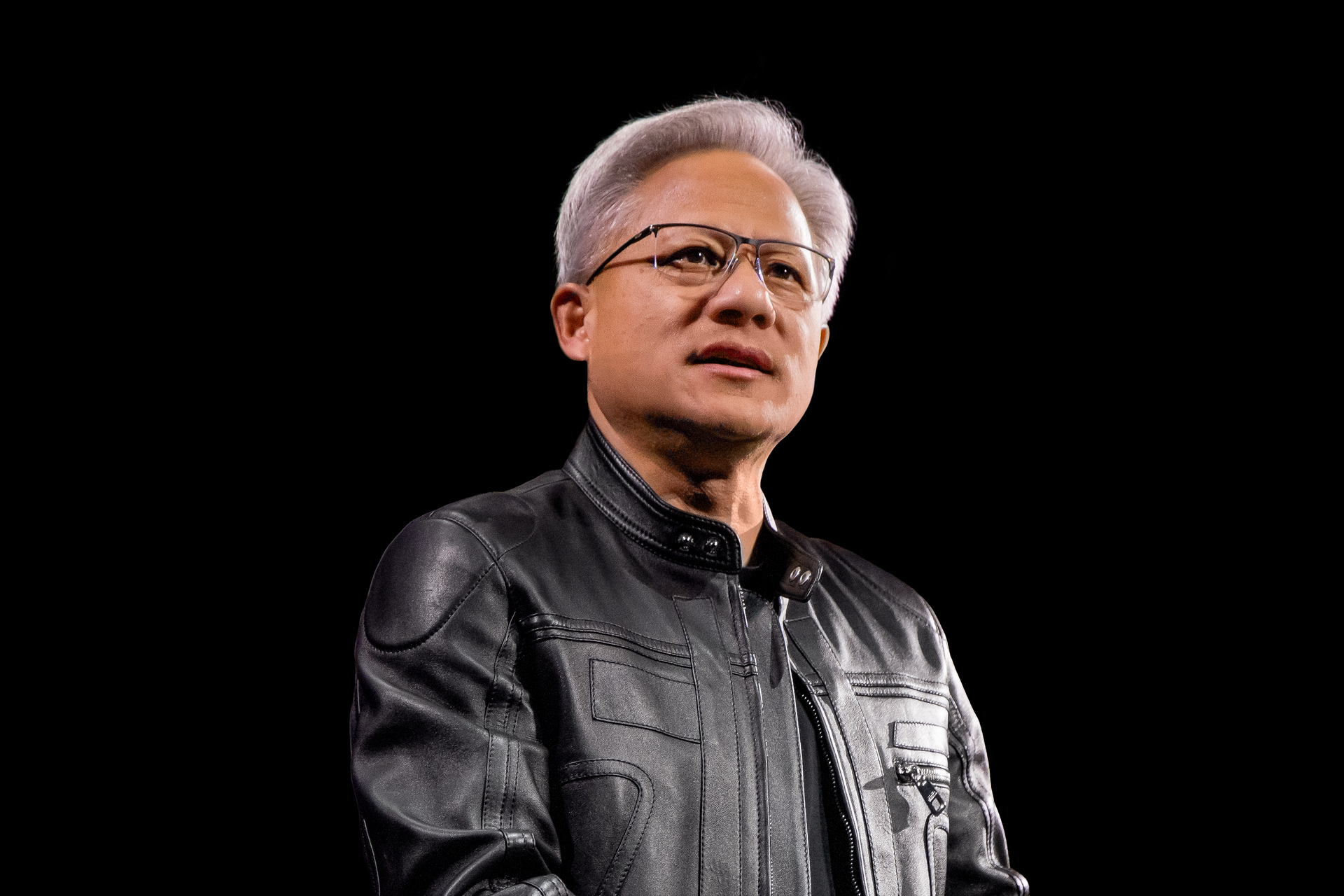
Jensen Huang’s role as the co-founder, president, and CEO has been central to NVIDIA’s enduring success and its ability to navigate successive technological transformations. His leadership is characterized by a blend of deep technical understanding, a compelling long-term vision, and an engaging public persona. Huang has consistently articulated a clear strategic roadmap for NVIDIA, anticipating paradigm shifts from PC graphics to GPGPU, then to deep learning and AI, and more recently, to omniverse and industrial metaverse applications. His steadfast commitment to reinvesting heavily in R&D, even during economic downturns, has allowed NVIDIA to maintain its technological lead and continue innovating ahead of the curve. He remains a driving force behind the company’s ambition to be “the world’s leading platform for accelerated computing.”
The Culture of Innovation
The entrepreneurial spirit and technical rigor of the three founders permeate NVIDIA’s corporate culture. The company fosters an environment where bold ideas are encouraged, and complex engineering challenges are met with collaborative problem-solving. This is evident in its continuous development of new GPU architectures, its expansive software ecosystem, and its foray into cutting-edge research areas. NVIDIA invests heavily in its engineers and scientists, empowering them to push the boundaries of what’s possible, much like the founders did in the company’s nascent stages. This commitment to innovation is not just about creating new products; it’s about defining new categories of computing and solving some of the world’s most complex computational problems.

Looking Ahead
As NVIDIA looks to the future, its trajectory remains tied to the accelerated computing paradigm envisioned by its founders. The company is poised to play an even greater role in emerging technologies:
- The Metaverse and Digital Twins: NVIDIA is making significant strides in the development of Omniverse, a platform for creating and operating 3D simulations and digital twins. This technology has vast implications for industrial design, virtual collaboration, and creating immersive digital worlds, extending the application of its graphics and AI expertise.
- Advanced AI and Generative Models: As AI continues to evolve, NVIDIA’s hardware and software will be crucial for training increasingly sophisticated generative AI models, large language models, and multimodal AI, further pushing the boundaries of what machines can create and understand.
- Quantum Computing Integration: While not directly involved in building quantum computers, NVIDIA is exploring how its GPUs can be used to simulate quantum systems and potentially interface with quantum processors, bridging classical and quantum computing paradigms.
The journey of NVIDIA, from a small startup founded by three visionaries to a global technology powerhouse, underscores the transformative power of a clear technological vision and relentless execution. Jensen Huang, Chris Malachowsky, and Curtis Priem didn’t just found a company; they ignited a revolution in computing that continues to accelerate progress across every domain of technology, leaving an indelible mark on how we interact with and understand the digital world.
aViewFromTheCave is a participant in the Amazon Services LLC Associates Program, an affiliate advertising program designed to provide a means for sites to earn advertising fees by advertising and linking to Amazon.com. Amazon, the Amazon logo, AmazonSupply, and the AmazonSupply logo are trademarks of Amazon.com, Inc. or its affiliates. As an Amazon Associate we earn affiliate commissions from qualifying purchases.