
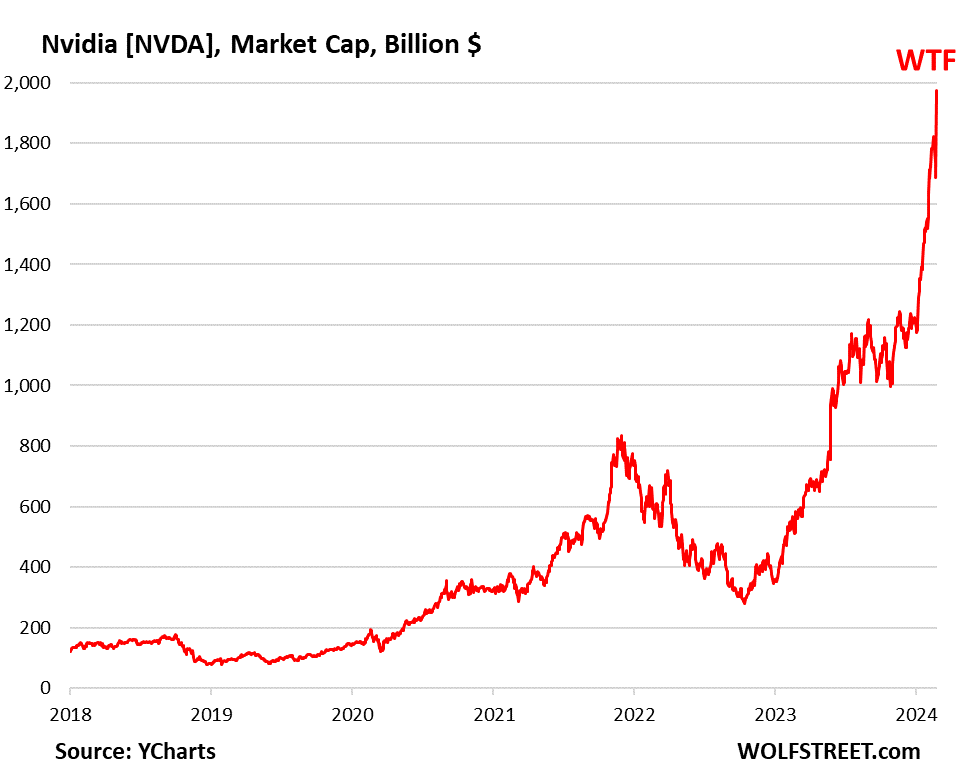
NVIDIA Corporation (NVDA) has become an undisputed titan in the technology sector, with its stock soaring to unprecedented heights, capturing the attention—and often the envy—of investors worldwide. Its market capitalization has frequently surpassed that of venerable industry giants, sparking intense debate and speculation: what precisely is fueling this extraordinary valuation? The answer lies in a confluence of technological leadership, strategic market positioning, robust financial performance, and a compelling narrative that has captivated the global investment community. This article delves into the core financial drivers behind NVIDIA’s elevated stock price, examining its critical role in transformative technologies and its implications for the broader market.

The AI Revolution: NVIDIA’s Dominance in Data Centers
At the heart of NVIDIA’s meteoric rise is its foundational role in the artificial intelligence (AI) revolution. The company’s Graphics Processing Units (GPUs), initially designed for rendering complex graphics in video games, have proven to be exceptionally well-suited for the parallel processing demands of AI and machine learning workloads. This serendipitous advantage positioned NVIDIA at the forefront of a technological paradigm shift, making its hardware indispensable to virtually every major AI initiative.
The GPU as the New CPU for AI
Traditional Central Processing Units (CPUs) excel at sequential processing tasks, making them suitable for general computing. However, AI, particularly deep learning, requires massive parallel computation—simultaneously processing vast amounts of data to train neural networks. NVIDIA’s GPUs, with their thousands of processing cores, are uniquely designed for this very purpose. The CUDA platform, NVIDIA’s proprietary parallel computing architecture, further solidifies its ecosystem. CUDA allows developers to program NVIDIA GPUs for general-purpose computing, effectively creating a “lock-in” effect where AI researchers and developers, accustomed to CUDA’s efficiency and extensive libraries, find it challenging and costly to switch to alternative hardware. This deep integration into the AI development stack ensures sustained demand for NVIDIA’s high-margin data center GPUs, driving significant revenue growth that justifies a premium valuation. Investors are essentially buying into the infrastructure layer of the future of computing.
Hyperscale Cloud Providers and Enterprise Adoption
The insatiable demand for AI capabilities by hyperscale cloud providers—such as Amazon Web Services (AWS), Microsoft Azure, Google Cloud, and Oracle Cloud Infrastructure—is a primary catalyst for NVIDIA’s data center revenue. These providers are building vast AI training and inference infrastructures, often exclusively powered by NVIDIA’s A100 and H100 Tensor Core GPUs. As more enterprises adopt cloud-based AI solutions, and as AI models become larger and more complex, the demand for NVIDIA’s accelerators escalates. This enterprise adoption extends beyond cloud environments to on-premise data centers, where companies across various industries—from finance and healthcare to automotive and manufacturing—are investing heavily in AI to gain competitive advantages. The revenue generated from these critical segments is not merely transactional; it represents a foundational investment in the digital economy, viewed by investors as a high-certainty growth engine for years to come.
Strategic Partnerships and Ecosystem Lock-in
NVIDIA has masterfully cultivated an ecosystem that extends beyond just hardware. Its strategic partnerships with leading AI software companies, research institutions, and major cloud providers ensure that its technology remains at the cutting edge and deeply embedded in the evolving AI landscape. The NVIDIA AI Enterprise software suite, for instance, provides a comprehensive platform for AI development and deployment, further integrating NVIDIA into the enterprise AI stack. This multi-layered ecosystem strategy creates significant barriers to entry for competitors and reinforces NVIDIA’s market leadership. From an investment perspective, this signifies not just a component supplier, but a foundational technology partner whose growth is intrinsically linked to the entire AI industry’s expansion, making its stock a proxy for the broader AI market’s potential.
Beyond AI: Diversified Revenue Streams and Innovation
While AI is undoubtedly the dominant narrative, NVIDIA’s financial strength and high valuation are also underpinned by its diversified portfolio of products and its continuous innovation across multiple high-growth sectors. This breadth of engagement reduces reliance on any single market segment and provides multiple avenues for future growth.
Gaming: A Persistent Powerhouse
The gaming segment, where NVIDIA first built its reputation, remains a significant and highly profitable revenue stream. Its GeForce GPUs are the gold standard for PC gaming, offering cutting-edge performance, realistic graphics through technologies like ray tracing, and high frame rates. The consistent upgrade cycle among gamers, coupled with the ongoing growth of the gaming industry (including esports and streaming), ensures a steady demand for NVIDIA’s consumer-grade GPUs. This segment provides a stable base of revenue and cash flow, which the company can reinvest into research and development for its more capital-intensive data center initiatives. Investors appreciate the resilience and profitability of the gaming division, seeing it as a reliable counterweight to the more volatile, albeit higher-growth, data center market.
Professional Visualization and Omniverse
NVIDIA’s professional visualization segment caters to industries requiring high-performance graphics for design, engineering, media creation, and scientific research. Its Quadro and RTX professional GPUs power workstations used for tasks ranging from CAD/CAM and product design to special effects in film and architectural visualization. A newer, yet incredibly potent, growth driver in this area is NVIDIA Omniverse, a platform for building and operating metaverse applications. Omniverse allows designers and engineers to collaborate in real-time on 3D simulations and virtual worlds, promising to revolutionize industrial design, digital twins, and virtual content creation. This platform represents a strategic move into the nascent but potentially enormous metaverse economy, offering investors exposure to a future market with significant upside, positioning NVIDIA as a key enabler of digital transformation beyond just AI.
Automotive and Autonomous Vehicles

The automotive sector represents another high-potential market for NVIDIA. The company’s DRIVE platform provides a comprehensive end-to-end solution for autonomous vehicles, encompassing hardware, software, and AI models. As car manufacturers race to develop self-driving capabilities, they increasingly rely on NVIDIA’s powerful AI computers and software stacks. The DRIVE Orin system-on-a-chip, for example, is a highly advanced, energy-efficient processor designed for autonomous driving and AI cockpit applications. This segment, while still in its earlier stages of revenue contribution compared to data centers and gaming, holds immense long-term growth potential. Investors are keen on the “picks and shovels” approach to the autonomous vehicle industry, recognizing that NVIDIA is poised to profit regardless of which specific car manufacturer ultimately wins the self-driving race, as long as they all need advanced computing.
Robust Financials and Market Position
A high stock price can sometimes be built on hype alone, but NVIDIA’s valuation is substantially supported by its exceptional financial performance and a strong market position built over decades of innovation and strategic execution. These fundamental strengths provide a solid bedrock for investor confidence.
Explosive Revenue Growth and Profitability
NVIDIA has consistently demonstrated explosive revenue growth, particularly in its data center division, which has often seen triple-digit year-over-year percentage increases. This growth is driven by increasing demand for AI infrastructure and its leadership in cutting-edge GPU technology. Crucially, this revenue growth translates into impressive profitability. NVIDIA consistently reports high gross margins, reflecting the value and differentiation of its intellectual property and the pricing power it commands in its specialized markets. Net income has followed a similar upward trajectory, demonstrating efficient cost management alongside aggressive expansion. For investors, this robust financial performance validates the company’s business model and provides tangible evidence of its market dominance, making it an attractive prospect even at a high price-to-earnings multiple.
Strong Balance Sheet and R&D Investment
A healthy balance sheet is a hallmark of a financially sound company, and NVIDIA’s is no exception. The company typically maintains a substantial cash reserve, minimal debt, and strong free cash flow generation. This financial strength allows NVIDIA to weather economic downturns, pursue strategic acquisitions, and, critically, invest heavily in research and development (R&D). NVIDIA’s commitment to R&D is paramount, as it’s the engine driving its continuous innovation and technological leadership. By consistently pouring resources into developing next-generation GPUs, AI software, and platforms, NVIDIA ensures it stays ahead of competitors and anticipates future market needs. Investors view significant R&D spending as a positive indicator, signifying a company’s dedication to long-term growth and its ability to maintain a competitive edge.
Valuation Metrics and Investor Sentiment
Despite its high stock price, many investors continue to see NVIDIA as a compelling long-term investment. While traditional valuation metrics like P/E (price-to-earnings) ratios might appear elevated compared to the broader market or mature industries, these are often contextualized by NVIDIA’s exceptional growth rates and its pivotal role in transformative technologies. Growth investors are often willing to pay a premium for companies with disruptive potential and a clear path to future earnings expansion. Furthermore, strong investor sentiment, fueled by positive analyst ratings, frequent product announcements, and its position as a bellwether for the AI industry, creates a positive feedback loop that contributes to its sustained high valuation. The perception that NVIDIA is a “must-own” stock for anyone betting on AI ensures consistent buying pressure.
Competitive Landscape and Future Growth Catalysts
No company operates in a vacuum, and understanding NVIDIA’s competitive positioning and its future growth catalysts is crucial for evaluating its long-term investment prospects and the sustainability of its high stock price.
Navigating Competition from AMD, Intel, and Custom Chips
While NVIDIA enjoys a dominant position in high-end AI GPUs, it faces formidable competition. Advanced Micro Devices (AMD) is a strong contender, particularly in gaming and increasingly in the data center with its Instinct accelerators, often offering competitive performance at potentially lower price points. Intel, with its vast resources and long-standing relationships in the server market, is also aggressively developing its own AI accelerators (like Gaudi) and integrated solutions. Furthermore, major tech companies like Google (with its TPUs) and Amazon (with Graviton and Trainium/Inferentia chips) are designing custom AI chips for their internal cloud operations, potentially reducing their reliance on third-party suppliers over time. NVIDIA’s challenge is to maintain its technological lead, reinforce its ecosystem, and continuously innovate to fend off these powerful rivals. Investors closely monitor these competitive dynamics, as a significant shift could impact future market share and profitability.
Emerging Markets and New Technologies
NVIDIA is actively exploring and investing in several emerging markets and technologies that could serve as significant growth catalysts in the future. Beyond the established areas, quantum computing research, edge AI (bringing AI capabilities closer to data sources), and digital twins for industrial applications represent nascent but potentially massive opportunities. The company’s continued investment in areas like robotics and smart cities, leveraging its Jetson platform for AI at the edge, demonstrates its foresight and willingness to capture future market trends. For investors, these exploratory ventures represent embedded options for future growth, offering exposure to the next wave of technological innovation.
Long-Term Outlook for Investors
The long-term outlook for NVIDIA’s stock hinges on its ability to sustain its innovation pace, maintain its ecosystem advantages, and continue translating technological leadership into robust financial performance. The global demand for AI is only expected to intensify, underpinning the demand for NVIDIA’s core data center products. As AI permeates every industry, from drug discovery to personalized education, NVIDIA’s hardware and software platforms are likely to remain central to this expansion. While market corrections and competitive pressures are always possibilities, the fundamental drivers behind NVIDIA’s high valuation—its indispensable role in the AI era, its diversified revenue streams, and its strong financial health—suggest that it remains a compelling, albeit premium-priced, investment for those betting on the future of technology and computing. The company’s ability to innovate and capture new markets will be key to justifying its elevated position in the financial markets for years to come.
aViewFromTheCave is a participant in the Amazon Services LLC Associates Program, an affiliate advertising program designed to provide a means for sites to earn advertising fees by advertising and linking to Amazon.com. Amazon, the Amazon logo, AmazonSupply, and the AmazonSupply logo are trademarks of Amazon.com, Inc. or its affiliates. As an Amazon Associate we earn affiliate commissions from qualifying purchases.