
The trajectory of Nvidia’s stock has been nothing short of phenomenal in recent years, cementing its status as a bellwether for the artificial intelligence revolution and a darling of growth investors. However, even the most robust growth stories are subject to market forces, and occasional corrections are an intrinsic part of the investment landscape. When a high-flying stock like Nvidia experiences a significant drop, it naturally triggers questions among investors, analysts, and market watchers alike. Understanding the multifaceted reasons behind such a downturn requires a deep dive into market dynamics, macroeconomic pressures, company-specific developments, and the ever-shifting tides of investor sentiment. This article will explore the primary factors contributing to Nvidia’s stock fluctuations, strictly through the lens of personal finance, investing, and business finance, offering insights for those navigating the complexities of the modern stock market.

Navigating the Dynamics of Market Correction and Profit Taking
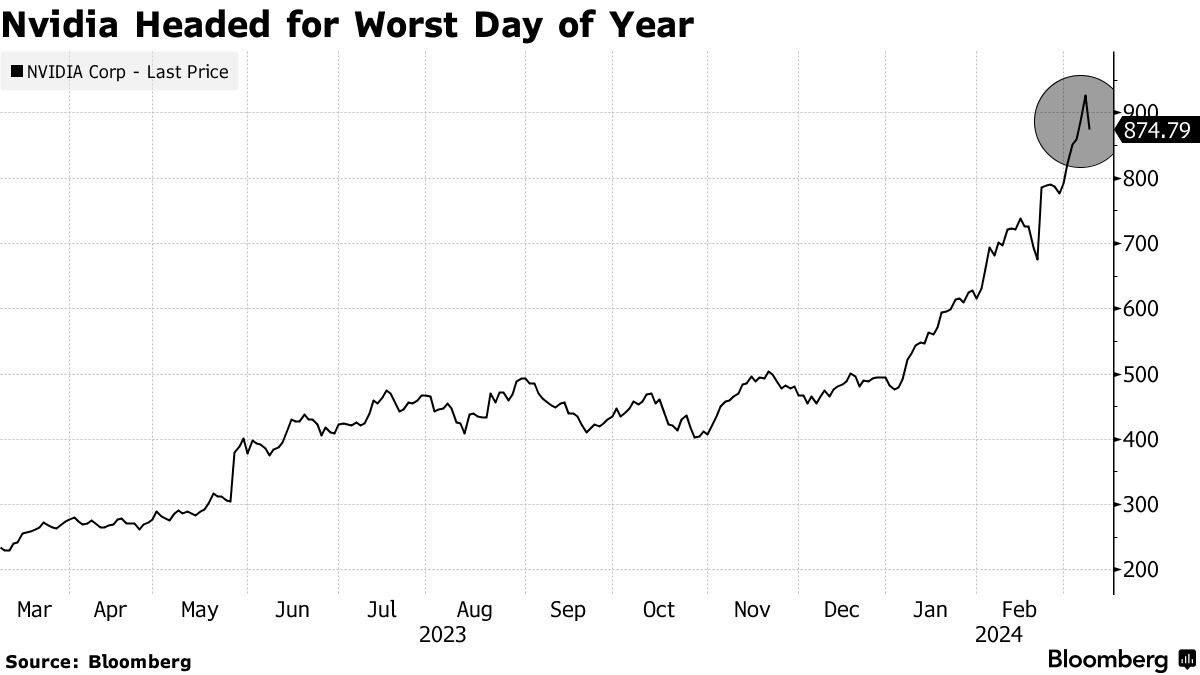
Periods of sharp upward momentum are frequently followed by pullbacks, a natural and often healthy market mechanism. For Nvidia, a stock that has seen unprecedented gains driven by the insatiable demand for its AI chips, a drop can often be attributed to the simple yet powerful forces of profit-taking and market corrections.
The Inevitable Pullback After Monumental Gains
Nvidia’s stock has enjoyed a meteoric rise, largely fueled by its pivotal role in the AI arms race. Its GPUs (Graphics Processing Units) have become the de facto standard for training large language models and powering data centers, leading to consecutive quarters of blockbuster earnings and optimistic future guidance. This stellar performance propelled its market capitalization to staggering heights, making it one of the world’s most valuable companies. However, such rapid appreciation inevitably leads to a situation where many investors are sitting on substantial unrealized gains.
When a stock experiences such a prolonged and steep ascent, a “correction” often occurs. This isn’t necessarily a reflection of deteriorating company fundamentals but rather a function of market psychology and mechanics. After a significant run-up, some long-term investors might opt to sell a portion of their holdings to lock in profits, especially if they perceive the stock to be temporarily overextended or if they need to rebalance their portfolios. Similarly, short-term traders might capitalize on the volatility, selling into strength and potentially buying back at lower levels. This collective action of selling, even if minor for individual investors, can create downward pressure that manifests as a noticeable stock drop, particularly in a liquid and widely traded asset like Nvidia. It’s a classic example of supply and demand at play: increased selling pressure, even if temporary, can outweigh buying interest, leading to a price decline.
Distinguishing Correction from Fundamental Decline
It’s crucial for investors to differentiate between a healthy market correction and a fundamental decline driven by adverse changes in a company’s business model, competitive landscape, or financial health. A market correction is often a temporary recalibration, allowing the stock’s valuation to catch up with its underlying growth, or simply shedding some speculative froth. It can be an opportunity for new investors to enter at a more reasonable price or for existing investors to average down their cost basis.
In Nvidia’s case, while the stock may drop, the underlying demand for its technology, its innovation pipeline, and its dominant market position in critical areas like AI accelerators might remain robust. A correction driven by profit-taking or broader market sentiment is distinct from a scenario where, for instance, a competitor has launched a superior product, demand for Nvidia’s chips is drying up, or the company is facing significant legal or regulatory challenges that could impair its long-term profitability. Savvy investors analyze whether the reasons for the drop are external and cyclical (e.g., market-wide sentiment) or internal and structural (e.g., a permanent shift in the company’s competitive advantage). Understanding this distinction is key to making informed investment decisions rather than reacting impulsively to price movements.
Broader Economic Headwinds and Sector-Specific Pressures
Beyond company-specific factors, Nvidia’s stock performance is also intricately linked to the broader economic environment and prevailing sentiment within the technology sector. Macroeconomic shifts and geopolitical developments can exert significant downward pressure, even on fundamentally strong companies.
Interest Rates, Inflation, and Their Impact on Growth Stocks
The macroeconomic landscape plays a pivotal role in how investors value different asset classes, particularly growth stocks like Nvidia. When central banks implement policies to combat inflation, such as raising interest rates, it significantly impacts the valuation models used for growth companies. Higher interest rates increase the discount rate applied to future earnings, making future profits less valuable in present terms. Since growth stocks are valued primarily on their anticipated future earnings, they are disproportionately affected by rising interest rates compared to value stocks that typically have more immediate, stable earnings.
Inflation itself can also erode profit margins if companies cannot pass on increased costs to consumers or if it dampens overall consumer and business spending. For a company like Nvidia, which operates in a capital-intensive industry, rising costs for raw materials, manufacturing, and labor can compress margins if not managed effectively. The market’s interpretation of inflation and interest rate trends often leads to sector-wide re-evaluations, prompting investors to shift capital away from high-growth, high-valuation stocks and towards more defensive or stable assets.
Shifting Investor Sentiment Towards Risk Aversion
Market sentiment is a powerful, often irrational, force. Periods of economic uncertainty, geopolitical instability, or even just prolonged market volatility can trigger a widespread shift towards risk aversion. When investors become more cautious, they tend to pull back from assets perceived as higher risk or speculative, even if those assets have strong underlying fundamentals. High-growth tech stocks, with their elevated valuations, are often among the first to see selling pressure during such shifts.
The narrative around “AI bubbles” or excessive valuations in the tech sector can also contribute to this sentiment. If investors feel that the hype has outrun the reality, or that valuations have become unsustainable, they may preemptively sell off holdings to protect gains. This collective psychology can create a self-fulfilling prophecy, where fears of a downturn contribute to an actual downturn. Fund managers and institutional investors, who manage vast sums, can significantly amplify these movements as they rebalance portfolios to reduce overall market exposure during periods of heightened uncertainty.
Geopolitical Tensions and Trade Restrictions
Nvidia operates in a globalized market, and geopolitical tensions can have a direct and substantial impact on its business. A prime example is the escalating trade tensions and export restrictions, particularly those imposed by the U.S. government on chip sales to China. China represents a significant market for Nvidia, especially for its data center and AI chips. Restrictions on exporting advanced chips to specific regions or customers in China directly limit Nvidia’s addressable market and revenue potential.
These restrictions can force Nvidia to design specific, less powerful versions of its chips for the Chinese market, which might fetch lower prices or face increased competition from domestic alternatives. Beyond direct revenue impacts, such tensions introduce significant uncertainty regarding future market access and can complicate supply chain management. Investors react negatively to such uncertainties, as they make it harder to project future earnings and growth trajectory, often leading to a reassessment of the stock’s intrinsic value and subsequent selling pressure. The ongoing risk of further escalation or new restrictions remains a persistent overhang for companies with substantial international exposure like Nvidia.
Deep Dive into Nvidia-Specific Challenges
While broader market forces play a role, specific challenges unique to Nvidia’s business and operational landscape can also contribute to its stock dropping. These often relate to its competitive environment, financial performance, and market perception of its valuation.
Intensifying Competition in the AI Chip Arena
Nvidia has been the undisputed leader in AI chips for years, largely due to its CUDA software platform and early investments in GPU technology for parallel processing. However, the immense profitability and strategic importance of AI accelerators have attracted fierce competition. Rivals like AMD are aggressively developing their own AI GPU architectures (e.g., Instinct MI300X) and software ecosystems, aiming to capture a share of the burgeoning market. Intel is also making inroads with its Gaudi accelerators, particularly after acquiring Habana Labs.
Furthermore, major cloud service providers (CSPs) like Google (TPUs), Amazon (Inferentia/Trainium), and Microsoft (Maia/Athena) are increasingly designing their own custom AI silicon. These in-house chips are tailored to their specific data center needs, potentially reducing their reliance on external vendors like Nvidia. While Nvidia’s ecosystem dominance remains strong, the intensification of competition could lead to pricing pressures, slower market share growth, or increased R&D expenses as Nvidia strives to maintain its technological edge. Any perception that Nvidia’s competitive moat is eroding, even slightly, can lead to investor concern and a re-evaluation of its long-term growth prospects.
Valuation Scrutiny and Analyst Revisions
Nvidia’s rapid ascent has naturally led to a significant expansion in its valuation multiples, such as its price-to-earnings (P/E) ratio. At peak valuations, Nvidia’s P/E ratio has often soared far beyond the market average, reflecting high expectations for future growth. While premium valuations are common for high-growth tech companies, they also make the stock more susceptible to corrections if growth expectations are not continually met or exceeded.
When analysts review their models, even minor adjustments to future revenue or profit forecasts, or a recalibration of their expected growth rates, can lead to significant changes in their price targets. If multiple analysts downgrade the stock, or express concerns about its valuation being stretched, it can trigger widespread selling. Investors might perceive that the stock has become “overpriced” relative to its fundamental value, even if the company’s performance remains strong. The market is forward-looking; if the pace of future growth is anticipated to slow, or if the risk-reward balance at current prices becomes less favorable, investors will adjust their positions, causing the stock to drop.
Supply Chain Volatility and Production Capacity
Despite its dominant position, Nvidia does not manufacture its own chips. It relies heavily on third-party foundries, primarily TSMC (Taiwan Semiconductor Manufacturing Company), for the production of its advanced GPUs. The semiconductor industry has experienced significant supply chain volatility in recent years, from COVID-19 related disruptions to geopolitical tensions impacting key manufacturing hubs.
Any constraints on TSMC’s production capacity, unexpected delays in fabrication, or issues with the availability of critical raw materials can directly impact Nvidia’s ability to meet the surging demand for its chips. If Nvidia cannot produce and ship enough units to satisfy customer orders, it directly translates into missed revenue opportunities and potentially impacts future earnings guidance. Furthermore, the immense capital expenditure required to scale production of advanced chips can be a bottleneck. Concerns about Nvidia’s ability to consistently meet demand or navigate potential future supply chain disruptions can lead investors to question its execution capabilities and long-term financial stability, contributing to stock price weakness.
Future Guidance and Earnings Expectations
One of the most immediate triggers for stock drops, especially for growth companies, is a miss on earnings expectations or, more commonly, a conservative future guidance provided by management. Investors eagerly await quarterly earnings reports, not just for the past performance but primarily for the company’s outlook on the upcoming quarter and fiscal year.
If Nvidia’s management provides revenue or profit guidance that falls short of analyst consensus, even if the numbers are still strong in absolute terms, the market can react severely. This is because analyst models and stock valuations are built on certain growth assumptions. A lower-than-expected outlook suggests a deceleration in growth or unforeseen challenges, prompting investors to revise their own expectations downwards. Similarly, if the company highlights any unexpected headwinds—such as slowing demand in a particular segment, increased operating expenses, or intensified competition—during its earnings call, it can cause immediate panic selling. The market’s reaction is often not just to the absolute numbers, but to how those numbers compare against the collective expectations embedded in the stock price.
The Investor’s Perspective: Strategy Amidst Volatility
Understanding why Nvidia’s stock might be dropping is one thing; deciding how to react as an investor is another. Volatility, while unsettling, is an inherent part of investing and can present both risks and opportunities.
Long-Term Outlook vs. Short-Term Fluctuations
A critical aspect of navigating stock drops is maintaining a long-term investment horizon. For companies with strong fundamentals, a dominant market position, and a clear growth trajectory like Nvidia, short-term price fluctuations are often just noise. Investors with a long-term view are less likely to panic during corrections, understanding that market cycles are inevitable. They focus on the underlying business health, innovation pipeline, and secular growth trends (like AI, data centers, gaming) that are expected to drive value over years, not weeks or months.
Impulsive selling based on short-term drops can lead to missing out on subsequent recoveries and undermine long-term portfolio growth. Instead, long-term investors might view significant drops as potential buying opportunities, allowing them to accumulate shares of a quality company at a more attractive valuation, provided their fundamental assessment of the company remains positive. This approach requires discipline and the ability to distinguish temporary market sentiment from permanent impairment of business value.
Due Diligence and Risk Management
Regardless of market conditions, rigorous due diligence is paramount. This involves thoroughly researching Nvidia’s financial statements, competitive landscape, management team, and future growth catalysts. Understanding the risks associated with its business—such as supply chain dependencies, geopolitical exposure, and valuation multiples—is crucial. Investors should assess whether the reasons for a stock drop fundamentally alter their long-term investment thesis.
Effective risk management also involves diversification. Concentrating too much capital in a single stock, even a high-quality one, exposes a portfolio to idiosyncratic risks. Spreading investments across different sectors, asset classes, and geographies can cushion the impact of a significant drop in any one holding. Furthermore, investors should establish clear entry and exit strategies and adhere to their personal risk tolerance, ensuring that their portfolio aligns with their financial goals and comfort level with market volatility.

Opportunities Amidst the Dip
For discerning investors, a significant drop in Nvidia’s stock can present a compelling buying opportunity. If the reasons for the drop are primarily external (e.g., broad market correction, profit-taking) or temporary (e.g., short-term supply chain issues), and the company’s long-term growth prospects remain intact, then a lower stock price means acquiring the same quality asset at a discounted rate.
However, this requires careful analysis. Is the drop a fleeting moment, or does it signal a more profound shift? Investors might consider dollar-cost averaging, investing a fixed amount regularly, regardless of the stock price, to mitigate the risk of timing the market incorrectly. Before buying the dip, it’s essential to re-evaluate the investment thesis. Does Nvidia still possess its competitive advantages? Is the demand for its products robust? Are its financial metrics healthy? A dip should be viewed as an invitation for re-evaluation, not an automatic call to buy, ensuring that any investment decision is based on renewed conviction rather than speculative hope.
In conclusion, Nvidia’s stock dropping is a complex phenomenon influenced by a confluence of market, economic, geopolitical, and company-specific factors. For investors, understanding these dynamics is crucial for making informed decisions, managing risk, and potentially identifying opportunities in what remains a highly innovative and strategically important company in the modern economy.
aViewFromTheCave is a participant in the Amazon Services LLC Associates Program, an affiliate advertising program designed to provide a means for sites to earn advertising fees by advertising and linking to Amazon.com. Amazon, the Amazon logo, AmazonSupply, and the AmazonSupply logo are trademarks of Amazon.com, Inc. or its affiliates. As an Amazon Associate we earn affiliate commissions from qualifying purchases.