
In the intricate world of global finance, understanding the ownership structure of a major corporation like Norwegian Cruise Line Holdings Ltd. (NCLH) is crucial for investors, industry analysts, and even curious consumers. The simple question, “Who owns Norwegian Cruise Lines?” unveils a complex tapestry woven from public shareholding, institutional investments, and the dynamic interplay of market forces. Far from being controlled by a single individual or private entity, Norwegian Cruise Lines, like many large publicly traded companies, is owned by a diverse collective, each holding a piece of its financial future. This article will delve into the multifaceted ownership landscape of NCLH, providing an insightful look into the mechanics of its financial control and the implications for its strategic direction and market performance.

The Complex Tapestry of Public Ownership
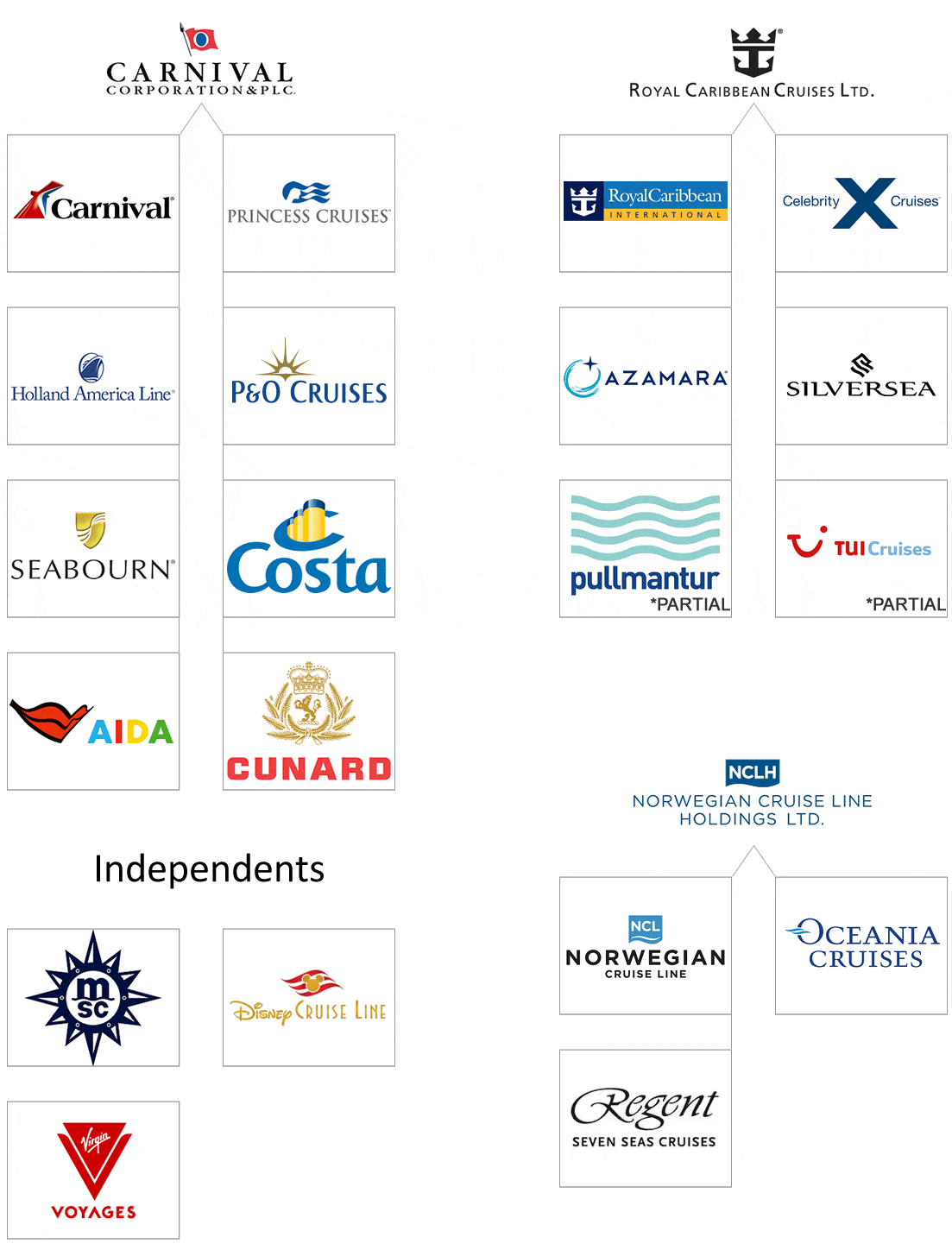
Norwegian Cruise Line Holdings Ltd. operates as one of the world’s leading cruise line operators, overseeing a portfolio of brands including Norwegian Cruise Line, Oceania Cruises, and Regent Seven Seas Cruises. Its presence spans the globe, offering a wide array of itineraries and experiences. To grasp its ownership, one must first understand its corporate structure: it is a publicly traded company.
Understanding Norwegian Cruise Line Holdings Ltd. (NCLH)
Norwegian Cruise Line Holdings Ltd. (NCLH) is a Bermuda-domiciled company that trades its shares on the New York Stock Exchange (NYSE) under the ticker symbol NCLH. This public listing is the fundamental answer to the “who owns” question. When a company goes public, it essentially fractionalizes its ownership into millions, or even billions, of shares. These shares are then bought and sold on stock exchanges, making the company’s ownership fluid and widely distributed.
NCLH’s journey to becoming a publicly traded entity involved various financial maneuvers over the years, including an IPO and subsequent share offerings. Its current structure reflects a mature corporation that relies on public capital to fund its operations, expansion, and shareholder returns. The company’s financial health, strategic decisions, and future growth prospects are intrinsically linked to the sentiment and actions of its diverse shareholder base.
The Nature of a Publicly Traded Company
For a company like NCLH, being publicly traded means its ownership is distributed among any individual or institution willing to purchase its stock. Unlike private companies, where ownership might be concentrated among founders, family members, or a small group of private equity investors, public companies are beholden to a broader spectrum of stakeholders. Each share represents a tiny fraction of ownership, conferring certain rights, most notably the right to vote on corporate matters (like electing board members) and a claim on the company’s earnings.
This model of ownership provides access to vast amounts of capital from the global investment community, enabling companies to fund large-scale projects, acquisitions, and innovation that would be difficult to finance privately. However, it also comes with increased scrutiny, regulatory compliance requirements, and the pressure to deliver consistent financial performance to a demanding market. For NCLH, this means navigating the volatile waters of tourism and global economics while constantly reassuring its shareholders of its long-term value proposition.
Unpacking the Major Stakeholders
While theoretically anyone can own a piece of NCLH, the reality is that ownership is not evenly distributed. A significant portion of the company’s shares is held by large institutional investors, whose holdings often dwarf those of individual retail investors. Understanding these major players is key to comprehending the real centers of financial influence.
Institutional Investors: The Titans of Capital
Institutional investors are professional organizations that manage large pools of money on behalf of others. These include pension funds, mutual funds, hedge funds, insurance companies, and sovereign wealth funds. They are the behemoths of the stock market, often holding significant stakes in publicly traded companies. For NCLH, these institutions collectively represent the largest block of shareholders, wielding considerable influence through their voting power and their ability to move large blocks of stock.
-
Mutual Funds and ETFs: Many individuals indirectly own NCLH shares through their investments in mutual funds or Exchange Traded Funds (ETFs). These funds pool money from countless investors and use it to buy a diversified portfolio of stocks, often including major players like NCLH. Fund managers, acting on behalf of these funds, make investment decisions based on their fund’s specific objectives (e.g., growth, value, index tracking). Giants like Vanguard, BlackRock, and State Street are often among the top holders of NCLH stock through various index funds and actively managed portfolios. Their investment decisions are typically driven by NCLH’s financial performance, industry outlook, and macroeconomic factors.
-
Hedge Funds and Sovereign Wealth Funds: These types of institutional investors also hold significant stakes. Hedge funds are known for their more aggressive and complex investment strategies, often taking large positions to influence corporate policy or capitalize on short-term market movements. Sovereign wealth funds, managed by national governments, also invest globally, seeking long-term returns for their respective nations, often holding substantial, stable positions in major companies. Their involvement can sometimes lead to activist investing, where they push for changes in management or corporate strategy to unlock shareholder value.
The Role of Corporate Insiders and Retail Investors
While institutional investors dominate the shareholder landscape, other important groups contribute to NCLH’s ownership mosaic.
-
Corporate Insiders: This group includes the company’s executive officers, board members, and sometimes major employees. While their combined ownership stake is usually much smaller than that of institutional investors, their holdings are significant because they are directly involved in the company’s operations and strategy. Their ownership aligns their interests with those of external shareholders, providing an incentive to enhance company performance. Public filings (like those with the SEC) transparently disclose their stock transactions, offering insights into their confidence in the company’s future.
-
Retail Investors: These are individual investors who buy shares directly through brokerage accounts. While each individual’s stake might be small, collectively, retail investors represent a substantial portion of the free float (shares available for public trading). Their decisions are often influenced by personal financial goals, market sentiment, news, and investment research. The rise of easy-to-use trading platforms has empowered more retail investors to participate in the stock market, including in companies like NCLH.
The Mechanics of Shareholder Value
The ownership structure of NCLH is not merely a static list of names; it’s a dynamic system that underpins the company’s valuation, strategic direction, and financial decision-making. The interaction between various shareholders and the market is crucial for how the company generates and distributes wealth.
Stock Exchanges and Market Dynamics
NCLH’s shares are traded on the New York Stock Exchange, one of the world’s most prominent trading venues. This exchange facilitates the buying and selling of NCLH stock, setting its market price based on supply and demand. The market capitalization of NCLH (share price multiplied by the number of outstanding shares) is a direct reflection of how investors collectively value the company. Factors influencing this value include financial performance, industry trends, global economic health, geopolitical events, and even consumer confidence in travel.
The liquidity provided by a public exchange allows shareholders to easily buy or sell their ownership stakes, making NCLH an attractive investment for many. The continuous trading activity ensures that the company’s valuation is constantly being reassessed by the market, reflecting the collective judgment of its diverse ownership base.
Governance and Influence: Beyond Simple Ownership
While shareholders “own” the company, they do not manage its day-to-day operations. This responsibility falls to the executive management team, overseen by the Board of Directors. The Board, composed of independent directors and often some corporate insiders, is elected by the shareholders. Their primary duty is to represent shareholder interests, provide strategic oversight, and ensure the company is well-managed.
Institutional investors, with their large blocks of shares, can exert significant influence over the election of board members and key corporate policies. Their engagement, either through direct communication with management or through proxy voting, shapes the company’s governance framework. This system ensures a separation of ownership and management, while still providing mechanisms for shareholders to hold leadership accountable and steer the company in a direction that maximizes long-term value.
Strategic Implications of Ownership Structure
The broad and often fragmented ownership of NCLH has profound implications for its strategic planning, financial operations, and overall business philosophy. The need to satisfy a diverse group of shareholders influences everything from dividend policies to capital expenditure decisions.
Driving Business Decisions and Financial Performance
Every major strategic decision made by NCLH, whether it’s investing in new ships, expanding into new markets, or implementing new pricing strategies, is ultimately weighed against its potential impact on shareholder value. Management is under constant pressure to deliver strong financial performance—revenue growth, profitability, and positive cash flow—to keep investors confident and the stock price robust.
The presence of influential institutional investors can sometimes push for specific outcomes, such as cost-cutting measures, share buybacks, or divestitures, if they believe these actions will enhance shareholder returns. This dynamic interplay ensures that NCLH’s strategic direction is not only about operational excellence but also about financial optimization from an ownership perspective.
Balancing Short-Term Gains with Long-Term Vision
A key challenge for any publicly traded company with a diverse ownership base is balancing the desire for short-term financial gains (often favored by some hedge funds or short-term traders) with the necessity of investing for long-term growth (a priority for pension funds and long-term investors). NCLH must navigate these competing demands. For instance, investing billions in a new class of cruise ships might depress short-term earnings but is vital for future capacity and competitive advantage.
The company’s leadership must articulate a clear long-term vision that demonstrates how current investments will eventually translate into sustainable shareholder value. This involves transparent communication, consistent financial reporting, and a robust investor relations strategy to manage expectations and maintain investor confidence across the spectrum of its ownership.
The Investment Landscape for Cruise Lines
Understanding who owns NCLH is intrinsically linked to understanding its investment appeal. The cruise industry is cyclical and susceptible to various external factors, making its stock a fascinating, albeit sometimes volatile, investment.
Factors Influencing NCLH’s Stock Performance
Several factors directly impact NCLH’s stock performance and, consequently, the wealth of its owners:
- Global Economic Health: Consumer disposable income is a major driver for cruise bookings. Economic downturns often lead to reduced travel spending.
- Fuel Prices: Operating large cruise ships is energy-intensive. Fluctuations in oil prices directly impact NCLH’s operational costs and profitability.
- Geopolitical Events and Health Crises: Events like pandemics, political instability in tourist regions, or natural disasters can severely disrupt operations and deter bookings, as evidenced by recent history.
- Competition and Industry Capacity: The competitive landscape with other major cruise lines (e.g., Carnival, Royal Caribbean) and the overall capacity in the market influence pricing and market share.
- Environmental Regulations: Increasing environmental scrutiny and regulations can lead to significant capital expenditures for fleet upgrades.

A Look Ahead: Challenges and Opportunities for Shareholders
For current and prospective owners of NCLH, the future presents both challenges and opportunities. The industry is recovering from unprecedented disruptions and is adapting to new consumer preferences, including a greater emphasis on sustainable travel. NCLH’s ability to innovate, manage its debt, optimize its fleet, and market effectively will be crucial.
From an ownership perspective, the company’s financial resilience, its strategy for debt reduction, and its capacity for future growth will determine the long-term returns for its shareholders. The dynamic composition of its ownership ensures that its path forward will always be influenced by the collective financial wisdom and strategic demands of a global investment community.
In conclusion, “who owns Norwegian Cruise Lines” is not a simple answer but rather a detailed exploration of a publicly traded entity whose shares are held by millions of investors worldwide. From the institutional giants managing vast portfolios to the individual retail investors seeking growth, NCLH’s ownership structure is a living testament to the power and complexity of modern capital markets, constantly shaping its journey across the global seas.
aViewFromTheCave is a participant in the Amazon Services LLC Associates Program, an affiliate advertising program designed to provide a means for sites to earn advertising fees by advertising and linking to Amazon.com. Amazon, the Amazon logo, AmazonSupply, and the AmazonSupply logo are trademarks of Amazon.com, Inc. or its affiliates. As an Amazon Associate we earn affiliate commissions from qualifying purchases.